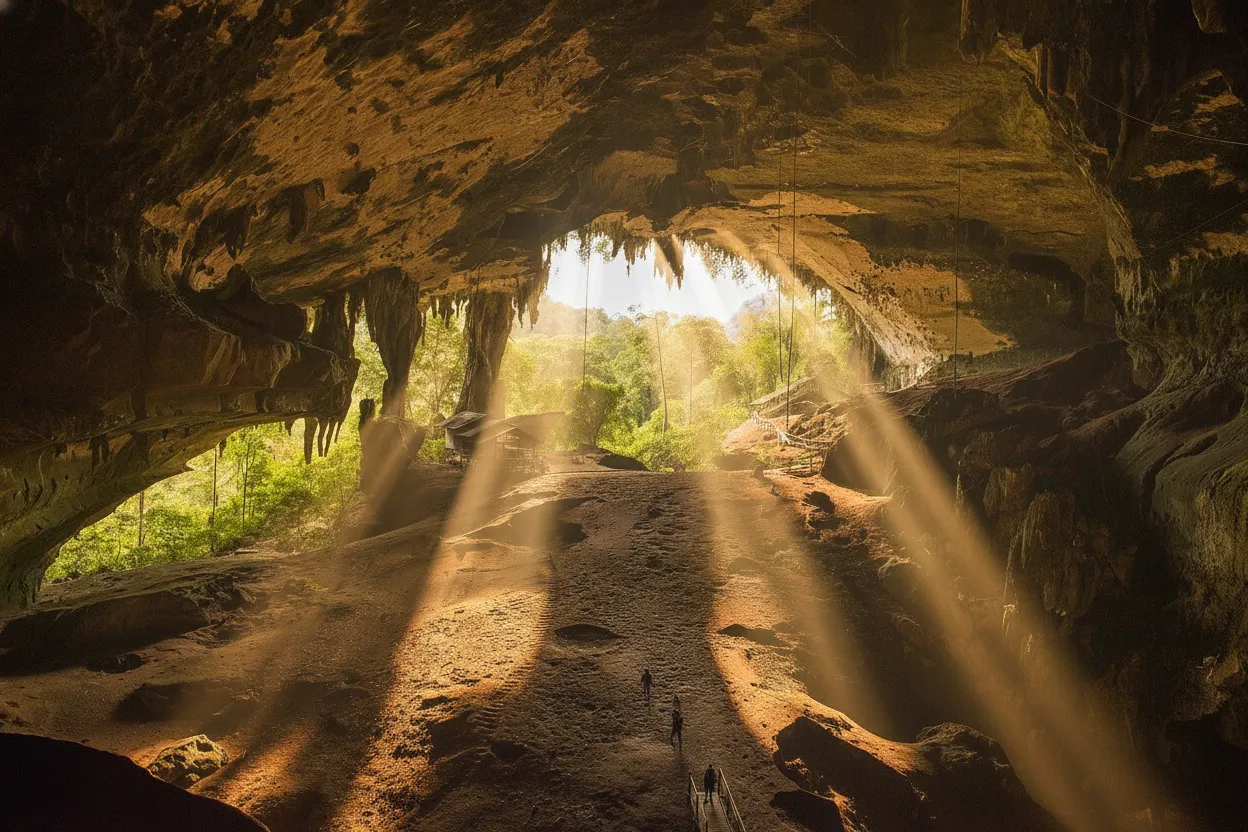
Imagine ascending precarious bamboo ladders, hundreds of feet into the darkness of colossal caves, where a centuries-old, death-defying harvest unfolds for one of the world's most prized delicacies. This isn't a scene from an Indiana Jones movie; it's a living reality in the heart of Borneo, at Malaysia's Niah Caves National Park. Tucked away in the lush, ancient rainforests of Sarawak, Niah offers more than just breathtaking natural beauty; it's a portal to deep time, a vibrant archaeological site, and a testament to human courage and tradition. Forget the usual tourist trails – Niah is an adventure for the soul, a place where history whispers from the rocks and incredible feats of human ingenuity play out against a backdrop of primeval wonder.
The Ancient Heart of Borneo: A Glimpse into Deep Time
Niah Caves National Park isn't just a collection of impressive caverns; it's one of the most significant archaeological sites in Southeast Asia, rewriting chapters of human history. For millennia, these colossal limestone formations have provided shelter, sustenance, and spiritual sanctuary to early humans. It was here, in the late 1950s, that archaeologists unearthed the "Deep Skull" – a human skull fragment dating back an astonishing 40,000 years, making it one of the oldest anatomically modern human remains found in the region. This single discovery shattered previous theories about human migration and settlement in Southeast Asia, positioning Niah as a crucial cradle of civilization.
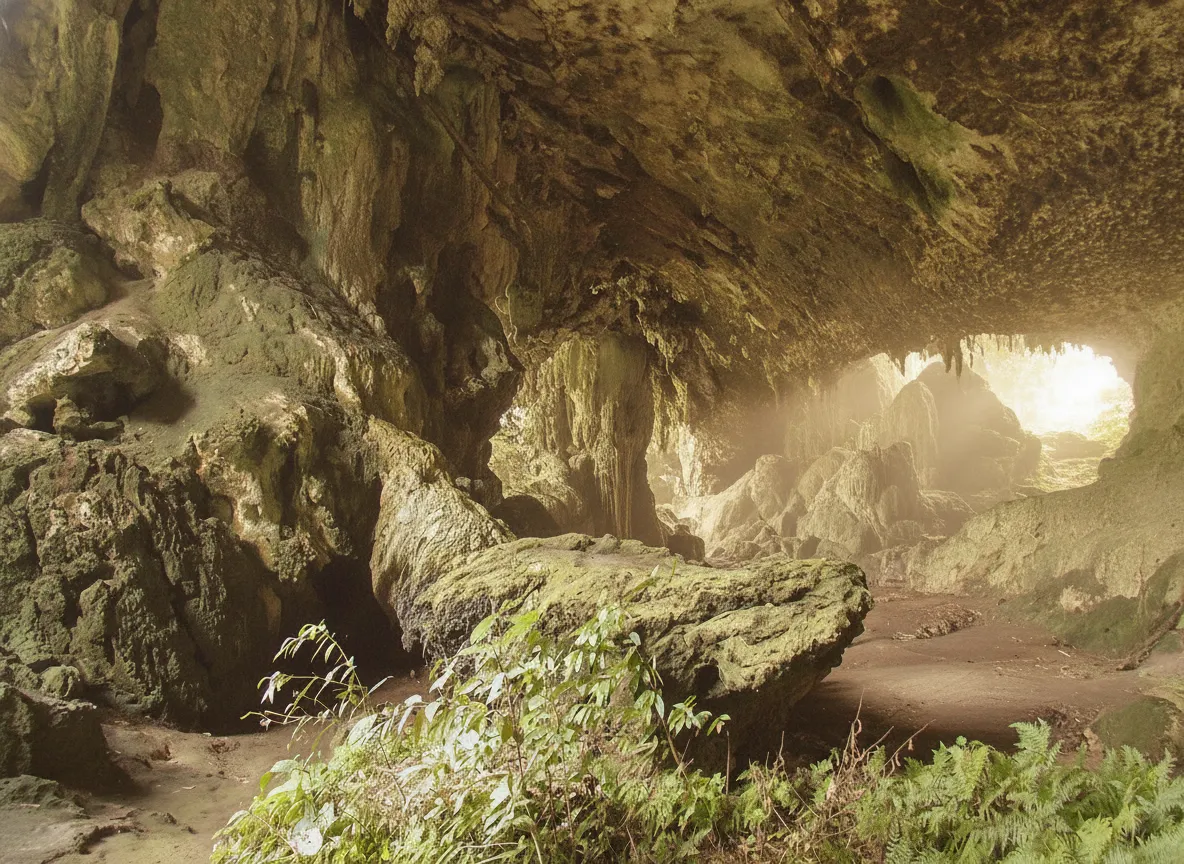
Walking through the vast chambers of the Great Cave, you can almost feel the echoes of ancient life. Evidence of prehistoric settlements, tools, and burial sites are scattered throughout, offering tantalizing glimpses into the lives of our distant ancestors. These weren't just temporary shelters; they were homes, workshops, and ceremonial grounds, bustling with activity. The sheer scale of the caves provided ample space for communities to thrive, protected from the elements and the dangers of the surrounding jungle. Niah is a living museum, where every rock formation and every patch of earth tells a story of survival, adaptation, and the enduring human spirit.
The Perilous Harvest: A Tradition Forged in Courage
While Niah's ancient history captivates, it's the ongoing, death-defying tradition of edible bird's nest harvesting that truly sets this destination apart. Imagine a delicacy so prized, so valuable, that individuals risk their lives scaling dizzying heights to collect it. This is the reality for a select group of local Penan and other indigenous harvesters, whose families have practiced this perilous art for centuries.
The "nests" are built by swiftlets, small birds native to the region, using their solidified saliva. These delicate, cup-shaped structures cling to the highest, darkest reaches of the cave ceilings, often hundreds of feet above the cave floor. To reach them, the harvesters construct incredibly intricate and precarious scaffolds made entirely of bamboo and rotan (rattan vines). These towering structures, sometimes reaching over 200 feet high, are engineering marvels in themselves, built with ancestral knowledge and an almost unbelievable trust in their materials and craftsmanship.
During harvesting seasons (typically February to April and August to October), you might witness remnants of these incredible scaffolds, a silent testament to the bravery involved. If you're extraordinarily lucky, and visit during an active harvest, you might even catch a glimpse of a harvester, a tiny figure high above, moving with incredible agility and courage. The practice demands not only physical prowess but also a deep respect for the cave's delicate ecosystem and the swiftlet population. Harvesters typically collect nests only after the swiftlets have fledged, ensuring the sustainability of this extraordinary tradition. This profound connection between humanity and the wild, the courage to face immense danger for a cultural and economic legacy, makes Niah an unparalleled experience.
Exploring Niah: What Awaits the Curious Traveler
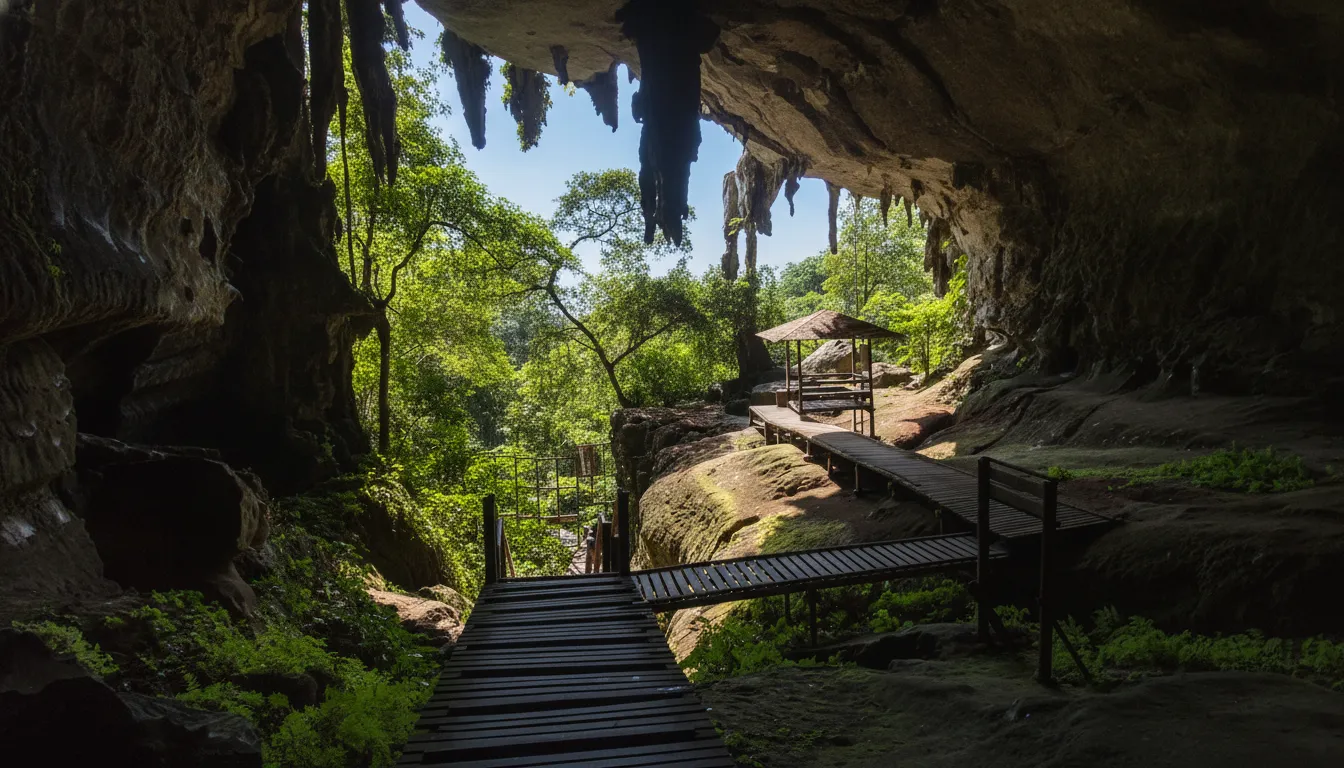
Beyond the cultural spectacle, Niah National Park offers an immersive jungle and cave exploration experience. Your adventure typically begins with a pleasant longboat ride across the Niah River, followed by a shaded boardwalk trek through lush rainforest, alive with the sounds of exotic birds and insects. Keep an eye out for macaques, hornbills, and vibrant butterflies as you make your way towards the cave entrances.
The first major chamber you'll encounter is the Trader's Cave, an open-sided overhang where traders once bartered for bird's nests and guano. From there, the path leads into the colossal Great Cave, a truly awe-inspiring space. The sheer scale is difficult to comprehend until you're standing within its cavernous embrace, gazing up at ceilings that disappear into darkness. Millions of bats and swiftlets call this cave home, creating an incredible symphony of chirps and squeaks, especially at dawn and dusk when they depart and return. The scent of guano, a rich fertilizer, is omnipresent, a natural part of the cave's vibrant ecosystem.
Further into the park, you'll discover the Painted Cave, a smaller but equally significant site. Here, on a sloping wall, lie enigmatic prehistoric cave paintings depicting human figures, boats, and animals, alongside ancient boat-shaped burial coffins. These vibrant ochre and charcoal drawings, estimated to be over 1,200 years old, offer another poignant link to Niah's storied past and the spiritual beliefs of its former inhabitants. The journey through Niah is a sensory overload in the best possible way: the cool damp air of the caves, the echoing sounds, the vastness of the chambers, and the tangible sense of ancient history all combine to create an unforgettable adventure.
Planning Your Expedition: Practical Tips for Niah Caves
Ready to embark on your own Niah adventure? Here are some tips to make your trip smooth and memorable:
- Best Time to Visit: The dry season, generally from March to October, offers the most comfortable trekking conditions. If you're hoping to witness the bird's nest harvesting, aim for February-April or August-October, though sightings are never guaranteed.
- Getting There: The nearest major city is Miri, Sarawak. From Miri, you can take a taxi or bus (approximately 1.5-2 hours) to Batu Niah town. From Batu Niah, it's a short longboat ride or a walk to the park headquarters.
- Accommodation: While there are basic chalets and hostel rooms available at the park headquarters for an immersive experience, many visitors opt to stay in Miri and do Niah as a day trip. Miri offers a wider range of hotels and dining options.
- What to Bring: Sturdy walking shoes are a must. A headlamp or powerful torchlight is essential for exploring the darker sections of the caves. Bring plenty of water, insect repellent, a light raincoat (for sudden downpours), and a camera. The boardwalks can be slippery, so watch your step.
- Guides: While Niah can be explored independently, hiring a local guide can significantly enrich your experience, providing deeper insights into the history, ecology, and cultural significance of the caves and the bird's nest harvesting tradition.
- Respect and Conservation: Remember that Niah is a national park and a culturally significant site. Stay on designated paths, do not touch cave paintings or archaeological remains, and respect the local communities and their traditions.
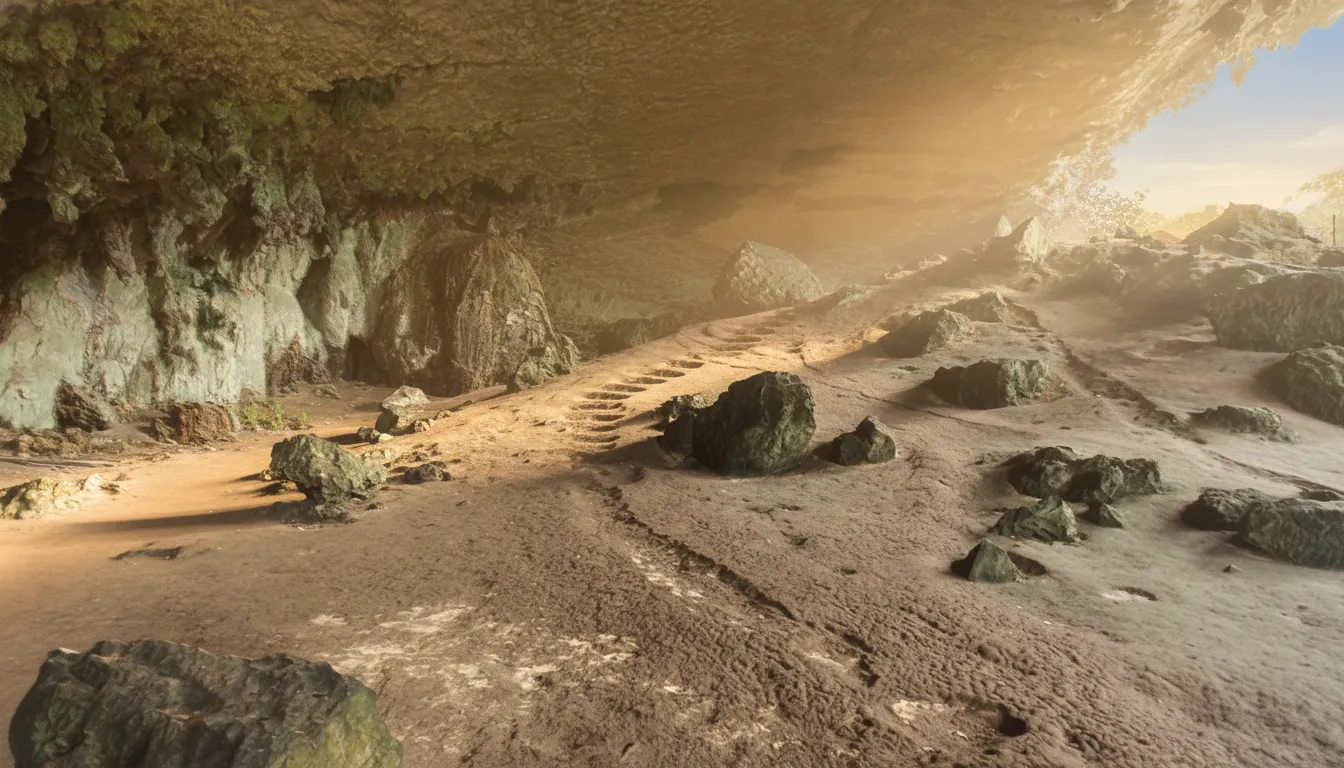
Niah Caves National Park is more than just a destination; it's an experience that challenges your perceptions of human history, natural wonder, and cultural resilience. It's a place where you can feel the pulse of millennia and witness a living tradition that defies modernity. So, if you're seeking an adventure that combines breathtaking natural beauty, profound historical insight, and a touch of daring, pack your bags and set your sights on the hidden wonders of Niah. You won't just visit a place; you'll embark on a journey through time itself.
Essential Travel Information
- Location Niah Caves National Park, Malaysia
- Best Time Dry season (March to October), with bird's nest harvesting seasons typically Feb-April and Aug-Oct.
- Getting There Fly to Miri Airport (MYY), then take a taxi or bus to Batu Niah town, followed by a short longboat ride or walk to the park HQ.
- Airport Miri Airport (MYY)
- Budget Mid-range (approx. $50-100 USD per day for park fees, transport, food, basic accommodation)
- Language Malay, Iban, English (widely spoken in tourist areas)
Find Places to Stay Near Niah Caves National Park
Compare hotels, hostels, and unique stays in Malaysia.
Search AccommodationTours & Experiences Near Niah Caves National Park
Book guided tours, day trips, and unique experiences.
Browse Tours