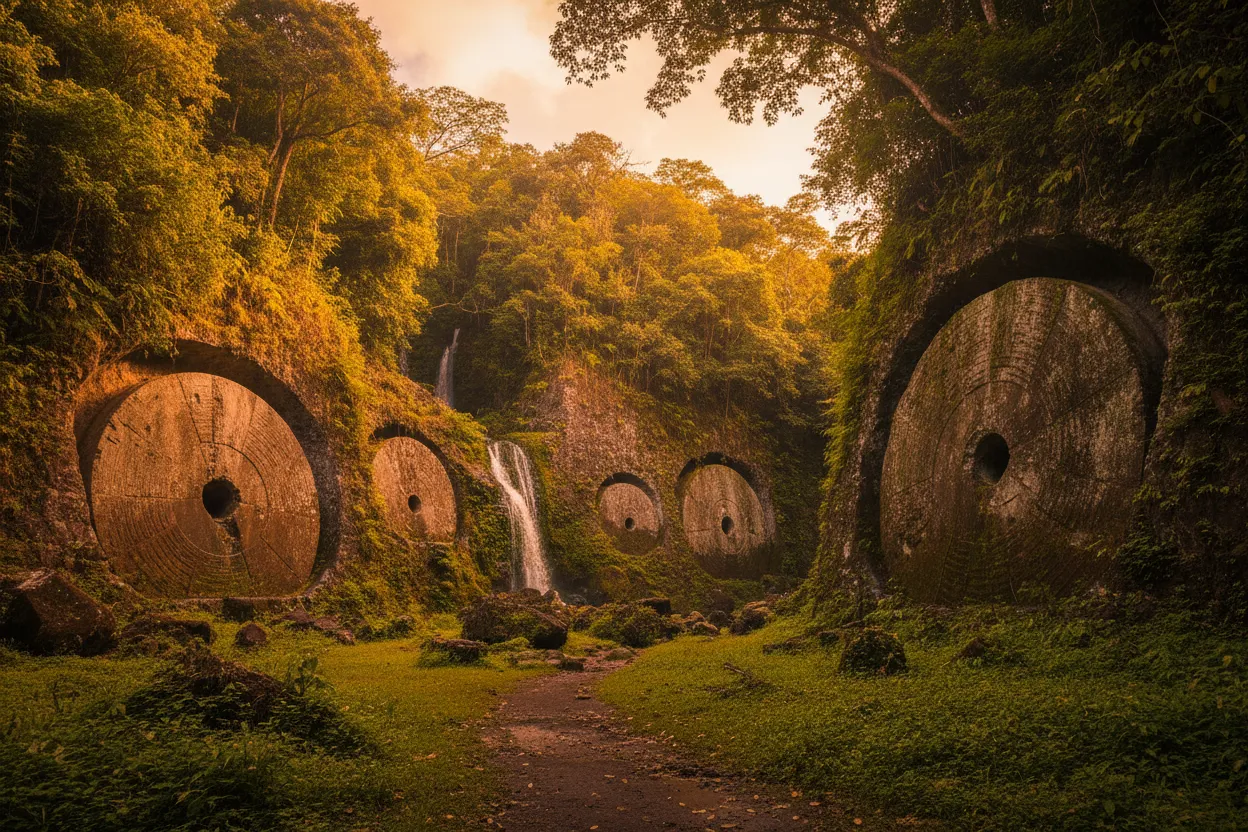
Deep in the emerald heart of Palau’s jungles lies a secret so profound, it redefines our understanding of ancient economies and human daring. This isn't just another archaeological site; it's the industrial heartland of a vanished currency, where colossal stone 'coins' were born before their perilous ocean voyage. Welcome to the Ollei Stone Money Quarries, a place where the whispers of a bygone era echo through the dense foliage, inviting you to step into a story of incredible ingenuity, arduous labor, and audacious inter-island trade.
Imagine a world where money wasn't gold or silver, but massive limestone discs, some taller than a human, weighing many tons. Now imagine the journey to acquire this "money": not from a nearby mine, but from hundreds of miles across treacherous open ocean, carved with primitive tools from a foreign land. This is the astonishing legacy of the Rai stones, the legendary currency of Yap, and the Ollei Quarries are where their epic tale began. To walk among these abandoned, partially carved giants is to touch a tangible piece of history, a testament to the indomitable spirit of ancient Micronesian navigators and craftsmen.
The Enigma of the Rai Stones: Money Beyond Measure
The Yapese people, residing on the island of Yap, developed a unique and awe-inspiring form of currency: the Rai stones, or *feiq* in the local language. Unlike any other money system, the value of Rai stones wasn't inherent in the material itself, but in their size, their history, and, crucially, the story of their acquisition. The larger the stone, the more perilous the journey to obtain it, and the more lives lost in the process, the greater its value.
But here's the kicker: Yap, a volcanic island, lacks the soft, crystalline limestone necessary to carve these magnificent discs. So, where did they come from? The answer lies here, on Palau’s Babeldaob Island, specifically in the Ngaraard State. The geology of Palau offered rich deposits of the perfect material, setting the stage for one of the most remarkable chapters of ancient human endeavor and inter-island commerce. This realization elevates the Ollei Quarries from a mere historical curiosity to a vital nexus point in the economic and cultural tapestry of ancient Micronesia.
A Vanished Industrial Age: History Etched in Stone
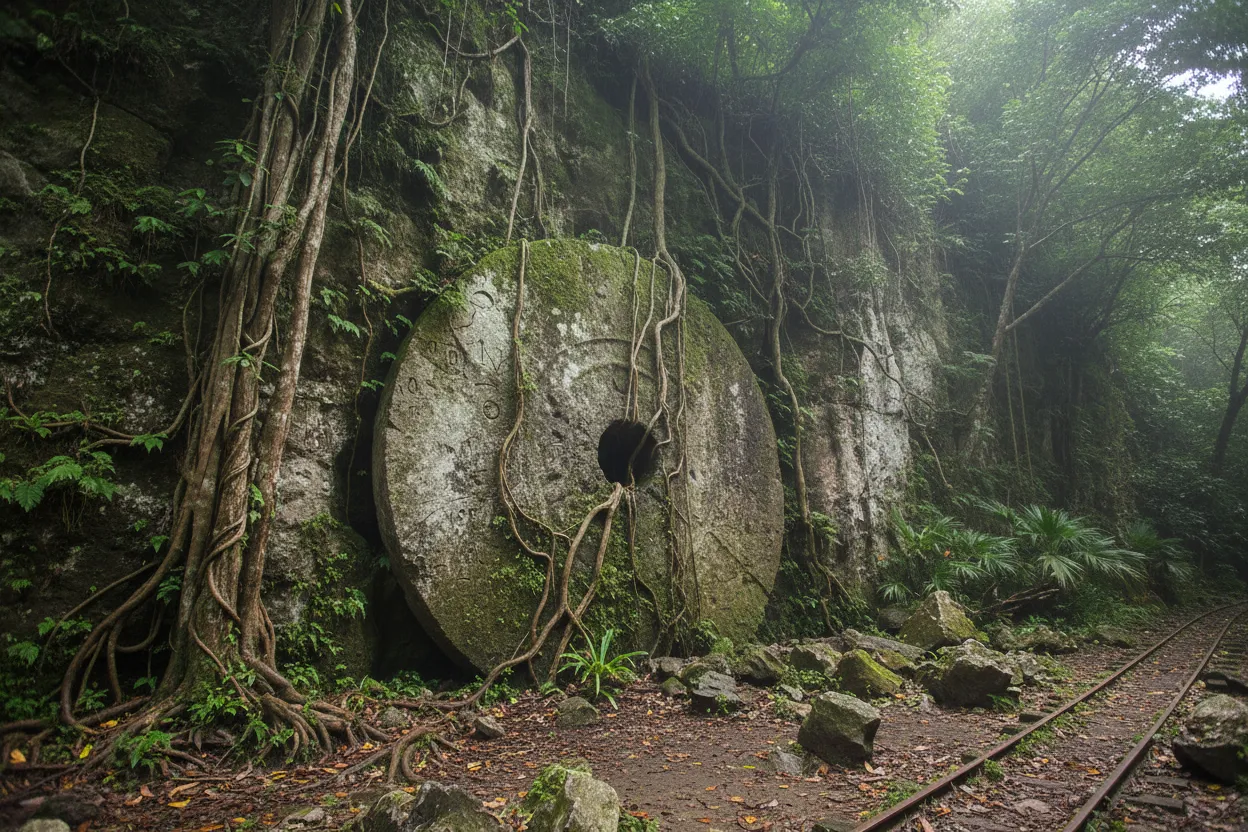
For centuries, Yapese expeditions sailed to Palau, embarking on voyages that were as much spiritual quests as they were economic ventures. Their arrival at Ollei marked the beginning of an arduous, months-long process. Using only the tools available to them – shell adzes, sharpened stone chisels, and sheer human muscle – they would painstakingly chip away at the limestone cliffs. The technique involved carving a circular groove around the desired disc, slowly detaching it from the bedrock.
The work was incredibly slow and dangerous. Imagine the rhythmic clang of stone against stone, the sweat, the dust, the constant threat of falling rock or exhaustion. Once a stone was carved, a central hole was bored through it, allowing a sturdy log to be inserted for transport. But the quarrying was only half the battle. The true test of courage and skill came with the ocean voyage back to Yap. Rai stones, weighing up to several tons, were loaded onto large rafts or canoes, then navigated across hundreds of miles of open ocean, braving storms, currents, and the vast, unforgiving Pacific. Many lives were lost, but each sacrifice only enhanced the value of the stones that made it home.
The practice continued until the late 19th and early 20th centuries, when the arrival of Western powers, particularly the Germans, inadvertently disrupted the traditional system. The Germans, seeking to establish infrastructure, introduced metal tools and even gunpowder to expedite the quarrying process, diminishing the "labor value" of the stones. However, the legacy of these epic expeditions remains, frozen in time at the Ollei Quarries.
What You'll Discover: Walking Among Giants
Visiting the Ollei Stone Money Quarries is less like a museum tour and more like an archaeological treasure hunt. The site is not manicured or signposted; it's raw, wild, and utterly authentic. You'll trek through dense jungle, guided by local experts who know the hidden paths. As you delve deeper, the jungle slowly reveals its secrets.
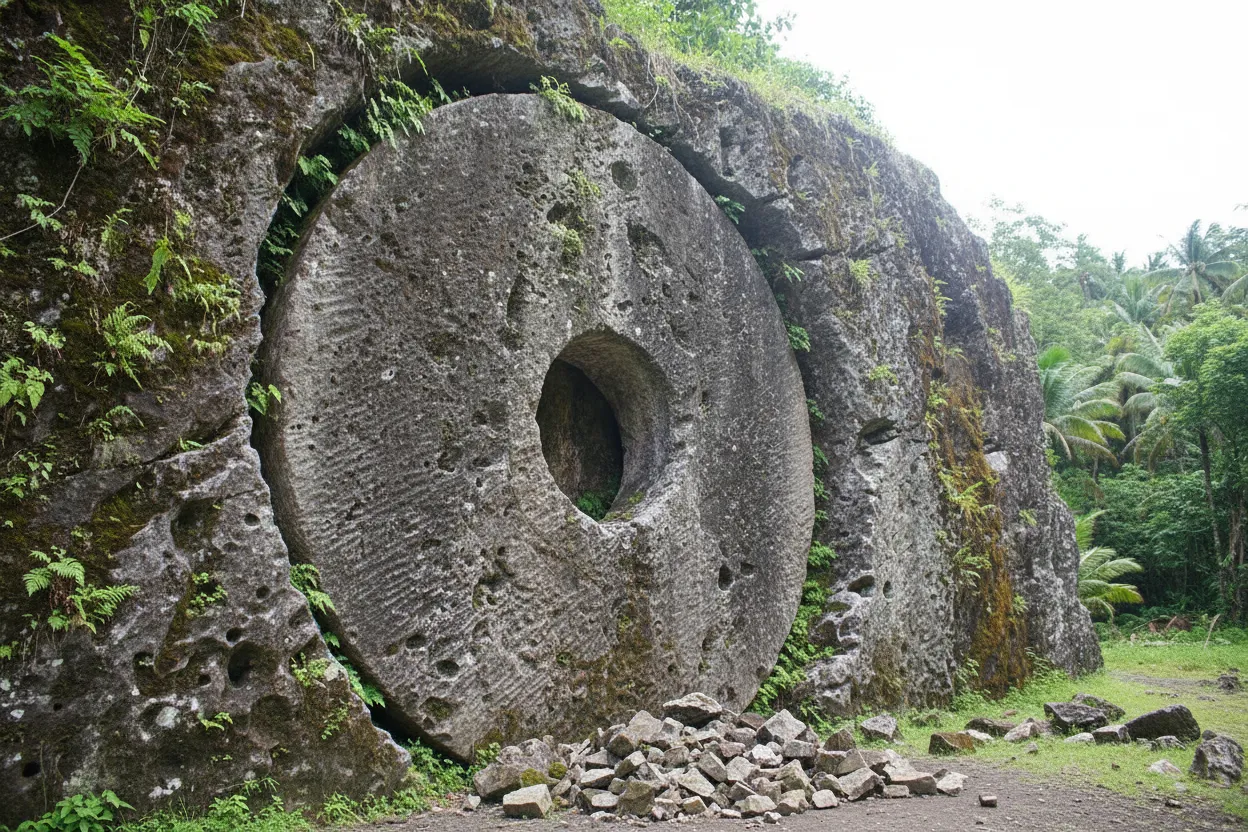
Suddenly, you'll encounter them: colossal stone discs, some perfectly formed, others partially carved, still clinging to the cliff face as if suspended in time. You’ll see the faint marks of ancient tools, the rough outlines where the carving began, and the precise circular grooves of nearly finished pieces. Some stones lie abandoned, perhaps too heavy to move, or left behind due to an unforeseen calamity. Others are half-buried by centuries of jungle growth, their ancient forms slowly being reclaimed by nature.
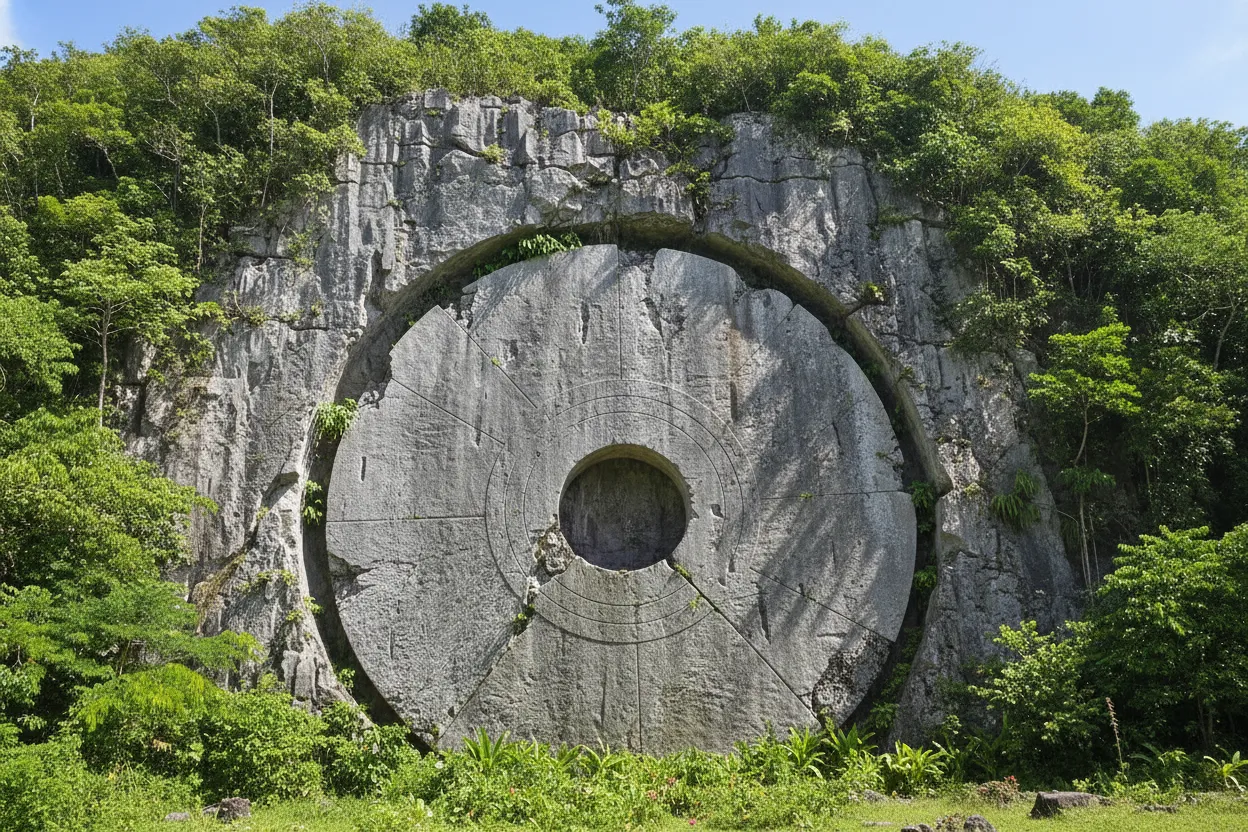
The sheer scale of some of these stones is breathtaking. Standing next to a disc that's three meters in diameter, you can't help but feel a profound sense of awe for the people who envisioned, carved, and attempted to transport such immense artifacts with nothing but rudimentary tools and immense determination. It’s a powerful experience, connecting you directly to an audacious chapter of human ingenuity and inter-island trade that defies modern comprehension.
You'll feel the quiet reverence of the place, a sense of wonder at the tenacity of the Yapese people, and a deep appreciation for the cultural heritage of Palau. It's a place that truly makes you pause and reflect on the diverse ways humanity has defined value and wealth throughout history.
Practical Tips for Your Ollei Adventure
While the Ollei Stone Money Quarries are a hidden gem, they require a bit of planning to visit. This isn't a walk-in attraction, and that's part of its charm!
Getting There & Around:
The quarries are located in Ngaraard State on Babeldaob Island, Palau's largest island. You'll first fly into Roman Tmetuchl International Airport (ROR) in Koror. From Koror, Babeldaob is accessible via the compact, well-maintained Compact Road. However, to reach the specific quarry sites in Ollei, you'll almost certainly need to arrange a guided tour with a local operator. They will provide transportation, often a 4x4, and lead you on the jungle trek to the sites. This isn't a place to explore independently due to the dense jungle and lack of clear signage.
What to Bring:
- Sturdy Footwear: Expect uneven terrain, mud, and potentially slippery paths. Hiking shoes are a must.
- Insect Repellent: You're in the jungle, so mosquitoes and other biting insects are present.
- Plenty of Water: It's hot and humid, and you'll be exerting yourself.
- Sun Protection: While much of the trek is shaded, you'll still be exposed at times. A hat and sunscreen are advisable.
- Camera: You'll want to capture the incredible sights, but be prepared for low light in some areas.
- Lightweight Rain Gear: Tropical showers can occur at any time.
Respect & Responsibility:
Remember, this is a culturally significant site. Tread lightly, do not disturb the stones or the surrounding environment, and always follow your guide's instructions. Leave nothing but footprints, take nothing but photos and memories.
Best Time to Visit:
The dry season, generally from November to April, offers the most comfortable conditions for hiking, with less rain and slightly cooler temperatures. However, Palau's tropical climate means rain can occur year-round.
A journey to the Ollei Stone Money Quarries is more than just a sightseeing trip; it's an immersive experience into the heart of human history and cultural resilience. It's a place that challenges your perceptions of wealth, trade, and the sheer audacity of ancient civilizations. So, if you're seeking an adventure that combines historical intrigue with the raw beauty of nature, Palau's hidden industrial heartland awaits, ready to share its incredible story.
Essential Travel Information
- Location Ollei Stone Money Quarries, Palau
- Best Time Dry season (November to April)
- Getting There Fly to Roman Tmetuchl International Airport (ROR) in Koror, Palau. Arrange a guided tour from Koror to Ngaraard State on Babeldaob Island, typically involving a 4x4 drive and a jungle hike.
- Airport Roman Tmetuchl International Airport (ROR)
- Budget Mid-range to Luxury (approx. $200-500+ USD per day, excluding international flights, depending on accommodation and activities)
- Language Palauan, English
Find Places to Stay Near Ollei Stone Money Quarries
Compare hotels, hostels, and unique stays in Palau.
Search AccommodationTours & Experiences Near Ollei Stone Money Quarries
Book guided tours, day trips, and unique experiences.
Browse Tours