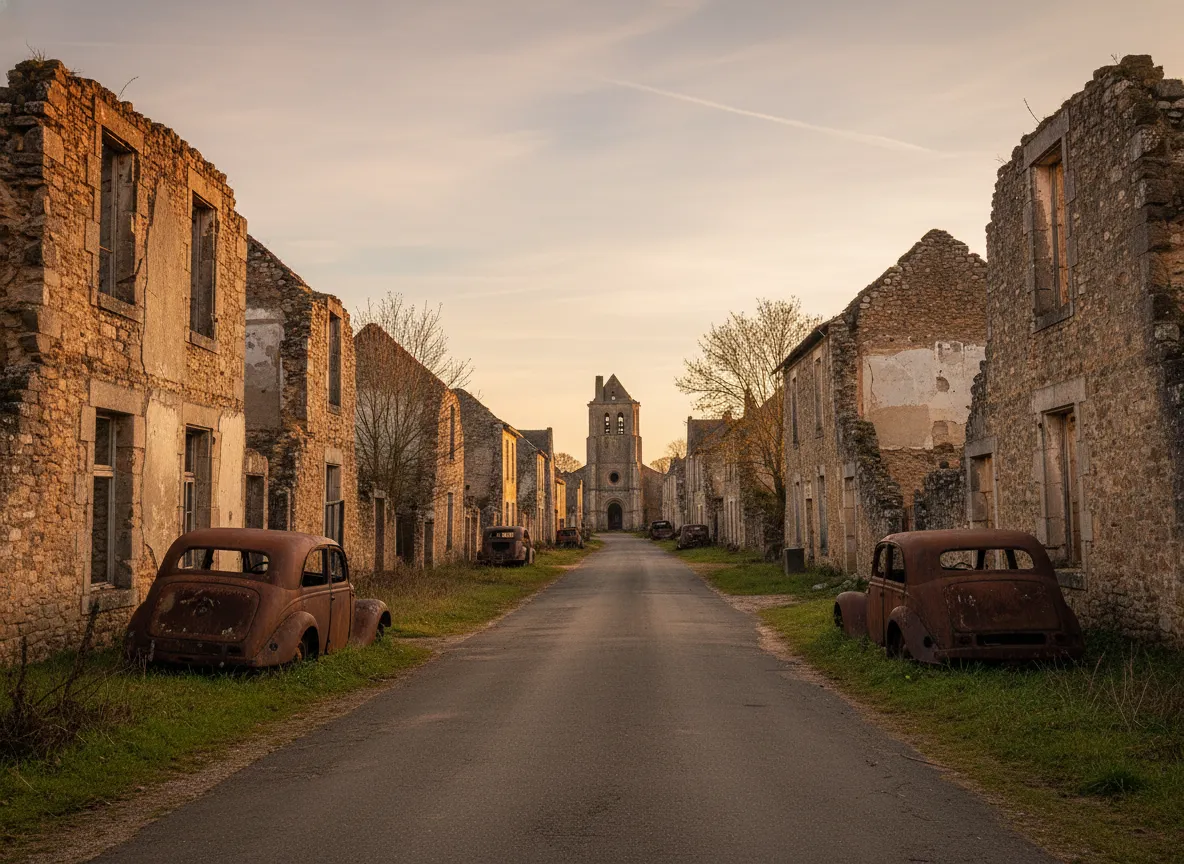
Imagine stepping into a moment frozen in time, a quiet French village where the echoes of a summer day in 1944 still linger, a permanent, raw scar on the landscape. Oradour-sur-Glane isn't merely a historical site; it's a profound, almost sacred space where the hands of the clock stopped abruptly, preserving a scene of unimaginable horror and, paradoxically, immense human resilience. This isn't a place for casual tourism, but a powerful pilgrimage, an essential journey for anyone seeking to understand the darkest corners of history and the enduring importance of remembrance.
Oradour-sur-Glane: A Village Frozen in Time
Nestled in the picturesque Nouvelle-Aquitaine region of France, Oradour-sur-Glane appears, at first glance, like many charming French hamlets. But as you approach, a palpable silence descends, a stillness that speaks volumes. This isn't a village that lives and breathes; it's a monument, a ghost town meticulously preserved exactly as it was left after a horrific act of wartime brutality. The decision to preserve Oradour-sur-Glane as a "Village Martyr" was a deliberate one, made by Charles de Gaulle himself. He decreed that the original village should remain untouched, a poignant, chilling testament to the violence it endured, and a perpetual warning to future generations.
What makes Oradour-sur-Glane so uniquely compelling is this very preservation. Unlike other memorials that rebuild or restore, Oradour stands as a stark, unvarnished truth. It’s a place where history isn't retold through plaques and exhibits alone, but felt through the very fabric of the crumbling buildings, the twisted metal, and the silent, overgrown streets. It offers an unparalleled, visceral experience, inviting visitors to walk directly into the past and bear witness to a moment of destruction that reshaped lives and scarred a nation.
The Day Time Stood Still: A Tragic History
The story of Oradour-sur-Glane is a heartbreaking chapter in the annals of World War II. On June 10, 1944, just four days after D-Day, a company of the notorious Waffen-SS Das Reich division descended upon the unsuspecting village. Their motive remains a subject of historical debate—whether it was a reprisal for resistance activity, a warning to the French population, or a horrific mistake fueled by misinformation and brutality. Regardless of the exact trigger, the outcome was devastating.
That fateful afternoon, the SS systematically rounded up the entire population of Oradour-sur-Glane, including men, women, and children. The men were led to barns and garages, where they were machine-gunned. The women and children, herded into the village church, faced an even more horrific fate: the church was set ablaze, and those who tried to escape the inferno were shot. In a matter of hours, 642 innocent souls—nearly every inhabitant of Oradour-sur-Glane—were murdered, and the village was systematically razed to the ground. Homes, shops, schools, the church—all reduced to smoldering ruins. The scale and brutality of the massacre shocked even a war-weary world.
The preservation of Oradour-sur-Glane wasn't just about remembering the dead; it was about ensuring that such an atrocity could never be forgotten or denied. A new village, Oradour-sur-Glane-sur-Glane, was built nearby, but the original site remains, a powerful, silent scream against the senselessness of war.
Walking Through Silence: What You'll See
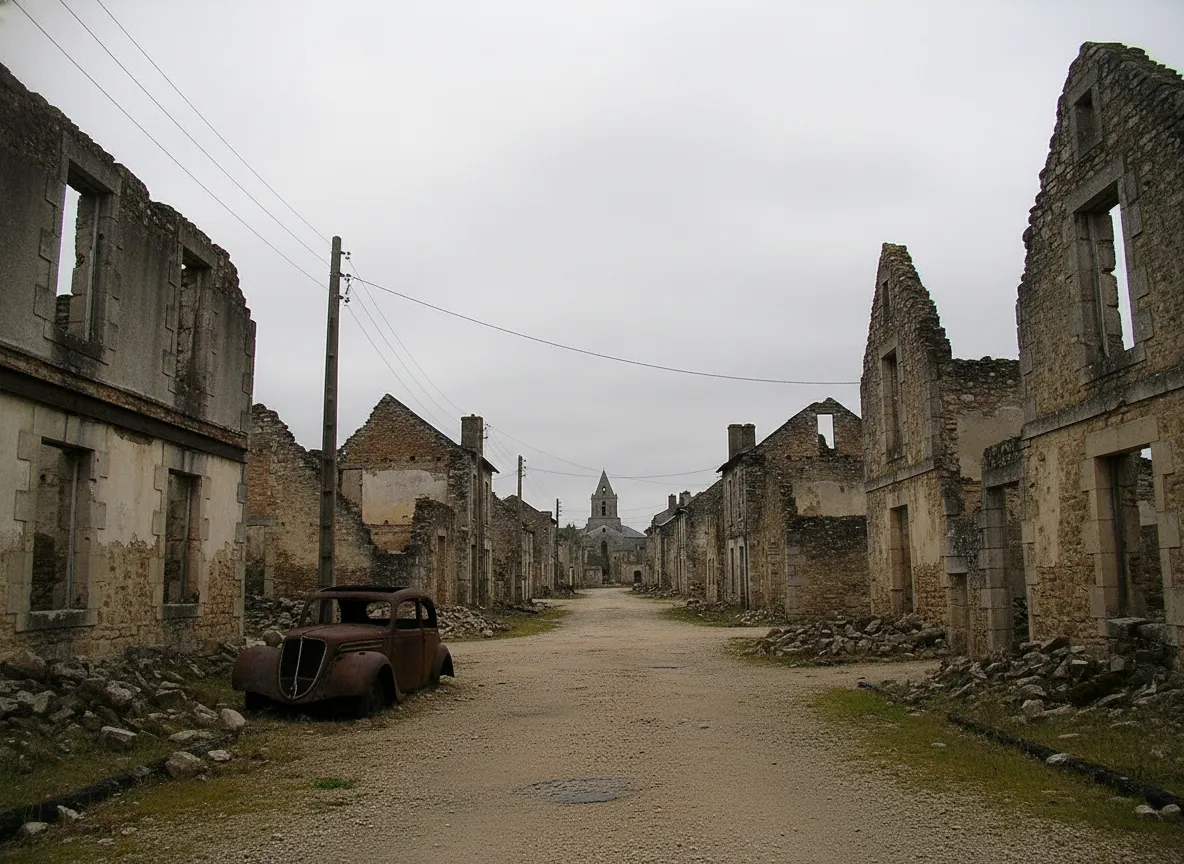
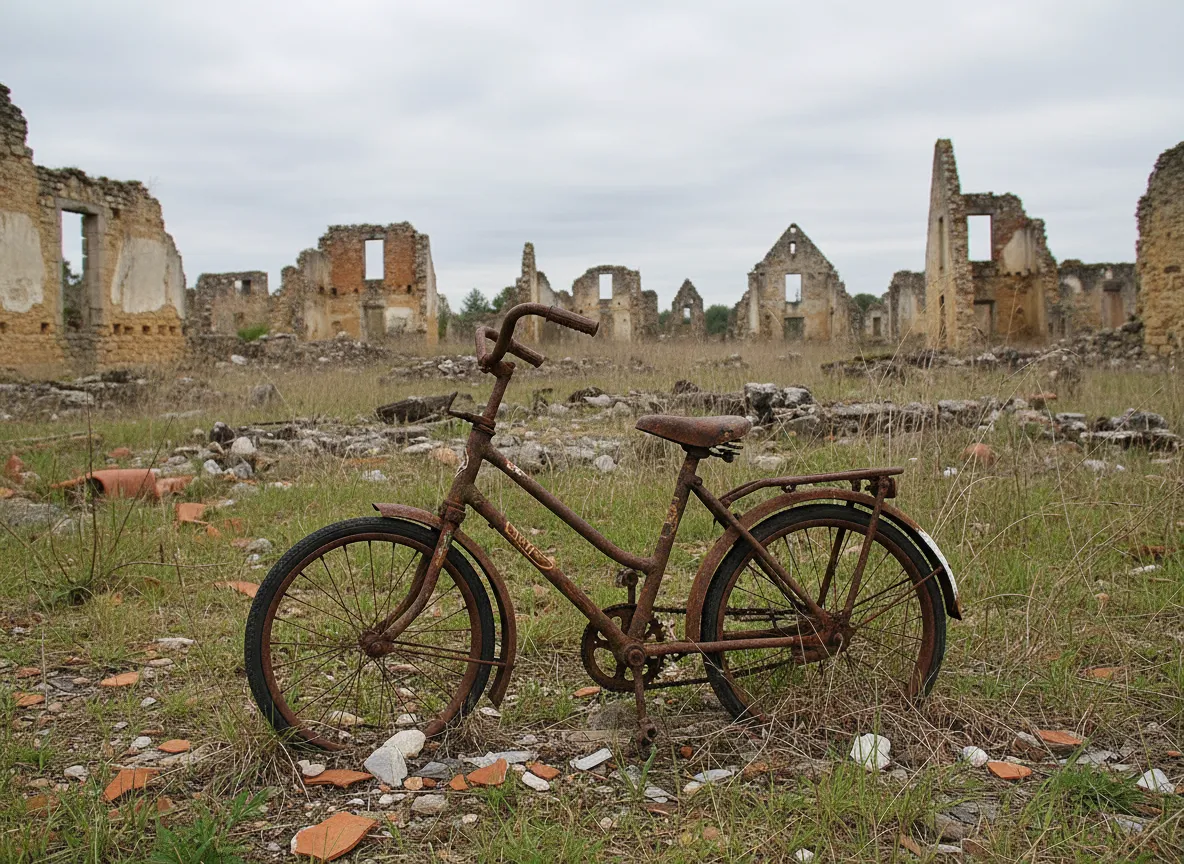
Visiting Oradour-sur-Glane is an intensely moving experience. As you pass through the entrance to the original village, a chilling silence envelops you. The first thing you'll notice is the sheer scale of the destruction. Houses stand as hollow shells, their stone walls blackened by fire, roofs long gone. Rusting household items—a sewing machine, a child's bicycle, kitchen utensils—lie exactly where they were abandoned, some fused into the rubble, others slowly succumbing to the elements. Each item tells a silent story of a life abruptly ended, a daily routine shattered.
The main street, once bustling with life, is now a pathway through desolation. You'll see the remains of the baker's shop, the butcher's, the schoolhouse where children were taught just hours before the massacre. One particularly poignant sight is the doctor's car, a charred, skeletal frame, still parked on the street, a stark reminder of the impossibility of escape. The silence is profound, broken only by the crunch of your own footsteps or the rustling of leaves.
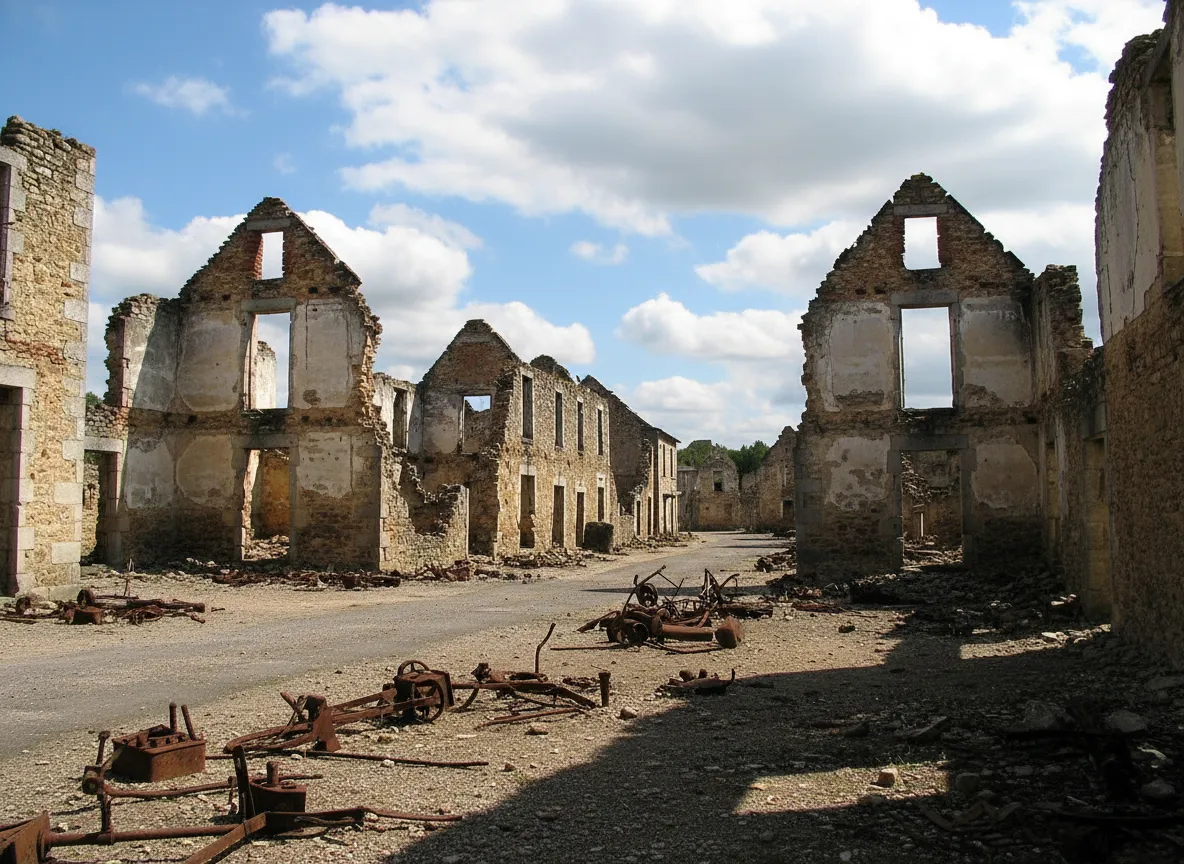
The most harrowing part of the visit is often the church. Its stone walls still stand, but the interior is a desolate, roofless space where the ultimate horror unfolded. Here, the sheer scale of the tragedy, the final moments of hundreds of women and children, feels almost tangible. It's a place that demands solemn reflection and deep respect.
Adjacent to the ruins is the Centre de la Mémoire d'Oradour (Memory Centre). This modern, underground museum provides essential historical context through compelling exhibits, survivor testimonies, and artifacts recovered from the site. It's highly recommended to visit the Memory Centre before entering the village itself, as it prepares you for the emotional weight of what you are about to see and helps you understand the broader historical significance. It also serves as a crucial educational resource, ensuring the lessons of Oradour are never forgotten.
Planning Your Pilgrimage: Practical Visit Tips
Visiting Oradour-sur-Glane is not a typical tourist excursion; it's a pilgrimage. Approach it with respect and a willingness to engage with its difficult history. The site is open year-round, but the Memory Centre has specific opening hours, which vary by season, so check their official website before you go.
Getting There: Oradour-sur-Glane is located in the Haute-Vienne department of Nouvelle-Aquitaine, approximately 25 kilometers (15 miles) west of Limoges. The easiest way to reach it is by car, which also gives you the flexibility to explore the surrounding beautiful, if starkly contrasted, countryside. There are also bus services from Limoges, though they are less frequent. Limoges – Bellegarde Airport (LIG) is the nearest major airport.
Best Time to Visit: Spring (April-May) and Autumn (September-October) offer pleasant weather and fewer crowds than the peak summer months. However, the somber nature of the site means it's rarely overrun, even in summer. Allow at least half a day, preferably a full day, to fully experience both the Memory Centre and the ruined village without rushing.
What to Bring: Wear comfortable walking shoes, as you'll be on your feet for several hours, navigating uneven terrain. A bottle of water is advisable, especially in warmer months. Photography is permitted, but always remember the solemnity of the location. Silence and respectful behavior are paramount; this is not a place for loud conversations or casual laughter.
There are no shops or cafes within the preserved village itself, maintaining its authentic, untouched atmosphere. Facilities, including restrooms and a small shop, are available at the Memory Centre. While entry to the ruined village is free, there is a modest admission fee for the Memory Centre, which is vital for its upkeep and educational mission.
Oradour-sur-Glane is more than just ruins; it's a profound lesson in humanity, a stark reminder of the consequences of hatred and extremism. It is a place that challenges, educates, and ultimately, inspires a renewed commitment to peace. A visit here is not easily forgotten, and the silence of its streets will echo in your memory long after you've left.
Essential Travel Information
- Location Oradour-sur-Glane (Village Martyr), France
- Best Time Spring (April-May) or Autumn (September-October)
- Getting There By car from Limoges (approx. 25km west); limited bus services also available from Limoges.
- Airport Limoges – Bellegarde Airport (LIG)
- Budget Budget (free entry to village, small fee for Memory Centre, approx. €8-10 for Memory Centre entry)
- Language French (English information available at Memory Centre)
Find Places to Stay Near Oradour-sur-Glane (Village Martyr)
Compare hotels, hostels, and unique stays in France.
Search AccommodationTours & Experiences Near Oradour-sur-Glane (Village Martyr)
Book guided tours, day trips, and unique experiences.
Browse Tours