Discovering the Dream: The Genesis of an Architectural Marvel
Imagine a life of quiet routine, delivering letters day in, day out, through the rolling hills of the Drôme region in southeastern France. This was Ferdinand Cheval's existence in the late 19th century. Yet, beneath the surface of his unassuming life, a powerful artistic current lay dormant. The spark ignited in 1879. One fateful day, during his 32-kilometer (20-mile) daily round, Cheval tripped over an unusually shaped stone. Its unique form captivated him. The next day, he returned to the same spot and found more, equally intriguing pebbles, smoothed by ancient rivers, sculpted by nature. That night, Cheval had a vivid, almost prophetic dream. He dreamt of building a magnificent palace, a fantastical edifice born from these very stones. Driven by this powerful vision, the 43-year-old postman, with no architectural training or artistic background, began his monumental task. For the next three decades, often working by moonlight with only a wheelbarrow, a shovel, and his bare hands, he collected stones, pebbles, shells, and fossils. He cemented them together, piece by painstaking piece, creating a structure that defied classification and captivated the world. His tools were rudimentary, his methods self-taught, but his conviction was unshakeable. This wasn't just a building project; it was a life's work, a spiritual quest, and an enduring monument to the power of the human spirit.A Symphony in Stone: What Makes the Palais Idéal So Unique?
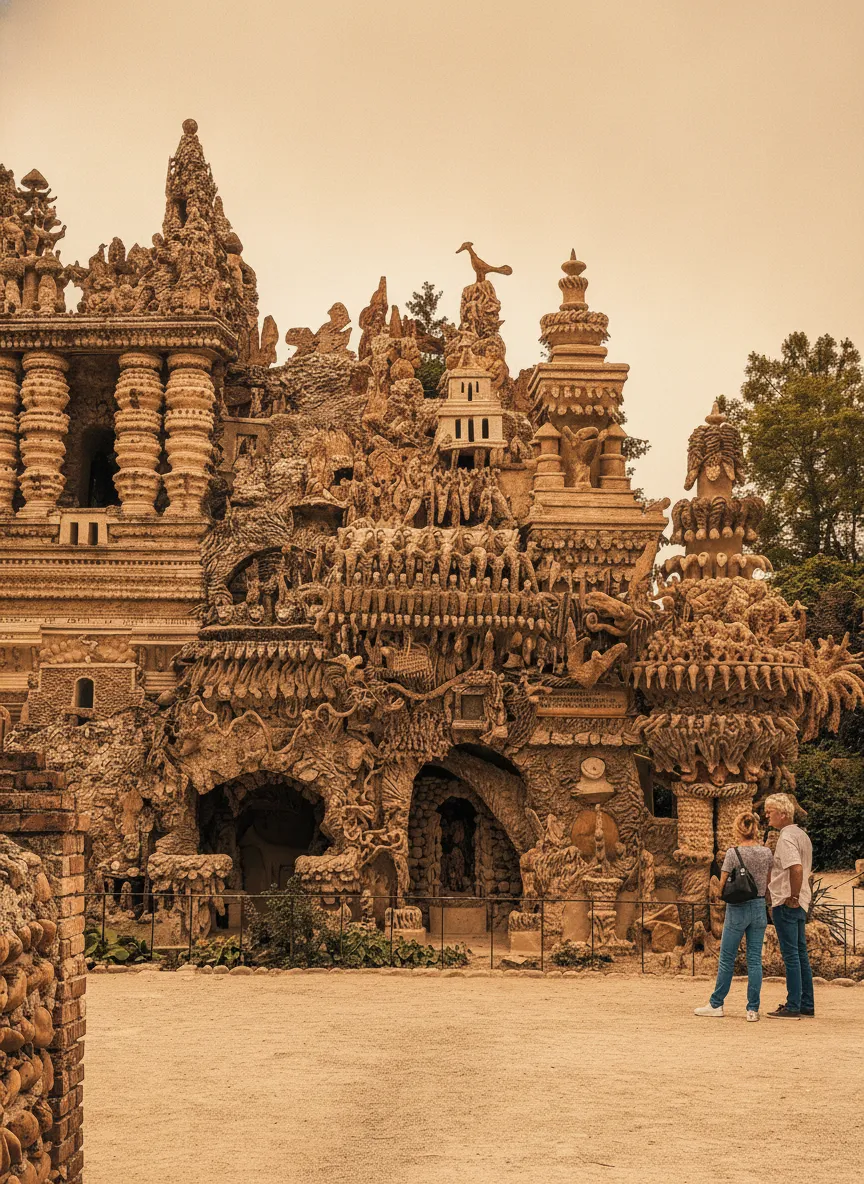
The Palais Idéal is more than just a quirky building; it's a globally recognized example of *Art Brut* (outsider art) and an architectural marvel that has inspired artists, surrealists, and dreamers for over a century. What makes it so utterly unique? Firstly, its origin story – a postman building a palace from found objects – is compelling in itself. But it's the result that truly astounds. Cheval's palace is a whimsical blend of styles, defying any traditional architectural school. You'll find influences ranging from Hindu temples and Swiss chalets to medieval castles and fantastical grottoes, all fused into a harmonious, albeit eccentric, whole. Every surface tells a story, every stone a brushstroke in Cheval's grand vision. There are towering giants, exotic animals, mythical creatures, and intricate inscriptions carved directly into the stone, offering philosophical musings and personal declarations. It's a structure that simultaneously feels ancient and futuristic, earthy and ethereal. It's not about perfect symmetry or classical proportions; it's about raw expression, heartfelt dedication, and the sheer force of an individual's will to manifest a dream. This isn't just a place to visit; it's an experience that challenges your perception of art, architecture, and what's possible when passion meets perseverance.
Wandering Through a Fantastical World: What You'll See
Stepping into the grounds of the Palais Idéal is like entering a waking dream. The sheer scale and detail are overwhelming in the best possible way. The palace is primarily an exterior masterpiece, designed to be admired from all angles. As you approach, its fantastical silhouette rises dramatically from the surrounding landscape, a jumble of towers, turrets, and intricate facades. You'll first encounter the *Façade Est* (East Facade), the longest and most richly decorated side, which Cheval completed first. Here, you'll see a vibrant tapestry of stones, shells, and cement forming grottoes, columns, and niches housing statues of figures like Caesar and Vercingetorix. Look closely, and you'll discover intricate mosaics of pebbles, each placed with deliberate care. Moving around, you'll encounter the "Temple of Nature," a towering structure adorned with animals, birds, and plants, reflecting Cheval's love for the natural world he encountered on his rounds. The "Source of Life" and the "Cave of the Giants" invite you to peer into dark, mysterious recesses, while the "Egyptian Tomb" and "Swiss Chalet" demonstrate his eclectic inspirations. The palace is a labyrinth of passages, staircases, and hidden corners, each revealing new wonders. Cheval's personal inscriptions, like "The dream of a man," "Work of one man," and "The Palais Idéal," are etched into the stone, serving as a constant reminder of the visionary behind this incredible achievement. While there are small interior spaces, the true magic lies in the external structure, inviting you to walk around, marvel, and discover new details with every glance.
The Legacy of a Visionary: More Than Just a Monument
Ferdinand Cheval finished his Palais Idéal in 1912, at the age of 76. But his creative drive was far from extinguished. He then spent another eight years building his own tomb in the Hauterives cemetery, the "Tomb of Silence and Endless Rest," a miniature version of his palace, ensuring his final resting place was as unique as his life's work. He passed away in 1924, leaving behind not just a physical structure, but an enduring legacy. His work, initially dismissed by some as the folly of a madman, eventually gained recognition from figures like André Breton and Pablo Picasso, establishing it as a significant piece of *Art Brut*. In 1969, the Palais Idéal was classified as a historical monument by the French Ministry of Culture, thanks to the efforts of André Malraux, then Minister of Cultural Affairs. Today, it attracts hundreds of thousands of visitors annually, a testament to its universal appeal. It stands as a powerful symbol of human perseverance, the beauty of unconventional art, and the profound impact one individual can have when they dare to dream beyond the ordinary. It reminds us that genius can emerge from the most unexpected places, and that passion, when nurtured, can move mountains – or in Cheval's case, build palaces from pebbles.Planning Your Pilgrimage to Hauterives: Practical Tips for Visitors
Visiting the Palais Idéal du Facteur Cheval is a truly unique experience, and planning ahead will ensure you make the most of it. **Location:** The Palais is located in the charming village of Hauterives, in the Drôme department of the Auvergne-Rhône-Alpes region, a picturesque area of the French countryside. **Best Time to Visit:** The spring (April-May) and early autumn (September-October) offer pleasant weather, fewer crowds than peak summer, and beautiful natural scenery. Summer (July-August) can be hot and busy, but the long daylight hours allow for ample exploration. Winter visits are possible, but some facilities might have reduced hours. **How to Get There:** Hauterives is best reached by car. It's about an hour's drive south of Lyon, or two hours north of Avignon. The nearest major train station is Valence TGV, from which you would need to rent a car or take a local taxi/bus (bus services are limited). While it's off the beaten path, the drive through the Drôme countryside is part of the charm. **What to Expect:**
* **Accessibility:** The site is generally accessible, but there are some uneven surfaces and steps within the palace.
* **Time:** Allow at least 2-3 hours to fully explore the palace and the small museum dedicated to Cheval's life and work.
* **Facilities:** There's a gift shop, restrooms, and often a small café or food stand on site or nearby in Hauterives village.
* **Tickets:** Purchase tickets upon arrival or online in advance, especially during peak season.
* **Nearby Attractions:** The Drôme region is beautiful. Consider exploring charming villages like Saint-Antoine-l'Abbaye, tasting local produce, or hiking in the Vercors Regional Natural Park. Combine your visit with a stay in a local gîte for a truly immersive French countryside experience.
The Palais Idéal du Facteur Cheval isn't just a destination; it's an inspiration. It's a place that whispers tales of dedication, creativity, and the extraordinary potential hidden within the most ordinary of lives. Make the journey, and prepare to be utterly captivated by this impossible dream made real, stone by magnificent stone.
**What to Expect:**
* **Accessibility:** The site is generally accessible, but there are some uneven surfaces and steps within the palace.
* **Time:** Allow at least 2-3 hours to fully explore the palace and the small museum dedicated to Cheval's life and work.
* **Facilities:** There's a gift shop, restrooms, and often a small café or food stand on site or nearby in Hauterives village.
* **Tickets:** Purchase tickets upon arrival or online in advance, especially during peak season.
* **Nearby Attractions:** The Drôme region is beautiful. Consider exploring charming villages like Saint-Antoine-l'Abbaye, tasting local produce, or hiking in the Vercors Regional Natural Park. Combine your visit with a stay in a local gîte for a truly immersive French countryside experience.
The Palais Idéal du Facteur Cheval isn't just a destination; it's an inspiration. It's a place that whispers tales of dedication, creativity, and the extraordinary potential hidden within the most ordinary of lives. Make the journey, and prepare to be utterly captivated by this impossible dream made real, stone by magnificent stone.
Essential Travel Information
- Location Palais Idéal du Facteur Cheval, France
- Best Time Spring (April-May) and early Autumn (September-October) for pleasant weather and fewer crowds.
- Getting There Best reached by car; approximately 1-hour drive south of Lyon, or 2-hour drive north of Avignon. Nearest major train station is Valence TGV, requiring onward car rental/taxi.
- Airport Lyon-Saint Exupéry Airport (LYS)
- Budget Mid-range (approx. €80-150 per day, excluding accommodation for site visit)
- Language French
Find Places to Stay Near Palais Idéal du Facteur Cheval
Compare hotels, hostels, and unique stays in France.
Search AccommodationTours & Experiences Near Palais Idéal du Facteur Cheval
Book guided tours, day trips, and unique experiences.
Browse Tours