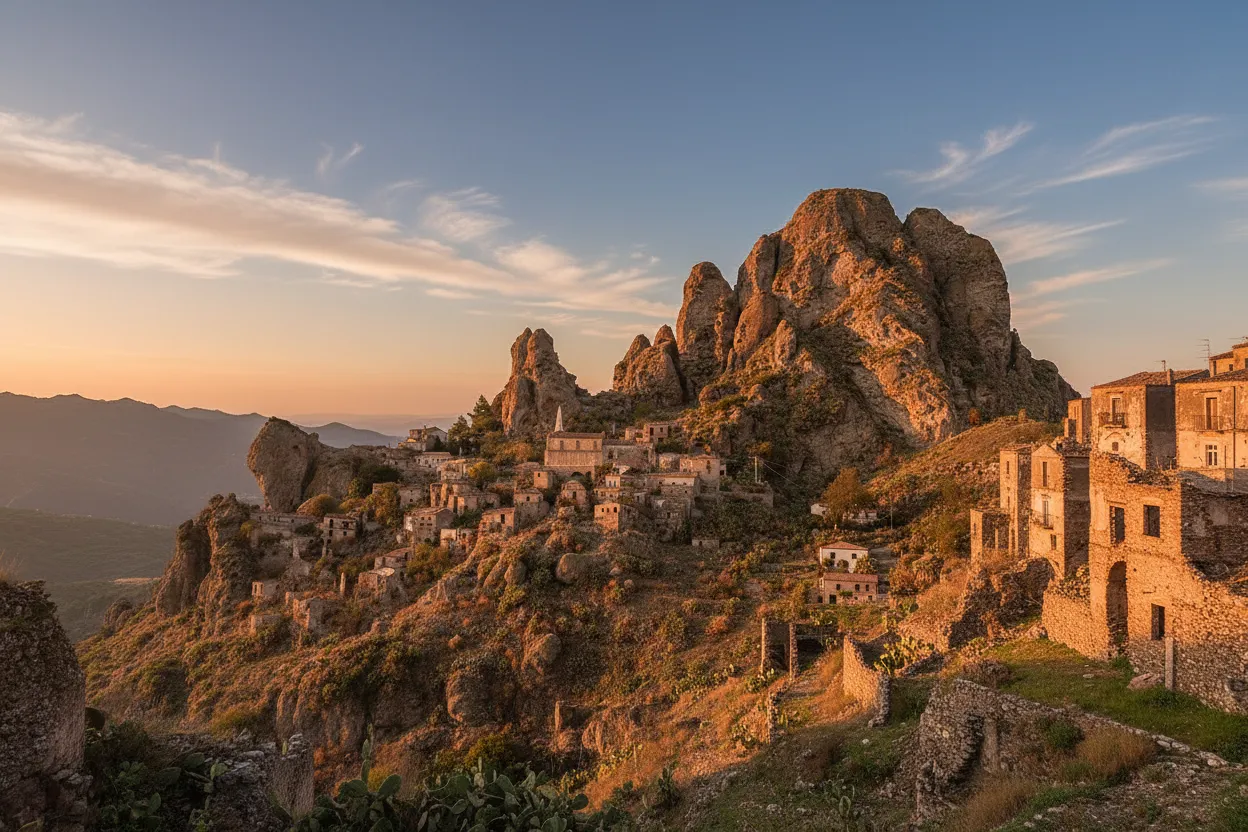
Imagine a place so otherworldly, it feels plucked from the pages of a forgotten gothic novel. A village that clings precariously to the colossal, five-fingered rock formation that gave it its name, looking out over a landscape where ancient mountains meet the sparkling Ionian Sea. This isn't a fantasy; it's Pentedattilo, a breathtaking abandoned ghost village in the heart of Southern Italy’s rugged Calabria region, waiting to reveal its haunting beauty and hopeful rebirth to those daring enough to seek it out.
For centuries, Pentedattilo was a thriving community, nestled securely within the "giant hand" of its natural wonder. But time, earthquakes, and the inexorable pull of emigration turned it into a silent shell, a poignant monument to forgotten lives. Yet, the story doesn't end there. Today, a new chapter is being written by intrepid artists and visionaries who are slowly, lovingly, breathing life back into its crumbling stone houses, transforming Pentedattilo into a unique artisan hub. It's a place where dramatic, silent ruins stand side-by-side with vibrant creativity, all under the watchful 'hand' of its ancient geology.
Pentedattilo: Where Geology Meets Gothic Mystery
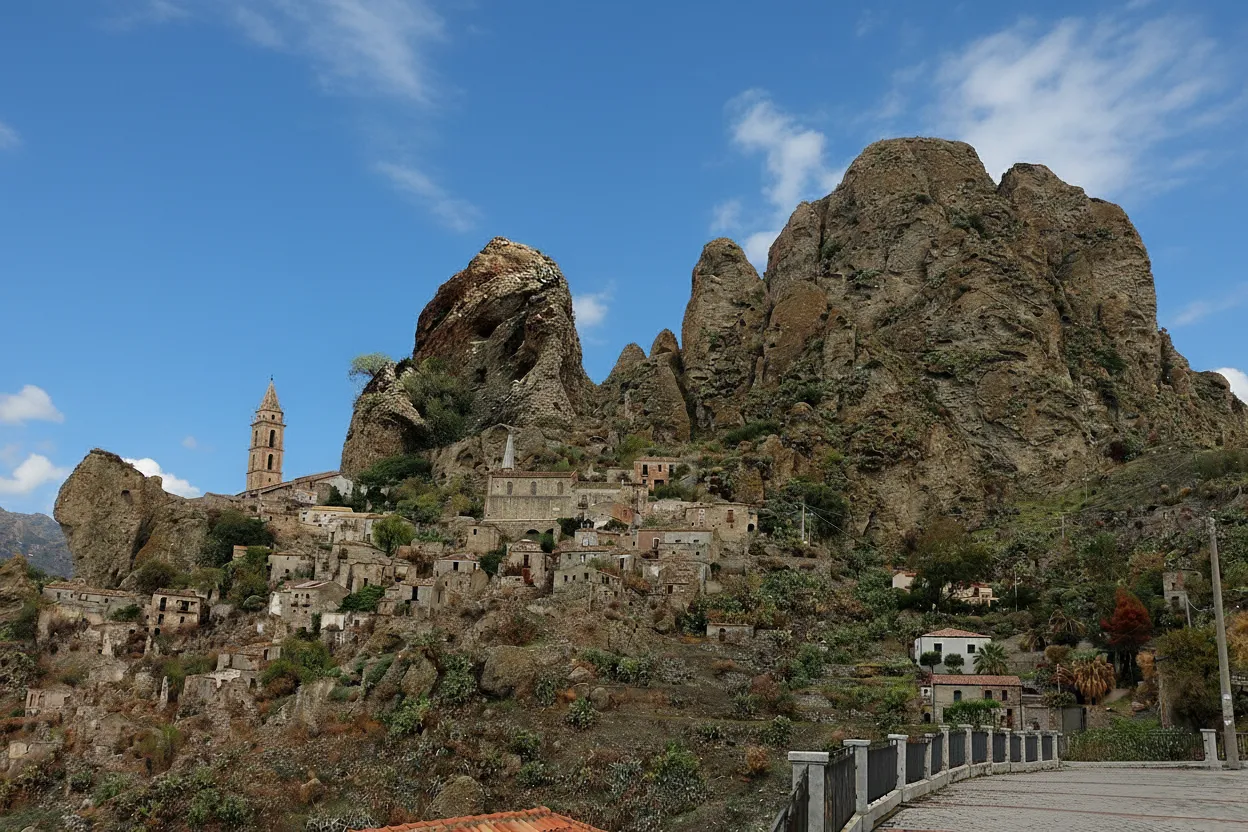
What makes Pentedattilo truly special isn't just its abandonment, but the sheer, jaw-dropping spectacle of its setting. The name itself, Pentedattilo, is derived from the Greek "penta daktilos," meaning "five fingers," a direct reference to the colossal rock formation that cradles the village. This geological marvel, sculpted by millennia of wind and rain, towers over the landscape, its five distinct peaks resembling a petrified hand reaching towards the sky. It's a natural sculpture of such grandeur that it evokes a sense of both awe and ancient myth.
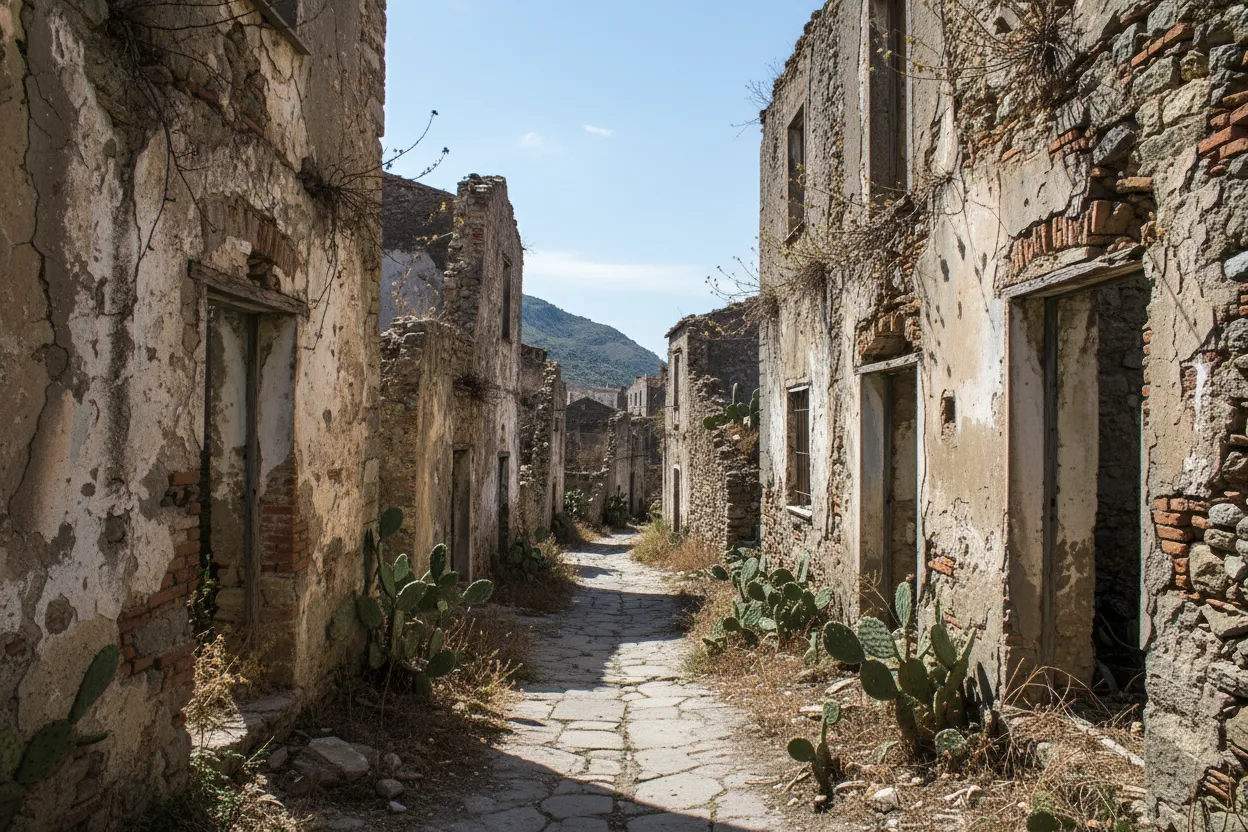
Walking through Pentedattilo is like stepping into a living, breathing diorama of history. The silence is profound, broken only by the whisper of the wind through empty windows and the occasional chirp of a bird. Yet, this isn't a desolate silence. It's a contemplative hush that allows you to feel the weight of centuries, the echoes of lives once lived within these very walls. The crumbling stone houses, many with roofs long gone, stand as poignant testaments to a community that once thrived here. Moss-covered walls and wild flora reclaiming what was once human domain add to the ethereal, dreamlike quality of the village.
But Pentedattilo is no longer solely a ghost village. In recent decades, a remarkable transformation has begun. Artists, sculptors, ceramists, and other creatives have been drawn to its unique atmosphere, setting up workshops and galleries in restored buildings. This infusion of artistic energy creates a fascinating juxtaposition: the raw, untamed beauty of decay meets the vibrant, hopeful spirit of creation. You'll find intricate pottery, hand-woven textiles, and unique artworks, all inspired by the dramatic landscape and the village’s rich history. It's a place where you can witness history being preserved and reimagined simultaneously, making it a truly unparalleled destination for the curious traveler seeking something beyond the ordinary.
Whispers of the Past: A History Etched in Stone
The story of Pentedattilo is as dramatic and rugged as the landscape it inhabits. Its origins are shrouded in antiquity, likely dating back to ancient Greek settlements in Magna Graecia, given the region's historical ties to Hellenic culture. Its strategic position, high atop the "five fingers," made it a natural fortress, offering unparalleled views and protection from invaders. Over centuries, it passed through the hands of various powers – Romans, Byzantines, Normans, Aragonese – each leaving their indelible mark on its architecture and culture.
Pentedattilo experienced its golden age during the medieval period, particularly under the feudal rule of noble families like the Alberti. It was a bustling agricultural and commercial center, a vibrant hub in the Aspromonte mountains. However, this period of prosperity was not without its shadows. Legend tells of the "Massacre of the Alberti," a bloody feud in 1686 that saw the entire Alberti family brutally murdered by a rival baron, creating a chilling tale that has become part of the village's mystique. Some say the bloodstains of the massacre are still visible on the rocks, or that on stormy nights, you can hear the cries of the victims echoing through the ravines.
The true decline of Pentedattilo, however, was initiated by nature's fury. A series of devastating earthquakes, most notably the catastrophic one in 1783, severely damaged the village, prompting many residents to relocate to safer ground closer to the coast. Despite attempts at rebuilding, Pentedattilo never fully recovered its former glory. Economic hardship and the lure of opportunity abroad led to a gradual, then rapid, exodus, particularly in the post-World War II era. By the mid-20th century, the village was almost completely abandoned, becoming the ghost town it remained for decades, slowly surrendering its structures to the embrace of nature.
The current revival, which began in the late 1980s and gained momentum in the 21st century, is a testament to the enduring spirit of the place. Visionaries saw not just ruins, but potential; not just decay, but beauty. They began the painstaking work of restoring buildings, respecting their historical integrity while giving them new purpose. This commitment has transformed Pentedattilo from a mere relic into a living, evolving testament to resilience and creativity.
Exploring the Silent Streets: What Awaits You in Pentedattilo
A visit to Pentedattilo is an immersive experience that engages all your senses. As you approach, the sight of the village clinging to its monumental rock is truly unforgettable. Park your car at the base and begin your ascent on foot, allowing the anticipation to build. The narrow, winding cobblestone streets invite you to wander, to get lost in time, and to discover hidden corners.
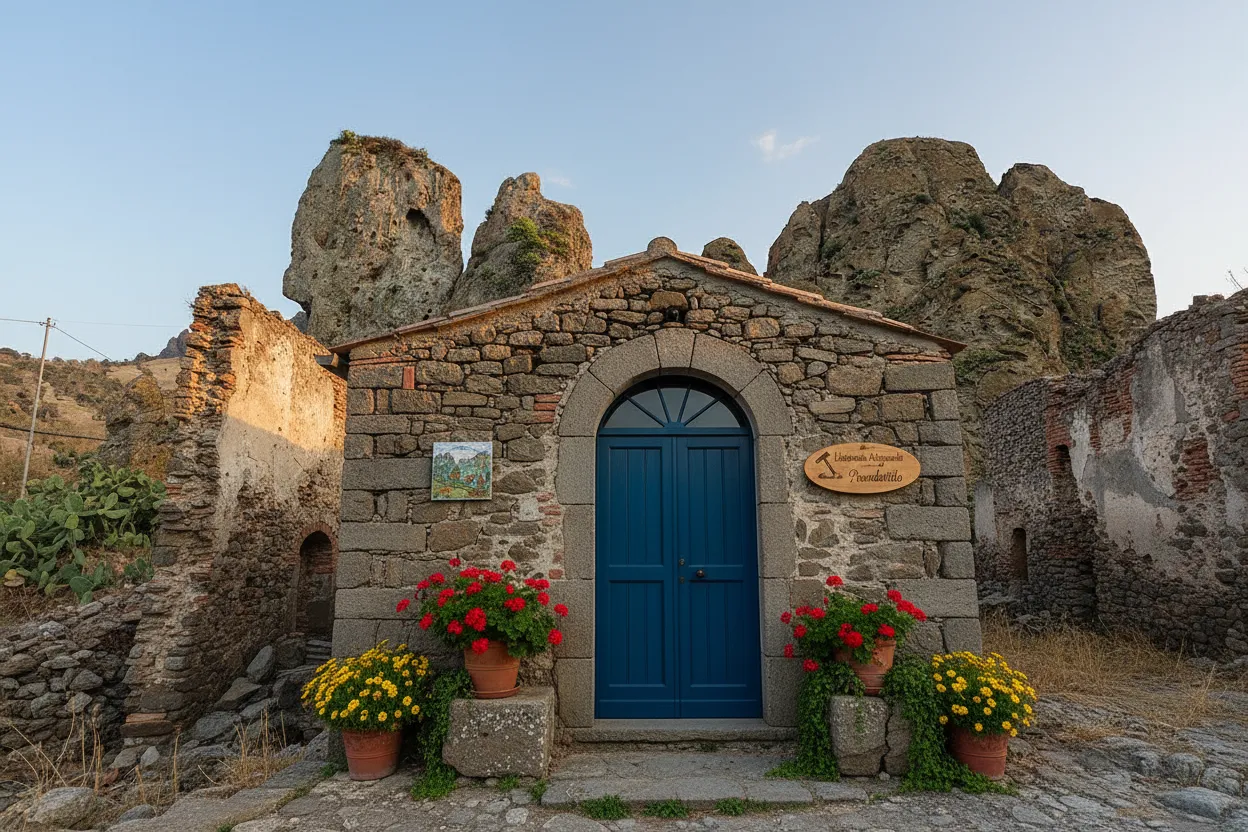
One of the first things you'll notice are the **crumbling stone houses**. Each one tells a story, from grander aristocratic residences to humble peasant dwellings. Peer into empty windows, imagine families gathered around hearths, and feel the weight of history in every weathered stone. Many of these buildings are now beautifully restored and house the vibrant **artisan workshops** that are the heart of Pentedattilo's rebirth. You can spend hours browsing unique, handcrafted items – intricate ceramics depicting local folklore, hand-stitched textiles, beautiful paintings, and local food products like olive oil and bergamot-infused delights. Chat with the artisans; their passion for their craft and for Pentedattilo is infectious.
Don't miss the **Chiesa dei Santi Pietro e Paolo**, the village's main church. Though modest, its ancient stones and simple beauty evoke a deep sense of peace. Nearby, you'll find the ruins of the **Castello di Pentedattilo**, perched at the very top of the rock formation. While little remains of the original structure, the panoramic views from this vantage point are absolutely breathtaking. You'll gaze out over the vast expanse of the Aspromonte mountains, a rugged tapestry of green and grey, stretching towards the shimmering blue of the Ionian Sea. On a clear day, you might even catch a glimpse of Sicily and Mount Etna in the distance.
Beyond the architectural wonders, Pentedattilo offers opportunities for gentle exploration. Follow the trails that lead around the base of the rock formation for different perspectives of the village and its geological guardian. The surrounding natural landscape is rich with Mediterranean flora and fauna, perfect for a leisurely stroll. You might even find a small, charming café or trattoria offering simple, authentic Calabrian fare – a perfect spot to savor local flavors and reflect on the magic of the place.
Planning Your Journey to Pentedattilo: Tips for the Intrepid Traveler
Pentedattilo is a hidden gem, and part of its charm lies in its relative remoteness. To truly experience its magic, a little planning goes a long way. Trust me, the effort is incredibly rewarding!
Getting There: The most convenient way to reach Pentedattilo is by car. It's located about 30 kilometers southeast of Reggio Calabria. While public transport options are limited and infrequent, renting a car gives you the freedom to explore at your own pace and combine your visit with other Calabrian treasures. The drive itself is scenic, winding through olive groves and small villages, offering a taste of authentic Southern Italy.
Best Time to Visit: Spring (April-May) and Autumn (September-October) are ideal. The weather is pleasantly mild, perfect for walking and exploring, and the crowds are minimal. In spring, the landscape is lush and green, dotted with wildflowers. Autumn brings beautiful warm hues to the mountains. Summers can be hot, but if you don't mind the heat, the longer daylight hours allow for extended exploration. Winter visits are possible, but some artisan shops might have reduced hours, and the weather can be damp and chilly.
Where to Stay: While there are no hotels directly within Pentedattilo, several charming agriturismos (farm stays) and B&Bs can be found in the surrounding area, offering a taste of rural Calabrian hospitality. Larger towns like Melito di Porto Salvo or even Reggio Calabria make excellent bases, providing more accommodation and dining options, with Pentedattilo easily accessible for a day trip.
What to Bring: Comfortable walking shoes are an absolute must, as you'll be navigating cobblestone streets and uneven terrain. A camera is essential to capture the village's unique beauty and dramatic views. Don't forget water, especially during warmer months, and sun protection. While some artisans accept card payments, it's always wise to carry some cash for smaller purchases or local vendors.
Respectful Tourism: Pentedattilo is a place of historical significance and a testament to ongoing preservation efforts. Please be mindful and respectful of the ruins, the restored buildings, and the local artisans who are breathing new life into the village. Support local businesses by purchasing their crafts and enjoying their hospitality. This helps sustain their incredible work and ensures Pentedattilo's future.
Pentedattilo is more than just a destination; it's an experience, a journey into the heart of a region rich in history, natural beauty, and a quiet, resilient spirit. It’s a reminder that even in abandonment, there can be beauty, and in the hands of passionate individuals, new life can bloom amidst ancient stones. So, pack your bags, embrace your inner explorer, and discover the compelling, haunting, and utterly enchanting world of Pentedattilo.
Essential Travel Information
- Location Pentedattilo, Italy
- Best Time Spring (April-May) and Autumn (September-October)
- Getting There Best reached by car; approximately 30 km southeast of Reggio Calabria.
- Airport Reggio Calabria Airport (REG)
- Budget Budget/Mid-range (approx. €50-€100 per day, excluding accommodation)
- Language Italian
Find Places to Stay Near Pentedattilo
Compare hotels, hostels, and unique stays in Italy.
Search AccommodationTours & Experiences Near Pentedattilo
Book guided tours, day trips, and unique experiences.
Browse Tours