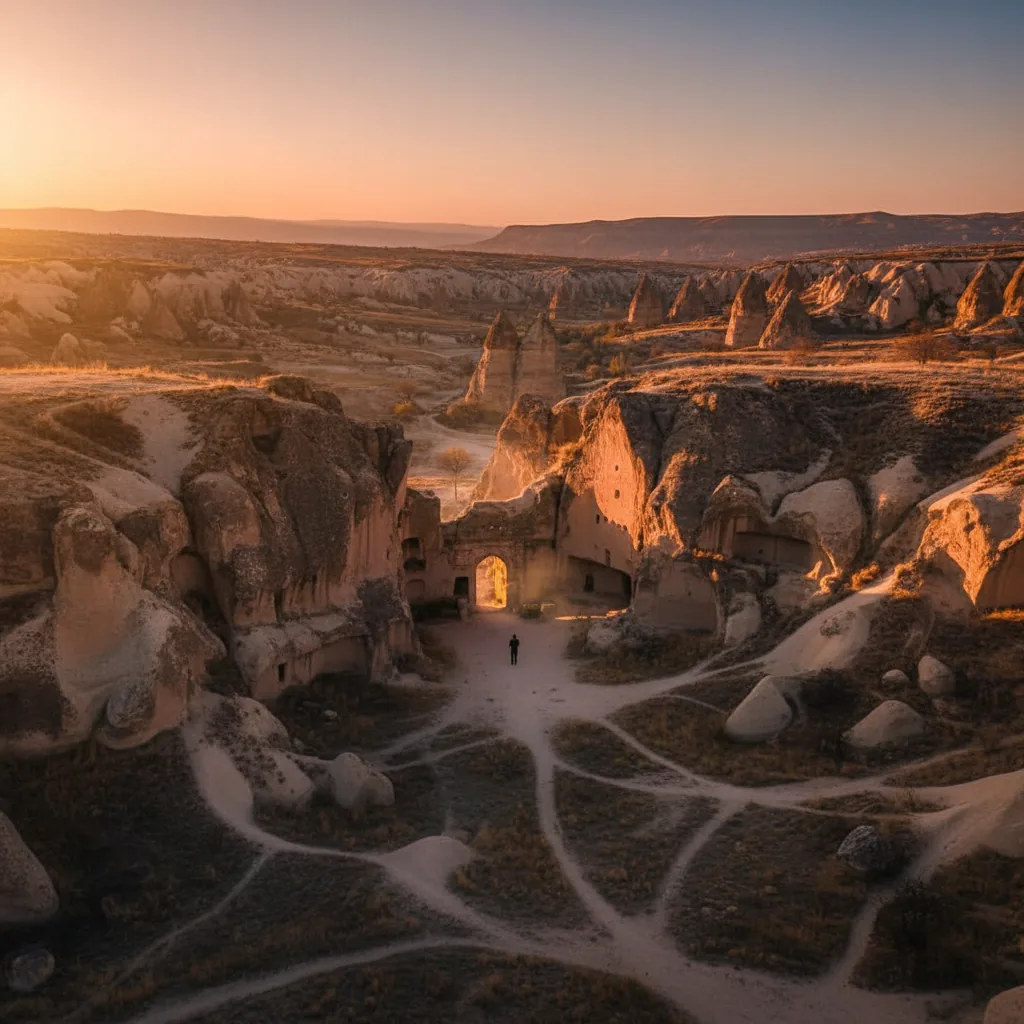
Prepare to be transported to an ancient civilization carved directly into rose-red sandstone cliffs, a hidden city that will literally take your breath away. Imagine stepping through a narrow, winding canyon, the walls towering hundreds of feet above you, only to emerge into a vast, open space dominated by an impossibly intricate façade carved with unimaginable precision into the very rock face. This isn't a scene from an Indiana Jones movie; this is Petra, Jordan, a legendary 'Rose City' that has captivated adventurers, historians, and dreamers for centuries. It's more than just an archaeological site; it's an immersive journey into a world of forgotten empires, ingenious engineering, and breathtaking beauty that promises an experience unlike any other.
Petra: A Wonder Carved in Stone
What makes Petra so profoundly special? It's the sheer audacity of its existence. Nestled within the rugged desert landscapes of Jordan's Ma'an Governorate, Petra stands as a testament to the Nabataeans, an ancient Arab people who, over 2,000 years ago, transformed a remote canyon into a thriving capital. Unlike traditional cities built with bricks and mortar, Petra was literally sculpted from the living rock. Its monumental tombs, temples, and dwellings are not merely adorned with rock; they *are* the rock, carved with an artistry and scale that defies belief. The iconic Treasury (Al-Khazneh) is just the beginning – a dazzling introduction to a sprawling complex of wonders waiting to be discovered.
This UNESCO World Heritage site isn't just about impressive structures; it's about the feeling of discovery. As you wander through its ancient streets, past intricate facades and into vast open spaces, you'll feel the whispers of history carried on the desert wind. The changing light throughout the day paints the sandstone cliffs in an ever-shifting palette of reds, oranges, and purples, giving the 'Rose City' its evocative name. It’s a place where natural grandeur meets human genius, leaving an indelible mark on every visitor.
Echoes of an Ancient Empire: The Story of Petra
The story of Petra begins with the Nabataeans, a nomadic Arab tribe who, by the 4th century BCE, had established themselves as masters of trade routes connecting Arabia, Egypt, Syria, and the Mediterranean. Their strategic location, hidden deep within a defensible canyon, allowed them to control the lucrative incense, spice, and silk trade. Far from being simple desert dwellers, the Nabataeans were sophisticated engineers, developing advanced hydrological systems to collect, store, and distribute precious water, allowing their city to flourish in an arid environment.
Petra reached its zenith in the 1st century AD, boasting a population estimated at 20,000 to 30,000 people. It was a cosmopolitan hub, reflecting influences from Hellenistic, Roman, and local Arabian cultures in its art and architecture. However, its prosperity eventually attracted the attention of the Roman Empire, which formally annexed the kingdom in 106 AD. While Petra continued to thrive for a time under Roman rule, shifts in trade routes and devastating earthquakes in the 4th and 6th centuries led to its gradual decline. By the 7th century, it was largely abandoned, becoming a "lost city" known only to local Bedouin tribes until its rediscovery by Swiss explorer Johann Ludwig Burckhardt in 1812. His accounts reignited the world's fascination with this forgotten marvel, paving the way for its modern-day exploration and admiration.
Unveiling Petra's Secrets: What to Explore
Your adventure in Petra truly begins at the Siq, a winding, narrow gorge nearly a mile long. Walking through this natural fissure, with towering cliffs almost touching overhead, is an experience in itself, building anticipation with every step. The dramatic reveal at the end is a moment you'll never forget.

Suddenly, the Siq opens up, and there it is: Al-Khazneh, The Treasury. This magnificent façade, carved into the cliff face, stands over 120 feet tall, its intricate Corinthian columns, friezes, and statues perfectly preserved. Despite its name, it was likely a tomb for a Nabataean king, but its sheer beauty and dramatic appearance have made it the enduring symbol of Petra. Take your time here; the light changes its appearance throughout the day, offering different photographic opportunities and a chance to simply marvel.
Beyond the Treasury, Petra unfolds into a vast city. The Street of Façades features dozens of rock-cut tombs, each displaying unique architectural details. You'll then encounter the Roman-style Theatre, capable of seating 4,000 spectators, also carved into the mountain. Further along, the Royal Tombs – including the Urn Tomb, Silk Tomb, Corinthian Tomb, and Palace Tomb – are a series of grand structures, each showcasing distinct styles and incredible scale. Their interiors, though often simple, offer a glimpse into Nabataean burial practices and the sheer effort involved in their creation.

As you delve deeper, you'll discover the Colonnaded Street, the remnants of Petra's commercial center, flanked by the Great Temple and Qasr al-Bint, a freestanding temple. But for those with the energy, the ultimate reward awaits: The Monastery (Ad Deir). This arduous climb of around 800 steps (or a donkey ride) takes you high into the mountains. The Monastery is even larger than the Treasury, though less ornate, offering panoramic views of the surrounding wilderness that are truly breathtaking. It’s a testament to the scale of Petra and the determination of its builders, and a perfect spot to reflect on the grandeur of this ancient city.

For a truly magical experience, consider Petra by Night, a special event where the Siq and Treasury are illuminated by thousands of candles, accompanied by traditional Bedouin music. It’s a serene and unforgettable way to see the Rose City under the stars.
Planning Your Journey to the Rose City
Visiting Petra requires some planning to make the most of your adventure. Here are some essential tips:
Best Time to Visit: The shoulder seasons (March to May and September to November) offer the most pleasant weather, with mild temperatures perfect for exploring. Summers can be extremely hot, and winters can be cold and rainy.
How to Get There: Most visitors arrive via Amman (the capital of Jordan) or Aqaba (on the Red Sea coast). Jett Bus offers comfortable, direct services from Amman to Wadi Musa (the town just outside Petra). Private taxis or organized tours are also popular options. The drive from Amman takes approximately 3-4 hours.
Accommodation: Wadi Musa offers a wide range of hotels, guesthouses, and resorts to suit all budgets. Booking in advance, especially during peak season, is highly recommended.
Tickets & Passes: The Jordan Pass is an excellent investment if you plan to visit multiple sites in Jordan, as it includes your visa fee (for most nationalities) and entry to Petra for 1, 2, or 3 days, along with other attractions.
Getting Around Petra: The site is vast, and you'll be doing a lot of walking. Comfortable, sturdy walking shoes are non-negotiable. Donkeys, camels, and horse-drawn carriages are available for hire within the site (negotiate prices beforehand), but be mindful of animal welfare. Small golf carts are also available for the Siq, primarily for those with mobility issues.
What to Bring: Hydration is key! Carry plenty of water, especially during warmer months. Sunscreen, a wide-brimmed hat, sunglasses, and layers of clothing (for temperature changes) are essential. A good camera is a must for capturing the incredible scenery.
Respect the Site: Petra is a fragile ancient wonder. Stick to marked paths, do not climb on structures, and dispose of litter properly. Support local Bedouin communities by purchasing handicrafts or hiring guides, but always engage respectfully and ethically.
Duration: While you can see the main highlights in one full day, two or even three days allow for a more in-depth exploration, including the challenging but rewarding hike to the Monastery and other lesser-visited sites.
Petra is more than just a destination; it's an adventure into the heart of history, a place where the grandeur of nature and human ingenuity combine to create something truly extraordinary. It's a journey that will challenge your imagination, stir your soul, and leave you with memories to last a lifetime. So pack your bags, lace up your boots, and prepare to be utterly spellbound by the Rose City.
Essential Travel Information
- Location Petra, Jordan
- Best Time March to May and September to November
- Getting There Fly to Amman (AMM) or Aqaba (AQJ), then take a Jett Bus, private taxi, or tour to Wadi Musa (Petra's gateway town).
- Airport Queen Alia International Airport (AMM) - Amman, King Hussein International Airport (AQJ) - Aqaba
- Budget Mid-range (approx. $100-$250+ per day, excluding flights, depending on accommodation/activities)
- Language Arabic (English widely spoken in tourist areas)
Find Places to Stay Near Petra
Compare hotels, hostels, and unique stays in Jordan.
Search Accommodation