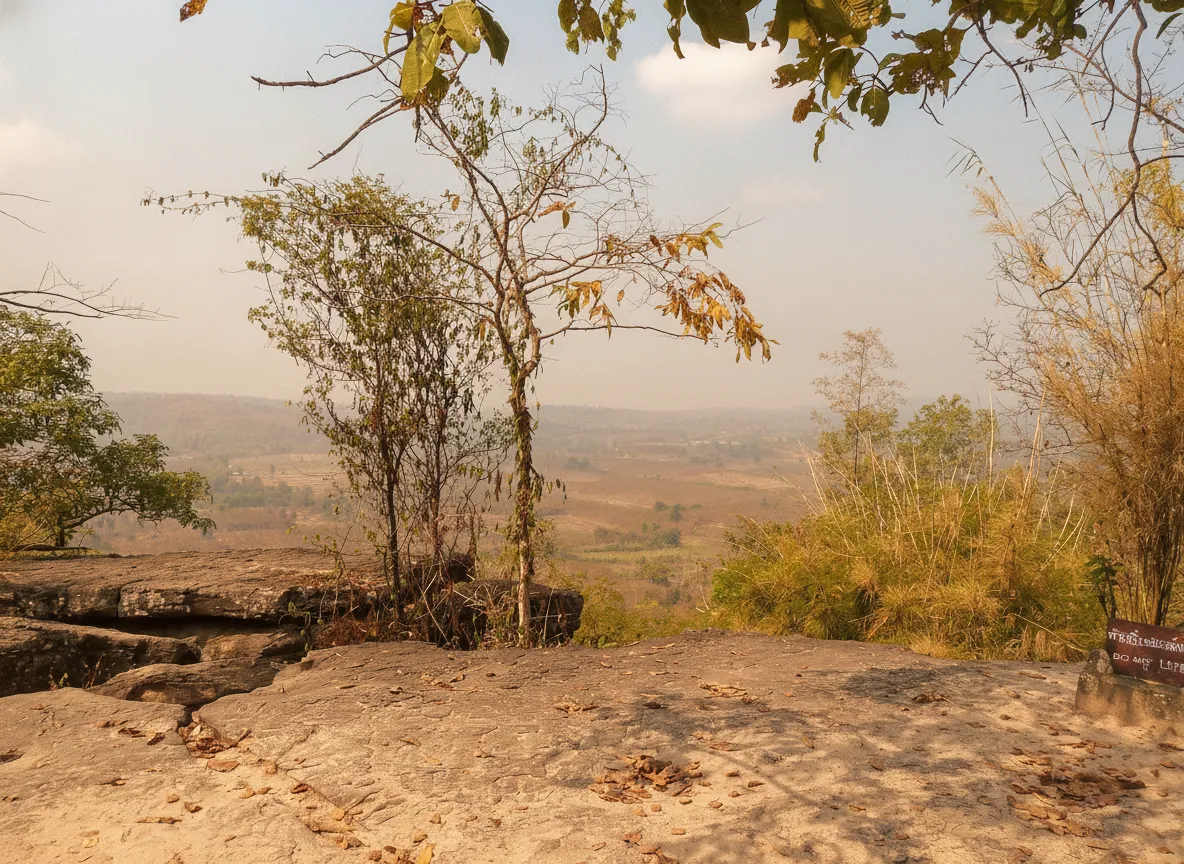
Imagine a surreal landscape where colossal sandstone pillars shelter prehistoric cave art and centuries-old Buddha images, revered as a sacred site hidden in plain sight. Forget the bustling beaches and well-trodden temples of Thailand's south. Tucked away in the northeastern province of Udon Thani lies a place of profound natural beauty and ancient mystery: Phu Phra Bat Historical Park (ภูพระบาท). This isn't just another park; it's a living canvas, a geological marvel, and a spiritual sanctuary that promises an experience unlike any other in the Land of Smiles. Prepare to step into a world where millennia of erosion have sculpted an otherworldly stage for human history, whispered through rock art and silent, watchful Buddhas.
For those who crave authentic, off-the-beaten-path adventures, Phu Phra Bat is a revelation. It’s a place that connects you directly to the raw power of nature and the enduring spirit of humanity, all wrapped in an atmosphere of serene wonder. If you're ready to uncover one of Thailand's best-kept secrets, read on – your journey into the heart of ancient Isaan begins here.
Phu Phra Bat: Thailand's Ancient Wonderland
What makes Phu Phra Bat so utterly captivating? It's the astonishing fusion of geology, archaeology, and spirituality. Picture this: towering sandstone formations, sculpted by wind and rain over millions of years into bizarre, often mushroom-shaped pillars, arches, and overhangs. These aren't just rocks; they are natural sculptures, each with its own character and story. Walking through the park feels like wandering through a giant's forgotten garden, where every turn reveals a new, fantastical shape defying belief.
But the true magic begins when you realize these natural shelters weren't merely admired; they were lived in, revered, and transformed. Thousands of years ago, prehistoric communities sought refuge and inspiration within these colossal rock formations, leaving behind intricate cave paintings that whisper tales of their lives, beliefs, and the animals they coexisted with. Fast forward to later eras, and these same natural sanctuaries became sacred sites for Buddhist devotees, who carved serene Dvaravati-style Buddha images directly into the rock faces, seamlessly blending the natural world with spiritual devotion. It's this breathtaking interplay – nature as the architect, humanity as the artist and worshipper – that elevates Phu Phra Bat from a mere park to a profound historical and spiritual landmark.
This isn't a manicured garden or a reconstructed ruin; it's a wild, organic museum where the exhibits are as old as time itself, inviting you to explore, discover, and reflect. It’s a testament to the enduring human connection with the earth and the heavens, a connection made palpable amidst these ancient stones.

A Journey Through Time: History and Significance
The history of Phu Phra Bat is etched directly into its landscape, a chronological narrative told through stone and pigment. The earliest chapters date back some 2,500 to 4,000 years, when hunter-gatherer communities first discovered the protective embrace of these natural rock shelters. They adorned the walls of caves like Tham Wua-Tham Khon (Cave of Cows and People) and Tham Khon (Cave of People) with vibrant red and black paintings depicting human figures, animals, and abstract symbols. These prehistoric artworks offer invaluable insights into the lives, rituals, and cosmology of Thailand's earliest inhabitants, making Phu Phra Bat a crucial archaeological site for understanding the region's deep past.
Centuries later, as Buddhism spread across Southeast Asia, the park took on a new, spiritual significance. During the Dvaravati period (roughly 6th to 11th centuries CE), the natural rock formations were transformed into places of worship. Monks and artisans carved exquisite Buddha images directly into the sandstone, often within the very same shelters that held prehistoric art. These Dvaravati-style Buddhas, characterized by their serene expressions and specific mudras (hand gestures), stand as powerful testaments to the enduring spiritual reverence for this unique landscape. The most famous of these is the 'Buddha's Footprint' (Phra Phutthabat Bua Bok), a revered site believed to contain a footprint of the Buddha, further cementing the park's status as a sacred pilgrimage destination.
Beyond these archaeological layers, local legends and folklore also weave rich tapestries around the formations. The most famous is the tale of Nang Usa and Tao Baros, a tragic love story associated with prominent rock formations like Ho Nang Usa (Nang Usa's Tower), Wat Luk Khoei (Son-in-Law's Temple), and Kut Rue Sri (Hermit's Cave). These stories add a layer of human drama and cultural depth to the already awe-inspiring natural and historical wonders, making every rock and every cave resonate with meaning.
Unveiling the Treasures: What Awaits You at Phu Phra Bat
Exploring Phu Phra Bat is an immersive adventure, a walk through a living museum where every path leads to discovery. The park is well-maintained with clear walking trails, allowing you to comfortably navigate its wonders. As you venture deeper, you'll encounter a series of distinct and fascinating sites:
Ho Nang Usa (Nang Usa's Tower): This iconic, towering mushroom-shaped rock formation is perhaps the most famous landmark in the park. It's steeped in the legend of Nang Usa and Tao Baros, and its unique silhouette is a symbol of Phu Phra Bat. It’s an absolute must-see and a photographer's dream.
Tham Wua-Tham Khon (Cave of Cows and People): One of the most significant prehistoric cave painting sites. Here, you can marvel at ancient red and black pictographs depicting human figures, animals (like cattle and deer), and geometric patterns, offering a rare glimpse into the distant past.
Wat Luk Khoei (Son-in-Law's Temple): Another striking rock formation with a small, natural shelter. This site is also part of the Nang Usa legend and showcases the incredible natural sculpting power of erosion.
Phra Phutthabat Bua Bok (Buddha's Footprint): A deeply revered site featuring a natural rock depression believed to be a footprint of the Buddha. This area is often adorned with offerings and is a focal point for local pilgrims.
Dvaravati Buddha Images: Throughout the park, you’ll discover numerous serene Buddha images carved directly into the sandstone cliffs and within rock shelters. These ancient sculptures, often subtly integrated with the natural rock, evoke a powerful sense of peace and timeless devotion.
The Geological Wonders: Beyond the specific sites, the sheer variety and scale of the sandstone formations themselves are breathtaking. From delicate arches to massive, gravity-defying boulders, each turn presents a new, spectacular natural sculpture. Keep an eye out for formations that resemble animals, faces, or abstract art – your imagination will run wild!
The quiet atmosphere, punctuated only by the sounds of nature, enhances the sense of stepping back in time. You’ll find yourself pausing often, not just to take photos, but to simply absorb the profound peace and ancient energy of the place.

Navigating the Hidden Gem: Practical Tips for Your Visit
Ready to add Phu Phra Bat to your Thailand itinerary? Here’s what you need to know to make your visit smooth and memorable:
Best Time to Visit: The ideal time is during the cool, dry season, from November to February. Temperatures are more pleasant, and the trails are dry. The hot season (March-May) can be very warm, and the rainy season (June-October) might make some paths slippery, though the lush greenery is beautiful.
How to Get There: Phu Phra Bat is located in Ban Phue District, Udon Thani Province. The nearest major hub is Udon Thani International Airport (UTH), with direct flights from Bangkok and other Thai cities. From Udon Thani city, it’s about a 1.5-hour drive (approximately 60-70 km). Renting a car or a scooter offers the most flexibility, but you can also hire a taxi or arrange a private driver for the day. Local tour operators in Udon Thani might also offer day trips.
What to Bring:
- Comfortable Walking Shoes: Essential for navigating the trails.
- Water: Stay hydrated, especially on warmer days.
- Hat and Sunscreen: Protection from the sun.
- Insect Repellent: Always a good idea in natural areas.
- Camera: You'll want to capture the incredible scenery and ancient art.
- Lightweight Clothing: Breathable fabrics are best.
Entry Fees & Opening Hours: There is a nominal entrance fee for the park (typically around 100-200 THB for foreigners, less for Thais). Opening hours are generally from 8:30 AM to 4:30 PM, but it's always good to check current information before you go.
Respectful Exploration: Phu Phra Bat is a sacred site. Please dress modestly (shoulders and knees covered are respectful, though not strictly enforced for general park areas, it's good practice near Buddha images). Do not touch the cave paintings or rock carvings, and always dispose of your trash properly. Leave no trace.
Food & Accommodation: There are usually small local vendors selling snacks and drinks near the entrance, but for more substantial meals and accommodation, Udon Thani city offers a wide range of options, from budget guesthouses to comfortable hotels.

Phu Phra Bat Historical Park is more than just a destination; it's an experience that transcends time and connects you to the very essence of Thailand's ancient soul. It's a place where nature's artistry meets human history, where prehistoric whispers mingle with Buddhist serenity. For the discerning traveler seeking genuine discovery away from the crowds, this hidden gem in Udon Thani promises an unforgettable journey into wonder. Don't just visit Thailand; uncover its secrets. And let Phu Phra Bat be one of them.
Essential Travel Information
- Location Phu Phra Bat Historical Park (ภูพระบาท), Thailand
- Best Time November to February (Cool, dry season)
- Getting There Fly to Udon Thani International Airport (UTH), then drive/taxi (approx. 1.5 hours) to the park.
- Airport Udon Thani International Airport (UTH)
- Budget Mid-range (approx. 40-70 USD daily for basic travel/food/transport in the region, excluding flights)
- Language Thai
Find Places to Stay Near Phu Phra Bat Historical Park (ภูพระบาท)
Compare hotels, hostels, and unique stays in Thailand.
Search AccommodationTours & Experiences Near Phu Phra Bat Historical Park (ภูพระบาท)
Book guided tours, day trips, and unique experiences.
Browse Tours