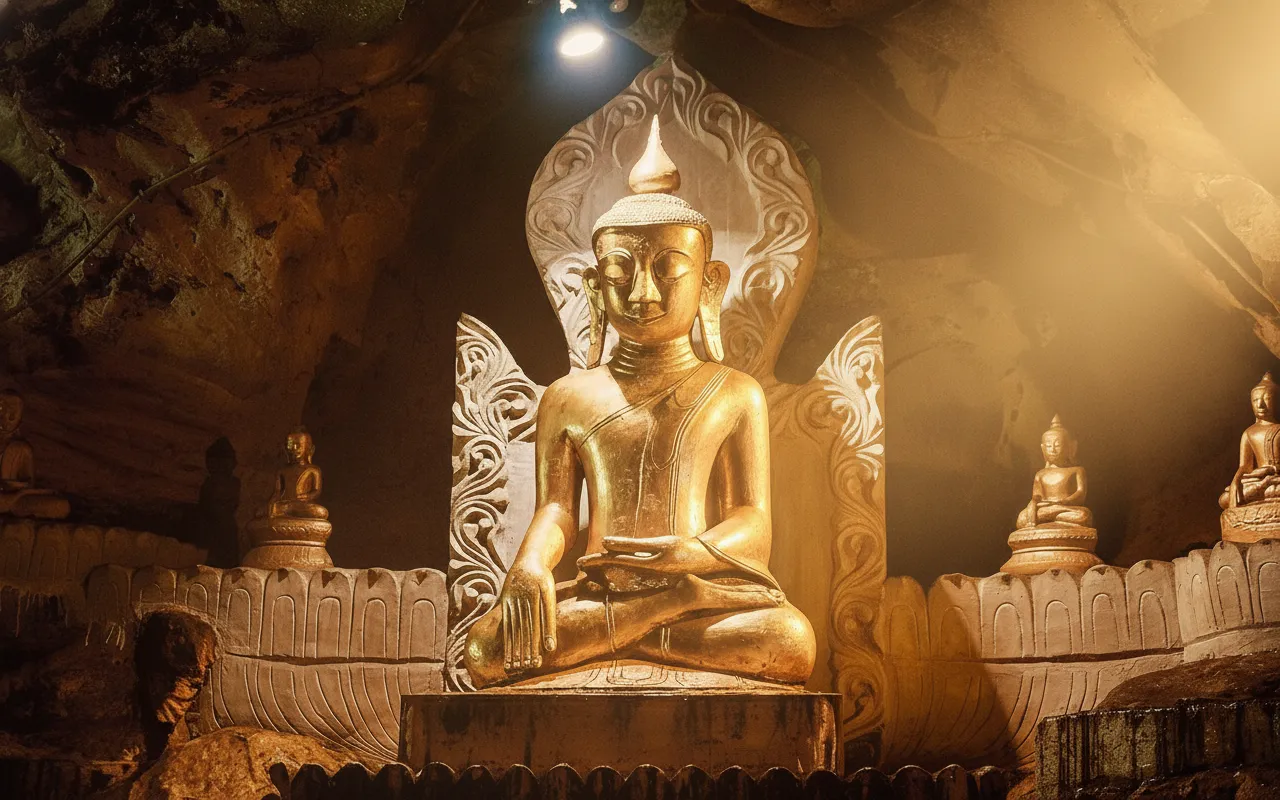
Imagine stepping into the earth's embrace, not into darkness, but into a dazzling spectacle of light, history, and profound spirituality. Far from the well-trodden paths of Southeast Asia lies a secret, a natural wonder transformed into a sacred sanctuary over millennia. This isn't just a cave; it's a sprawling labyrinth of limestone where over 8,000 glittering Buddha images, some centuries old, stand enshrined within the natural rock formations. Welcome to the Pindaya Caves in Myanmar's mystical Shan State, a destination that promises not just a visit, but a truly transformative journey into the heart of devotion.
If you've ever dreamt of discovering a place where nature's grandeur meets human artistry and unwavering faith, Pindaya is it. It's a place that whispers stories of ancient prayers, echoes with the footsteps of countless pilgrims, and shines with the golden glow of devotion. Prepare to descend into an experience unlike any other, where every turn reveals another breathtaking vista of spiritual artistry, making you feel as though you've stumbled upon a hidden world.
The Mystical Labyrinth of Pindaya Caves: A Spiritual Journey Underground
What makes Pindaya Caves so utterly captivating? It's the sheer, overwhelming scale of devotion. These ancient caverns are a revered pilgrimage site, filled floor-to-ceiling with a breathtaking collection of Buddha statues crafted from teak, marble, alabaster, lacquer, and cement. As you navigate the winding passages, the cool, echoing chambers open to reveal a dazzling array of devotional art, each statue a testament to the enduring faith of the Myanmar people. From tiny, intricately carved figures nestled in crevices to towering, majestic effigies, the diversity is astounding.
The experience is almost surreal. You walk through natural tunnels, carved by water and time, only to emerge into vast grottoes bathed in a soft, ethereal light. Here, thousands upon thousands of Buddhas gaze out, their serene expressions inviting contemplation. The air is thick with a sense of peace and reverence, a palpable energy that comes from centuries of prayer and offerings. It’s not merely a collection of statues; it’s a living, breathing testament to Myanmar's rich spiritual heritage, all housed within the earth's own magnificent architecture.

A Tapestry of Time: The Rich History of Pindaya
The history of Pindaya Caves is as deep and layered as the caverns themselves, blending geological time with human legend and spiritual evolution. Geologically, these limestone caves have been forming for millions of years, sculpted by water seeping through the earth, creating the impressive stalactites and stalagmites that still adorn the chambers today. For early humans, these natural shelters likely provided refuge long before they became a spiritual sanctuary.
The local legend, however, adds a touch of captivating folklore. It tells of a prince who rescued seven princesses from a giant spider that had trapped them within the caves. The prince, armed with a bow and arrow, slew the spider, and his triumphant cry, "Pin-da-ya!" (meaning "taken the spider" or "killed the spider") is said to be the origin of the town's name. While a charming tale, the true spiritual significance of Pindaya began much later.
The earliest known additions of Buddha images date back to the 18th century, with inscriptions indicating that the first statues were placed around 1773. Over the centuries, monks, kings, and countless devotees, driven by their faith and a desire to gain merit, have continuously contributed to the ever-growing collection. Each statue, whether a grand gilded figure or a humble clay effigy, represents a personal act of devotion, a prayer solidified in form. This continuous accumulation over hundreds of years has transformed a natural wonder into one of Myanmar's most unique and profound pilgrimage sites, a living museum of Buddhist art and faith.
What Awaits You: Navigating the Sacred Passages
Your journey into the Pindaya Caves typically begins with an ascent up a long, covered walkway or a unique spiral staircase, often adorned with traditional Burmese motifs and guardian figures. At the top, you'll find the entrance to the Shwe U Min Pagoda (Golden Cave Pagoda), the gateway to the main cave system. Before you even step inside, the sense of anticipation is palpable.
Once through the entrance, prepare to be awestruck. The caves are not a single, open chamber but a series of interconnected passages, grottoes, and vast halls, stretching for hundreds of meters. The path winds and undulates, sometimes narrow, sometimes opening into cavernous spaces. What will immediately strike you is the sheer density of Buddha images. They are everywhere – lining the walls, nestled in natural alcoves, standing on ledges, and arranged in rows on the floor. Each one is unique, varying in size, material, and mudra (hand gesture).
You’ll see Buddhas carved from gleaming white marble, polished dark teak, and smooth alabaster. Some are lacquered in rich reds and golds, others crafted from cement and painted with vibrant hues. There are ancient, weathered figures bearing the patina of centuries, alongside newer, brightly gilded offerings. As you explore, look closely at the details: the serene faces, the intricate robes, and the subtle variations in style that reflect different eras and regional artistic traditions. The natural stalactites and stalagmites often intertwine with the statues, creating a breathtaking fusion of natural and man-made beauty. Don't rush; take your time to absorb the atmosphere, to notice the subtle differences in each Buddha, and to feel the profound peace that permeates these sacred chambers.

Beyond the Caves: Exploring Pindaya Town and Shan State
While the Pindaya Caves are undoubtedly the main draw, the tranquil town of Pindaya itself, nestled on the shores of Pone Taloke Lake, offers a charming glimpse into local Shan State life. After emerging from the spiritual depths of the caves, take some time to wander through the town. You’ll find local markets bustling with fresh produce, vibrant textiles, and traditional crafts. Pindaya is particularly famous for its traditional Shan paper-making and umbrella-making workshops. You can often visit these workshops to see the intricate process firsthand, from boiling the mulberry bark to delicately painting the designs.
The surrounding Shan State is a region of breathtaking natural beauty, characterized by rolling hills, fertile valleys, and a patchwork of tea plantations and orange groves. The area is home to various ethnic groups, including the Danu, Pa-O, and Taungyo, each with their own distinct cultures and traditions. Exploring the countryside around Pindaya, perhaps with a local guide, can offer opportunities to visit traditional villages, learn about their unique way of life, and enjoy the serene landscapes. It’s a perfect complement to the spiritual journey inside the caves, offering a holistic view of this fascinating corner of Myanmar.
Practical Tips for Your Pindaya Caves Adventure
To make your visit to Pindaya Caves as smooth and enriching as possible, here are a few practical tips:
- Getting There: Pindaya is most commonly accessed from Kalaw (about a 1-hour drive) or Nyaungshwe (the gateway to Inle Lake, about a 2-hour drive). You can hire a private taxi, a shared taxi, or a motorbike taxi from either location. Many visitors combine Pindaya with a trip to Inle Lake or a trekking adventure in Kalaw.
- Best Time to Visit: The dry season, from October to May, is generally the most pleasant time to visit, with comfortable temperatures and less chance of rain. However, the caves themselves offer a cool respite regardless of the outside weather.
- What to Wear: As a sacred site, modest dress is required. This means covering your shoulders and knees. Comfortable walking shoes are essential, as you'll be navigating uneven surfaces, stairs, and walking quite a distance inside the caves. You will also need to remove your shoes and socks before entering the main pagoda area at the cave entrance, so slip-on shoes are convenient.
- Entrance Fee: There is typically an entrance fee for foreign visitors, which contributes to the maintenance of the site.
- Respectful Conduct: Maintain a respectful demeanor. Speak softly, avoid touching the statues, and always ask permission before taking photos of monks or local people. Photography is generally allowed inside the caves, but be mindful of others and avoid flash photography directly on the ancient statues.
- Guided Tours: While you can explore independently, hiring a local guide at the entrance can greatly enhance your visit. They can share fascinating stories, historical insights, and point out details you might otherwise miss.
- Accommodation: Pindaya has a few guesthouses and hotels, offering a peaceful stay. Alternatively, many visitors choose to stay in Kalaw or Nyaungshwe and make Pindaya a day trip.

Pindaya Caves is more than just a tourist attraction; it's a profound spiritual experience, a journey into the heart of Myanmar's devotion and artistic heritage. It's a place where the earth itself becomes a canvas for faith, and thousands of serene Buddhas bear witness to centuries of human reverence. If you're seeking a destination that offers deep cultural immersion, breathtaking natural beauty, and a truly unique sense of wonder, then let Pindaya be your next great adventure. It's a hidden gem waiting to be discovered, and a memory that will undoubtedly stay with you long after you've emerged from its sacred depths.
Essential Travel Information
- Location Pindaya Caves (ပင်းတယဂူ), Myanmar
- Best Time October to May (dry season)
- Getting There Typically by car or shared taxi from Kalaw (1-hour drive) or Nyaungshwe (Inle Lake, 2-hour drive).
- Airport Heho Airport (HEH)
- Budget Mid-range with approximate daily cost of $50-100 (excluding international flights and long-distance transport)
- Language Burmese (Myanmar), Shan, English (in tourist areas)
Find Places to Stay Near Pindaya Caves (ပင်းတယဂူ)
Compare hotels, hostels, and unique stays in Myanmar.
Search AccommodationTours & Experiences Near Pindaya Caves (ပင်းတယဂူ)
Book guided tours, day trips, and unique experiences.
Browse Tours