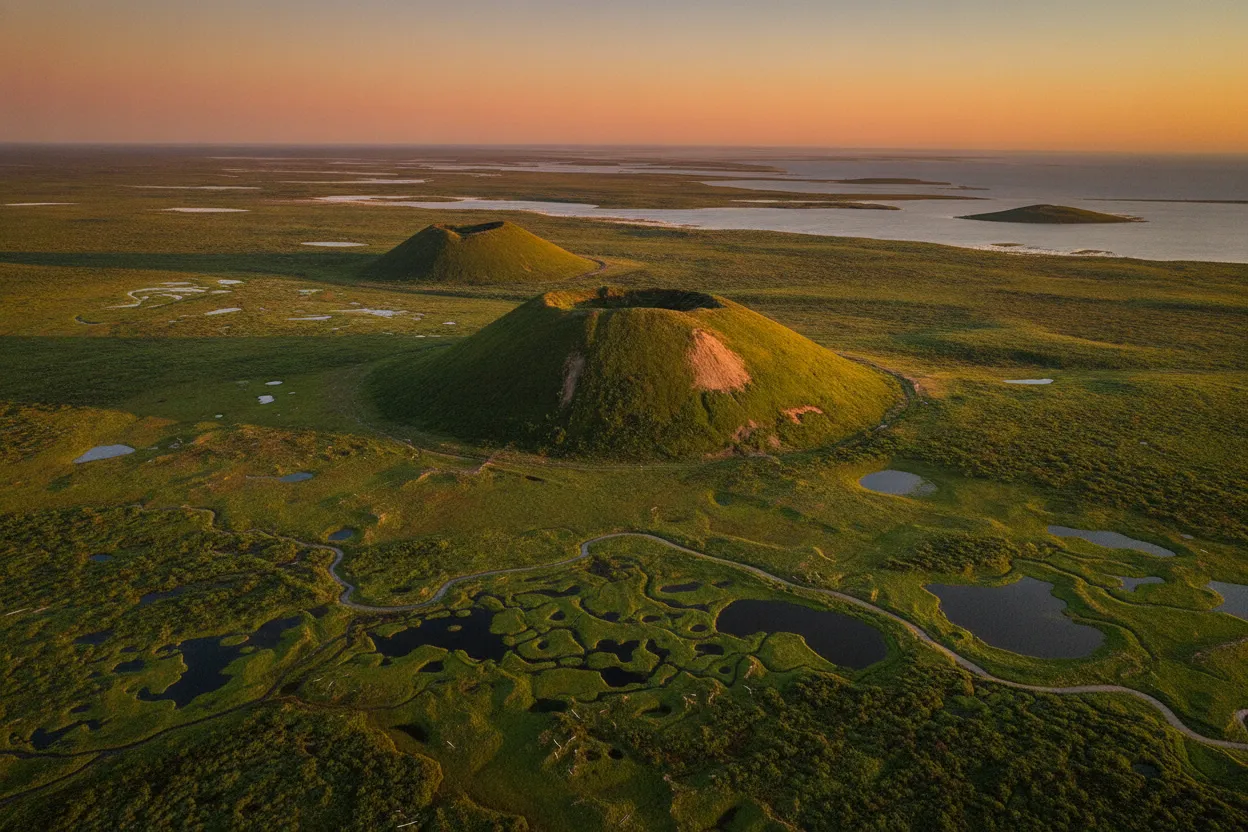
Imagine a surreal Arctic landscape dotted with colossal, ice-cored mounds, some over 50 meters tall, that have been slowly pushing up from the flat tundra for thousands of years. This isn't a scene from a sci-fi movie or a distant planet; it's the breathtaking reality of Canada's Pingo Canadian Landmark, a hidden geological wonderland tucked away in the remote Northwest Territories. If you're a traveler yearning for truly unique experiences, a place that challenges your perception of nature's power and artistry, then prepare to be utterly captivated by this extraordinary destination. It's an adventure into a realm where the Earth itself breathes and reshapes, creating an otherworldly topography unlike anything you've ever witnessed.
What Exactly Are Pingos? A Geological Marvel
So, what exactly are these magnificent mounds that dominate the Arctic horizon? They're called 'pingos,' a term derived from the Inuvialuktun word for 'hill.' These unique dome-shaped hills are geological oddities, formed by a fascinating and slow process involving permafrost, water, and immense pressure. In regions of continuous permafrost – ground that remains frozen for at least two consecutive years – groundwater can become trapped between the permafrost layer above and solid bedrock below.
As this trapped water attempts to freeze, it expands, just like water turning into ice in a freezer. But here, with nowhere to go horizontally, the expanding ice pushes upwards, forcing the overlying soil and sediment into a dome shape. Over centuries, and even millennia, this process continues, creating an ice core that grows larger and larger, relentlessly pushing the earth higher and higher. The result? A perfectly symmetrical, often conical, hill rising dramatically from the flat tundra, looking almost deliberately placed by some giant hand.
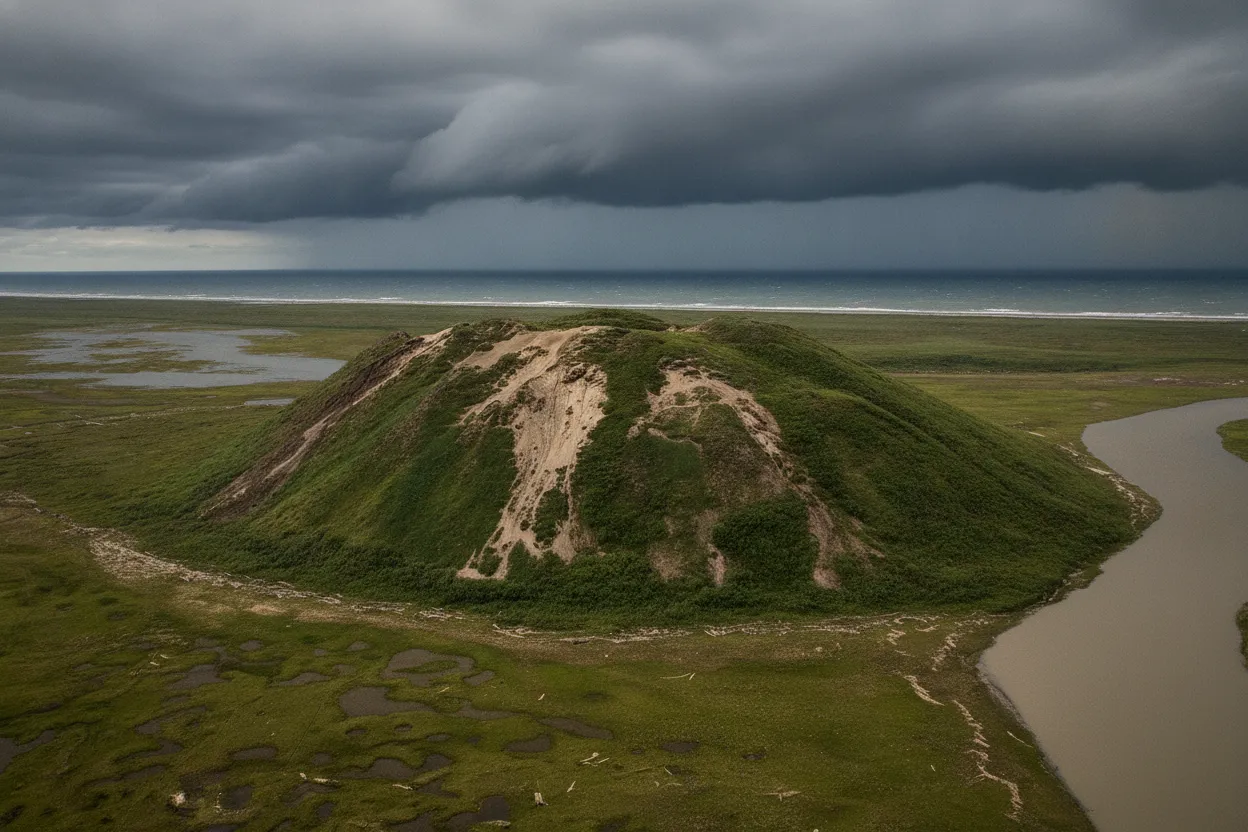
The Pingo Canadian Landmark is home to some of the finest examples of these geological wonders, including Ibyuk Pingo, which holds the title as Canada's largest. Towering over 50 meters (164 feet) high and stretching over 300 meters (984 feet) in diameter, Ibyuk is not just a static monument; it's a living, growing entity, still slowly expanding today. Standing at its base, you can almost feel the silent, powerful forces of nature at work, shaping the very land beneath your feet. It's a humbling reminder of the dynamic Earth and the incredible phenomena that unfold in its most remote corners.
The Pingo Canadian Landmark: A Protected Wonderland
Recognizing the global significance and unique beauty of these formations, the Canadian government established the Pingo Canadian Landmark in 1984. This protected area, located near the Inuvialuit community of Tuktoyaktuk, safeguards eight of Canada's most impressive pingos. It's a place of immense scientific interest, offering researchers a living laboratory to study permafrost dynamics, climate change impacts, and unique Arctic ecosystems. But beyond its scientific value, it's a place of profound cultural significance for the Inuvialuit people, who have lived in harmony with this land for thousands of years, utilizing the pingos for navigation, shelter, and as lookout points.
The Landmark isn't just about the pingos themselves; it's about the entire surrounding ecosystem. The flat, often wetlands-dotted tundra around the pingos supports a unique array of Arctic flora and fauna. While the stark beauty of the pingos is the main draw, keep an eye out for migrating birds, Arctic foxes, and even caribou herds that traverse this ancient landscape. The designation as a Landmark ensures that these precious geological formations and their environment are preserved for future generations, allowing visitors to experience them in their pristine, natural state.
Exploring the Otherworldly Landscape: What to See and Do
Visiting the Pingo Canadian Landmark is an experience that transcends typical tourism. It's an immersion into a landscape that feels truly alien, yet deeply connected to the Earth's fundamental processes. The sheer scale of the larger pingos, especially Ibyuk, is astonishing when viewed against the vast, flat expanse of the Arctic tundra. You can hike around the base of these giants, marveling at their symmetrical slopes and the unique plants that cling to their sides.
For photographers, the opportunities are endless. The changing light of the Arctic sky, especially during the endless summer days or the dramatic twilight of late summer, casts incredible shadows and highlights across the pingo surfaces. The contrast between the vibrant green tundra (in summer) or the pristine white snow (in winter) and the earthy tones of the pingos creates stunning visual compositions. Imagine capturing the midnight sun illuminating Ibyuk Pingo – a truly once-in-a-lifetime shot!
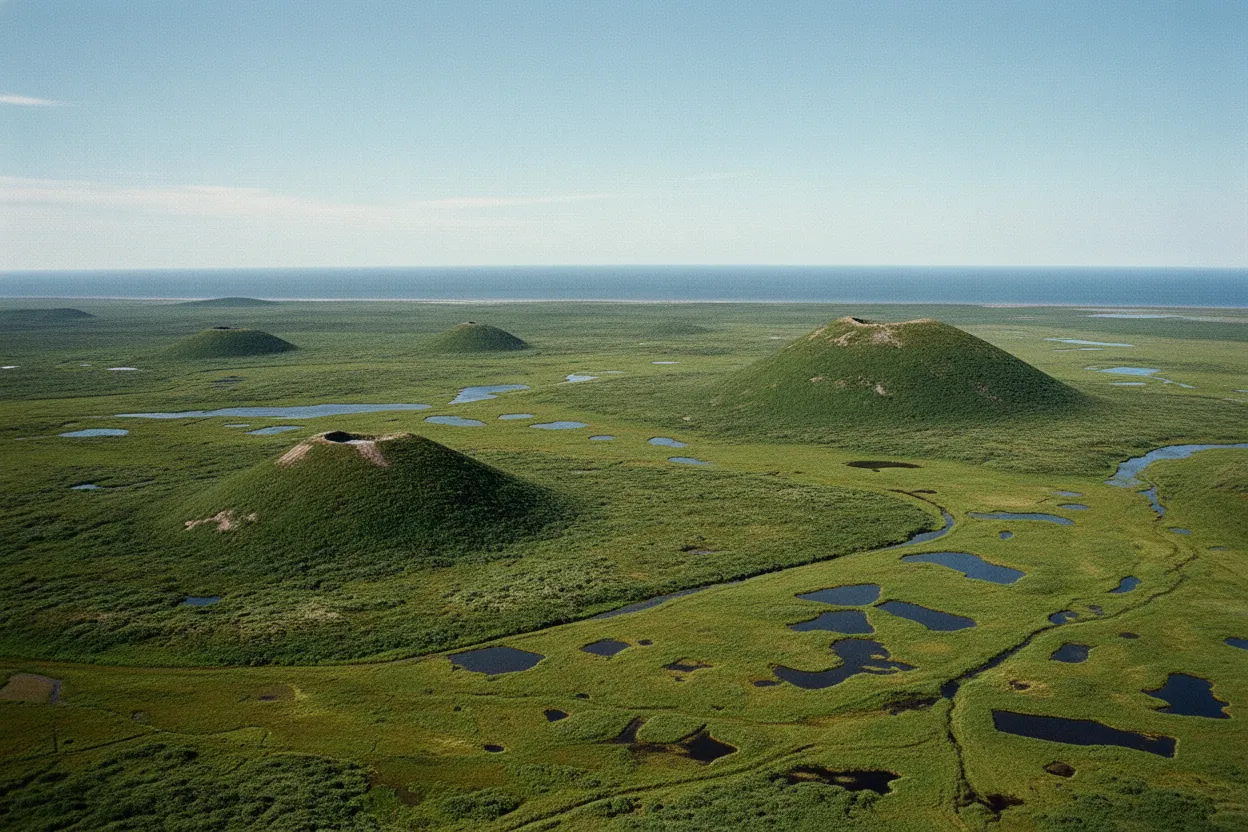
Beyond photography and hiking, simply being present in this remote, wild place is an experience in itself. The quiet, broken only by the wind or the call of an Arctic bird, offers a profound sense of peace and solitude. It's a chance to disconnect from the modern world and reconnect with the raw, untamed beauty of nature. Many visitors also take the opportunity to explore the nearby community of Tuktoyaktuk, learning about the rich Inuvialuit culture, traditions, and their deep connection to the land and the Arctic Ocean.
Planning Your Arctic Adventure: Practical Tips for Visiting
A journey to the Pingo Canadian Landmark is an adventure, and like any Arctic expedition, it requires careful planning. But don't let its remoteness deter you; with the right preparation, it's an incredibly rewarding trip.
Best Time to Visit: The most accessible and popular time is late June to early September. During these summer months, the tundra is green, the weather is milder (though still cool and unpredictable), and the sun never truly sets, offering 24 hours of daylight. This is also when the Inuvik-Tuktoyaktuk Highway is most easily navigable. Winter visits offer a starkly different, frozen wonderland, but require specialized gear, experienced guides, and are significantly more challenging due to extreme cold and limited daylight.
How to Get There: Your adventure typically begins by flying into Inuvik (YEV), the regional hub in the Northwest Territories. From Inuvik, the iconic Inuvik-Tuktoyaktuk Highway, Canada's only all-weather road to the Arctic Ocean, will take you directly to Tuktoyaktuk. The drive is a memorable part of the journey itself, offering stunning views of the Arctic landscape. Once in Tuktoyaktuk, the pingos are easily accessible, with Ibyuk Pingo located just a short distance from the community.
What to Pack: Regardless of the season, layering is key. Even in summer, pack warm, waterproof, and windproof outer layers. Sturdy hiking boots are essential, as the tundra can be wet and uneven. Don't forget bug spray (mosquitoes can be prolific in summer), sunscreen (due to the reflective qualities of the landscape and long daylight hours), a good hat, gloves, and of course, your camera gear with extra batteries. Binoculars are also highly recommended for wildlife spotting.
Guides and Safety: While the area around Tuktoyaktuk is relatively safe, it's a remote Arctic environment. Consider hiring a local Inuvialuit guide. Not only will they enhance your safety with their knowledge of the terrain and weather, but they'll also provide invaluable cultural insights and stories, enriching your experience immensely. Always inform someone of your travel plans and stick to marked trails or known routes.
Why the Pingo Canadian Landmark Belongs on Your Bucket List
In a world where so many destinations feel familiar, the Pingo Canadian Landmark stands out as truly unique. It's a place where geology comes alive, where ancient forces continue to shape the land, and where you can witness a phenomenon found in only a few select corners of our planet. It’s an adventure for the curious, the intrepid, and anyone who seeks to be profoundly moved by the wonders of the natural world.
This isn't just a place to visit; it's a place to experience, to ponder, and to understand the incredible diversity of our Earth. So, if you're ready to trade the beaten path for an extraordinary journey into the heart of the Canadian Arctic, to stand in awe of nature's slow, powerful artistry, then the Pingo Canadian Landmark awaits. It's more than a destination; it's a story written in ice and earth, waiting for you to discover.
Essential Travel Information
- Location Pingo Canadian Landmark, Canada
- Best Time Late June to early September
- Getting There Fly to Inuvik (YEV), then drive the Inuvik-Tuktoyaktuk Highway (approx. 1.5-2 hours) to Tuktoyaktuk. The Landmark is near Tuktoyaktuk.
- Airport Inuvik (YEV)
- Budget Mid-range to Luxury (due to remoteness and travel costs). Approx. CAD $300-700+ per day (excluding flights to Inuvik).
- Language English, Inuvialuktun
Find Places to Stay Near Pingo Canadian Landmark
Compare hotels, hostels, and unique stays in Canada.
Search AccommodationTours & Experiences Near Pingo Canadian Landmark
Book guided tours, day trips, and unique experiences.
Browse Tours