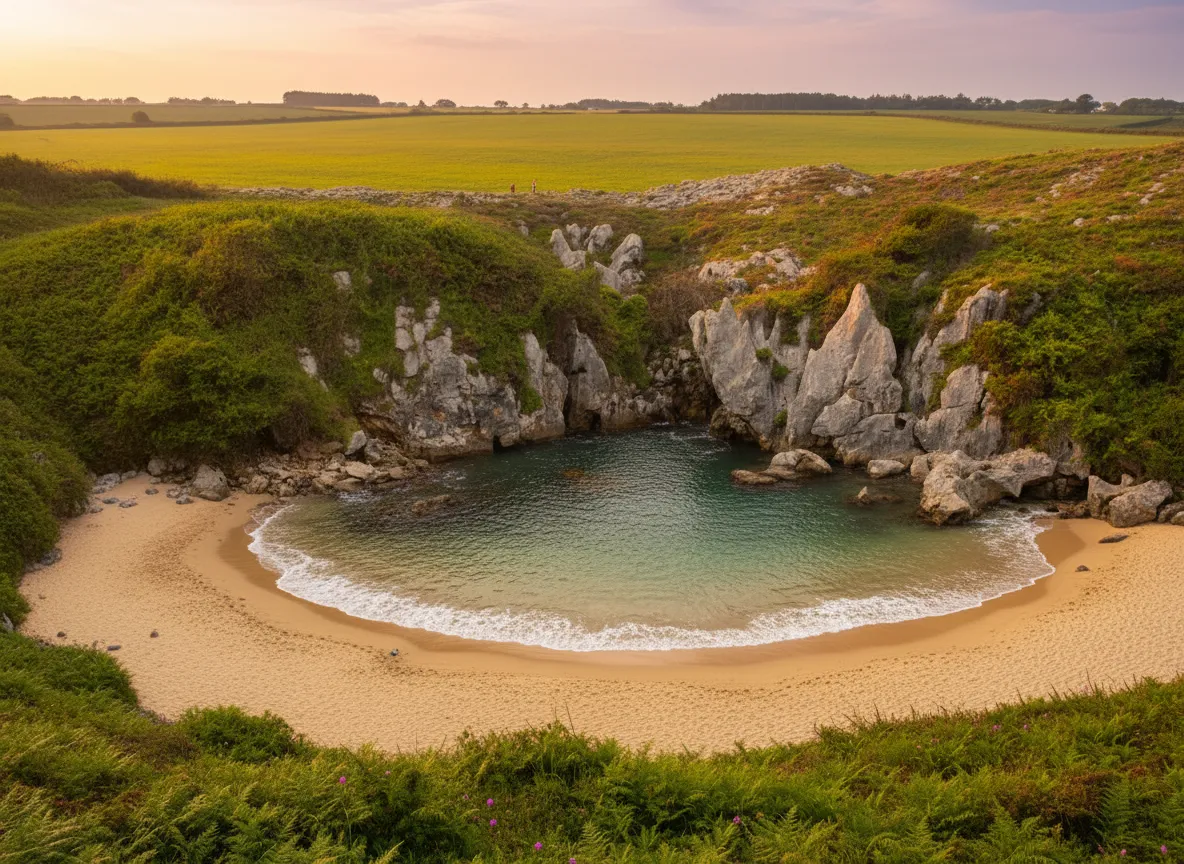
Imagine a tiny, perfectly crescent-shaped beach, complete with waves and sand, yet it sits hundreds of feet *inland*, completely surrounded by lush green meadows, with no visible connection to the vast, open sea. Sounds like something out of a fantasy novel, doesn't it? Well, pack your bags, because this isn't fiction. This is Playa de Gulpiyuri, a breathtaking natural wonder nestled in the heart of Asturias, Spain. It's like a secret portal to the ocean, hidden in a field, waiting to astound anyone lucky enough to discover its shores. Prepare to have your concept of a "beach" completely redefined.
Gulpiyuri: Spain's Inland Tidal Secret
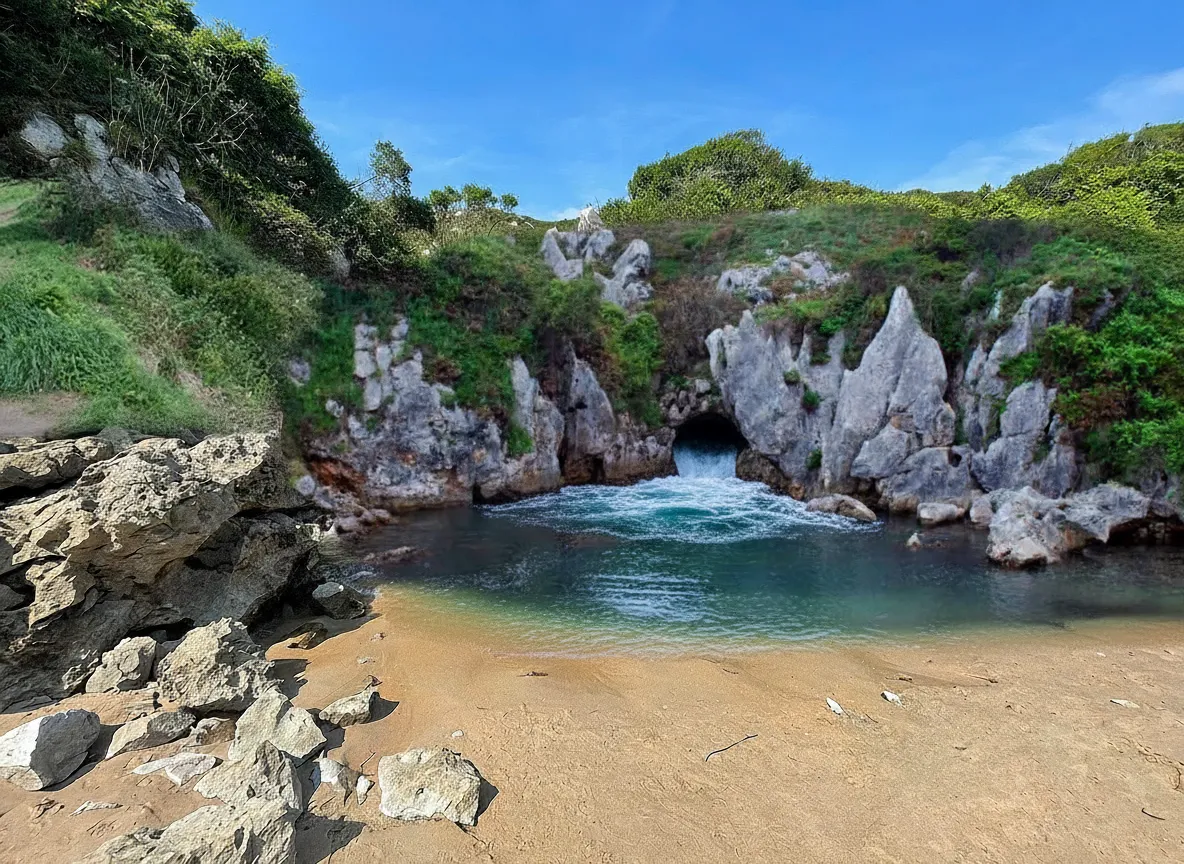
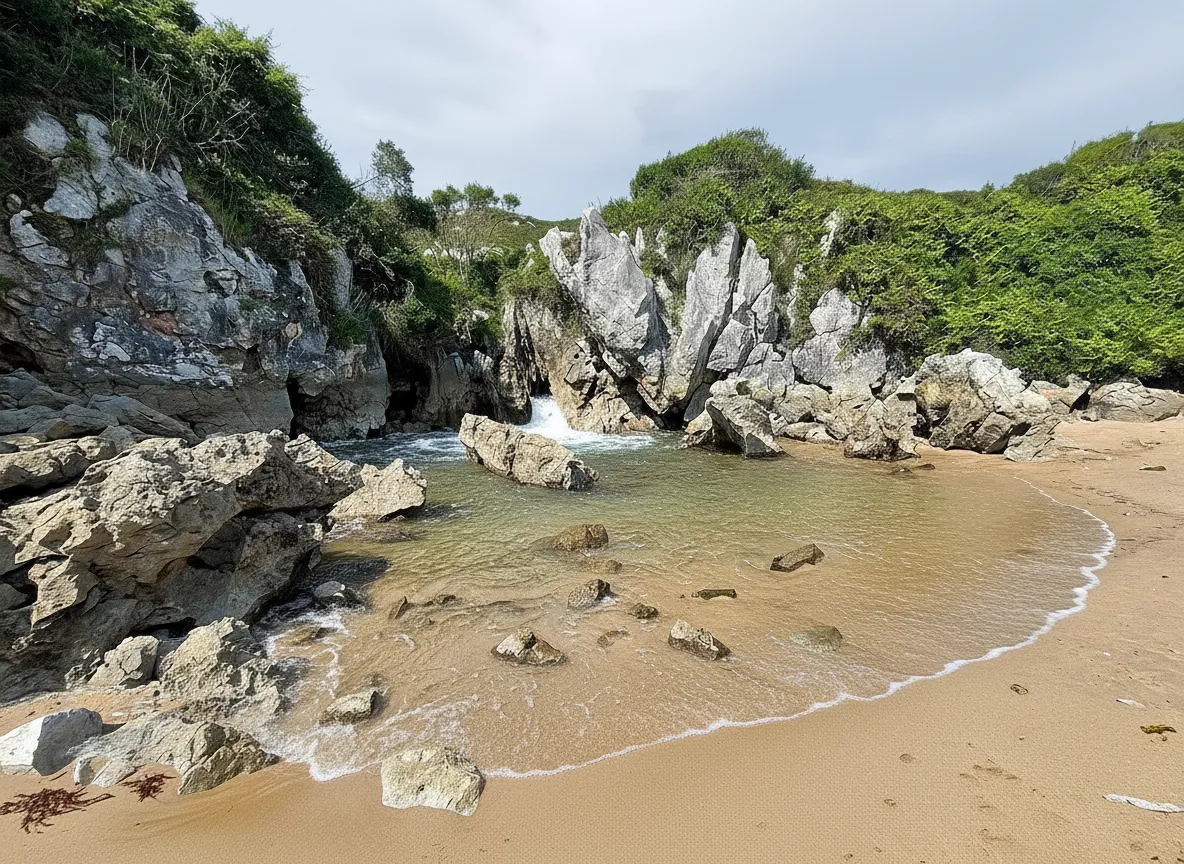
What makes Playa de Gulpiyuri so utterly unique isn't just its inland location, but the bizarre and beautiful geological phenomenon that created it. This isn't a lake, nor is it a man-made pool. Gulpiyuri is a collapsed sinkhole, or *dolina*, that acts as a natural funnel for the mighty Bay of Biscay. Through a intricate network of underground caves and tunnels, seawater travels inland, emerging onto this small, perfect patch of sand. As the tide changes, the water flows in and out, creating miniature waves that gently break on the shore, giving you the surreal experience of an inland, tidal beach.
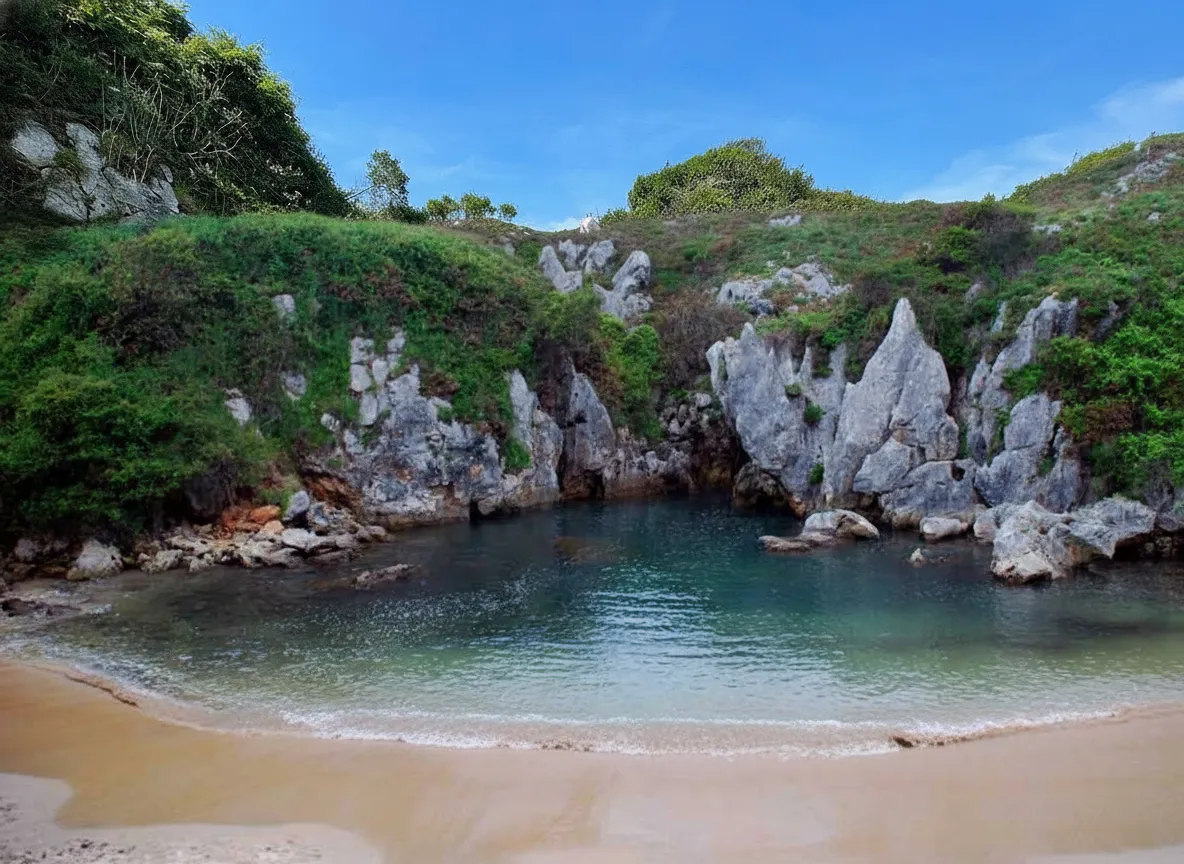
It's a marvel of nature's engineering, a testament to the slow, persistent power of water. The sound of the waves, the salty air, the soft sand beneath your feet – all the hallmarks of a traditional beach are present, yet you are utterly surrounded by verdant fields and limestone cliffs, miles from the immediate coastline. It's an experience that truly has to be seen to be believed, offering a sense of wonder and peaceful isolation that few other places on Earth can match. It's no surprise that this extraordinary spot has been declared a Natural Monument, protecting its delicate ecosystem and ensuring its magic can be enjoyed for generations to come.
The Geological Marvel: How Gulpiyuri Was Formed
To truly appreciate Gulpiyuri, it helps to understand the incredible forces that sculpted it. The coastline of Asturias, particularly around the Llanes region, is famous for its dramatic karst landscape. Karst topography is characterized by soluble rock formations, primarily limestone, which are eroded over millennia by water. Rainwater, slightly acidic, seeps into cracks and fissures, slowly dissolving the rock and creating an elaborate system of caves, sinkholes, and underground rivers.
In Gulpiyuri's case, the Bay of Biscay, with its powerful tides and relentless waves, played a crucial role. Over countless centuries, the sea relentlessly eroded the limestone cliffs, creating a labyrinth of subterranean tunnels that stretched further and further inland. Eventually, one of these tunnels connected to a massive underground cavern. When the roof of this cavern collapsed, perhaps due to a combination of erosion and seismic activity, it created the *dolina* we see today – a perfect, almost circular depression in the ground, open to the sky.
The genius of nature is that this collapsed sinkhole didn't just become a pond; it maintained its vital connection to the sea. The underground channels still funnel seawater from the Cantabrian Sea, filling the *dolina* at high tide and receding at low tide. This continuous flow of water ensures that Gulpiyuri remains a true tidal beach, a living, breathing part of the ocean, despite its landlocked appearance. It's a powerful reminder of how interconnected our planet's systems truly are, and how even the most seemingly impossible natural wonders can come to be.
What to Expect at Gulpiyuri: A Surreal Seaside Experience
Arriving at Gulpiyuri is an adventure in itself. You'll likely walk through picturesque green fields, perhaps past grazing cows, with no hint of the sea's presence. Then, almost abruptly, the landscape dips, and there it is: a small, perfect crescent of golden sand, sparkling water, and tiny waves. It's an utterly disorienting and delightful sight.
The beach itself is quite small, often described as barely 40 meters in diameter, which contributes to its intimate and almost magical feel. The water is crystal clear, revealing the sandy bottom, and typically cool, thanks to its oceanic origin. You won't find crashing surf here; the waves are gentle, almost playful, perfect for paddling your feet or simply sitting at the water's edge and letting the miniature tides wash over you. It's not a beach for serious swimming or watersports, but rather for quiet contemplation, photography, and simply marveling at its unique existence.
The atmosphere is incredibly peaceful, punctuated only by the gentle lapping of the waves and the chirping of birds from the surrounding meadows. Depending on the time of day and year, you might find a handful of fellow explorers sharing the wonder, or you might have this secret slice of paradise almost entirely to yourself. It’s a place that invites you to slow down, breathe deeply, and reconnect with the extraordinary beauty of the natural world. Don't forget your camera – every angle offers a postcard-worthy shot!
Practical Tips for Visiting Your Secret Beach
To make the most of your visit to Playa de Gulpiyuri, a little planning goes a long way. This isn't a typical drive-up beach, and its remote charm is part of its allure.
Best Time to Visit
The magic of Gulpiyuri is most evident at high tide, when the beach is fully filled with seawater, and the miniature waves are at their most prominent. Consult a local tide chart for the Bay of Biscay (specifically for the Llanes area) before you go. Summer (July-August) offers the warmest weather, but also the largest crowds. For a more serene experience, consider visiting during spring (May-June) or early autumn (September-October), when the weather is still pleasant, and the tourist numbers are lower. Early morning or late afternoon can also help avoid peak crowds.
How to Get There
Gulpiyuri is located near the villages of Naves and Cue, in the municipality of Llanes, Asturias. It’s not directly accessible by car. You'll typically park in Naves and follow a well-marked, unpaved path through the meadows. The walk is relatively easy, taking about 15-20 minutes, but comfortable walking shoes are a must. Signs for "Playa de Gulpiyuri" will guide you. Alternatively, some visitors park closer to the beach by following smaller dirt roads, but these can be rough and parking limited, so parking in Naves and walking is generally recommended.
What to Bring
Since there are no facilities directly at the beach (no restrooms, shops, or lifeguards), come prepared. Bring water, snacks, sunscreen, and a towel if you plan to wade. A small backpack is ideal for the walk. And, of course, your camera! Remember to pack out everything you pack in to help preserve this pristine natural monument.
Respecting the Environment
Gulpiyuri is a protected natural monument, and its delicate ecosystem should be treated with the utmost respect. Stick to designated paths, do not disturb the local flora and fauna, and absolutely leave no trace behind. Help keep this hidden gem beautiful for everyone.
Nearby Attractions
While Gulpiyuri is a highlight, the surrounding Asturian coast is dotted with other stunning beaches, charming fishing villages, and dramatic cliffs. The town of Llanes itself is worth exploring for its vibrant atmosphere, delicious seafood, and unique "Cubos de la Memoria" art installation. A trip to Gulpiyuri can easily be combined with exploring more of this magnificent "Green Spain" region.
Playa de Gulpiyuri isn't just a beach; it's an experience that challenges perceptions and sparks the imagination. It’s a secret whispered by the land to the sea, a place where geological wonder meets serene beauty. If you're seeking a travel destination that promises genuine awe and a story you'll tell for years to come, then this hidden Asturian marvel should be at the very top of your list. Come and discover the magic of Spain's most improbable beach – your adventure into the extraordinary awaits.
Essential Travel Information
- Location Playa de Gulpiyuri (Gulpiyuri Beach), Spain
- Best Time May-June or September-October for fewer crowds and pleasant weather; consult tide charts for high tide visibility.
- Getting There Park in Naves, Asturias, and follow a well-marked 15-20 minute walking path through meadows. Not directly accessible by car.
- Airport Asturias Airport (OVD)
- Budget Budget/Mid-range (approx. €50-€100 per day, excluding accommodation, for food and local transport)
- Language Spanish, Asturian (Bable)
Find Places to Stay Near Playa de Gulpiyuri (Gulpiyuri Beach)
Compare hotels, hostels, and unique stays in Spain.
Search AccommodationTours & Experiences Near Playa de Gulpiyuri (Gulpiyuri Beach)
Book guided tours, day trips, and unique experiences.
Browse Tours