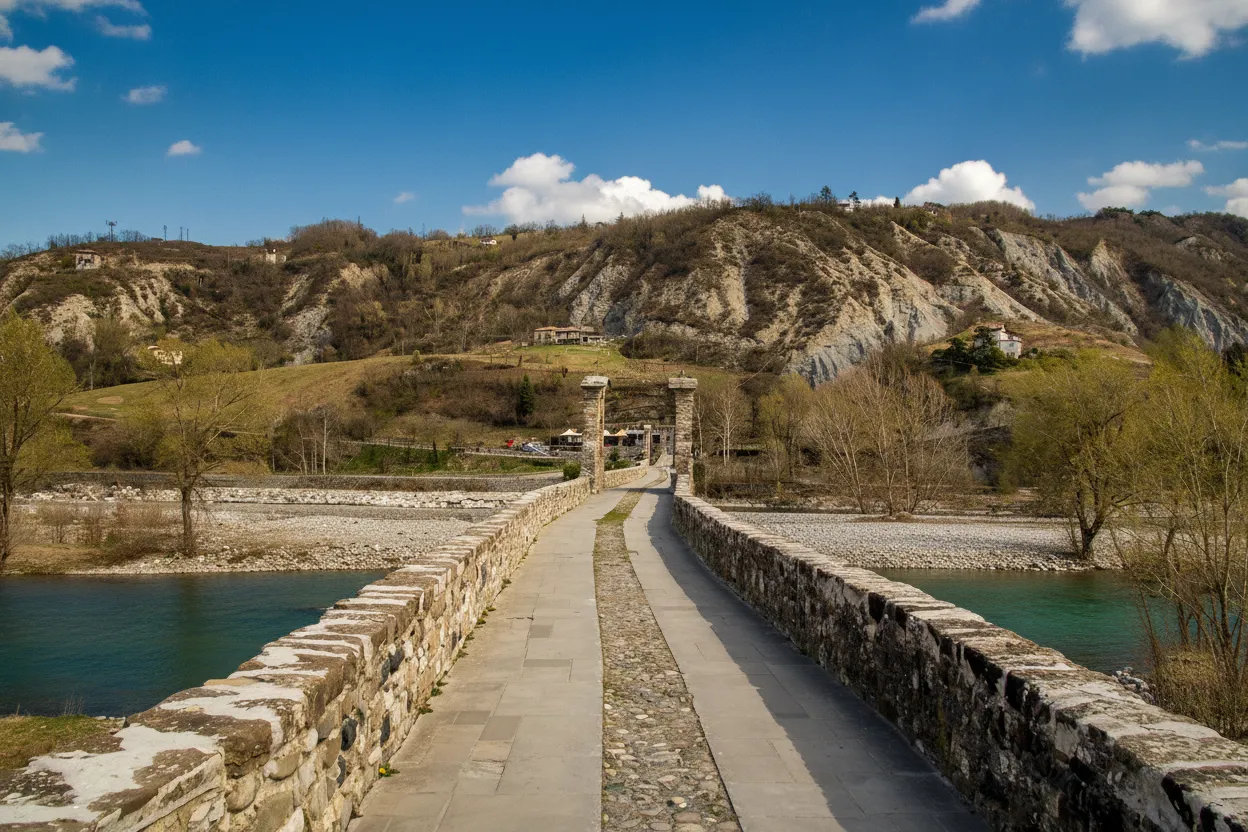
Imagine a legendary, multi-arched stone bridge that twists and turns over a river, a marvel of ancient engineering so strange it earned the nickname 'the Hunchback Bridge.' Forget the well-trodden paths of Rome or Florence for a moment, and let me whisk you away to a corner of Italy where history whispers from every stone, and folklore dances on the breeze. Tucked away in the serene embrace of Emilia-Romagna, where the Trebbia River carves its path through rolling hills, lies a true architectural enigma: the Ponte Gobbo. This isn't just a bridge; it's a living legend, a crooked masterpiece that defies logic and delights the imagination. Are you ready to discover a hidden gem that feels straight out of a fairytale?
Unveiling the Enigma: What Makes Ponte Gobbo So Special?
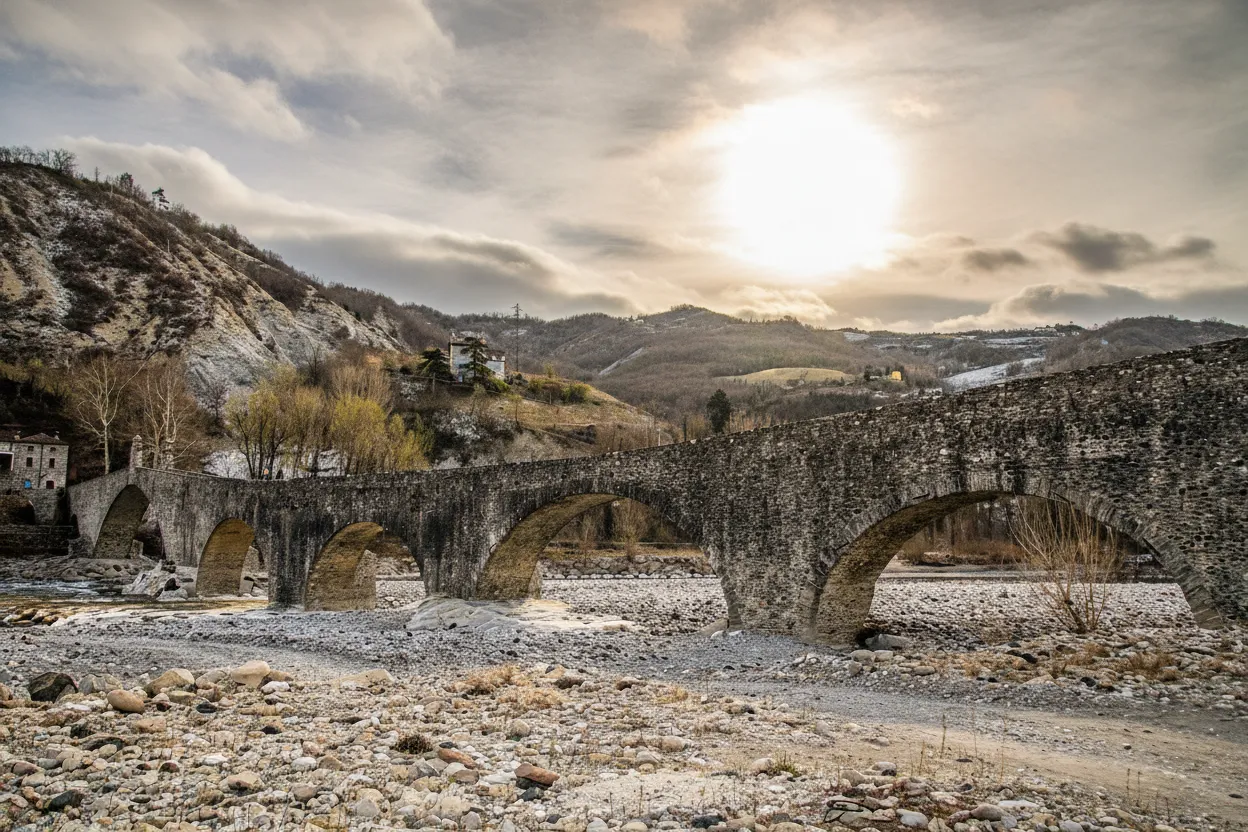
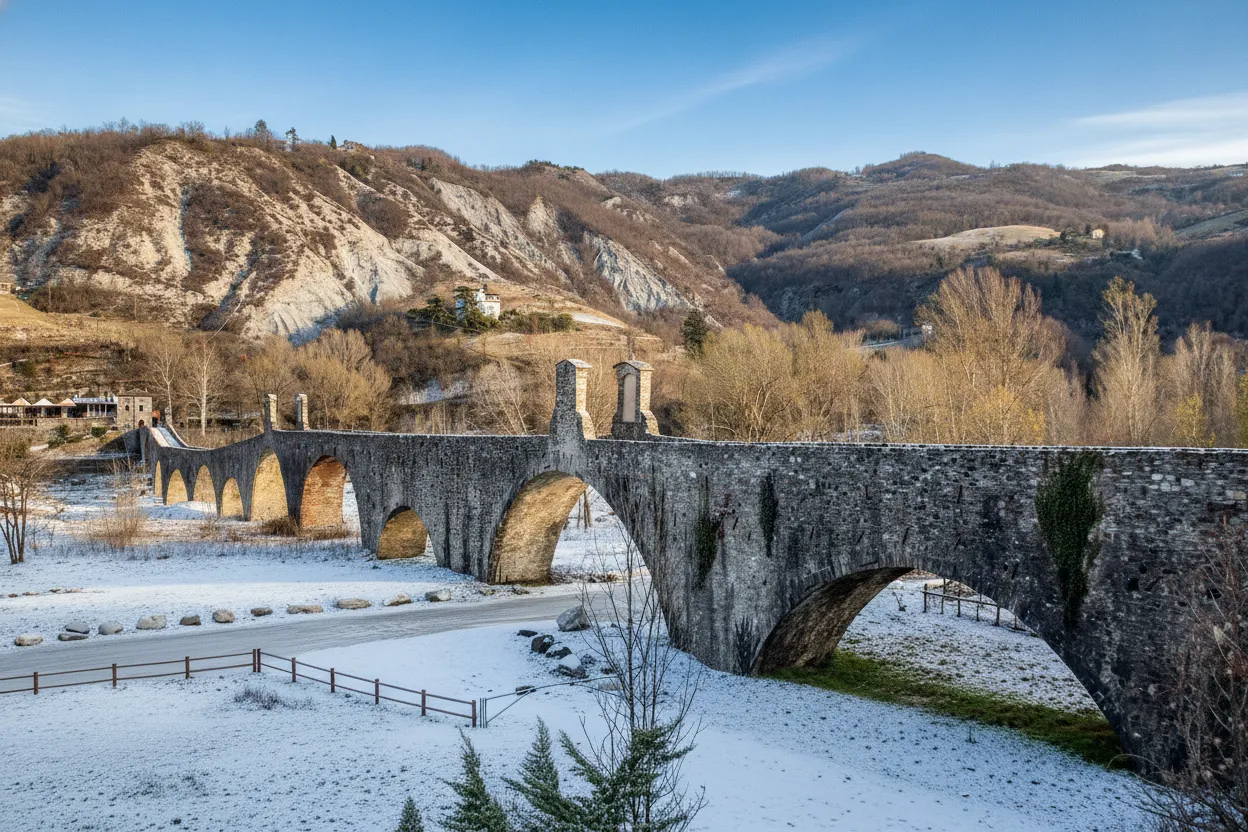
The moment you first lay eyes on the Ponte Gobbo, or "Hunchback Bridge," you understand why it's earned such an evocative moniker. Spanning the emerald-green waters of the Trebbia River in the charming medieval town of Bobbio, this isn't your average straight-laced bridge. Oh no. The Ponte Gobbo is a whimsical, almost playful structure, boasting eleven irregular arches that rise and fall in a captivating, wave-like pattern. It truly looks like a giant stone serpent undulating across the water, its "humps" giving it an unmistakable, unforgettable profile. It's an architectural anomaly, a testament to ancient ingenuity that dared to defy conventional design centuries ago, creating something utterly unique.
What sets the Ponte Gobbo apart isn't just its peculiar shape, but the sheer audacity of its construction. In an era long before computer-aided design, builders erected this complex, asymmetrical structure, perfectly adapting it to the shifting riverbed and the forces of nature. Each arch is a different size and height, creating a dynamic visual rhythm that changes with every step you take across its ancient stones. It’s a bridge that doesn’t just connect two riverbanks; it connects us to a time when engineering was an art form, deeply intertwined with the landscape and, as local legends suggest, even with supernatural forces.
More than just a historical monument, the Ponte Gobbo remains a vibrant part of daily life in Bobbio. Still in regular use exclusively for pedestrians, it invites you to slow down, to stroll, and to truly absorb the atmosphere. As you cross its uneven surface, you'll feel the weight of centuries beneath your feet, hear the gentle rush of the Trebbia below, and catch breathtaking views of the lush valley that cradles this ancient marvel. It's a place where history isn't confined to a museum; it's alive, tangible, and wonderfully accessible.
Whispers of the Past: A Journey Through Ponte Gobbo's History
To understand the Ponte Gobbo, we must delve into the rich tapestry of its past, a story woven with threads of Roman foundations, medieval rebuilds, and a generous dash of diabolical folklore. While the bridge's exact origins are shrouded in a bit of mystery, historical records and archaeological findings suggest that a bridge has stood at this strategic crossing point since at least Roman times. The current structure, however, is largely medieval, believed to have taken its distinctive form during the Middle Ages, possibly around the 7th or 8th century, with significant reconstructions and additions up until the 17th century.
Bobbio itself is an ancient town, famous for the Abbey of San Colombano, an influential monastic complex founded by the Irish monk Saint Columbanus in 614 AD. This abbey was a powerhouse of culture and learning throughout the early Middle Ages, and the bridge was crucial for connecting Bobbio with the surrounding territories and trade routes. Over the centuries, the Trebbia River, known for its powerful and sometimes destructive floods, repeatedly challenged the bridge's existence. Each time, it was rebuilt, adapted, and reinforced, leading to the irregular, almost organic shape we see today, as builders adapted to existing foundations and geological conditions.
But what truly captures the imagination is the local legend explaining its peculiar form: the devil himself built the Ponte Gobbo! The story goes that Saint Columbanus, needing a bridge to cross the treacherous Trebbia, struck a deal with the devil. The devil promised to build the bridge overnight in exchange for the soul of the first creature to cross it. The devil, in his haste, used stones of all shapes and sizes, and his demon helpers, being of varying heights, built arches of different dimensions, resulting in the bridge's iconic "hunchbacked" appearance. Saint Columbanus, ever the clever saint, outwitted the devil by sending a dog (or sometimes a pig) across first, saving a human soul. This charming, if slightly mischievous, tale perfectly encapsulates the bridge's unusual beauty and the enduring power of local folklore.
Crossing the Legend: What You'll See and Experience at Ponte Gobbo
Visiting the Ponte Gobbo isn't just about seeing a bridge; it's about immersing yourself in an experience that blends history, natural beauty, and a touch of magic. As you approach from the charming streets of Bobbio, the bridge gradually reveals itself, stretching elegantly across the river. Your first instinct will likely be to grab your camera, because from every angle, the Ponte Gobbo offers a postcard-perfect view.
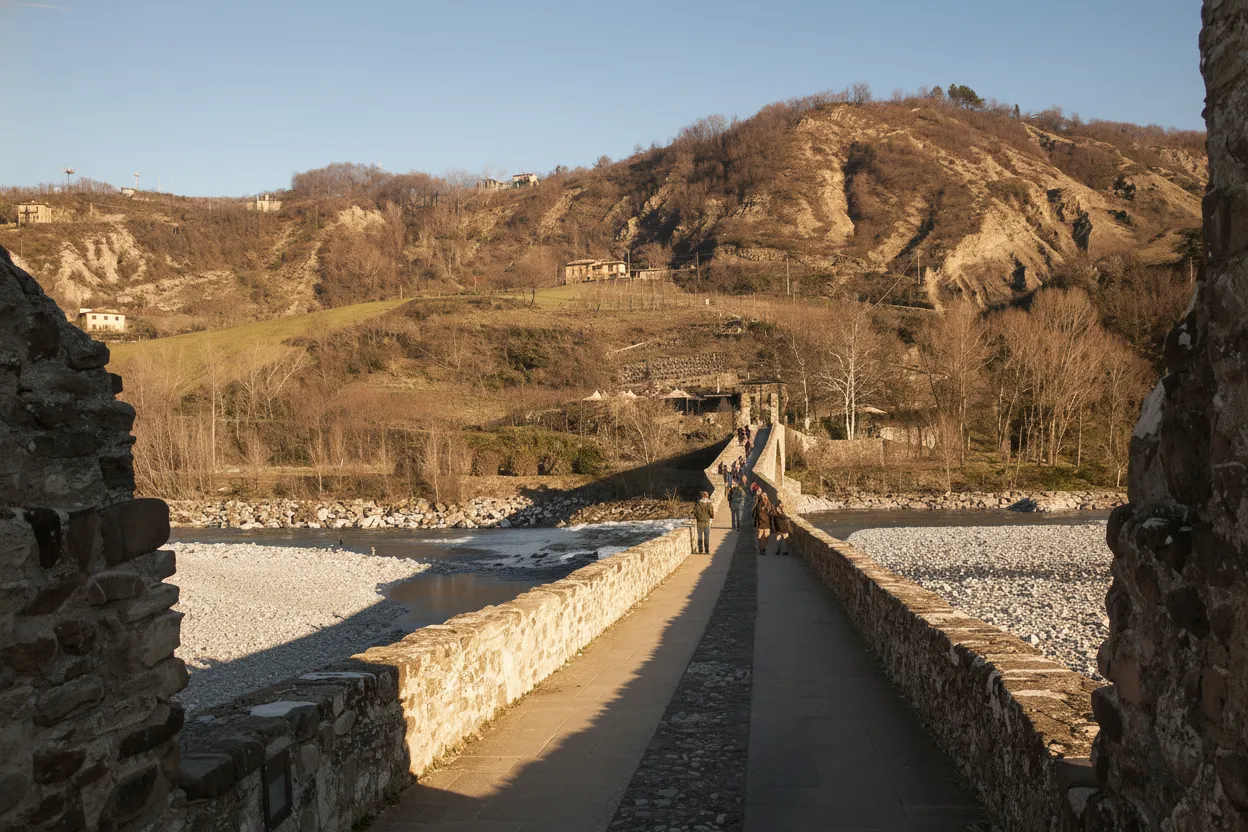
The best way to truly appreciate its uniqueness is to walk across it. Take your time. Feel the worn stones beneath your feet, imagining the countless footsteps that have traversed this path over centuries – monks, merchants, pilgrims, and lovers. Stop at various points along its length to peer down at the crystal-clear waters of the Trebbia River, perhaps spotting local fishermen or families enjoying the riverbanks below during warmer months. The views of the surrounding valley, with its verdant hills and the quaint rooftops of Bobbio nestled against the backdrop, are simply breathtaking. You’ll find yourself constantly turning, trying to capture its full, serpentine beauty, realizing that no single photograph can truly do it justice.
Beyond the bridge itself, Bobbio is a treasure trove waiting to be explored. After your walk across the Ponte Gobbo, wander through the narrow, cobbled streets of the old town. Visit the imposing Abbey of San Colombano, where you can explore its cloisters, museum, and crypt. The town also boasts a charming cathedral and a castle, all contributing to an atmosphere that feels wonderfully untouched by mass tourism. You might even find a cozy trattoria to savor some local Piacenza cuisine, perhaps a plate of *pisarei e fasò* (small pasta dumplings with beans) or some delicious cured meats, paired with a glass of local Gutturnio wine. It’s an authentic slice of Italian life, where history is lived, not just observed.
Your Guide to the Hunchback: Practical Tips for Visiting Ponte Gobbo
Ready to embark on your own adventure to the Ponte Gobbo? Here are a few practical tips to help you make the most of your visit to this incredible hidden gem:
Getting There: Bobbio is located in the province of Piacenza, within the Emilia-Romagna region of Italy. It’s a bit off the main tourist routes, which is part of its charm, but easily accessible. The most convenient way to reach Bobbio is by car, offering you the flexibility to explore the stunning Trebbia Valley at your own pace. The drive itself, especially along the SS45 road, is incredibly scenic. There are also bus services connecting Bobbio to Piacenza, which has a train station with connections to major Italian cities.
Best Time to Visit: The Ponte Gobbo is beautiful year-round, but each season offers a different charm. Spring (April-May) and early autumn (September-October) are ideal, with pleasant temperatures, fewer crowds, and vibrant natural colors – lush greens in spring, and fiery reds and golds in autumn. Summer (June-August) can be hot, but the Trebbia River offers a refreshing escape, and the evenings are perfect for strolling. Winter can be chilly, but a dusting of snow can transform the bridge into an even more magical, almost ethereal, sight.
What to Bring: Comfortable walking shoes are a must, as you’ll be exploring the bridge and Bobbio’s medieval streets. Don't forget your camera – you'll want to capture the bridge from every angle! A reusable water bottle is always a good idea, especially in warmer months. If you plan to spend time by the river, a towel or picnic blanket could be handy.
Accessibility: The Ponte Gobbo is a pedestrian-only bridge. While the surface is uneven due to its ancient construction, it is generally manageable for most visitors. However, those with mobility challenges might find some sections a bit tricky. The town of Bobbio itself is easily walkable.
Local Delights: Take the opportunity to savor the local cuisine of the Piacenza region. Beyond *pisarei e fasò*, look for *tortelli di zucca* (pumpkin tortelli), delicious cured meats like *coppa* and *salame piacentino*, and the robust local wines, particularly Gutturnio. Bobbio also has some delightful pastry shops offering traditional sweets.
The Ponte Gobbo is more than just a bridge; it’s a journey into the heart of Italy’s lesser-known wonders, a place where history, legend, and natural beauty converge in the most extraordinary way. It reminds us that sometimes, the most captivating stories are found off the beaten path, waiting to be discovered by those willing to look a little closer. So, pack your bags, fire up your imagination, and prepare to be enchanted by the Hunchback Bridge – a true marvel that will undoubtedly leave an indelible mark on your traveler's soul.
Essential Travel Information
- Location Ponte Gobbo, Italy
- Best Time Spring (April-May) and early Autumn (September-October) for pleasant weather and fewer crowds. Summer (June-August) is also popular, especially for river activities.
- Getting There Best reached by car (scenic drive along SS45) to Bobbio, Emilia-Romagna. Bus services connect Bobbio to Piacenza train station.
- Airport Milan Linate (LIN) or Bologna Guglielmo Marconi Airport (BLQ)
- Budget Mid-range, with approximate daily costs ranging from €80-€150 per person (accommodation, food, local transport, activities).
- Language Italian
Find Places to Stay Near Ponte Gobbo
Compare hotels, hostels, and unique stays in Italy.
Search AccommodationTours & Experiences Near Ponte Gobbo
Book guided tours, day trips, and unique experiences.
Browse Tours