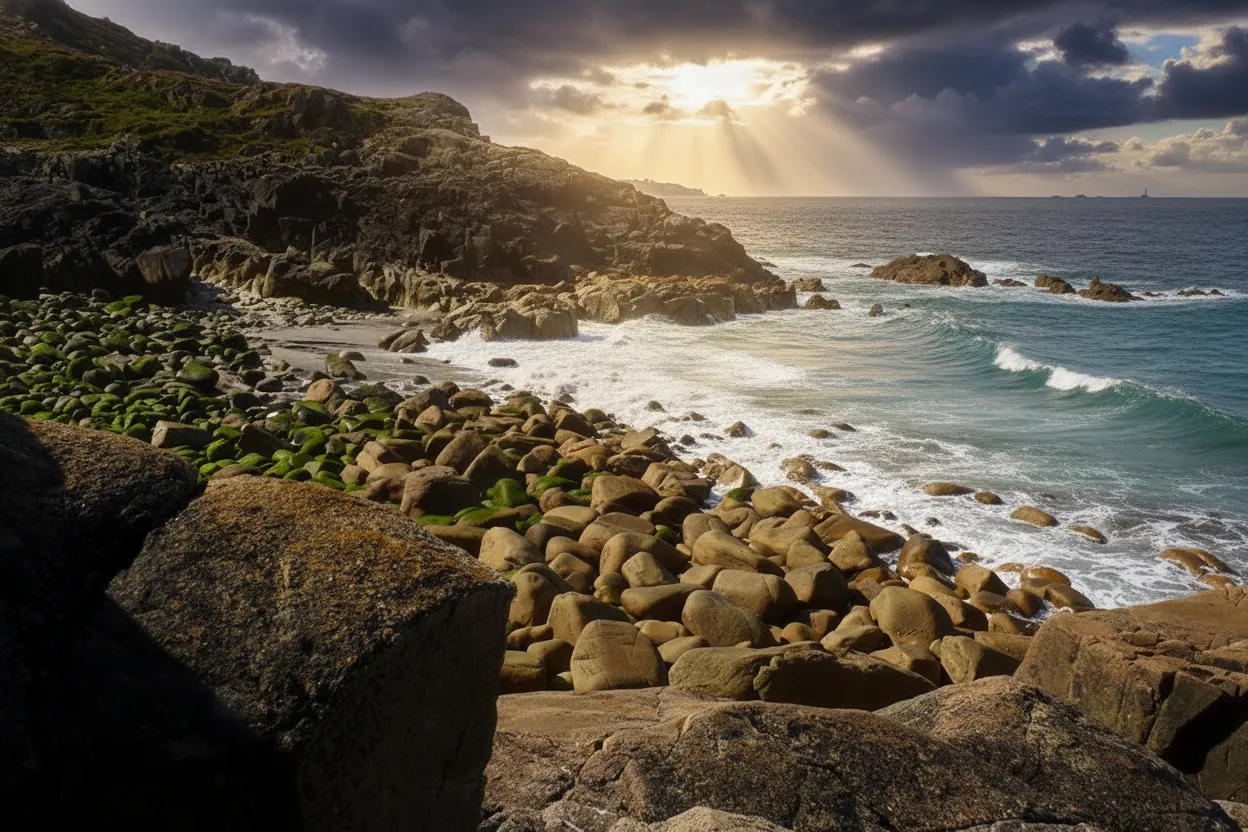
Imagine stepping onto a beach unlike any other, where the sand is replaced by a surreal scattering of giant, perfectly rounded stones. These aren't just pebbles; they are colossal, ovoid boulders that look uncannily like fossilized dinosaur eggs, laid millennia ago by some forgotten prehistoric beast. This isn't a scene from a sci-fi movie, but a very real, very spectacular hidden gem tucked away on the dramatic, wild coastline of West Cornwall, England. Welcome to Porth Nanven, affectionately known as 'Dinosaur Egg Beach,' a place where geology meets pure, unadulterated wonder.
If you've ever dreamt of discovering a truly unique corner of our world, a place that feels ancient, mystical, and utterly breathtaking, then pack your walking boots. Porth Nanven isn't just a destination; it's an experience, a journey back in time to a landscape sculpted by forces almost beyond human comprehension. Forget crowded tourist traps; this is where the raw beauty of Cornwall truly shines, inviting you to explore a geological marvel that will leave you spellbound.
Unearthing the Mystery of Porth Nanven's 'Dinosaur Eggs'
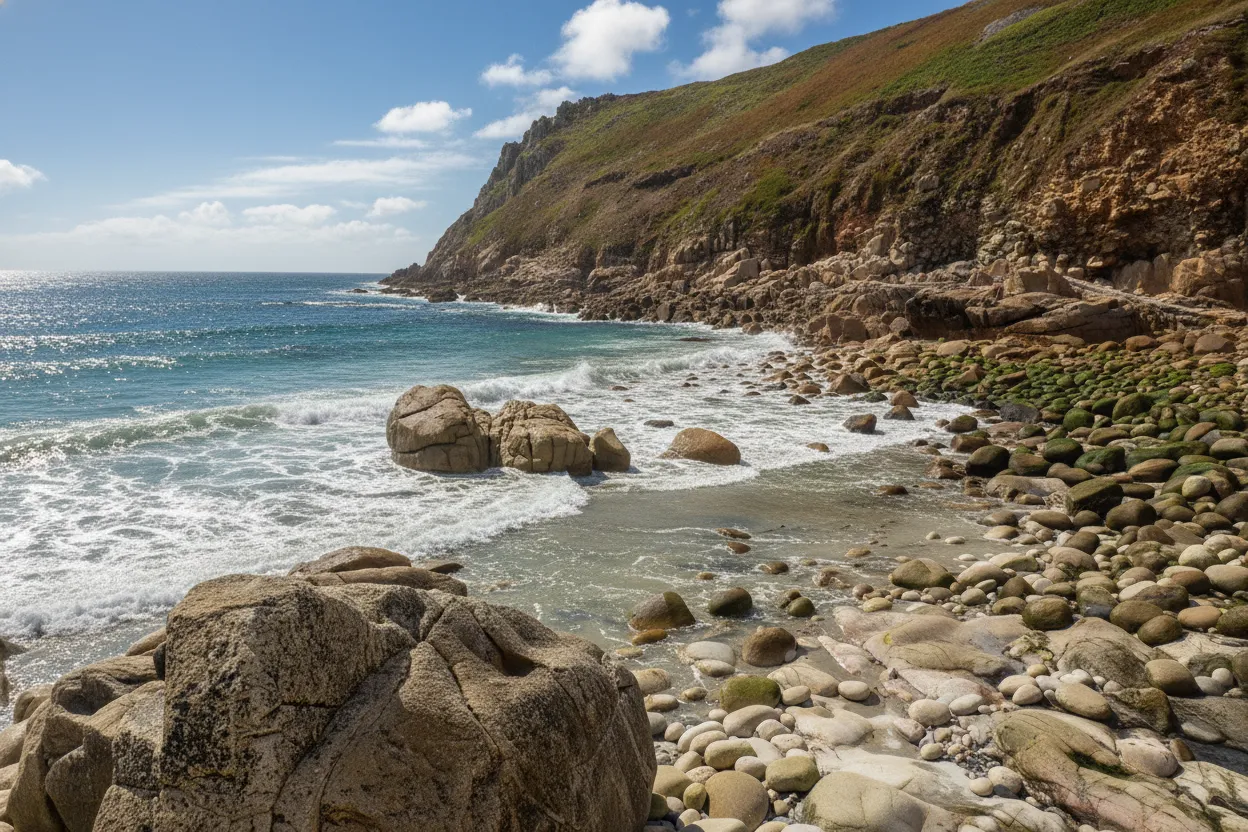
What makes Porth Nanven so profoundly special? It's the sheer, jaw-dropping visual impact of its beach. As you descend into this secluded cove, the sight that greets you is nothing short of extraordinary. The shore is not covered in typical sand or shingle, but by hundreds, if not thousands, of smooth, spherical, and ovoid granite boulders. Ranging in size from small cannonballs to massive, car-sized giants, they are so perfectly formed that they defy belief. You can't help but touch them, feel their cool, polished surfaces, and marvel at their uniformity.
This isn't just a pretty beach; it's a natural art gallery, a testament to the immense power of nature. Each 'egg' tells a silent story of countless tides, storms, and the slow, relentless grind of time. The colours vary too, from deep greys and blacks when wet, to lighter, almost pearlescent tones when dry, often flecked with quartz and feldspar, hinting at their igneous origins. Against the backdrop of towering, rugged cliffs and the restless Atlantic, Porth Nanven feels like stepping onto another planet, a lost world waiting to be explored.
A Geologist's Masterpiece: How the 'Eggs' Were Formed
While the allure of genuine dinosaur eggs is undeniable, the true story behind Porth Nanven's unique boulders is arguably even more fascinating. These aren't fossils from ancient reptiles, but rather an exquisite example of geological erosion and the sheer power of the ocean.
The 'eggs' are actually granite boulders, remnants of the ancient Land's End granite batholith that forms much of West Cornwall's bedrock. Over millions of years, these rocks were exposed to the elements. What happened next is a slow, powerful dance between rock and water. The relentless pounding of the Atlantic Ocean, combined with the abrasive action of sand and smaller stones, began to sculpt these angular granite chunks. The constant tumbling and grinding, especially during powerful storms, gradually wore down their sharp edges, smoothing them into the perfectly rounded, ovoid shapes we see today.
Adding another layer to this geological saga is the influence of ancient glacial periods. While Cornwall wasn't directly covered by ice sheets, the periglacial conditions (intense freezing and thawing cycles) shattered the granite, creating many of the initial angular blocks. These blocks were then transported and further rounded by meltwater rivers and, crucially, by the powerful wave action once sea levels rose. This combination of glacial erosion and marine abrasion, occurring over millennia, is what created this truly unique landscape. It’s a powerful reminder that nature is the ultimate sculptor, capable of crafting beauty on a scale that humbles us all.
What to Expect on Your Porth Nanven Adventure
Your journey to Porth Nanven begins with a sense of anticipation. Located just south of the charming, artistic town of St Just, the cove is nestled at the mouth of the beautiful Cot Valley. The approach itself is part of the adventure, involving a walk down a winding, sometimes steep, path through lush vegetation, eventually opening up to reveal the spectacular coastline.
As you step onto the beach, prepare to be captivated. The sheer number and size of the 'eggs' are astounding. Children (and adults!) will love clambering over them, discovering hidden nooks and crannies. It's a photographer's dream, with endless opportunities to capture the unique textures, the interplay of light and shadow, and the dramatic coastal scenery. The sound of the waves crashing against these giant boulders creates a unique, resonant symphony, a constant reminder of the forces that shaped this place.
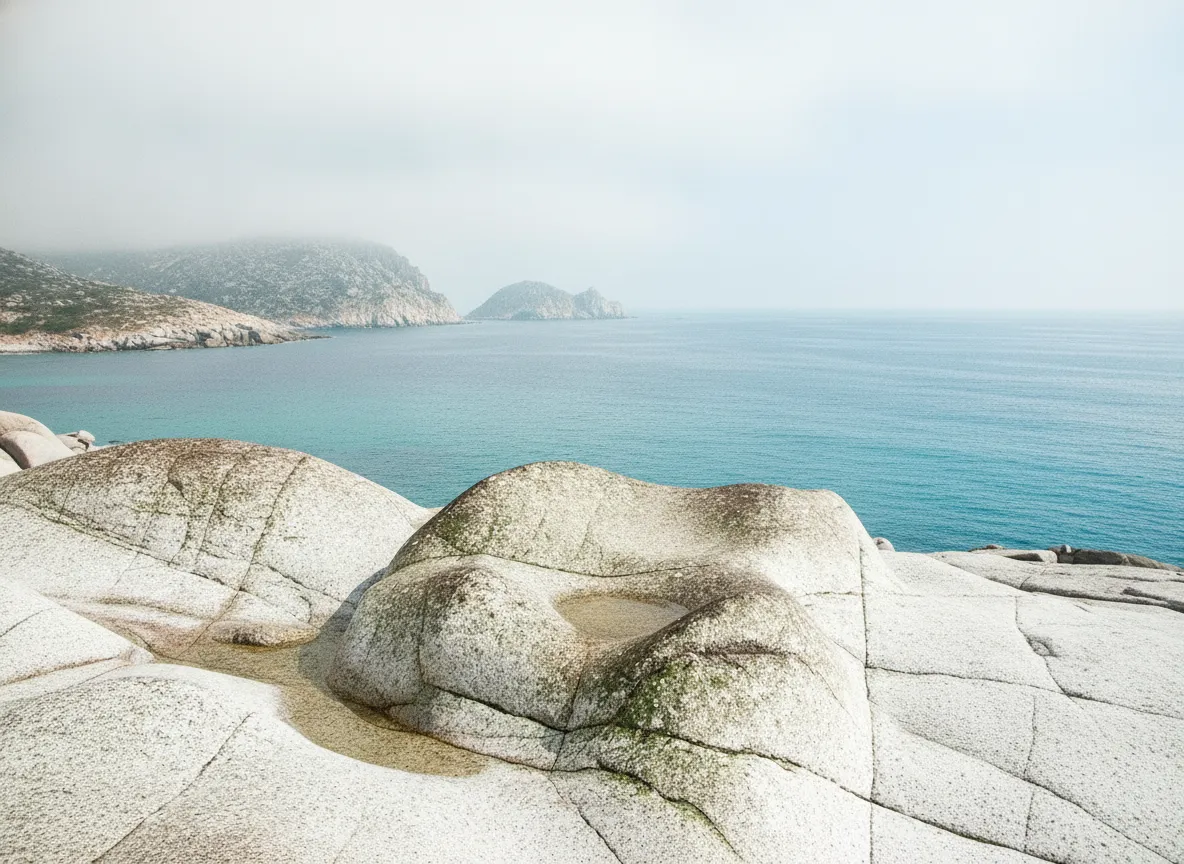
Beyond the 'eggs' themselves, the cove offers stunning views of the rugged Cornish cliffs, often teeming with seabirds. The water, especially on a calm day, can be incredibly clear, inviting you to peer into rock pools left by the receding tide. It's a place for contemplation, for feeling truly connected to the ancient earth, and for marveling at the raw, untamed beauty of the Cornish coast. You might even spot seals offshore or peregrine falcons soaring above the cliffs if you're lucky.
Allow yourself ample time to explore. This isn't a rush-in-and-out kind of place. Sit on one of the giant 'eggs', listen to the ocean, and let the prehistoric atmosphere wash over you. It's a deeply immersive experience that stays with you long after you've left.
Planning Your Visit to Cornwall's Prehistoric Coast
Visiting Porth Nanven requires a little planning, but the rewards are immeasurable. Here’s how to make the most of your trip:
Getting There & Parking:
Porth Nanven is located in the Cot Valley, just a short drive or walk south of St Just in Penwith, West Cornwall. The lanes leading to the valley are narrow and winding, typical of Cornwall. There’s a small, informal car park at the top of Cot Valley, near the stream, or you can park in St Just and enjoy a scenic walk (approximately 1.5-2 miles) down to the cove. From the Cot Valley car park, it's a relatively easy walk down a track and then a path to the beach. Be aware that the final descent to the beach can be a little steep and uneven.
Best Time to Visit:
The absolute best time to visit Porth Nanven is at low tide. This is crucial, as the 'dinosaur eggs' are largely submerged at high tide, revealing only a fraction of their glory. Check local tide times before you set off. Spring and autumn offer pleasant weather for walking, fewer crowds than summer, and often dramatic skies that enhance the atmosphere. Winter can be wild and exhilarating, but also very wet and windy, making the paths slippery. Summer offers longer daylight hours but can be busier.
What to Bring:
- Sturdy Footwear: The paths can be uneven, and the boulders on the beach can be slippery, especially when wet. Walking boots or sturdy trainers are essential.
- Waterproofs: This is Cornwall! Even on a sunny day, a sudden shower isn't uncommon.
- Camera: You'll want to capture the unique beauty of this place.
- Snacks/Picnic: There are no facilities at the beach, so bring water and some treats to enjoy amidst the 'eggs'.
- Binoculars: For spotting seabirds or distant marine life.
- Tide Times: A must-have for planning your visit.
Accessibility:
Due to the uneven paths and the rocky nature of the beach, Porth Nanven is not wheelchair accessible and may be challenging for those with significant mobility issues. The walk down to the beach, while not excessively long, does involve some gradients.
Leave No Trace:
Porth Nanven is a natural wonder. Please help keep it pristine by taking all your litter home with you and respecting the delicate environment. Do not disturb the wildlife or remove any stones.
Nearby Attractions:
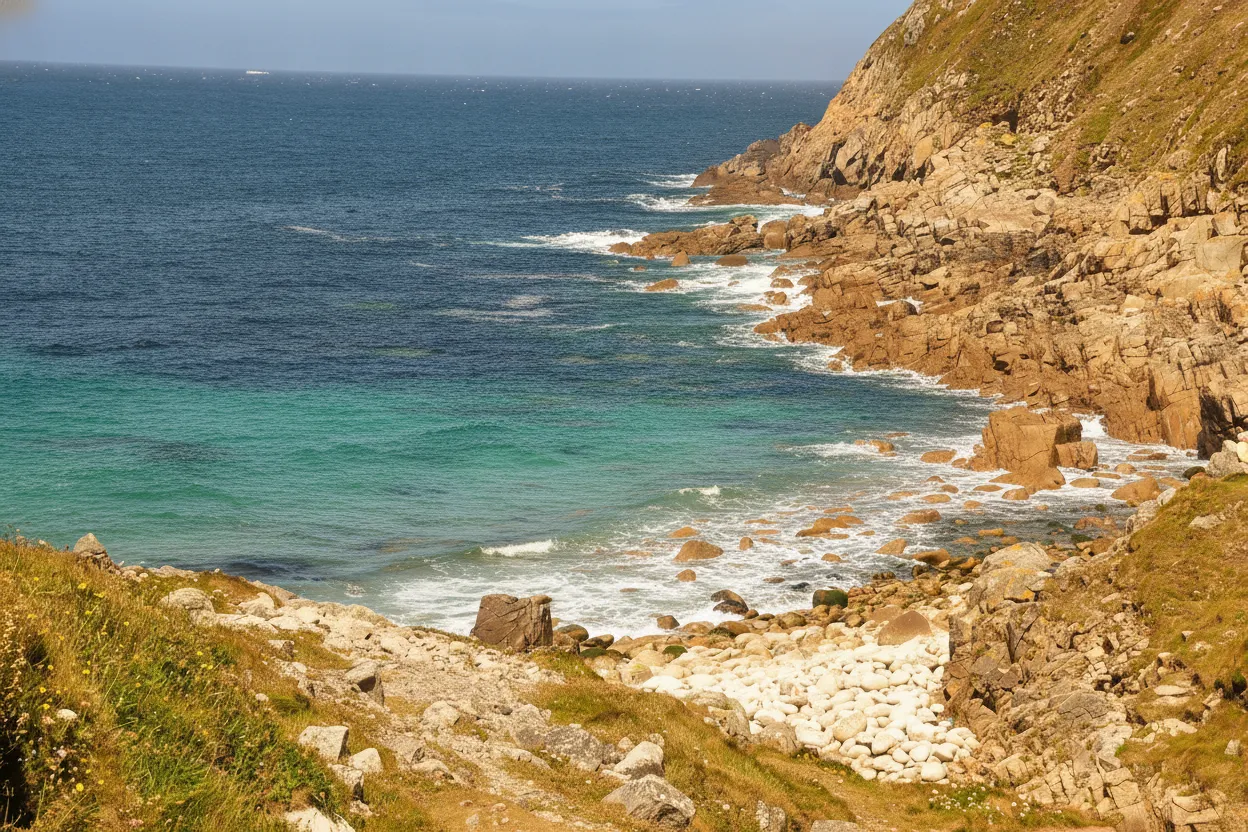
Porth Nanven is perfectly situated for exploring other incredible parts of West Cornwall. The charming town of St Just offers galleries, pubs, and cafes. Nearby, you'll find Cape Cornwall, the only 'cape' in England, offering breathtaking views. The Botallack Mine and Levant Mine, part of the Cornish Mining World Heritage Site, are just a short drive away, offering a fascinating glimpse into Cornwall's industrial past. All these spots offer incredible coastal walks and a true sense of Cornwall's wild, untamed spirit.
Porth Nanven is more than just a beach; it's a testament to the Earth's enduring power and beauty. It’s a place that sparks the imagination, inviting you to ponder the immense timescales of geological history and feel the raw energy of the Atlantic. If you're seeking an adventure that combines natural wonder, stunning scenery, and a touch of prehistoric mystery, make Porth Nanven your next hidden destination. You won't regret stepping into this truly extraordinary landscape.
Essential Travel Information
- Location Porth Nanven (Dinosaur Egg Beach), United Kingdom
- Best Time Low tide is essential. Spring and Autumn for pleasant weather and fewer crowds. Check local tide times.
- Getting There Located in Cot Valley, near St Just, West Cornwall. Park in Cot Valley or St Just and walk down. Narrow lanes lead to the valley.
- Airport Newquay Airport (NQY)
- Budget Budget/Mid-range (Accommodation in St Just/Penzance, self-catering, walking is free) - approx. £50-£100 per day
- Language English
Find Places to Stay Near Porth Nanven (Dinosaur Egg Beach)
Compare hotels, hostels, and unique stays in United Kingdom.
Search AccommodationTours & Experiences Near Porth Nanven (Dinosaur Egg Beach)
Book guided tours, day trips, and unique experiences.
Browse Tours