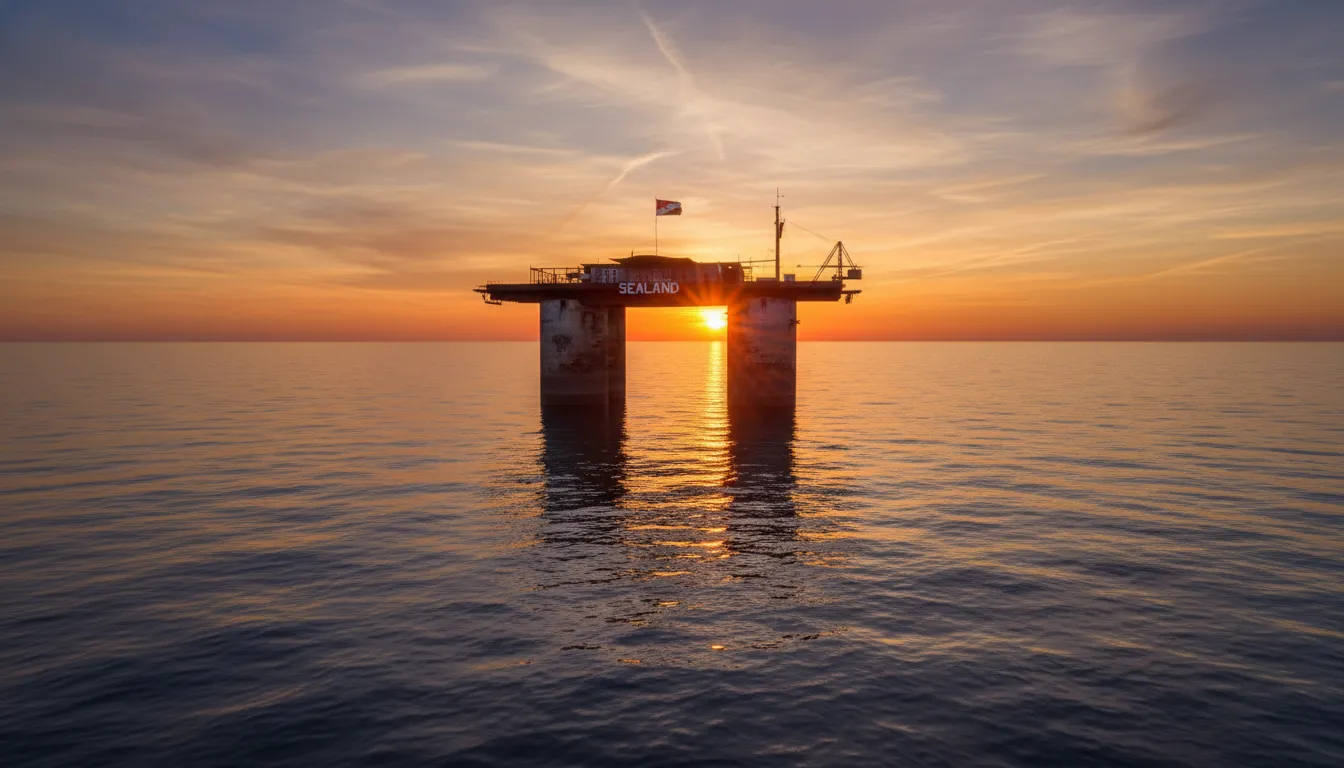
Imagine a tiny speck on the vast, churning canvas of the North Sea, a relic of wartime defiance that refuses to be forgotten. Perched precariously on two colossal concrete pillars, a former World War II anti-aircraft fort stands guard, not against enemy planes, but against the very notion of conventional nationhood. This isn't a forgotten ruin; it's the Principality of Sealand, the world's smallest self-proclaimed independent nation, a testament to human stubbornness, ingenuity, and a dream of sovereignty born amidst the waves. If you've ever dreamt of a place utterly unique, a story so bizarre it must be true, then prepare to be utterly captivated by the saga of Sealand.
The Principality of Sealand: A Sovereign Dream on the High Seas
What makes Sealand so incredibly special isn't just its minuscule size – though at roughly 550 square meters, it's certainly a contender for the planet's most compact country. It's the sheer audacity of its existence. This isn't some remote island or an overlooked patch of land; it's a man-made structure, Roughs Tower, built by the British during World War II, repurposed and declared sovereign by a family with an unshakeable vision. It boasts its own constitution, a royal family, currency, stamps, and even offers of citizenship and nobility. It's a living, breathing (and often storm-battered) experiment in self-determination, a defiant middle finger to traditional geopolitics that has charmed, puzzled, and occasionally infuriated the world for over half a century. It's a place that asks: what truly defines a nation?
From Wartime Fortress to Independent State: Sealand's Incredible Journey
To understand Sealand, we must first journey back to the dark days of World War II. In 1942, as the Battle of Britain raged, the UK government constructed several Maunsell Sea Forts in the Thames Estuary. These colossal, steel-reinforced concrete structures, including Roughs Tower, were strategically placed to defend London against German air raids and naval attacks. Each fort was a self-contained community, housing anti-aircraft guns and a crew of over 100 Royal Artillery personnel, enduring the harsh North Sea elements and the constant threat of aerial bombardment.
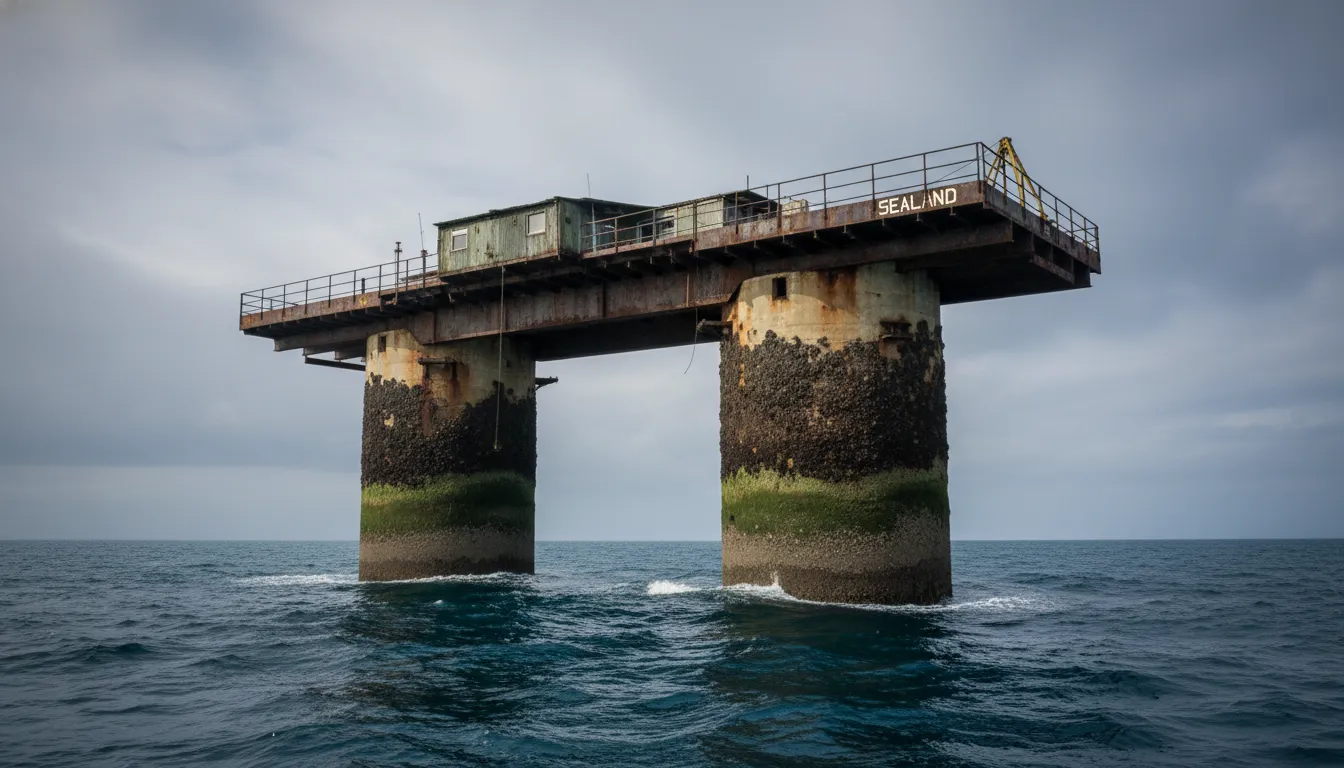
After the war, with the threat diminished, the forts were gradually decommissioned and abandoned in the 1950s. They became rusting hulks, monuments to a bygone era, slowly reclaimed by the sea and the gulls. Most were eventually dismantled, but Roughs Tower, located just outside British territorial waters at the time, was left untouched, a forgotten sentinel in the vast expanse of the North Sea.
Enter Paddy Roy Bates. A former major in the British Army and a successful businessman, Bates had a penchant for the unconventional. In the mid-1960s, he operated a pirate radio station, Radio Essex, from another abandoned Maunsell Fort. When the British government legislated against offshore broadcasting, Bates, ever the maverick, sought a new base. In 1967, he, his wife Joan, and their children, Michael and Penelope, occupied Roughs Tower. On September 2, 1967, Roy Bates declared Roughs Tower the sovereign Principality of Sealand, establishing himself as Prince Roy and his wife as Princess Joan.
What followed was a saga worthy of a spy novel. The British government attempted to remove them, leading to confrontations and legal battles. A landmark court ruling in 1968 declared that Roughs Tower was outside British jurisdiction, effectively giving Sealand a legal loophole to exploit. The Bates family took this as de facto recognition of their independence. Prince Roy then drafted a constitution, designed a flag, and even minted currency and issued stamps. They were a nation, albeit one the size of a tennis court.
The most dramatic chapter unfolded in 1978. While Prince Roy was away, a German businessman who had been involved in Sealand's affairs orchestrated an attempted coup, seizing the fort and taking Prince Michael hostage. Prince Roy, with a small team and a helicopter, launched a daring counter-assault, retaking Sealand and capturing the invaders. The subsequent release of the German hostage involved diplomatic intervention from Germany and the UK, further cementing Sealand's bizarre international profile. Through it all, Sealand endured, a beacon of defiant self-determination.
What Awaits You on the "Rock": A Glimpse into Sealand Life
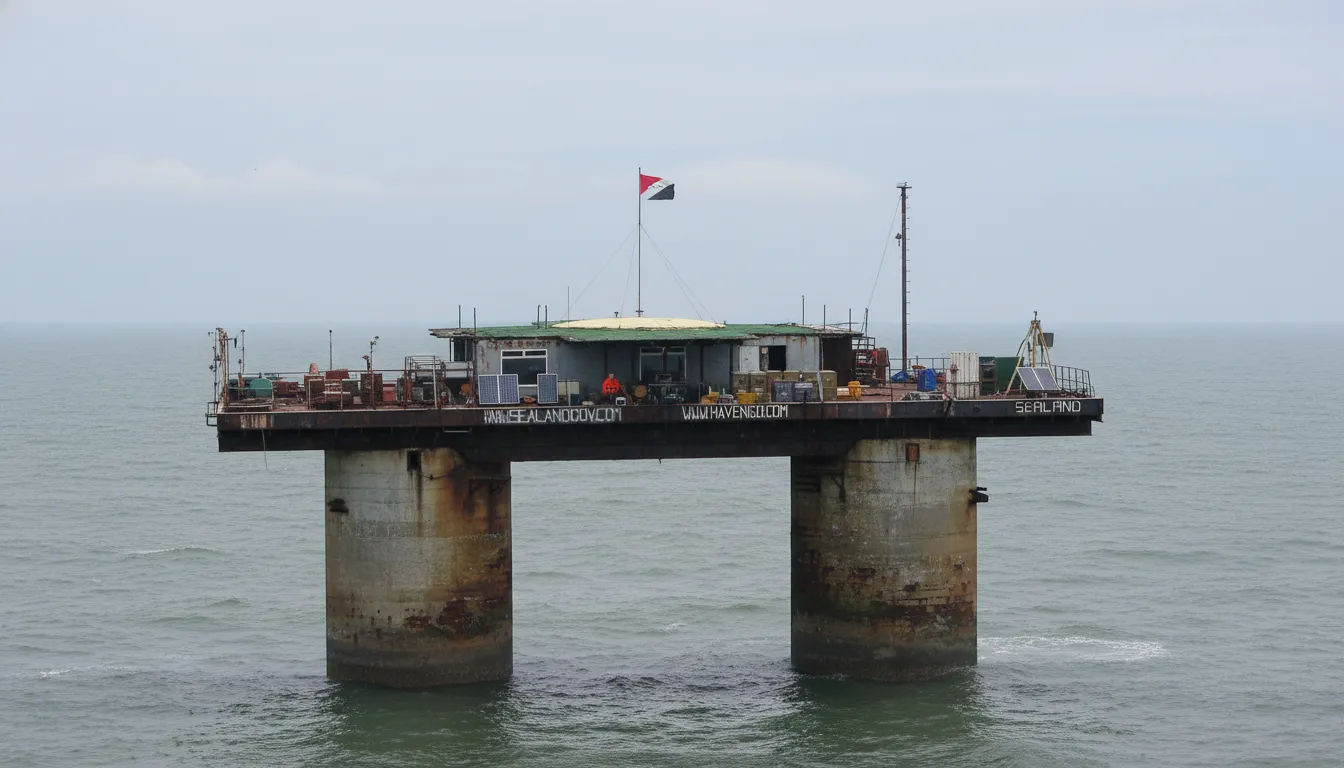
If you were to approach Sealand, either by boat or through the vivid imagination of its founders, you’d be struck by its stark, industrial beauty. The structure itself is essentially a massive concrete caisson, anchored to the seabed, with two hollow concrete towers rising about 18 meters above the waterline. These towers support a steel platform, on which the living quarters and various facilities are built. It’s a marvel of engineering, designed for survival in the harshest conditions.
On the platform, you'd see the Sealand flag, a striking red, white, and black banner, fluttering proudly in the wind. You might spot the helicopter landing pad, a necessity for such an isolated outpost. The interior, though rarely seen by outsiders, houses living quarters, a kitchen, a common room, and storage areas – everything needed for sustained habitation. It’s a minimalist existence, focused on self-sufficiency and resilience against the relentless elements of the North Sea.
While you won't find bustling markets or grand cathedrals, what you will find is a profound sense of history and defiance. Every inch of Sealand tells a story: the remnants of its wartime purpose, the scars of the 1978 coup, and the ongoing efforts of its caretakers, who embody the spirit of the Bates family. You'd feel the isolation, the vastness of the sea, and the sheer grit it takes to maintain a nation in such an improbable location. It's a place where the wind howls tales of ambition and the waves crash with the rhythm of an independent spirit.
Is a Visit to Sealand Possible? Practical Tips for the Intrepid Explorer
Now for the million-dollar question: can you actually visit the Principality of Sealand? The honest answer, for the vast majority of people, is no – at least not directly. Sealand remains a private residence and a self-declared sovereign state. Direct visits are extremely rare, usually by invitation only, and require significant logistical planning, often involving a helicopter or a specialized boat transfer in suitable weather conditions. Prince Michael, the current head of state, and his team maintain the fort, and access is tightly controlled for security and safety reasons.
However, that doesn't mean you can't experience the wonder of Sealand! For the intrepid explorer, the best way to "visit" is to take a boat tour from the nearby English coast. Operators from towns like Harwich or Felixstowe occasionally offer specialized charters or tours that sail *around* the Maunsell Forts, including Roughs Tower. These excursions provide incredible photographic opportunities and a chance to witness this unique structure from a respectful distance. You'll get a true sense of its isolation and the sheer scale of the North Sea surrounding it.
If you plan such a trip, remember that the North Sea weather can be notoriously unpredictable. Always check forecasts and choose a reputable tour operator. Dress warmly, even in summer, and be prepared for choppy waters. While you won't be stepping foot on Sealand, seeing it rise defiantly from the waves is an unforgettable experience, a powerful reminder of what human spirit and a touch of eccentricity can achieve. It's a pilgrimage for those who believe in dreams, no matter how small or how far out to sea.
More Than Just a Fort: Sealand's Enduring Legacy
The Principality of Sealand is more than just a quirky tourist attraction or a historical footnote; it's a profound statement. It challenges our definitions of sovereignty, nationhood, and freedom. It's a symbol of the ultimate DIY project, a family's unwavering commitment to their dream against all odds. From its origins as a wartime fort to its current status as an enduring micronation, Sealand has captured the imagination of millions.
It has appeared in documentaries, inspired artists, and even played a role in the early days of internet hosting, attempting to provide a haven for data beyond governmental reach. While its political status remains largely unrecognized by the international community, its cultural impact is undeniable. Sealand stands as a monument to human ingenuity, fierce independence, and the enduring allure of a truly unique story. It reminds us that even in a world seemingly mapped and claimed, there's always room for a little bit of magic, a little bit of defiance, and a dream perched on two concrete pillars in the middle of the sea.
Essential Travel Information
- Location Principality of Sealand (Roughs Tower), United Kingdom (claimed independent nation)
- Best Time Summer months (June to August) for calmer seas and better weather for boat tours around the fort.
- Getting There Direct access to Sealand is by invitation only. The best way to see it is via boat tours operating from coastal towns like Harwich or Felixstowe in the UK, which sail around the fort.
- Airport London Stansted Airport (STN), London Southend Airport (SEN)
- Budget Mid-range (for boat tours around the fort, actual visit budget is N/A)
- Language English
Find Places to Stay Near Principality of Sealand (Roughs Tower)
Compare hotels, hostels, and unique stays in United Kingdom (claimed independent nation).
Search AccommodationTours & Experiences Near Principality of Sealand (Roughs Tower)
Book guided tours, day trips, and unique experiences.
Browse Tours