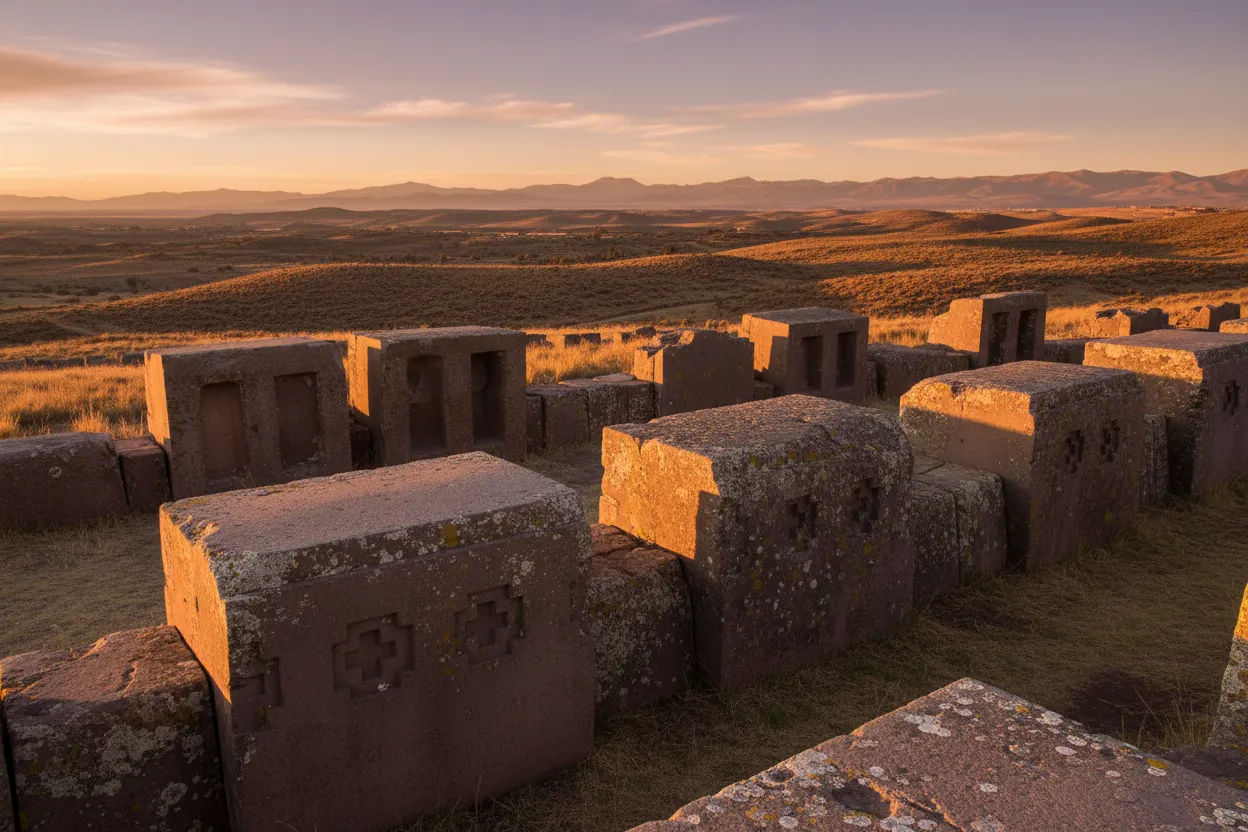
Imagine ancient ruins with stonework so impossibly precise, it baffles modern engineers and sparks theories of lost technologies or even alien intervention. This isn’t a scene from a sci-fi movie, but a very real, tangible place hidden high in the Bolivian Andes. Welcome to Pumapunku, a site that doesn't just whisper tales of a forgotten past, but shouts questions at our understanding of history itself. If you're a traveler who craves genuine mystery, who loves to challenge conventional wisdom, and who dreams of standing where the impossible was made manifest, then buckle up. Pumapunku is waiting to blow your mind.
What Makes Pumapunku So Uniquely Special?
Nestled in the La Paz Department of Bolivia, just a stone's throw from the more famous Tiwanaku ruins, Pumapunku stands apart. While Tiwanaku impresses with its scale and historical significance, Pumapunku captivates with an almost alien level of craftsmanship. We're talking about megalithic stones, some weighing over 100 tons, cut with an uncanny, almost surgical accuracy. Think about that for a moment: 100-ton blocks, moved, shaped, and fitted with the kind of precision we'd struggle to achieve with today's laser-guided tools, let alone what was available to ancient civilizations.
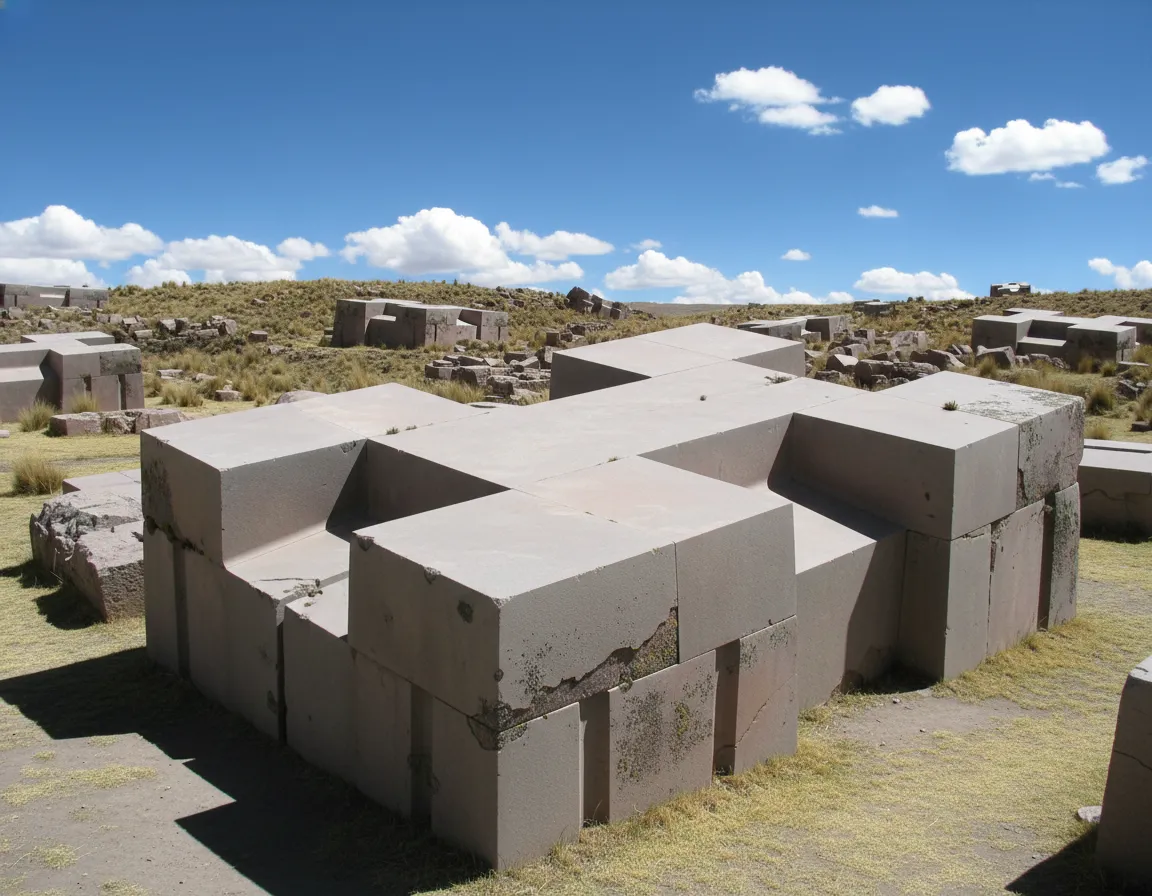
The site is a perplexing jumble of these colossal stones, many of them scattered as if a giant's toy set was abruptly knocked over. But look closer, and the true enigma emerges. You'll find perfectly interlocking H-blocks, almost like gigantic LEGO bricks designed to fit together without mortar. There are drilled holes that are perfectly cylindrical, some extending deep into the stone, others serving as precise sockets. The surfaces are so smooth, so perfectly flat, they defy the known capabilities of ancient tools. How did they achieve such perfect right angles, such razor-sharp edges, such flawless planar surfaces without iron tools or even the wheel?
This isn't just "good" stonework for its time; it's stonework that challenges our very definition of what was possible. It suggests a mastery of materials, geometry, and engineering far beyond what archaeologists typically attribute to pre-Columbian cultures. It's a compelling enigma that makes you question everything you thought you knew about prehistoric capabilities, begging for explanations that sometimes feel more at home in a conspiracy theory than a history book.
Whispers from the Past: History and Background
Pumapunku, meaning "Gate of the Puma" in Aymara, was once part of a sprawling complex that served as a major ceremonial and political center for the Tiwanaku culture. This sophisticated civilization flourished in the high Andes between roughly 500 AD and 1000 AD, predating the Inca Empire by centuries. The Tiwanaku people were master agriculturalists, astronomers, and artists, but it's their architectural prowess, particularly at Pumapunku, that truly leaves us speechless.
Archaeologists believe Pumapunku was a monumental temple complex, possibly a terraced platform or pyramid, adorned with polished metal plaques and intricate carvings. It would have been a dazzling spectacle, a testament to the power and advanced knowledge of the Tiwanaku elite. The precise interlocking blocks were not just for aesthetics; they were designed to withstand the harsh seismic activity common in the Andes, creating structures of remarkable stability and longevity.
However, the Tiwanaku civilization eventually collapsed, likely due to a prolonged drought that devastated their agricultural base. Pumapunku, like the rest of the capital, was abandoned and fell into ruin. The structures we see today are not just the result of natural decay; evidence suggests the site was systematically dismantled, perhaps by subsequent cultures reusing the materials, or even by the Tiwanaku themselves in a final, desperate act. The scattered blocks, the broken H-sections – they are fragments of a grand design, a puzzle waiting to be reassembled, both physically and intellectually.
The precise dating of Pumapunku is also a subject of debate. While the Tiwanaku culture is generally placed in the first millennium AD, some researchers, looking at the advanced nature of the stonework, propose much older origins, even suggesting a connection to a "mother culture" that predates known civilizations. These theories, while controversial, highlight just how profoundly the site challenges our conventional archaeological timelines and understanding of human technological development.
Stepping Among the Giants: What You'll See There
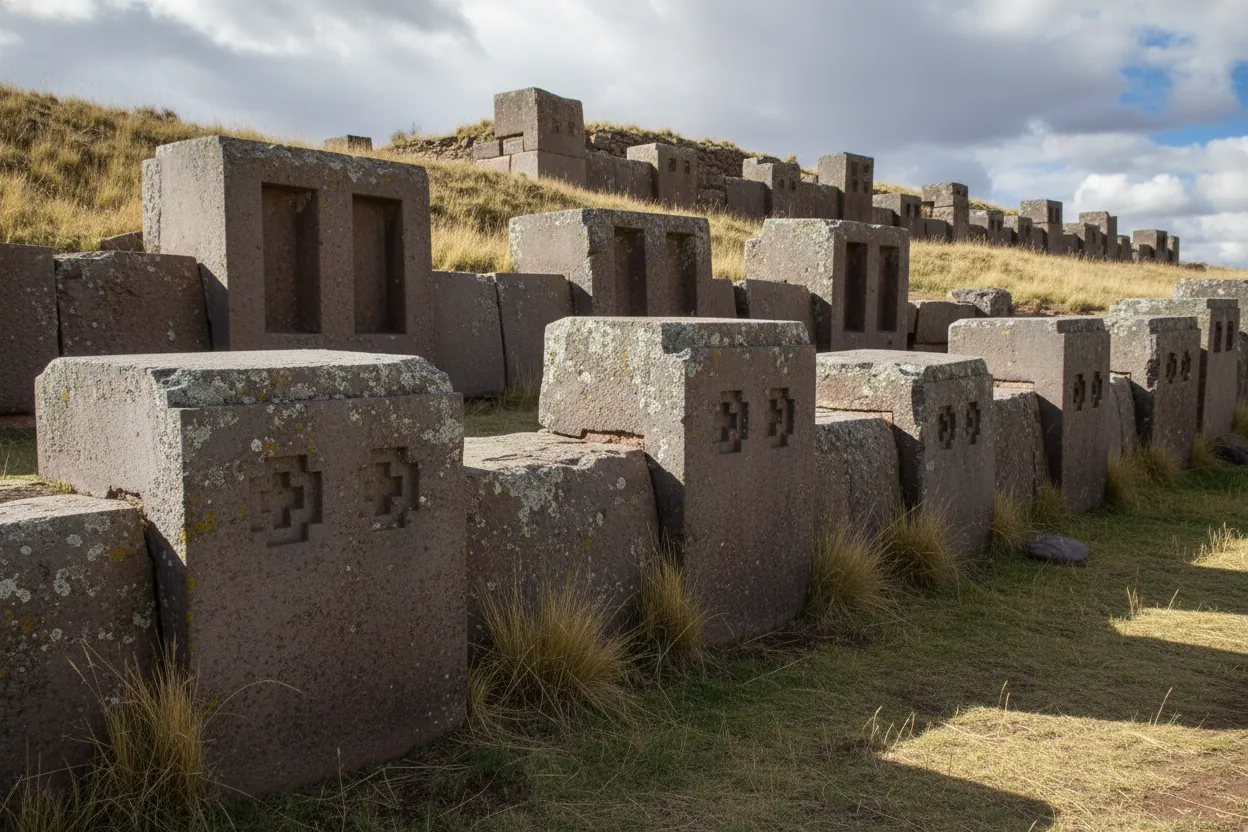
Your visit to Pumapunku is less about towering structures and more about an intimate encounter with individual stones that tell an incredible story. As you wander through the site, you'll be struck by the sheer scale of the scattered debris. Imagine a building made of perfectly cut, enormous puzzle pieces, then imagine that building exploded outwards.
Focus your attention on the details. Seek out the famous H-blocks – these are perhaps the most compelling evidence of advanced craftsmanship. Notice how their internal angles and external dimensions are consistent across multiple blocks, suggesting a system of standardized measurements and prefabrication. Run your hand over the incredibly smooth surfaces, often polished to a mirror-like finish, and ponder how this was achieved without modern abrasives.
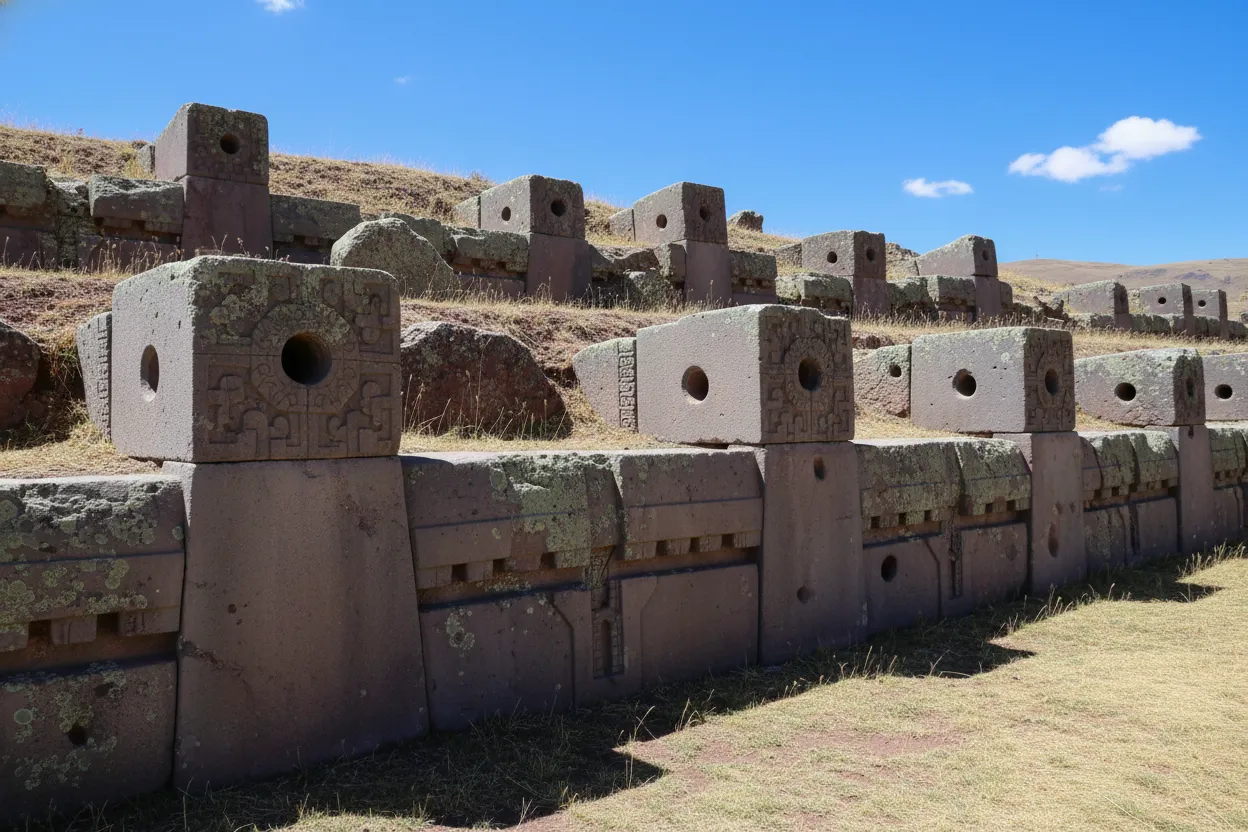
Look for the precise drill holes, some perfectly cylindrical, others conical, indicating a sophisticated understanding of drilling techniques. Some blocks feature intricate, shallow relief carvings that are still visible, suggesting decorative elements that once adorned this magnificent complex. You might even spot the remnants of ancient drainage systems, also precisely cut, hinting at a sophisticated understanding of hydraulics and engineering.
It's an experience that encourages quiet contemplation. Each block, each cut, each angle is a question mark. How did they quarry these stones from distant locations? How did they transport them across challenging terrain? How did they achieve such unparalleled precision without metal tools or the wheel? And what was the ultimate purpose of this extraordinary place? Pumapunku invites you not just to observe, but to actively participate in the mystery, to hypothesize, and to marvel at the ingenuity of a people whose full story we are still struggling to uncover.
Your Journey to the Edge of History: Practical Visit Tips
Visiting Pumapunku is an unforgettable adventure, but it requires a bit of planning to make the most of it. Here’s what you need to know:
Getting There: Pumapunku is located about 72 kilometers (45 miles) west of La Paz, Bolivia, in the La Paz Department. The easiest way to visit is by taking a guided tour from La Paz. Many tour operators offer day trips that combine Pumapunku with the nearby Tiwanaku ruins, which is highly recommended as they are part of the same ancient cultural complex. Alternatively, you can take a local bus (colectivo) from La Paz to Tiwanaku village and then walk or take a short taxi ride to the sites. Ensure your transportation is reliable, especially if going independently.
Altitude Acclimatization: Both Pumapunku and Tiwanaku are situated at an altitude of approximately 3,850 meters (12,630 feet) above sea level. This is high! It's crucial to spend a few days acclimatizing in La Paz (which is even higher) before heading to the ruins. Drink plenty of water, avoid alcohol and heavy meals, and take it easy. Even a short walk at this altitude can be tiring.
What to Bring:
- Water: Stay hydrated is key at altitude.
- Sun Protection: The sun is intense at this elevation. Bring a wide-brimmed hat, sunglasses, and high-SPF sunscreen.
- Layers: The weather can change rapidly. Dress in layers to adapt to temperature fluctuations. A warm jacket is essential, even on sunny days.
- Comfortable Shoes: You'll be walking over uneven terrain.
- Snacks: While there might be vendors, it’s always good to have some energy bars.
- Cash: For entrance fees, souvenirs, and any local snacks.
Guides: While you can explore on your own, hiring a local guide (often available at the entrance or included with tours) is highly recommended. They can provide invaluable context, point out specific features you might otherwise miss, and share local perspectives on the mysteries of the site.
Respect the Site: Pumapunku is an archaeological treasure. Stick to marked paths, do not climb on the stones, and do not remove anything from the site. Help preserve this incredible place for future generations.
Pumapunku is more than just a collection of old stones; it’s a portal to a profound mystery, a challenge to our historical narratives, and a testament to an ancient ingenuity that continues to astound. It's a destination that promises not just sights, but a truly mind-bending experience. Don't just read about the impossible; go and witness it for yourself. Your perspective on ancient history, and perhaps even modern capabilities, might just be irrevocably changed.
Essential Travel Information
- Location Pumapunku, Bolivia
- Best Time May to October (dry season)
- Getting There Day trip by guided tour or local bus from La Paz, Bolivia.
- Airport El Alto International Airport (LPB)
- Budget Budget/Mid-range (approx. $30-60 USD per day excluding international flights, including basic accommodation, food, and local transport/tours)
- Language Spanish, Aymara, Quechua
Find Places to Stay Near Pumapunku
Compare hotels, hostels, and unique stays in Bolivia.
Search AccommodationTours & Experiences Near Pumapunku
Book guided tours, day trips, and unique experiences.
Browse Tours