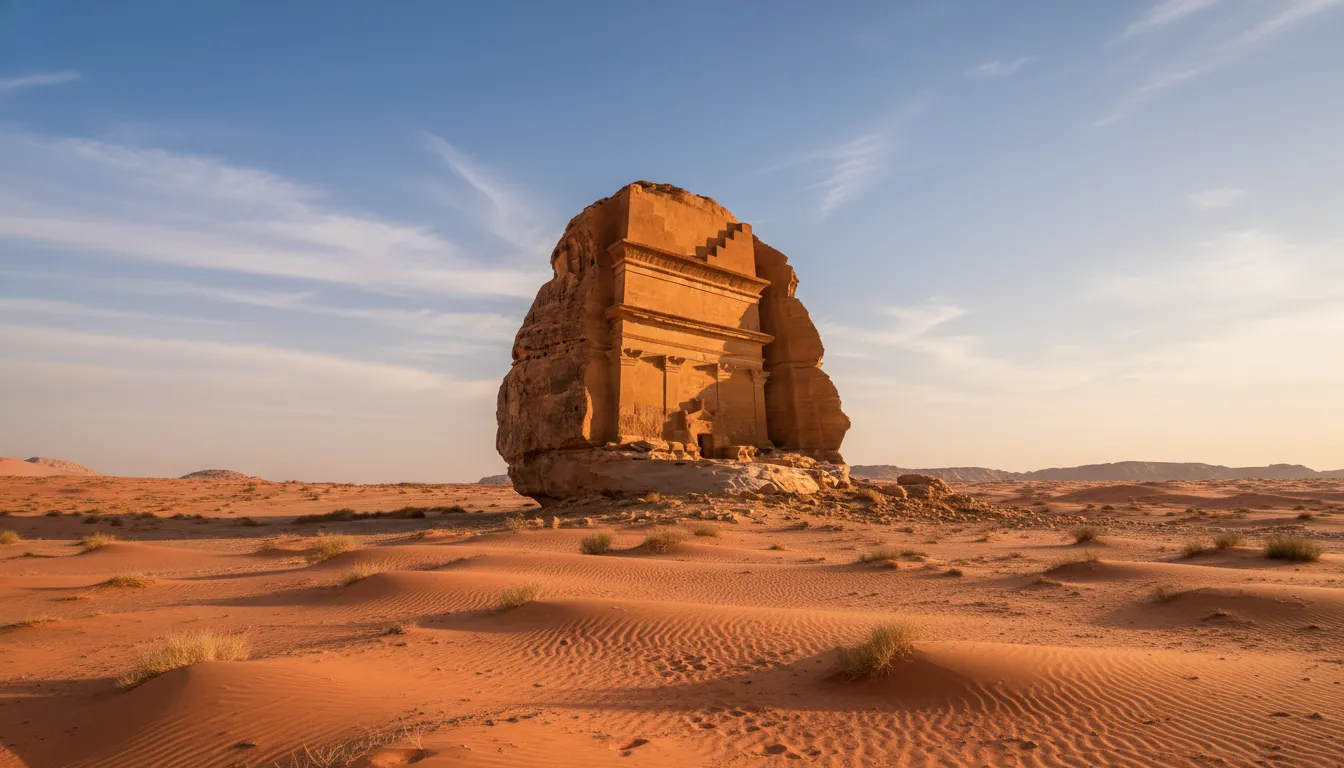
Imagine this: you’re deep in a vast, silent desert canyon, the sun painting the sandstone cliffs in hues of ochre and gold. Before you, utterly alone, stands a monumental structure, perfectly preserved, carved directly into a single, towering rock face. It’s a tomb, majestic and enigmatic, with four imposing pillars reaching skyward. Your mind immediately jumps to Petra, doesn't it? But this isn't Jordan. This is Qasr al-Farid, 'The Lonely Castle,' nestled in the ancient heart of Saudi Arabia's AlUla region, and it's an experience that will redefine your understanding of ancient wonders.
Qasr al-Farid: The Lonely Castle's Enduring Mystery
There are places that simply take your breath away, and then there's Qasr al-Farid. This isn't just another ancient ruin; it's a masterpiece of Nabataean architecture, the largest and most iconic of the 131 monumental tombs at Hegra (Mada'in Saleh), Saudi Arabia's very first UNESCO World Heritage Site. From the moment you first lay eyes on it, its sheer scale and intricate detail are mesmerizing. Unlike its counterparts, Qasr al-Farid stands solitary, a testament to a bygone era, commanding attention with its sheer presence amidst the boundless desert.
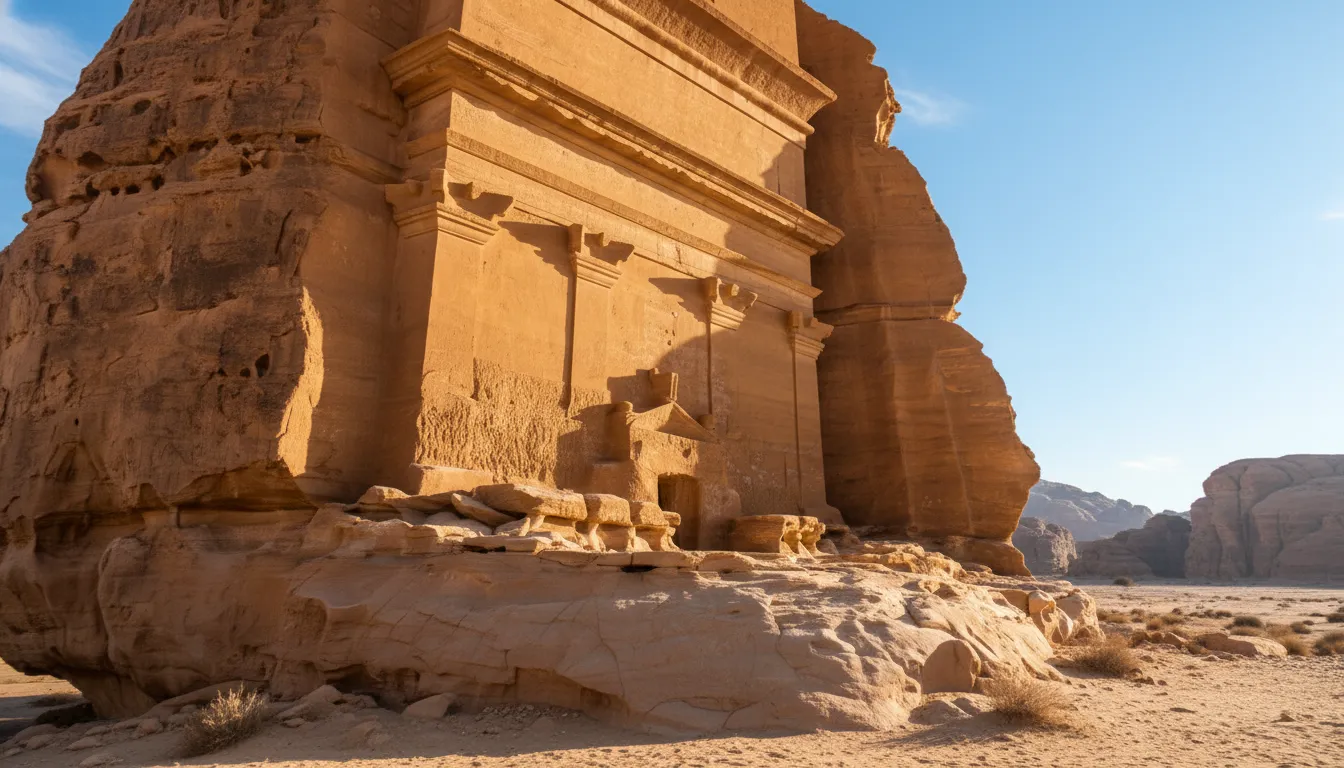
What makes Qasr al-Farid so profoundly fascinating, beyond its grandeur, is a subtle detail that tells a complex story: its four magnificent pillars are unfinished at the bottom. This isn't an oversight; it's believed to be a deliberate choice, perhaps signifying the owner's lower social status compared to the elite, despite the tomb's otherwise opulent design. It's an enigmatic blend of ambition and humility, a paradox frozen in stone. Imagine the individual who commissioned such a grand final resting place, yet chose to leave a mark of their place in society. This detail adds layers of human story to the already breathtaking architecture, inviting contemplation on life, death, and social hierarchies in an ancient world. It’s a silent dialogue between the past and present, a whisper of a life lived and a statement made for eternity.
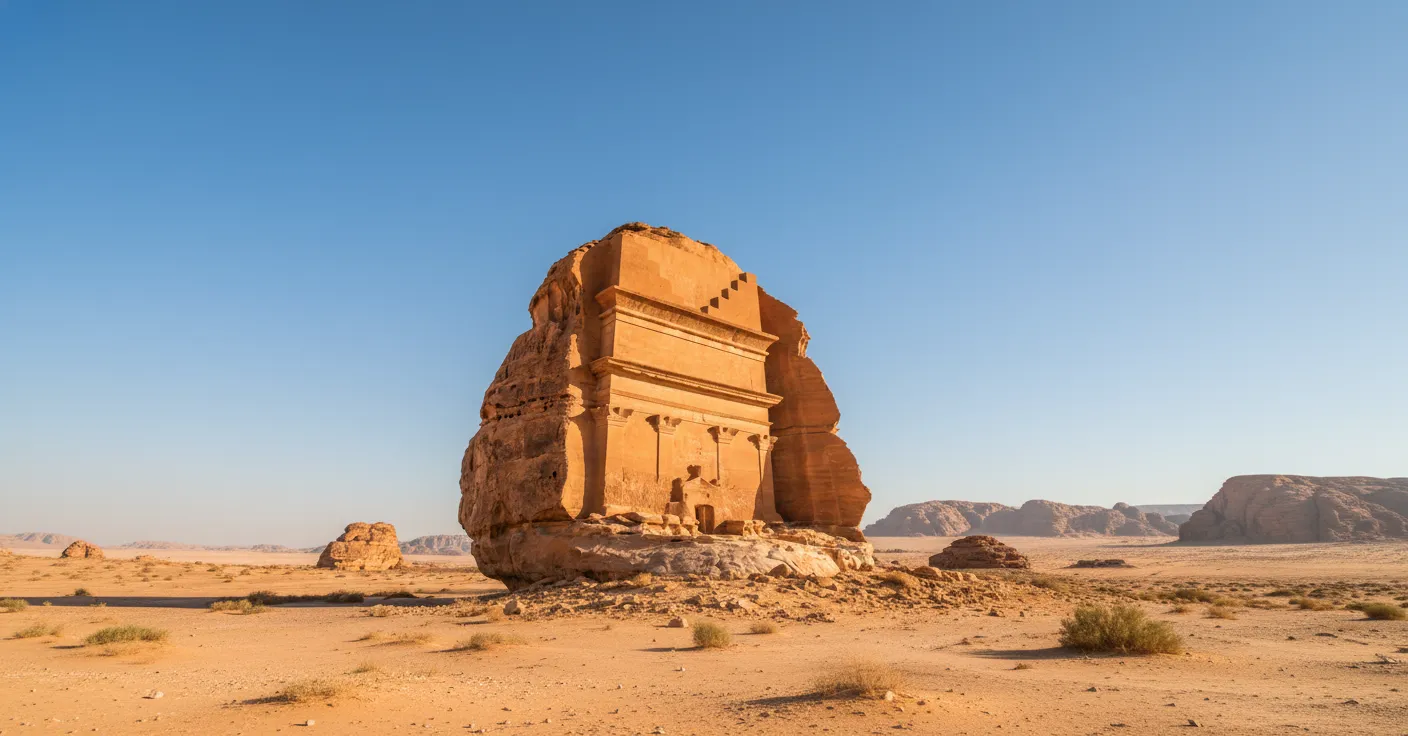
The craftsmanship is extraordinary, showcasing the Nabataeans' mastery of stone carving. Each detail, from the ornate capitals to the subtle decorative elements, speaks of a sophisticated civilization that flourished in this seemingly inhospitable landscape. To stand before Qasr al-Farid is to feel a profound connection to history, to marvel at human ingenuity, and to ponder the stories etched into these ancient rocks. It’s a place that humbles you while simultaneously igniting a sense of wonder that few other sites can match.
Echoes of the Past: A Glimpse into Nabataean Hegra
Qasr al-Farid is the crown jewel of Hegra, but to truly appreciate its significance, one must understand the civilization that created it. The Nabataeans were an ancient Arab people who established a powerful kingdom with its capital in Petra (modern-day Jordan). Hegra, known in antiquity as Mada'in Saleh, served as their second-largest city and a crucial southern outpost along the lucrative incense trade route. Imagine a bustling metropolis thriving in the desert, a hub of commerce and culture, connecting the Arabian Peninsula with the Mediterranean world.
For centuries, from the 1st century BCE to the 1st century CE, the Nabataeans controlled vital trade networks, growing immensely wealthy from taxing the caravans laden with frankincense, myrrh, spices, and other precious goods. Their wealth allowed them to create magnificent cities and elaborate burial sites, demonstrating their architectural prowess and their unique fusion of Hellenistic, Egyptian, and Mesopotamian artistic influences. Hegra, with its 131 rock-cut tombs, served as a necropolis for their elite, each tomb a permanent declaration of status and a belief in the afterlife.
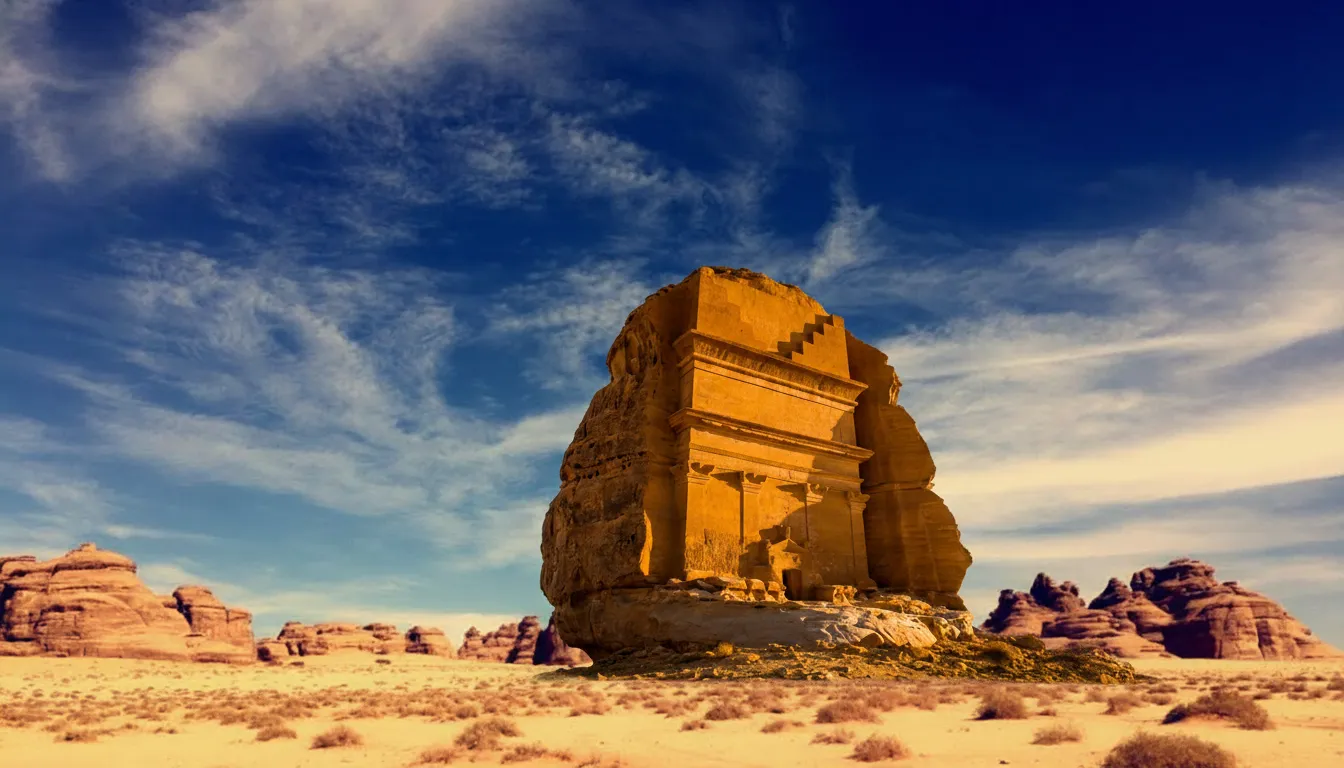
The Nabataean kingdom eventually fell to the Romans in 106 CE, and Hegra, once a vibrant city, slowly faded into obscurity, preserved by the desert sands. This isolation is precisely what makes it so special today. Unlike many other ancient sites, Hegra remains remarkably untouched, its structures standing as they did millennia ago, waiting to share their stories with those who seek them out. It's a rare privilege to walk among these ancient giants, to touch the same stone that Nabataean artisans carved, and to feel the weight of history in every breeze that sweeps through the canyons.
Exploring Hegra: Beyond Qasr al-Farid's Grandeur
While Qasr al-Farid is undoubtedly the star, Hegra offers an expansive landscape of archaeological wonders that invite deeper exploration. The site is vast, and you'll typically explore it with a knowledgeable guide who can bring the history to life. Beyond 'The Lonely Castle,' you'll encounter numerous other tomb clusters, each with its own unique characteristics and stories. Some are simple, others are grand, adorned with intricate inscriptions and symbols that hint at the lives and beliefs of those interred within.
The tombs are not just architectural marvels; they are also historical documents. Many feature detailed inscriptions in the Nabataean script, providing names, dates, and even curses against anyone who dared to disturb the eternal rest of the deceased. These epigraphs offer invaluable insights into Nabataean society, their legal system, and their religious practices. You'll see tombs with false doors, meant to confuse grave robbers, and others with elaborate facades that mimic temples or homes, reflecting the Nabataean desire for a comfortable afterlife.
Beyond the tombs, you'll discover other remnants of the Nabataean presence, including wells that demonstrate their ingenious water management techniques in an arid environment. The sheer scale of the site and the dramatic desert landscape provide a stunning backdrop to these ancient treasures. As you journey through Hegra, you're not just observing; you're stepping into a meticulously preserved world, experiencing the grandeur of a civilization that mastered the desert and left an indelible mark on human history. It's an adventure that combines historical discovery with breathtaking natural beauty.
Planning Your Journey to Saudi Arabia's Ancient Heart
Visiting Qasr al-Farid and the wider Hegra site is an unforgettable journey, but it requires some planning to ensure a smooth and enriching experience. AlUla, the region where Hegra is located, is rapidly developing into a premier global heritage destination, offering world-class facilities while preserving its historical integrity.
The **best time to visit** AlUla and Hegra is during the cooler months, typically from October to April. Temperatures during this period are much more pleasant for exploring the outdoor sites, allowing you to comfortably wander among the tombs and enjoy the desert landscape. Summers can be extremely hot, making extended outdoor activities challenging.
To **get there**, the most convenient way is to fly directly to Prince Abdul Majeed bin Abdulaziz International Airport (ULH) in AlUla. Several airlines offer direct flights from major Saudi cities like Riyadh and Jeddah, and increasingly, international connections are becoming available. Once you arrive, guided tours are mandatory for entering Hegra. These tours are typically booked through the official AlUla visitor centers or authorized tour operators. They provide transportation within the site, along with expert guides who offer invaluable context and stories.
AlUla offers a range of **accommodation options**, from luxury resorts that blend seamlessly with the natural environment to more boutique experiences. It's advisable to book well in advance, especially during peak season, as the region's popularity continues to grow. When visiting, remember to dress respectfully, particularly when exploring cultural sites. Lightweight, modest clothing is recommended, along with comfortable walking shoes, a hat, sunscreen, and plenty of water.
A trip to Qasr al-Farid and Hegra isn't just a vacation; it's an immersion into an ancient world, an opportunity to witness architectural genius, and a chance to connect with a civilization that defied the odds to thrive in the desert. It's a journey that will leave you with lasting memories and a profound appreciation for the enduring power of human endeavor. Don't just dream of ancient wonders; come and discover them for yourself in the heart of AlUla.
Essential Travel Information
- Location Qasr al-Farid, Saudi Arabia
- Best Time October to April (cooler months)
- Getting There Fly to Prince Abdul Majeed bin Abdulaziz International Airport (ULH) in AlUla. Guided tours are essential for Hegra and can be booked via official AlUla channels.
- Airport Prince Abdul Majeed bin Abdulaziz International Airport (ULH)
- Budget Luxury (approx. $300-$800+ USD per day, depending on accommodation and activities)
- Language Arabic (English widely spoken in tourist areas and by guides)
Find Places to Stay Near Qasr al-Farid
Compare hotels, hostels, and unique stays in Saudi Arabia.
Search AccommodationTours & Experiences Near Qasr al-Farid
Book guided tours, day trips, and unique experiences.
Browse Tours