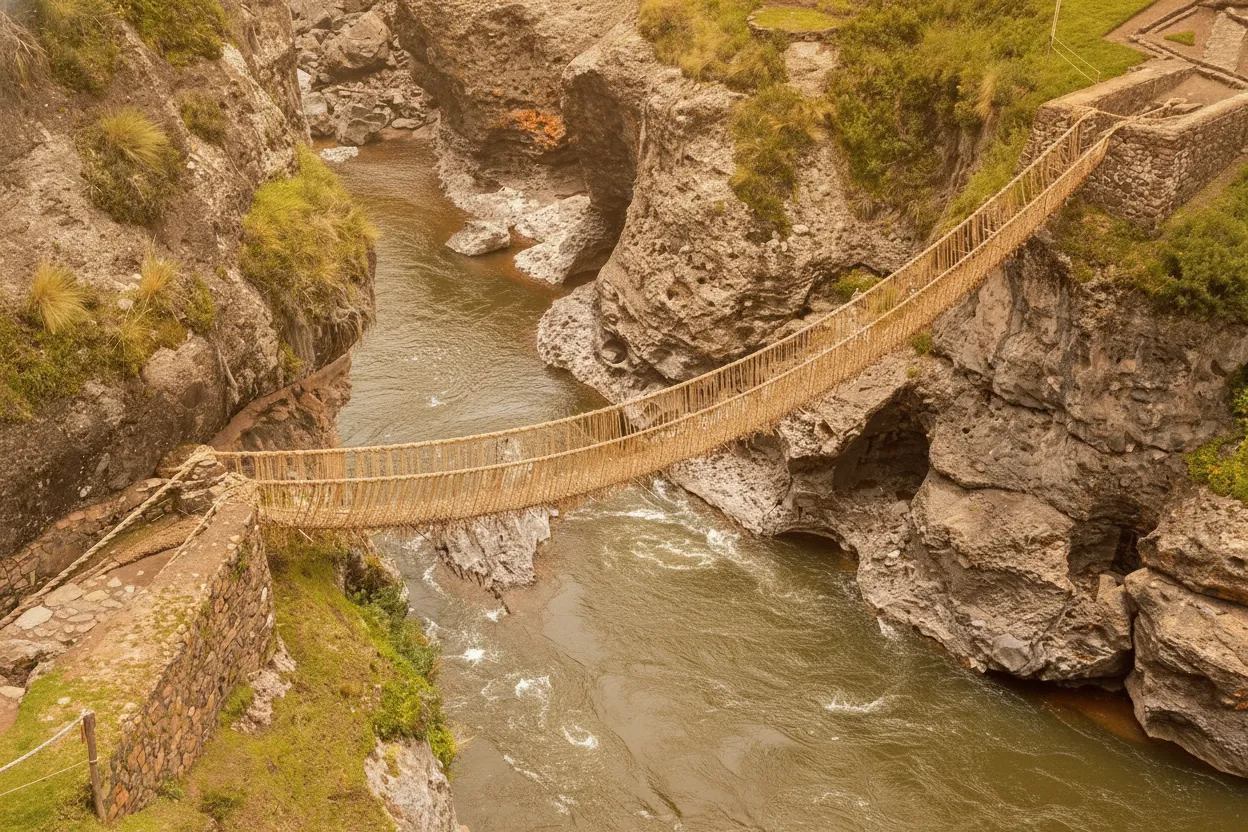
Imagine traversing a bridge made entirely of woven grass, swaying gently high above a rushing river. Now, imagine this isn't some ancient ruin, but a vibrant, living landmark – the last remaining handwoven rope bridge of the Inca Empire, astonishingly rebuilt by four local communities using ancient techniques, *every single year*. Welcome to Q'eswachaka, a hidden marvel nestled deep within Peru’s Cusco Region, where history isn't just preserved; it's meticulously rewoven, strand by sacred strand, keeping a 500-year-old tradition vibrantly alive. This isn't just a bridge; it's a profound journey into the heart of ancestral ingenuity and communal spirit, offering a tangible link to a civilization that continues to defy time.
Q'eswachaka: A Living Legacy, Woven Anew Every Year
Most ancient wonders exist as silent monuments, their stories whispered by crumbling stones. Q'eswachaka, however, is an anomaly, a living testament to an unbroken lineage of skill, faith, and community. This isn't a museum piece behind velvet ropes; it's a vital, functional artery that has connected people across the formidable Apurímac River canyon for centuries. What makes it truly extraordinary is its annual rebirth. Every June, as the Andean winter settles in, four Quechua communities – Huinchiri, Chaupibanda, Choccayhua, and Ccollana Quehue – converge for a three-day ritual unlike any other on Earth.
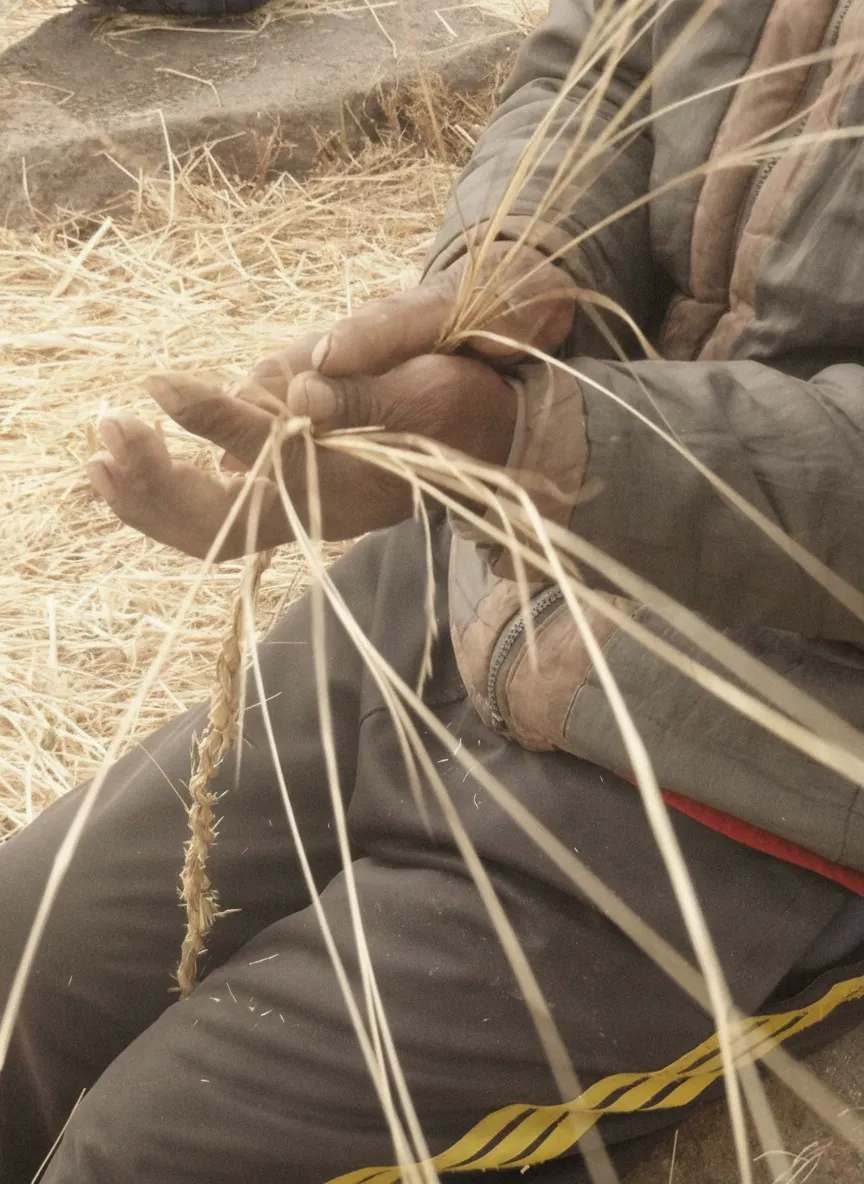
This isn't just a maintenance project; it's a sacred festival, a communal undertaking steeped in reverence and tradition. The process begins with the meticulous gathering of thousands upon thousands of strands of ichu grass, a native Andean plant. The men and women of the communities then braid these individual strands into thick, sturdy ropes. The old bridge, having served its purpose for a year, is ceremoniously dismantled, its ancient fibers returned to the earth. Then, with incredible precision and synchronized effort, the new bridge is woven into existence. Master bridge builders, known as 'Chaca Camayocs', lead the intricate work, their knowledge passed down through generations, ensuring every knot, every braid, every tension point is perfect. The air buzzes with activity, laughter, and the rhythmic chants of workers as they pull, twist, and secure the massive cables that will form the new pathway.
To witness this event, or even to cross the finished bridge, is to feel the pulse of an ancient civilization. It's a powerful reminder that the Inca Empire wasn't just about grand stone cities; it was about ingenious engineering, profound respect for nature, and an unbreakable communal bond. Q'eswachaka stands not just as a physical crossing, but as a symbolic bridge connecting the past with the present, demonstrating the enduring strength of Quechua culture.
Stepping Back in Time: The Enduring History of Inca Rope Bridges
The Inca Empire, Tawantinsuyu, was a marvel of organization and engineering, stretching thousands of miles across the rugged Andean landscape. Central to its ability to govern, trade, and communicate across such vast and varied terrain was its sophisticated road system, the Qhapaq Ñan (the Royal Road), a UNESCO World Heritage site in its own right. But what good is a road if a deep canyon or a raging river blocks the way? This is where the Inca rope bridges, known as 'k'eswachaka' (meaning 'braided rope bridge' in Quechua), became indispensable.
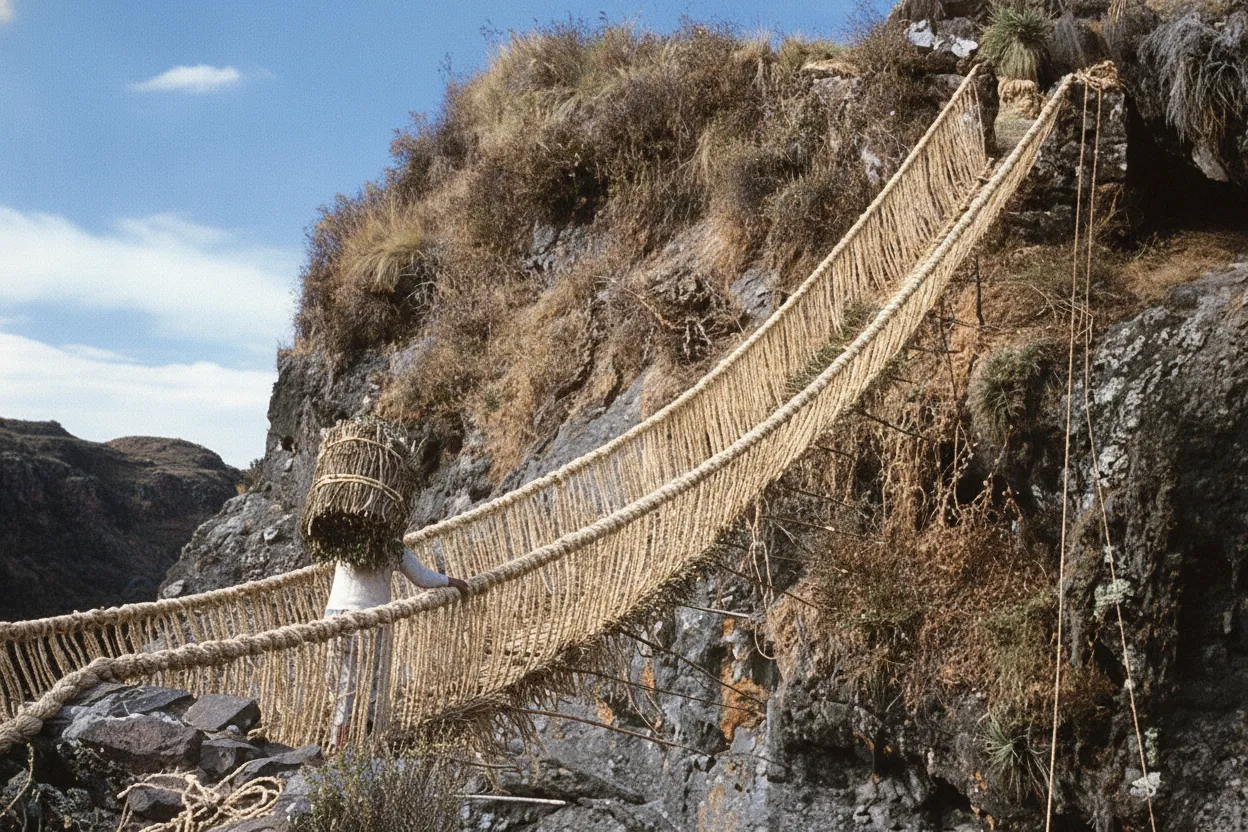
These bridges were not merely functional; they were feats of engineering genius, designed to withstand the harsh Andean elements and the constant flow of people and goods. Constructed from natural fibers like ichu grass, cotton, or even alpaca wool, they were surprisingly strong and flexible. The design typically involved four main cables forming the walkway, with two additional handrail cables, all anchored to massive stone abutments on either side of the canyon. The genius lay in their flexibility; unlike rigid structures, these bridges could sway and absorb the forces of wind and even minor earthquakes, making them remarkably resilient.
During the height of the Inca Empire, hundreds of these bridges crisscrossed the Andes, vital arteries for messengers (chasquis), armies, and merchants. They were maintained by local communities, much like Q'eswachaka is today, as a form of communal labor known as 'mita'. This system ensured that the empire's infrastructure remained intact and functional. With the arrival of the Spanish conquistadors, many of these bridges fell into disrepair or were deliberately destroyed. The Spanish, accustomed to stone arch bridges, often failed to grasp the ingenious simplicity and effectiveness of the Inca designs. Over the centuries, nearly all of them vanished, replaced by more 'modern' constructions. Q'eswachaka, nestled in a remote corner of the Cusco region, managed to escape this fate, its annual reconstruction ensuring its survival as the very last living example of this incredible Inca legacy.
The Q'eswachaka Experience: What You'll See and Feel
Visiting Q'eswachaka is more than just a sightseeing trip; it's an immersion into a profound cultural experience. As you approach the bridge, usually after a scenic (and sometimes bumpy) drive from Cusco, the first thing that strikes you is the sheer drama of the landscape. The Apurímac River carves a deep, verdant canyon, its waters rushing far below. Then, there it is: a slender, golden-brown ribbon of woven grass, stretching defiantly across the chasm, an almost unbelievable testament to human ingenuity against nature's grandeur.
Standing at one end, you can truly appreciate the craftsmanship. The thick, braided cables feel strong and ancient, yet remarkably fresh, especially if you visit shortly after the annual rebuild. Stepping onto the bridge itself is an experience that awakens all your senses. The bridge sways gently with your weight, a subtle, rhythmic motion that connects you to the earth and the wind. The sound of the river below is a constant murmur, and the crisp Andean air fills your lungs. You can feel the texture of the ichu grass beneath your feet, a direct, tangible link to the hands that wove it. Looking down, the view is breathtaking – the river, the steep canyon walls, and the endless Andean sky above.
If you're fortunate enough to visit during the annual reconstruction festival in June, the experience is amplified a thousandfold. The air is electric with anticipation and camaraderie. You'll witness the entire community, from elders to children, participating in this monumental task. The vibrant traditional clothing, the sounds of Quechua being spoken, the shared meals, and the palpable sense of purpose create an atmosphere that is truly unforgettable. It’s a powerful demonstration of collective strength and cultural pride, a living, breathing connection to a heritage that refuses to be forgotten. Even outside of the festival, the bridge itself, and the journey to reach it, offers a deep sense of peace and wonder, a feeling of having discovered something truly unique and profoundly authentic.
Planning Your Journey to Q'eswachaka: Practical Tips for an Unforgettable Visit
Q'eswachaka is a hidden gem, precisely because it’s not on the main tourist circuit. This remoteness is part of its charm, but it also means a bit more planning is required. Think of it as an adventure, a pilgrimage to a truly special place.
Best Time to Visit: The most spectacular time to visit is during the annual reconstruction festival, which typically takes place over three days during the second week of June. Dates vary slightly each year, so it's crucial to check local calendars or inquire with tour operators well in advance. Witnessing the rebuilding is an unparalleled cultural immersion. Outside of June, the bridge is still accessible and offers a quieter, contemplative experience. The dry season (May to October) generally offers better weather for travel in the Andes.
How to Get There: Q'eswachaka is located in the Quehue district, about a 3-4 hour drive south of Cusco. While it's technically possible to rent a car, the roads can be challenging, and navigation difficult. The most common and recommended way to visit is by joining a guided tour from Cusco. Many reputable tour operators offer full-day excursions that include transportation, a guide who can explain the history and cultural significance, and often a visit to other nearby attractions. Private transport with a driver can also be arranged, offering more flexibility.
What to Bring:
- Altitude Sickness: Q'eswachaka is at an elevation of around 3,700 meters (12,140 feet) above sea level. Acclimatize in Cusco for a day or two before your trip. Bring coca leaves or altitude sickness medication if you're prone to it.
- Layers: Andean weather can change rapidly. Bring warm layers, a waterproof jacket, hat, and gloves, even if the day starts sunny.
- Footwear: Sturdy, comfortable walking shoes are a must.
- Sun Protection: The sun at this altitude is intense. Bring high SPF sunscreen, sunglasses, and a wide-brimmed hat.
- Water & Snacks: While some tours provide these, it's always good to have extra.
- Camera: You'll want to capture the incredible scenery and the bridge itself.
- Cash: Small soles for any local purchases or gratuities.
Respectful Tourism: Remember that Q'eswachaka is a sacred site and a living tradition for the local communities. Be respectful of their customs, ask permission before taking photos of people, and support local economies responsibly. Your presence helps sustain this incredible heritage.
Accommodation: Most visitors experience Q'eswachaka as a day trip from Cusco. There are very limited, basic accommodation options in nearby towns, but Cusco offers a full range of hotels and hostels.
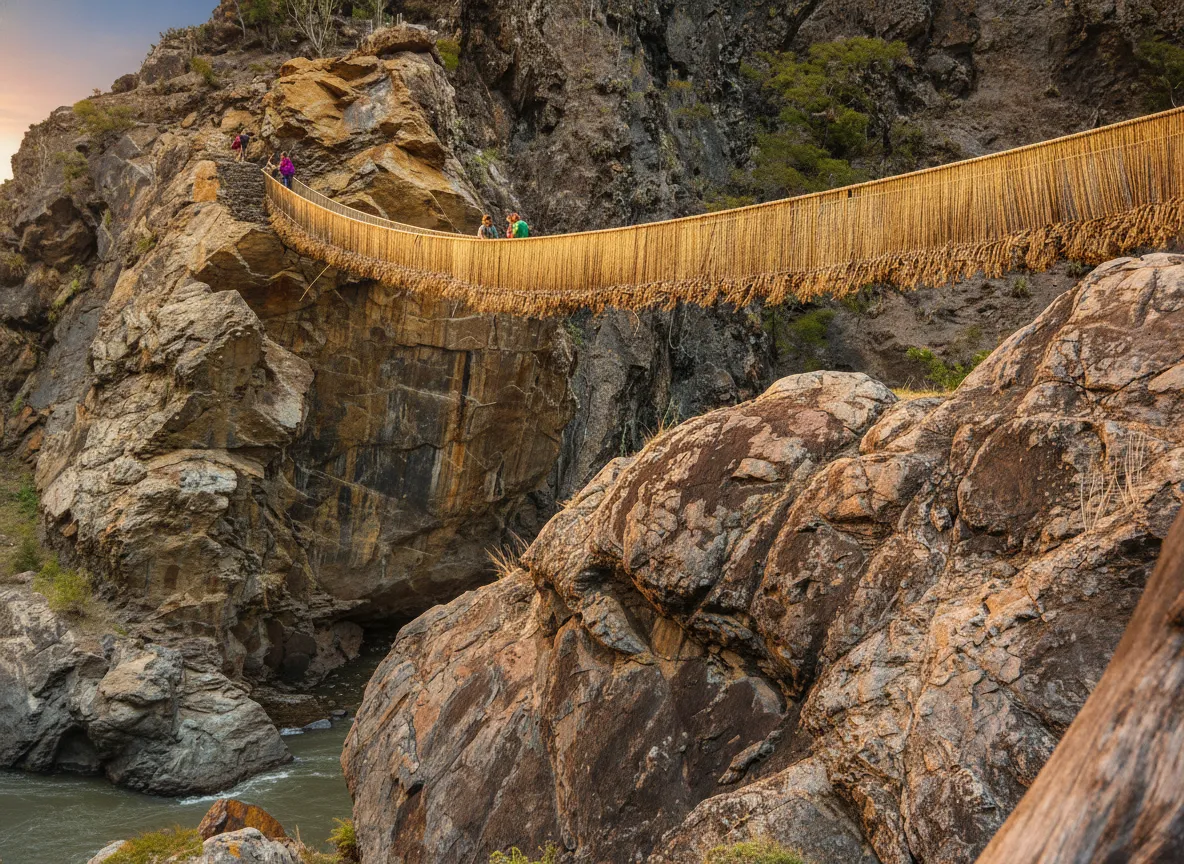
Q'eswachaka isn't just a destination; it's an experience that transcends time and offers a profound connection to human ingenuity and the enduring spirit of a culture. It's a reminder that some of the greatest wonders aren't found in grand, immutable structures, but in the living, breathing traditions that continue to shape our world. Add this extraordinary Inca rope bridge to your Peru itinerary, and prepare to step across a piece of history that is, quite literally, rewoven before your very eyes, year after year after year.
Essential Travel Information
- Location Q'eswachaka (Inca Rope Bridge), Peru
- Best Time June for the annual reconstruction festival; May-October for dry season travel.
- Getting There Approximately 3-4 hour drive south of Cusco. Best reached via a guided tour or private transport from Cusco.
- Airport Alejandro Velasco Astete International Airport (CUZ)
- Budget Mid-range (for guided tours from Cusco, approx. $50-100+ for a day trip)
- Language Spanish, Quechua
Find Places to Stay Near Q'eswachaka (Inca Rope Bridge)
Compare hotels, hostels, and unique stays in Peru.
Search AccommodationTours & Experiences Near Q'eswachaka (Inca Rope Bridge)
Book guided tours, day trips, and unique experiences.
Browse Tours