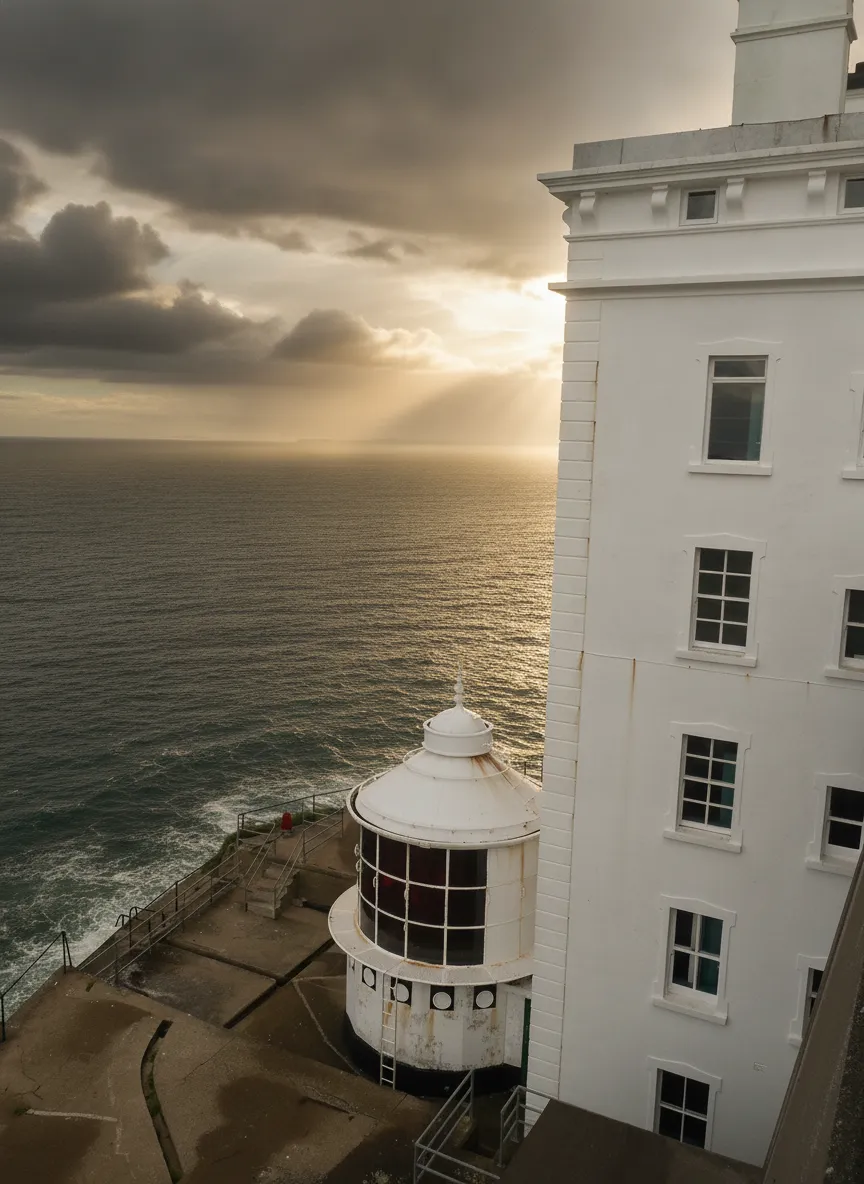
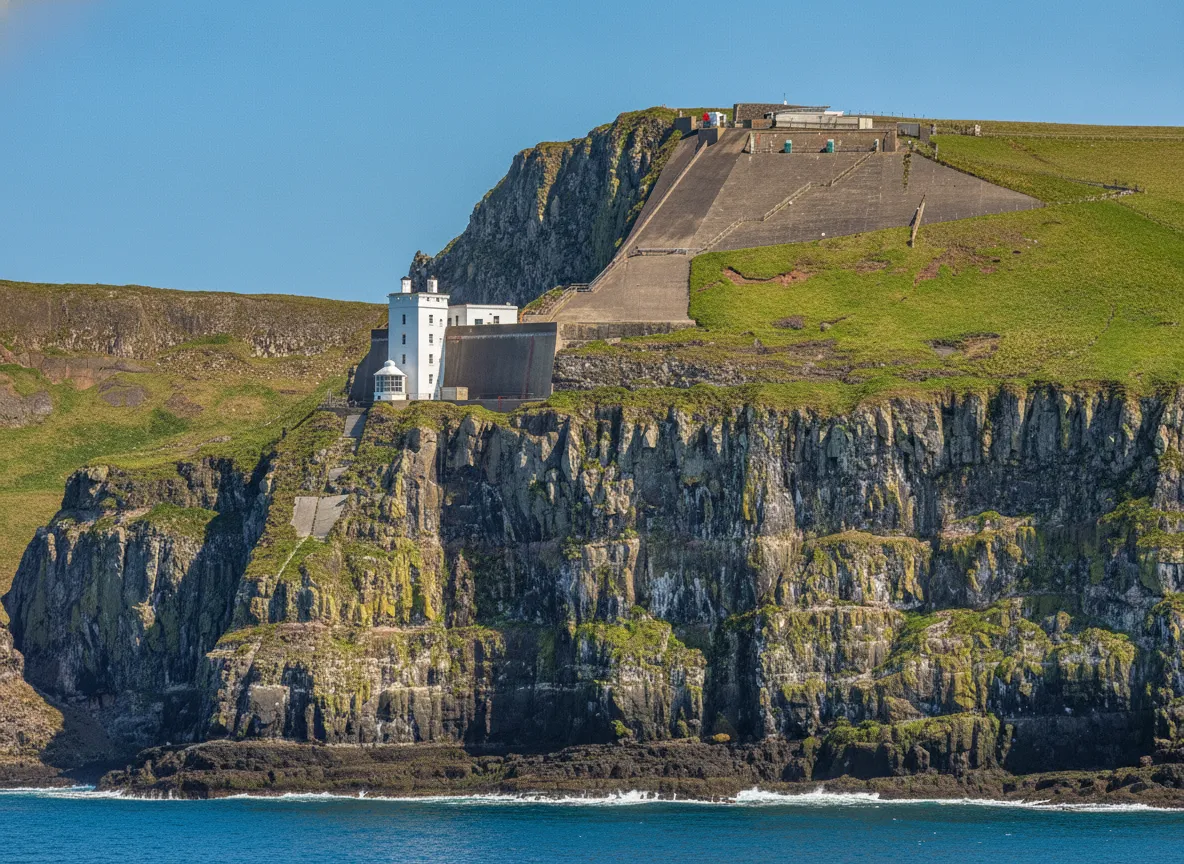
At the western tip of Rathlin Island, Northern Ireland, the Rathlin West Lighthouse has been guiding ships through treacherous waters since its completion in 1919. This isn't just any navigational aid; it's the world's only 'upside-down' lighthouse, an architectural anomaly that emerges directly from the cliff face, with its powerful warning light shining through its base, rather than from a conventional tower top.
Its unconventional design was born out of necessity, a brilliant solution to a unique geographical challenge. Unlike its brethren that proudly stand tall, projecting their beams from above, Rathlin West is built into the vertical rock, its lamp room situated *below* the level of the cliff path. From the sea, it appears as though the light is emanating from the very bottom of the structure, a seemingly impossible feat that has captivated engineers, mariners, and curious travelers for over a century.
This active aid to navigation, maintained by the Commissioners of Irish Lights, offers more than just a quirky engineering marvel. A visit here is an immersive journey into maritime history, a close encounter with dramatic natural beauty, and a chance to experience one of the most remarkable lighthouses on the planet. For those seeking genuine hidden gems and a story that defies expectation, Rathlin West Lighthouse is an unforgettable destination.
The Unconventional Brilliance of the Upside-Down Lighthouse
What exactly makes Rathlin West Lighthouse "upside-down"? Forget the classic image of a tall, white tower crowned with a lantern room. Here, the structure itself descends into the cliff. To reach the lamp, you don't climb up; you walk down. The light aperture, instead of being at the peak, is set into the seaward face of the cliff, allowing its beam to cut through the often-dense fog and low cloud that frequently shroud Rathlin Island's western reaches. This innovative placement ensures the light is always visible to ships navigating the turbulent North Channel, regardless of atmospheric conditions.
This isn't a mere aesthetic choice; it's a testament to ingenious problem-solving. The engineers faced a dilemma: a traditional lighthouse would have its light frequently obscured by the island's high cliffs and persistent fog. By sinking the light *into* the cliff, they effectively placed it beneath the fog line, ensuring its visibility when it mattered most. The result is a structure that is both functional and profoundly striking, a defiant beacon against the elements. Visitors can actually descend into the lighthouse, exploring its unique interior and standing at the very point where the light projects its life-saving beam.
A Glimpse into Maritime History: Conception and Operation
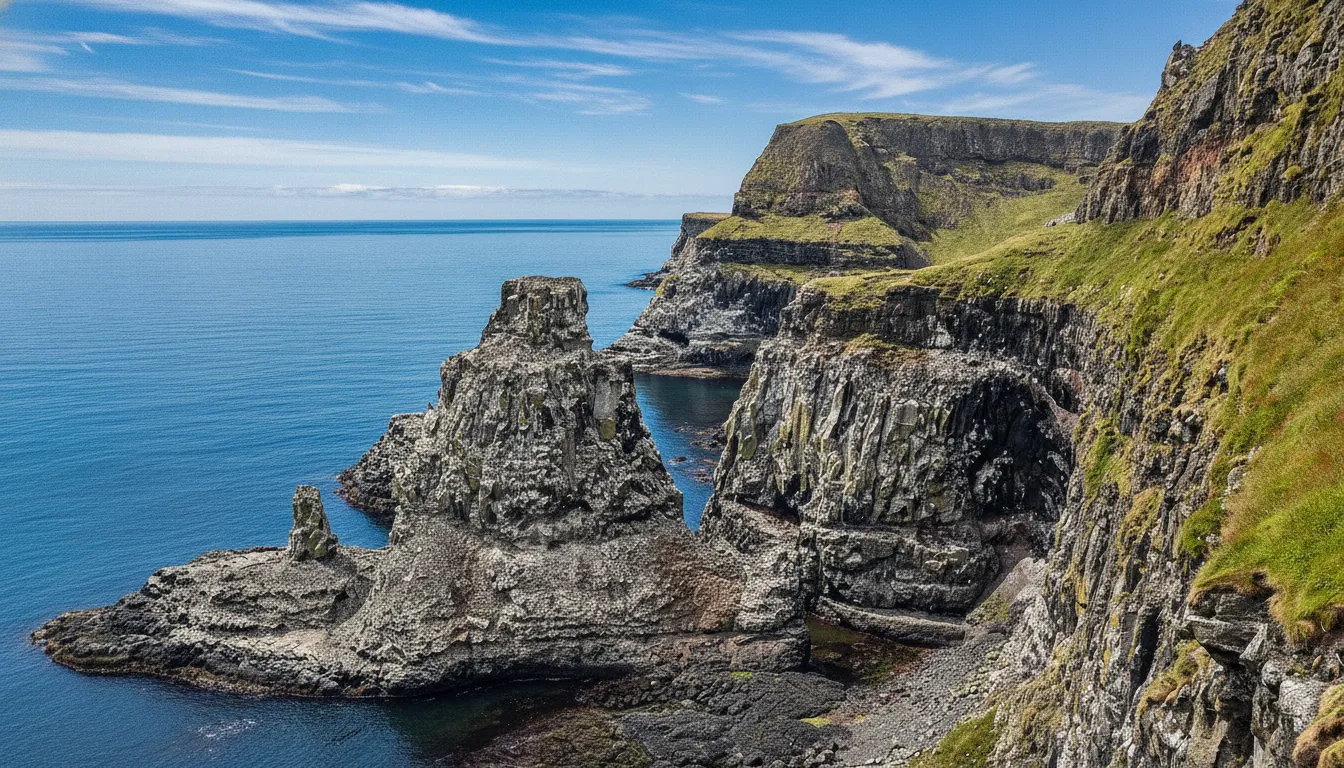
The story of Rathlin West Lighthouse is intertwined with the broader history of maritime navigation around the British Isles. The waters off Rathlin Island are notoriously dangerous, with strong currents and unpredictable weather making them a significant hazard for shipping. While two other lighthouses (East and Rue Point) were established on Rathlin much earlier, the western approach remained a blind spot, particularly in poor visibility.
The decision to build Rathlin West was made by the Commissioners of Irish Lights, the body responsible for maritime aids around Ireland, in the early 20th century. Construction began in 1912 and was a monumental undertaking. Workers had to contend with the island's remote location, challenging terrain, and the sheer force of the Atlantic. Materials were ferried over from the mainland and then transported across the rugged island, often by hand or with rudimentary machinery. The lighthouse finally became operational in 1919, a vital addition to the network of lights protecting mariners.
For decades, the lighthouse was staffed by dedicated keepers who lived in relative isolation, their lives dictated by the rhythm of the light and the sea. Their primary duty was to maintain the powerful lamp and its intricate machinery, ensuring the light shone brightly every night. They faced harsh weather, long hours, and the profound responsibility of guiding ships safely past the perilous coastline. The advent of automation in 1983 brought an end to the era of resident keepers, but their legacy of vigilance and dedication remains etched into the fabric of this remarkable structure.
What You'll Experience: From Ferry to Fascinating Light
Your adventure to Rathlin West Lighthouse begins even before you set foot on the island. A short, scenic ferry journey from Ballycastle on the Antrim Coast takes you across the often-choppy waters to Rathlin, Northern Ireland's only inhabited offshore island. Stepping ashore at Church Bay, you'll immediately feel a sense of stepping back in time, away from the hustle of modern life.
From Church Bay, the lighthouse is still a journey. You can opt for a leisurely walk (approximately 4-5 miles, allow ample time), hire a bicycle, or take the island's minibus service, which often coincides with ferry arrivals and departures. The route winds through Rathlin's rolling hills, past ancient drystone walls, and offers panoramic views of the island's unique landscape and the surrounding sea. Keep an eye out for seals basking on the rocks and the island's famous golden hares.
Upon reaching the western tip, you'll find the RSPB Seabird Centre, a fantastic spot to learn about the island's incredible avian population. During nesting season (April to July), the cliffs here are teeming with thousands of seabirds – puffins, kittiwakes, guillemots, and razorbills create a vibrant, noisy spectacle. The viewing platforms provide excellent opportunities to observe these fascinating creatures up close.
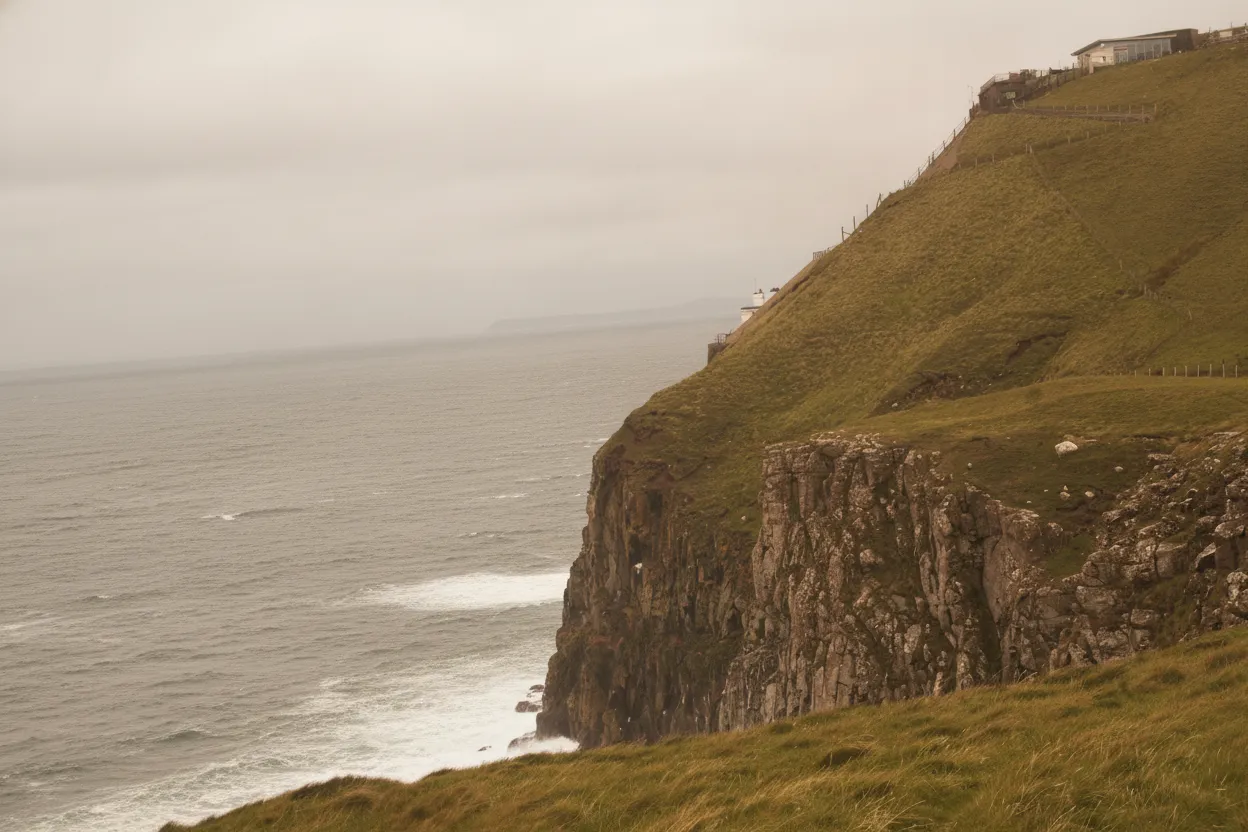
Then, it's time for the lighthouse itself. After checking in at the visitor centre (managed by the Commissioners of Irish Lights), you'll embark on the descent. A series of steps lead you down the cliff face, offering increasingly dramatic perspectives of the lighthouse embedded in the rock. Inside, you'll discover the workings of this engineering marvel, from the sophisticated lamp mechanism to the powerful foghorn. Standing in the lamp room, with the light projecting outwards from *below* you, is a genuinely surreal and unforgettable experience. The views from the viewing platform, looking out across the vast expanse of the Atlantic towards the Scottish coast, are nothing short of spectacular.
Practical Tips for Your Visit
Visiting Rathlin West Lighthouse requires a bit of planning, but the rewards are immense. Here's what you need to know:
- Getting There: The only way to Rathlin Island is by ferry from Ballycastle, Co. Antrim. There are two ferry services: the Rathlin Island Ferry Ltd. passenger ferry (which also carries bikes) and a larger vehicle ferry (booking essential for vehicles, but often not necessary for day-trippers). Book your ferry tickets in advance, especially during peak season.
- Getting Around Rathlin: Once on the island, you can walk, cycle (bring your own or rent from the ferry office), or take the local minibus service to the West Lighthouse and RSPB Seabird Centre. The minibus schedule usually aligns with ferry times.
- Best Time to Visit: Late spring to early summer (April to July) is ideal for seabird enthusiasts, as this is puffin season. The weather is generally milder, though still unpredictable. Always be prepared for rain and wind, regardless of the season.
- What to Wear: Sturdy, waterproof walking shoes are essential, as are layers of clothing. The weather can change rapidly, and it's often windier and colder at the lighthouse than in Church Bay.
- Lighthouse Tours: Access to the lighthouse interior is managed by the Commissioners of Irish Lights. Check their website or the RSPB Centre for opening times and tour availability, as these can be seasonal and weather-dependent. Booking ahead is often advised.
- Food & Drink: There are limited options on Rathlin Island, primarily in Church Bay. It's a good idea to bring some snacks and water, especially if you plan on a long walk.
- Accessibility: Be aware that the descent into the lighthouse involves numerous steps. The path to the lighthouse and around the cliffs can also be uneven.
- Stay Overnight: For a truly immersive experience, consider staying a night or two on Rathlin. There are a few guesthouses and self-catering options, offering a chance to enjoy the island's tranquility after the day-trippers have left.
Rathlin West Lighthouse isn't just a point on a map; it's an adventure, a lesson in ingenuity, and a testament to the enduring power of human innovation against the raw forces of nature. It’s a place that will challenge your perceptions of what a lighthouse can be and leave you with memories of its unique charm and the wild beauty of Rathlin Island.
Essential Travel Information
- Location Rathlin West Lighthouse, United Kingdom
- Best Time Late spring to early summer (April-July) for puffins and generally milder weather.
- Getting There Take a ferry from Ballycastle, Northern Ireland to Rathlin Island. From Church Bay, take the island minibus, walk, or cycle to the West Lighthouse.
- Airport Belfast International Airport (BFS), George Best Belfast City Airport (BHD)
- Budget Mid-range with approximate daily cost of £50-£100 (excluding accommodation)
- Language English
Find Places to Stay Near Rathlin West Lighthouse
Compare hotels, hostels, and unique stays in United Kingdom.
Search AccommodationTours & Experiences Near Rathlin West Lighthouse
Book guided tours, day trips, and unique experiences.
Browse Tours