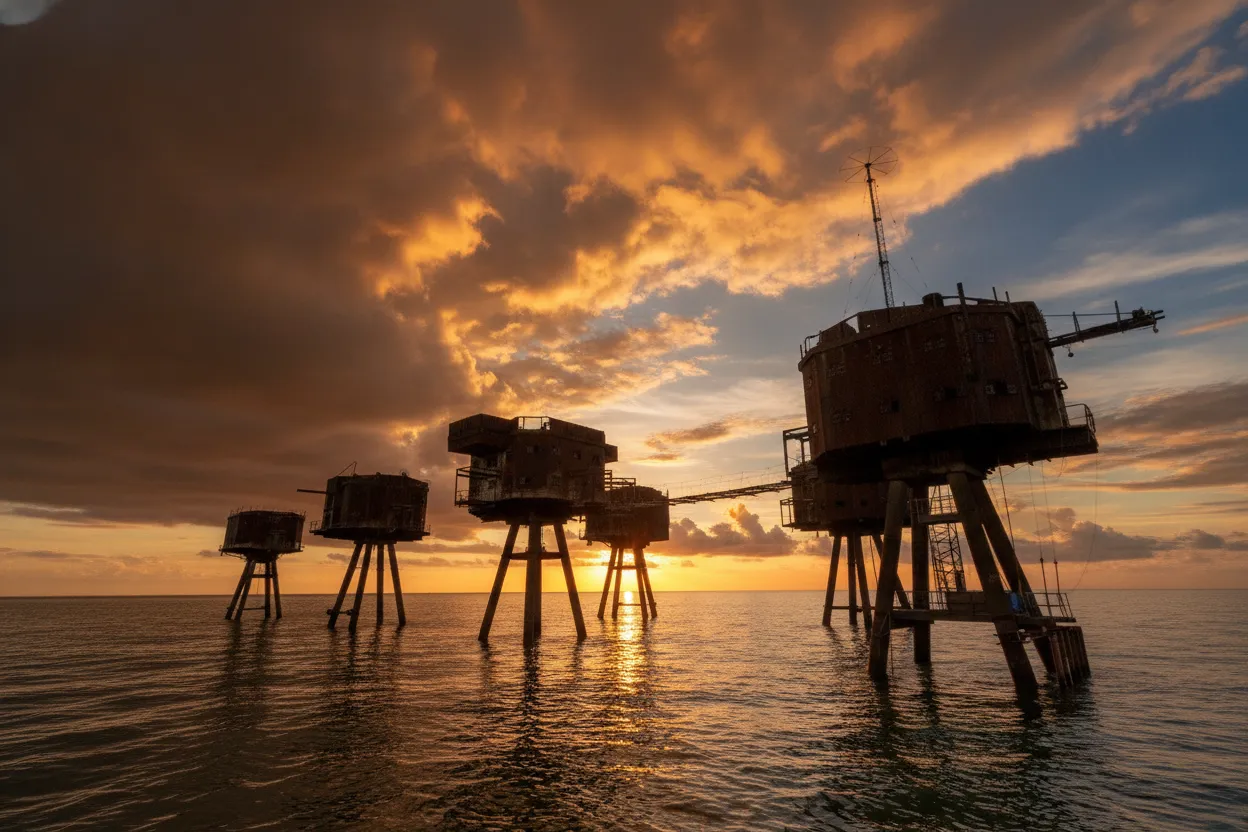
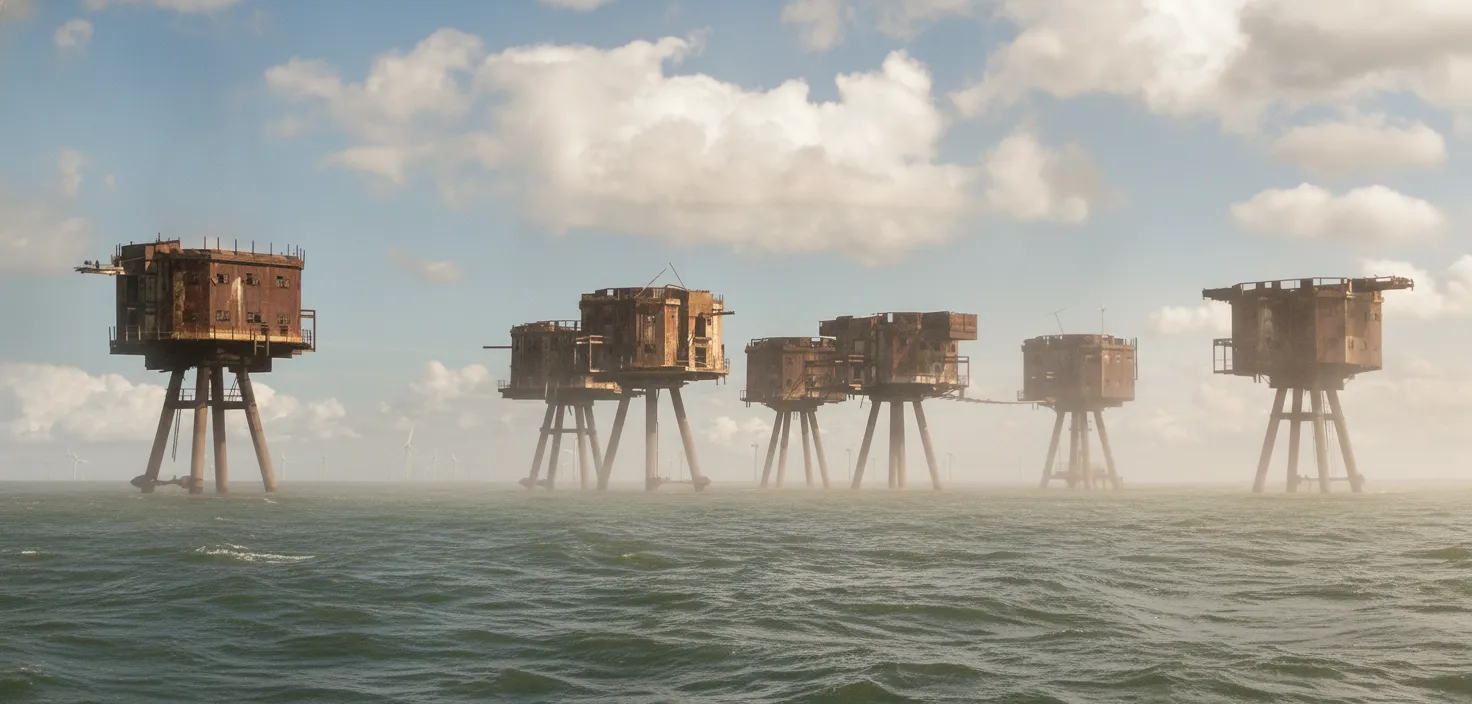
Imagine this: You're cruising across the serene, often moody waters of the Thames Estuary. The gentle swell lulls you into a sense of calm, the coastline a distant smudge. Then, on the horizon, they appear. Seven ominous metallic towers, rising like forgotten Martian tripods from the sea, guarding the mouth of the Thames. These aren't natural formations; they are the Red Sands Sea Forts, colossal relics of a bygone era, now abandoned, rusting sentinels forming a haunting, almost alien cityscape in the open water. Prepare to have your imagination captured and your sense of wonder ignited, because these forts are one of the UK's most extraordinary and least-known historical treasures.
For those of us who crave the thrill of discovery, who seek out places that whisper tales of the past and defy the ordinary, the Maunsell Forts are an absolute revelation. They stand as a testament to human ingenuity and wartime urgency, a stark and brutalist monument that feels utterly out of time and place. Rarely glimpsed by outsiders, these incredible structures offer a truly unique experience, pulling you into a narrative of defense, abandonment, and the relentless march of nature.
What Makes the Red Sands Forts So Special?
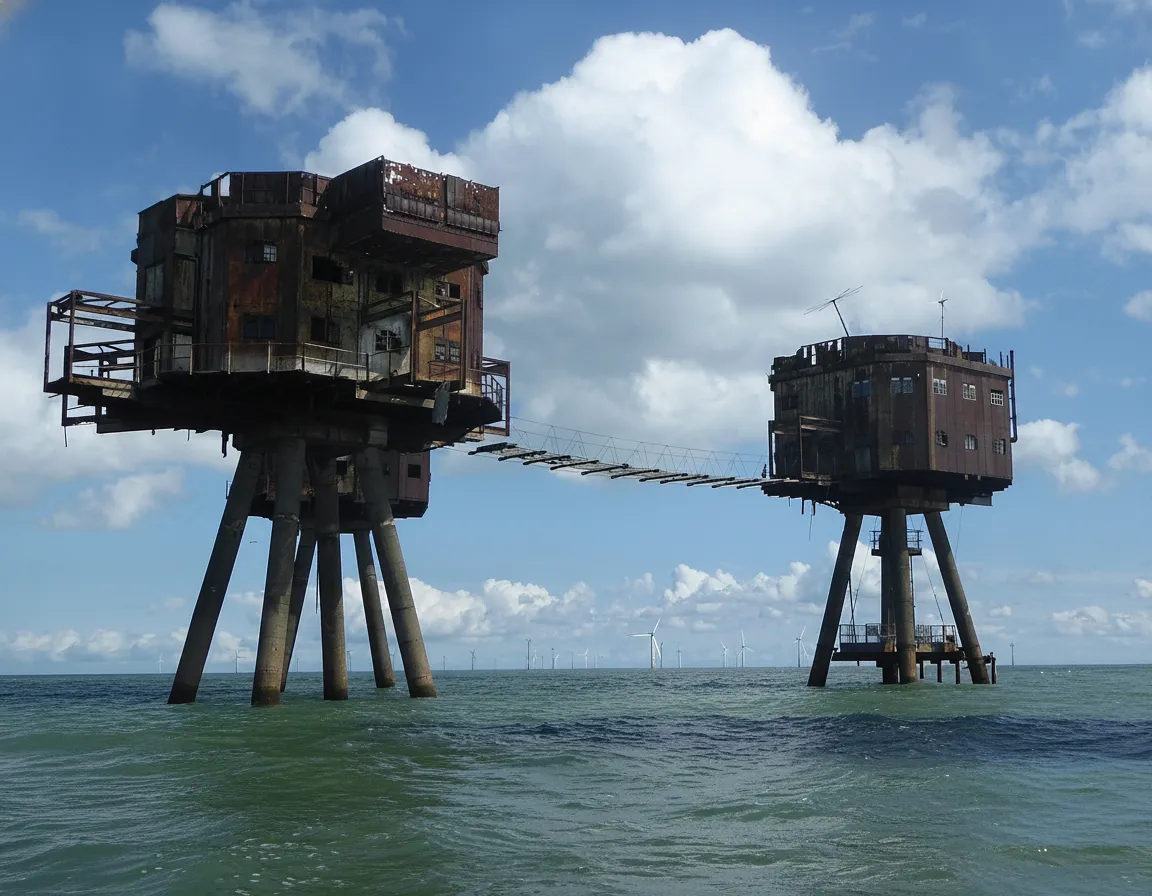
What sets the Red Sands Sea Forts apart isn't just their history, but their sheer, imposing presence. Picture massive concrete legs, anchored deep in the seabed, supporting a intricate lattice of steel and walkways that connect seven individual towers. Each tower, a self-contained fortress, housed anti-aircraft guns and a crew of brave soldiers. Today, stripped of their purpose, they stand as skeletal giants, their rust-coloured surfaces reflecting the ever-changing light of the estuary. The brutalist architecture, designed purely for function and resilience, now possesses an accidental, raw beauty that captivates photographers and adventurers alike.
Their remote location, miles off the Kent coast, adds immensely to their mystique. You can't just drive up to them; reaching them requires a journey by boat, adding an element of adventure to the experience. As you approach, the scale becomes breathtakingly apparent. What looked like distant dots transform into towering structures, each joint and rivet telling a story of wartime construction. The silence out there, broken only by the cry of gulls and the lapping of waves against their bases, is profound. It allows you to truly feel the weight of history and the isolation these garrisons once endured. They are not just buildings; they are a haunting, almost sentient presence, a stark reminder of humanity's capacity for both destruction and defense.
Echoes of War: A Glimpse into Their History
To truly appreciate the Red Sands Forts, you need to understand the urgent circumstances of their birth. These weren't built for aesthetics; they were forged in the crucible of World War II. As Nazi Germany's Luftwaffe launched devastating air raids on London and the industrial heartland of Britain, the need for robust air defense became paramount. Existing coastal defenses were insufficient against fast-moving bombers.
Enter Guy Maunsell, a brilliant civil engineer who conceived the audacious idea of building heavily armed forts directly in the sea. The Maunsell Forts, a series of naval and army forts, were strategically placed in the Thames Estuary and Liverpool Bay. The Red Sands Forts, specifically, were army forts, designed to house anti-aircraft guns, searchlights, and radar equipment. Each fort was a self-sufficient community, housing over 100 men who lived in cramped conditions, enduring the constant threat of enemy attack and the relentless battering of the sea.
Construction was an engineering marvel. The reinforced concrete legs and gun decks were prefabricated on land, floated out to their designated positions, and then sunk onto prepared gravel beds. It was a race against time, with the first forts becoming operational in 1943. They played a vital role in defending London, shooting down numerous enemy aircraft and V1 flying bombs, earning their place in history as silent, steadfast guardians.
After the war, with the advent of jet aircraft and more advanced weaponry, the forts became obsolete. They were decommissioned in the late 1950s and gradually abandoned, left to the mercy of the elements. In the decades that followed, they had a brief, rebellious stint as pirate radio stations in the 1960s, notably Radio Sutch and Radio City, adding another layer of fascinating, if illicit, history to their story. Today, they stand as a ghostly testament to their former glory, slowly succumbing to the relentless embrace of the sea and rust, yet retaining an undeniable dignity.
What You'll See (and Feel) Out There
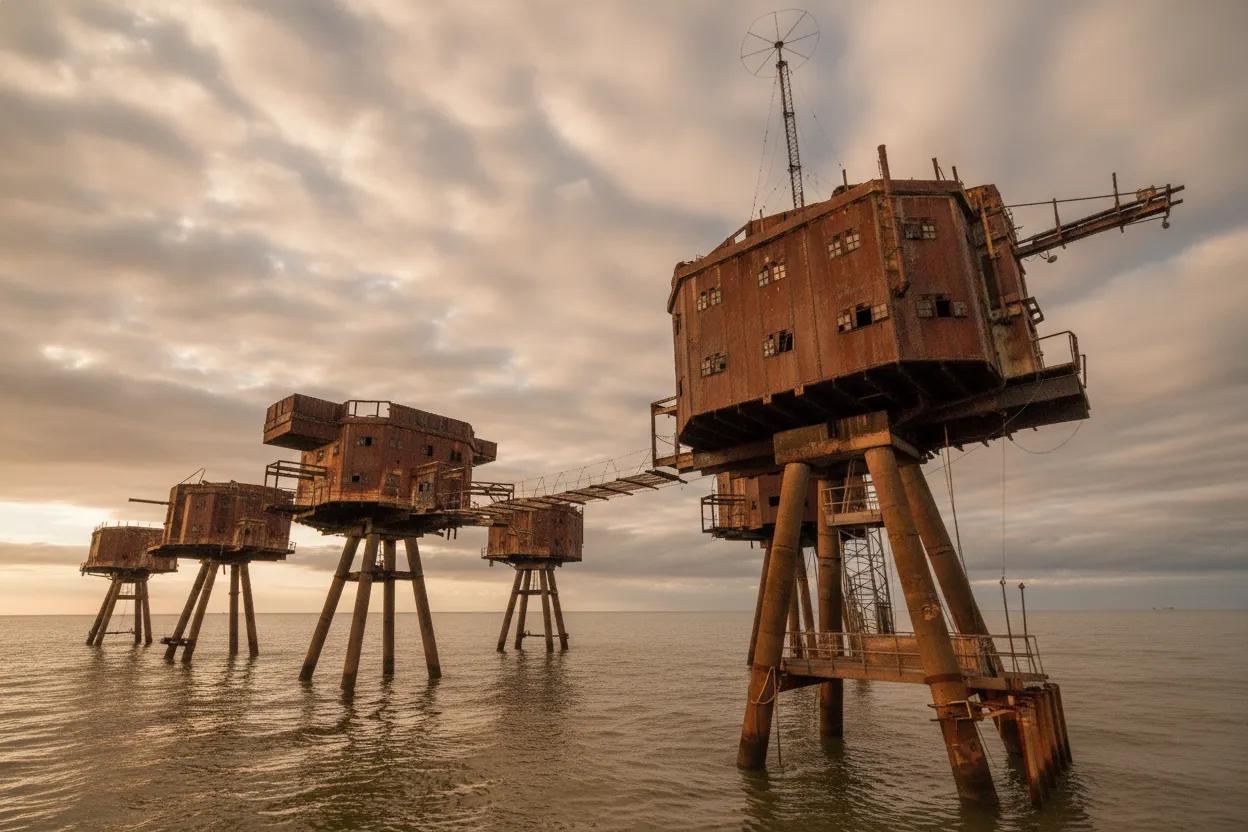
Approaching the Red Sands Forts by boat is an experience that truly ignites the imagination. As your vessel slices through the waves, these monolithic structures grow larger and more defined, their brutalist forms emerging from the haze. You’ll be struck by the sheer scale of them, far grander than any photograph can convey. The rust-stained concrete and corroding steel tell a story of abandonment and resilience, each patch of decay a testament to decades of exposure to the harsh maritime environment.
You’ll notice the intricate network of walkways that once connected the towers, now often broken or crumbling, making them look like a fractured industrial skeleton. Birds – gulls, cormorants, and other seabirds – have claimed them as their own, nesting in the crevices and circling the towers, their cries adding to the wild, untamed atmosphere. If you're lucky, you might even spot seals basking on the lower platforms during low tide, undisturbed by human presence. The forts have become an accidental haven for wildlife, a testament to nature's ability to reclaim even the most imposing man-made structures.
The feeling out there is one of profound isolation and wonder. The vast expanse of the estuary, the distant coastline, and these towering sentinels create a sense of being on the edge of the world. It’s a place that encourages contemplation – about the lives of the soldiers who manned them, the battles they witnessed, and the passage of time. The forts are not just structures; they are an emotional landscape, evoking a mix of awe, melancholy, and a deep appreciation for history. Be sure to bring a good camera, because every angle offers a dramatic, almost cinematic shot.
Planning Your Expedition: Practical Visit Tips
Visiting the Red Sands Sea Forts is an adventure, but it requires careful planning. First and foremost, it's crucial to understand that **landing on the forts is strictly forbidden and highly dangerous.** These structures are unstable, heavily corroded, and pose significant safety risks. The only way to experience them is by boat, circling them at a safe distance.
The best way to see the forts is by joining an organised boat tour. Several companies operate out of ports along the Kent coast, such as Whitstable, Herne Bay, or Queenborough on the Isle of Sheppey. These tours are specifically designed to take you close enough for incredible views and photography opportunities, while ensuring your safety. Tour operators are knowledgeable about the forts' history and the local marine environment, enriching your experience immensely. Always book in advance, especially during peak season.
Best Time to Visit:
The best time to visit is during the warmer, drier months, typically **May to September**. The sea conditions tend to be calmer, making for a more comfortable journey and better visibility. However, the Thames Estuary weather can be unpredictable, so always check the forecast before you go. Even on a sunny day, it can be breezy and cooler out on the water, so dress in layers and bring waterproofs.What to Bring:
- **Camera:** Absolutely essential for capturing the dramatic scenery. A telephoto lens will be beneficial.
- **Binoculars:** To get a closer look at the details of the forts and any wildlife.
- **Warm, waterproof clothing:** Even on a sunny day, it can be chilly and spray is possible.
- **Sunscreen and hat:** The sun's reflection off the water can be intense.
- **Snacks and drinks:** Check with your tour operator if these are provided or if you need to bring your own.
- **Motion sickness medication:** If you're prone to seasickness, take precautions.
Remember, this is an expedition into a wild, untamed environment. Respect the forts' history, their current state, and the natural habitat they now provide. A visit to the Red Sands Sea Forts is more than just a sightseeing trip; it's a journey through time, a meditation on conflict and abandonment, and an unforgettable encounter with one of the UK's most compelling hidden wonders.
So, if you're looking for an adventure that goes beyond the usual tourist trails, if you yearn for a place that sparks conversation and leaves an indelible mark on your memory, then set your sights on the Red Sands Sea Forts. These incredible, rusting giants await, ready to share their silent, powerful story with those curious enough to seek them out.
Essential Travel Information
- Location Red Sands Sea Forts (Maunsell Forts), United Kingdom
- Best Time May to September (calmer seas, better weather)
- Getting There Access is exclusively by boat tour from coastal towns like Whitstable, Herne Bay, or Queenborough (Isle of Sheppey) in Kent.
- Airport London Southend Airport (SEN), London City Airport (LCY)
- Budget Mid-range (boat tours typically cost £40-£80 per person)
- Language English
Find Places to Stay Near Red Sands Sea Forts (Maunsell Forts)
Compare hotels, hostels, and unique stays in United Kingdom.
Search AccommodationTours & Experiences Near Red Sands Sea Forts (Maunsell Forts)
Book guided tours, day trips, and unique experiences.
Browse Tours