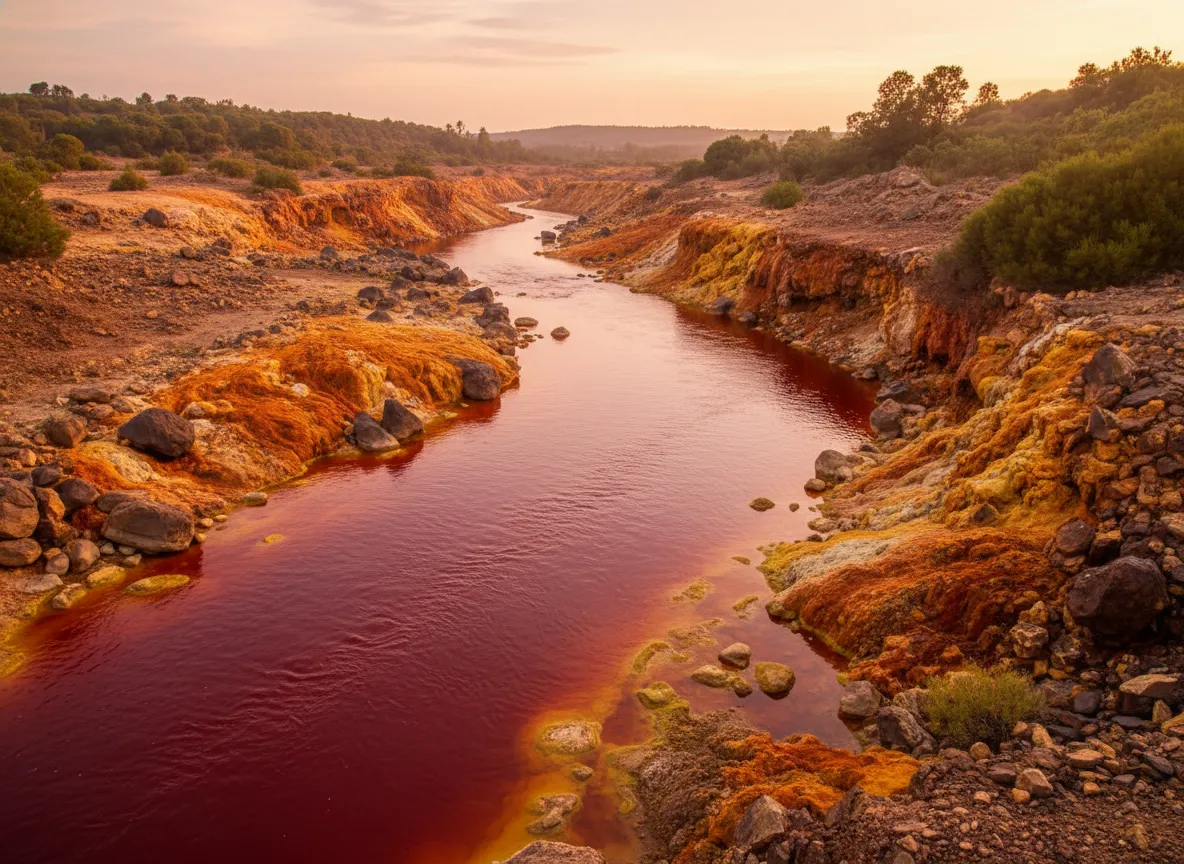
Imagine a river that flows with blood-red water, carving a landscape so alien that scientists use it as a real-world analog for Mars. No, this isn't a scene from a science fiction novel or a CGI masterpiece. This extraordinary place exists, tucked away in the heart of Andalusia, Spain. Welcome to Río Tinto, a destination that defies expectations, challenges perceptions, and promises an adventure unlike any other. If you've ever dreamt of stepping onto another planet without leaving Earth, pack your bags – your journey to the 'Red River' is about to begin.
The Martian Landscape on Earth: A River of Wonders
What makes Río Tinto so utterly captivating? It’s a spectacular confluence of natural processes and millennia of human intervention. The river itself is a vibrant, almost shocking, rust-red hue, a striking contrast against the surrounding ochre and terracotta earth. This isn't just pretty scenery; it's a living, breathing geological marvel. The intense acidity of the water, coupled with an astonishing concentration of heavy metals like iron and copper, has sculpted a landscape that truly feels plucked from the surface of Mars. The ground shimmers with metallic minerals, and the air carries a faint, earthy scent of iron, painting a picture that’s both beautiful and profoundly eerie.
But the marvels don't stop at the visual. This extreme environment is a thriving ecosystem for unique extremophile microorganisms. These resilient life forms not only survive but flourish in conditions that would be toxic to most other life on Earth. For astrobiologists, Río Tinto is an unparalleled outdoor laboratory. It provides crucial insights into how life might exist in harsh, mineral-rich environments like those found on Mars or Europa, making every visit a step into the cutting edge of scientific discovery. You’re not just witnessing a geological wonder; you’re observing a real-world experiment that helps us understand the potential for life beyond our planet.

A River Forged by Centuries of Industry
The story of Río Tinto is inextricably linked to human history, a saga of ambition, innovation, and the relentless pursuit of precious metals. The river's dramatic transformation isn't purely natural; it's the cumulative result of over 5,000 years of mining. Civilizations dating back to the Tartessians, followed by the Romans, the Moors, and finally the British, have all left their indelible mark on this land. Each era dug deeper, extracted more, and contributed to the unique chemical composition that defines the river today.
The Romans, in particular, were prodigious miners here, their advanced techniques laying the groundwork for future operations. But it was the industrial revolution that truly escalated the scale of extraction. In the late 19th century, the British-owned Rio Tinto Company Limited transformed the area into one of the world's most significant mining complexes. They built railways, towns, and infrastructure, forever altering the landscape and intensifying the river's unique characteristics. Walking through Río Tinto, you're treading on layers of history, where every rock and every ripple tells a story of human ingenuity and environmental impact. It’s a powerful reminder of how deeply intertwined humanity and nature truly are.
Unveiling the Wonders of Río Tinto: What You'll See and Do
Visiting Río Tinto isn't just about seeing a river; it's an immersive journey into a landscape that feels utterly other. Your adventure will likely begin at the Parque Minero de Riotinto, the gateway to exploring this incredible region. Here's what awaits you:
The Historic Mining Train Ride
Step aboard a beautifully restored, century-old railway carriage for an unforgettable journey. The train chugs along a 12-kilometer route that hugs the banks of the Río Tinto, offering unparalleled views of the crimson waters and the Martian landscape. You'll pass through tunnels and over bridges, witnessing the vivid colors and strange formations up close. It’s a fantastic way to grasp the sheer scale and unique beauty of the area, feeling like an explorer on a distant planet.
Peña de Hierro Mine and Roman Gallery
Descend into the depths of the Peña de Hierro mine, an ancient open-pit mine that reveals the sheer magnitude of past operations. You'll have the chance to explore a genuine Roman mining gallery, a chilling and fascinating glimpse into the lives of ancient miners. The air is cool, the silence profound, and the history palpable. It’s a tangible connection to the thousands of years of human toil that shaped this land.
The Mining Museum
Housed in a grand old hospital building, the museum offers a comprehensive deep dive into the history of mining in the region. You'll find a fascinating collection of tools, machinery, minerals, and photographs that tell the story of the people who lived and worked here. Don't miss the impressive replica of a Roman waterwheel, a testament to ancient engineering prowess. It contextualizes everything you see outside, giving you a richer understanding of Río Tinto's legacy.
Casa Nº 21: A Victorian Legacy
Take a step back in time by visiting Casa Nº 21, a faithfully restored Victorian house that belonged to the British managers of the Rio Tinto Company. It offers a glimpse into the comfortable, colonial lifestyle of the foreign engineers and their families, a stark contrast to the grueling work performed in the mines. The opulent furnishings and period details provide a fascinating social history of the region.

Planning Your Expedition to Río Tinto: Practical Tips
Ready to embark on your Martian adventure? Here are some friendly tips to help you plan your trip:
- Best Time to Visit: Spring (April-May) and Autumn (September-October) offer mild temperatures, ideal for exploring the outdoor attractions comfortably. Summers can be very hot, and winters can be chilly and damp.
- Getting There: Río Tinto is best reached by car. It's approximately a 1.5-hour drive northwest from Seville and about an hour from Huelva. Public transport options are limited, so renting a car offers the most flexibility to explore at your own pace.
- Accommodation: While there are smaller guesthouses and hotels in nearby towns like Minas de Riotinto and Nerva, many visitors choose to stay in Seville or Huelva and make Río Tinto a day trip. However, staying locally allows for a more immersive experience.
- What to Bring: Wear comfortable, sturdy walking shoes, as you'll be doing a fair bit of walking. Bring water, especially during warmer months, and don't forget your camera – this place is an absolute photographer's dream! A light jacket can be useful, even in spring, as conditions can change.
- Respect the Environment: Río Tinto is a fragile and scientifically significant ecosystem. Stick to marked paths, do not disturb the natural formations, and take all your litter with you. We are guests in this unique landscape.

More Than Just a Sight: A Journey of Discovery
Río Tinto is more than just a place to visit; it’s an experience that lingers long after you’ve left. It's a testament to the Earth's incredible geological power, a living history book of human endeavor, and a window into the potential for life beyond our world. Standing by the blood-red river, surrounded by a landscape that defies terrestrial norms, you can't help but feel a profound sense of wonder and curiosity.
It challenges our preconceived notions of beauty, showing us that even in the most extreme conditions, there is life, history, and a stark, undeniable allure. So, if you're seeking a destination that truly pushes the boundaries of imagination, a place where science fiction meets ancient history, and where every view is a postcard from another planet, then Río Tinto awaits. It’s not just a hidden gem; it’s a global treasure, and it’s calling your name.
Essential Travel Information
- Location Río Tinto, Spain
- Best Time Spring (April-May) and Autumn (September-October) offer mild temperatures ideal for exploration.
- Getting There Best reached by car from Seville (approx. 1.5 hours) or Huelva (approx. 1 hour). Public transport options are limited.
- Airport Seville Airport (SVQ)
- Budget Mid-range with approximate daily cost of €70-€120 per person (including accommodation, food, and activities).
- Language Spanish
Find Places to Stay Near Río Tinto
Compare hotels, hostels, and unique stays in Spain.
Search AccommodationTours & Experiences Near Río Tinto
Book guided tours, day trips, and unique experiences.
Browse Tours