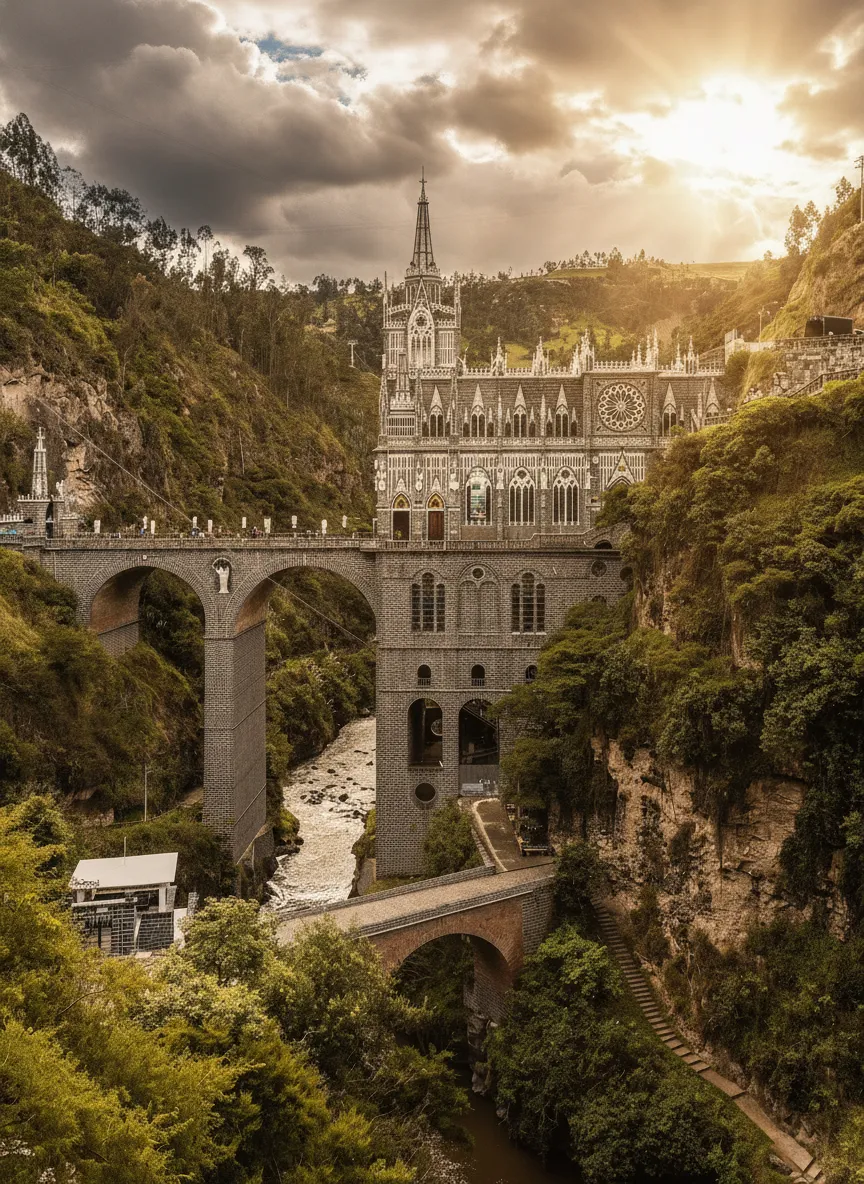
For years, intrepid explorers and devout Catholics have whispered tales of a "miracle in stone" hidden away in the rugged Nariño Department, close to the Ecuadorian border. This isn't just another beautiful church; it's an architectural phenomenon, built directly into the sheer rock face of a canyon, spanning the roaring Guáitara River with an elegance that seems to mock gravity. If you thought you'd seen all the world's wonders, prepare to have your breath stolen by this extraordinary testament to human faith, ingenuity, and a landscape that feels utterly otherworldly.
What Makes Santuario de Las Lajas an Unforgettable Spectacle?
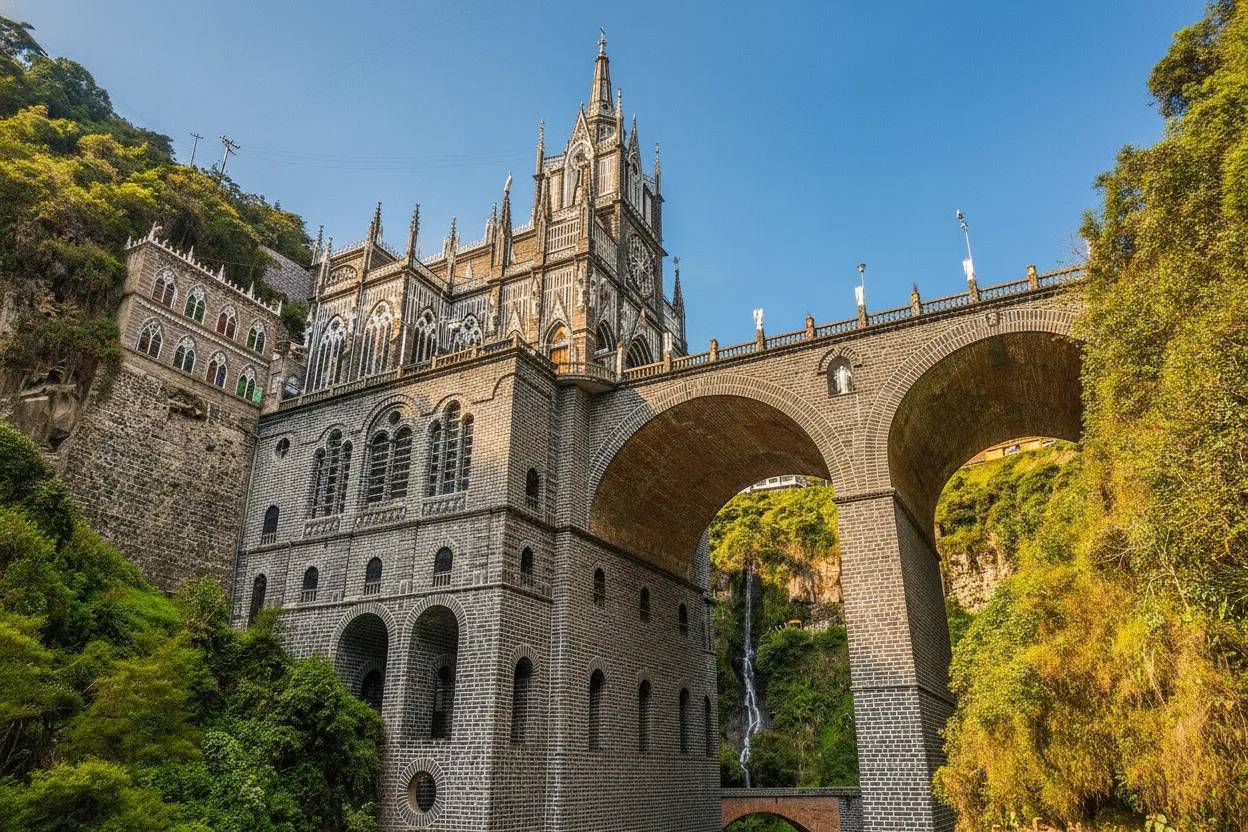
At first glance, the Santuario de Las Lajas appears almost Photoshopped into existence. Its neo-Gothic spires, arches, and buttresses seem to grow organically from the canyon walls, forming a harmonious union with the dramatic natural surroundings. Unlike most cathedrals that stand proudly on solid ground, Las Lajas is literally perched on a double-arched bridge, 100 meters above the river below, connecting two sides of a deep gorge. This isn't just a building; it's a bridge, a sanctuary, and a natural wonder all rolled into one.
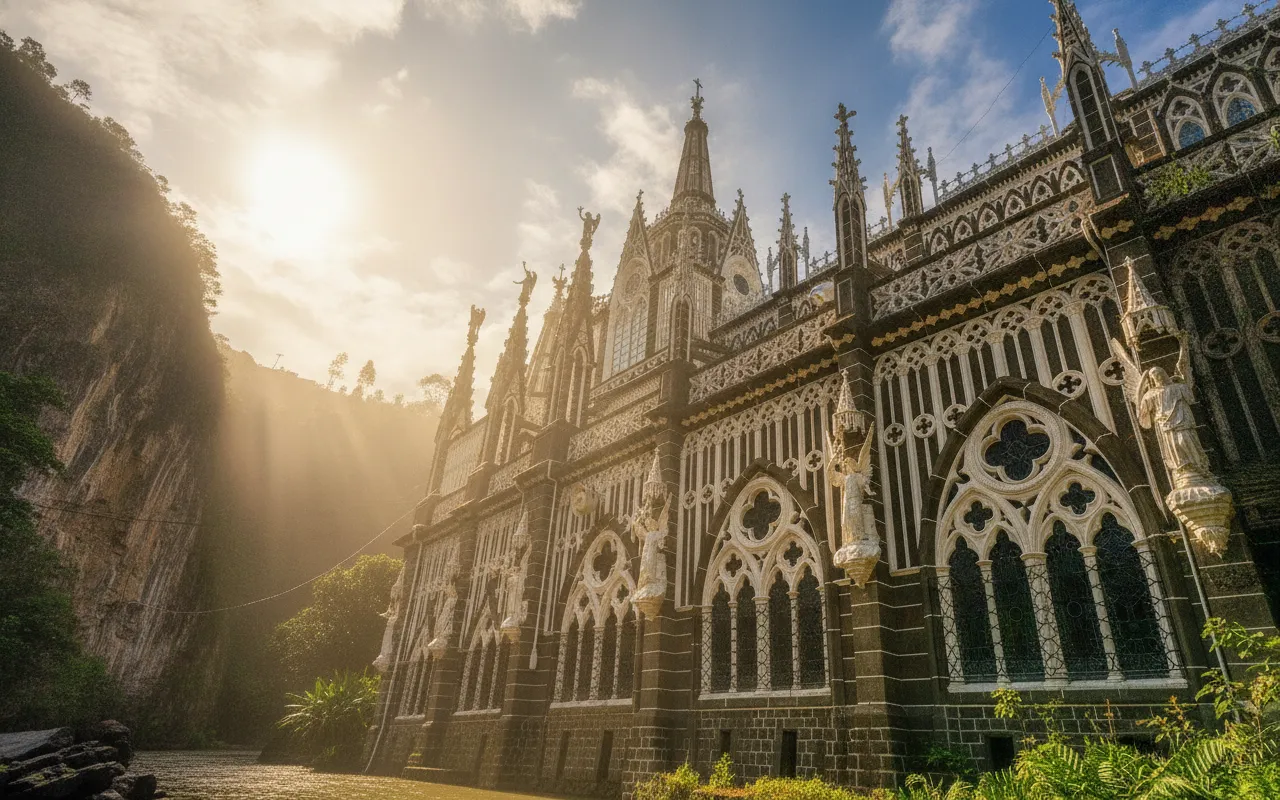
The sheer audacity of its construction is what truly sets it apart. Imagine the challenges faced by its builders in the early 20th century – hauling materials, carving into rock, and engineering a structure that could withstand the forces of nature in such a precarious location. It’s a powerful symbol of devotion, where the human desire to honor the divine pushed the boundaries of what was thought possible. The basilica's intricate details, from its stained-glass windows depicting the Virgin Mary to its elaborate carvings, are all amplified by the backdrop of cascading waterfalls, lush vegetation, and the constant murmur of the Guáitara River. It’s a place that engages all your senses, leaving an indelible mark on your memory.
A Glimpse into History: Faith Forged in Stone
The story of Las Lajas is as captivating as its appearance, rooted in a tale of miraculous intervention that dates back to the mid-18th century. The legend tells of a local indigenous woman named Maria Mueses de Quiñones and her deaf-mute daughter, Rosa, who were caught in a fierce storm within the canyon. Seeking shelter in a cave, Maria felt a mysterious force call to her, and to her astonishment, Rosa spoke for the first time, exclaiming, "The Virgin is calling me!"
Upon investigating, they discovered an inexplicable image of the Virgin Mary, holding the infant Jesus, miraculously imprinted on the rock face of the cave. This wasn't a painting or a carving, but an image that seemed to be part of the stone itself. The miracles didn't stop there; Rosa, who had been deaf and mute since birth, was completely cured. News of the apparition and the subsequent healing spread like wildfire, turning the remote canyon into a sacred pilgrimage site.
Initially, a simple straw-and-wood chapel was erected around the miraculous image. Over the centuries, more substantial structures followed, each growing in ambition and scale. The current neo-Gothic basilica, the one we marvel at today, was constructed between 1916 and 1949. It was designed by Ecuadorian architect Gualberto Pérez and built with contributions from faithful devotees across Colombia and Ecuador. The image of the Virgin of Las Lajas remains at the heart of the basilica, still believed by many to be an anomaleous imprint on the rock, a constant reminder of the profound faith that inspired this architectural wonder.
Exploring the Santuario: What Awaits You
Your journey to Las Lajas typically begins in Ipiales, a bustling border town. From there, a short taxi or bus ride takes you along winding roads that offer tantalizing glimpses of the dramatic landscape. As you descend into the canyon, the first sight of the Santuario will literally make you gasp. It appears almost suddenly, a majestic vision of stone and light emerging from the verdant depths.
The approach itself is part of the experience. You'll likely walk down a path, often lined with vendors selling religious artifacts, snacks, and souvenirs, and soon find yourself on the famous double-arched bridge that forms the base of the basilica. Standing on this bridge, gazing up at the towering spires and down at the rushing river, is an experience of profound awe. The exterior is a feast for the eyes, with its intricate stonework, flying buttresses, and delicate rose windows.
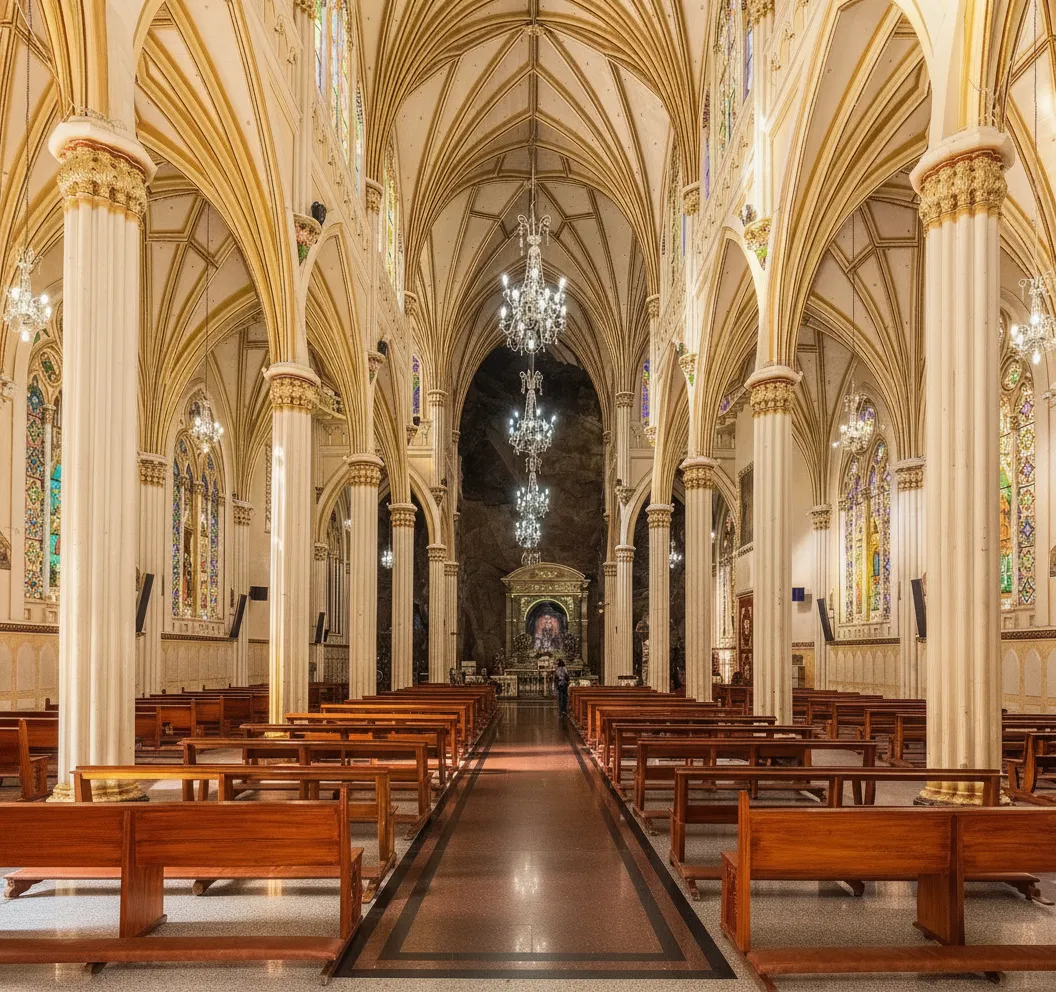
Inside, the atmosphere shifts to one of solemn reverence. The main altar is built directly into the rock face where the miraculous image of the Virgin Mary is enshrined. You'll see pilgrims kneeling in prayer, their faces etched with devotion. The interior is surprisingly bright, thanks to the numerous stained-glass windows that cast colorful hues across the stone. Don't forget to look at the walls leading up to the basilica – they are covered with thousands of small plaques, or "ex-votos," left by grateful pilgrims testifying to miracles received. It’s a powerful, humbling display of collective faith.
Beyond the basilica itself, take time to explore the surrounding pathways. You can descend further into the canyon to get different perspectives of the structure, or simply enjoy the natural beauty of the Guáitara River and its lush banks. There’s a palpable sense of peace and natural grandeur here, a perfect complement to the man-made marvel.
Planning Your Pilgrimage: Practical Tips for Visiting Las Lajas
Ready to add this architectural wonder to your bucket list? Here are a few friendly tips to make your visit smooth and memorable:
- Getting There: The nearest major town is Ipiales, Colombia. You can fly into San Luis Airport (API) in Ipiales, or arrive by bus from other Colombian cities like Pasto or Cali. From Ipiales, local taxis or colectivos (shared taxis/vans) can take you directly to the Santuario, which is about a 15-20 minute drive.
- Best Time to Visit: Colombia's weather patterns can be a bit unpredictable, but generally, the dry seasons (June-September and December-February) offer clearer skies and more pleasant conditions. However, even during the "rainy" season, showers are often brief, and the lushness of the canyon is amplified. Weekdays are usually less crowded than weekends or religious holidays.
- What to Wear: Ipiales is at a high altitude (around 2,900 meters or 9,500 feet), so even if it's sunny, the air can be cool, especially in the canyon. Dress in layers. Comfortable walking shoes are a must, as there's a fair amount of walking and stairs involved. Since it's a religious site, respectful attire (shoulders and knees covered) is appreciated, especially if you plan to enter the basilica.
- Altitude Sickness: Due to the high altitude, some visitors might experience mild symptoms of altitude sickness. Take it easy on your first day, stay hydrated, and avoid excessive alcohol.
- Food and Amenities: You'll find several small restaurants and food stalls near the Santuario entrance offering local Colombian dishes, snacks, and hot beverages. Restrooms are also available.
- Photography: This place is incredibly photogenic! Feel free to capture its beauty, but be mindful and respectful of pilgrims and any ongoing religious services inside the basilica.
- Combine with Other Destinations: If you're coming from Ecuador, Las Lajas is a fantastic stop just across the border. It's also a logical stop if you're traveling overland between Colombia and Ecuador.
Santuario de Las Lajas isn't just a destination; it's an experience that transcends the ordinary. It’s where human ingenuity meets divine inspiration, where a wild canyon cradles a monument of unwavering faith. This hidden gem in Colombia is more than just a place to visit; it’s a journey into wonder, a testament to what happens when belief literally moves mountains – or rather, builds into them. So, pack your bags, prepare to be amazed, and discover the magic of Las Lajas for yourself. You won't regret it.
Essential Travel Information
- Location Santuario de Las Lajas, Colombia
- Best Time Dry season (June-September, December-February) for clearer skies, but visit anytime for lush canyon views.
- Getting There Fly to Ipiales (API), then a short 15-20 minute taxi or bus ride to the Santuario. Buses from Pasto or Cali also connect to Ipiales.
- Airport San Luis Airport (API) - Ipiales, Colombia
- Budget Budget/Mid-range (approx. $30-60 USD per day for local transport, food, and basic accommodation, excluding international flights)
- Language Spanish
Find Places to Stay Near Santuario de Las Lajas
Compare hotels, hostels, and unique stays in Colombia.
Search AccommodationTours & Experiences Near Santuario de Las Lajas
Book guided tours, day trips, and unique experiences.
Browse Tours