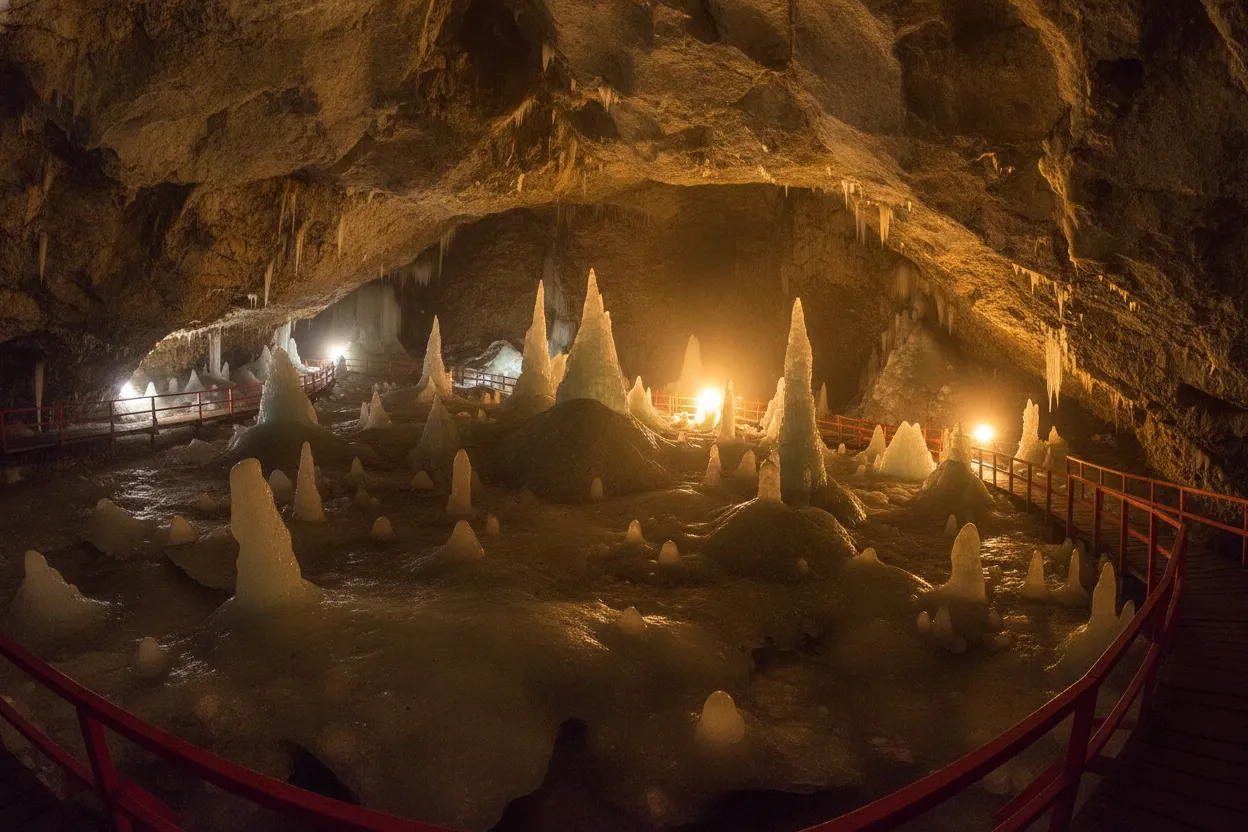
Deep beneath the rolling hills of Romania's Apuseni Mountains lies a subzero wonderland, a realm where time seems to stand still, preserving a relic from an era long past. Imagine descending into the earth, leaving behind the warmth of a temperate forest, only to step into a breathtaking, frozen cathedral. This isn't a scene from a fantasy novel; it's the very real, utterly spectacular experience of visiting the Scărișoara Ice Cave (Peștera Scărișoara), home to one of Europe's largest and oldest underground glaciers, a natural marvel that has persisted for millennia.
For the adventurous traveler seeking something truly extraordinary, Scărișoara isn't just a destination; it's an immersion into geological history, a journey to the heart of an ancient world. It's a place that whispers tales of the Ice Age, a perfectly preserved snapshot tucked away in the heart of Alba County. If you thought Romania was just about Dracula's castles and picturesque villages, prepare to have your expectations shattered by this icy, subterranean gem.
What Makes Scărișoara So Unique?
What sets Scărișoara apart from other caves, or even other ice caves, is its sheer scale and the incredible longevity of its main attraction: a colossal perennial ice block. Formed over 3,500 years ago, this isn't just a patch of ice; it's a monumental glacier measuring an astonishing 75,000 cubic meters. To put that into perspective, imagine a block of ice the size of a small skyscraper, perpetually frozen deep within the earth. It's an ecological marvel, sustained by a unique microclimate that traps cold air, allowing the ice to endure even as the world above experiences seasons of warmth.
This isn't just a natural curiosity; it's a living laboratory for scientists and a profound source of wonder for visitors. The cave acts as a natural refrigerator, with cold air sinking and becoming trapped, creating conditions perfect for the ice to form and persist. As you navigate the specially constructed wooden and metal pathways, you're not just walking through a cave; you're traversing a frozen landscape that has witnessed countless generations of human history unfold above ground, remaining untouched and pristine below.

A Journey Through Time: The Cave's Ancient History
The story of Scărișoara begins long before human memory. Its formation is tied to the geological processes that shaped the Apuseni Mountains themselves. Over millions of years, water carved its way through the soluble limestone, creating the vast network of chambers and galleries we see today. The ice, however, is a more recent addition, relatively speaking, dating back to the Quaternary period, specifically the last major glaciation.
While the exact date of its "discovery" by locals is lost to time, the cave has been known to the inhabitants of the Apuseni Mountains for centuries. Scientific exploration began in earnest in the late 19th and early 20th centuries, revealing the true significance of its ancient glacier. Researchers have studied the ice for clues about past climates, making Scărișoara not just a tourist attraction but an invaluable natural archive. The cave's unique conditions, which allow for the preservation of its ice, also make it a delicate ecosystem, carefully managed to ensure its long-term survival for future generations to study and admire.
Exploring the Frozen Depths: What to Expect Inside
Your adventure begins with a descent into the "Great Hall" (Sala Mare), a dramatic entrance marked by a series of wooden and metal stairs that plunge steeply into the earth. The air immediately grows colder, and a palpable sense of anticipation builds with every step. The transition from the sunlit forest to the dimly lit, icy interior is nothing short of magical. Once inside, you'll find yourself standing on a vast expanse of ice, surrounded by towering limestone walls.
From the Great Hall, pathways lead you through different sections of the cave. You'll marvel at monumental ice stalagmites that rise from the glacier floor, some reaching impressive heights, formed by water seeping through the cave ceiling and freezing upon contact with the subzero air. Imagine intricate frozen waterfalls clinging to the walls, their delicate structures glistening under the subtle artificial lighting, creating an ethereal glow. Each corner reveals a new, breathtaking formation, a testament to the slow, relentless artistry of nature.

One of the most captivating areas is the "Church" (Biserica), a chamber aptly named for its solemn, cathedral-like atmosphere, dominated by an enormous ice stalagmite that resembles an altar. The silence, broken only by the occasional drip of melting ice or the hushed whispers of fellow explorers, adds to the reverence of the space. It’s a truly otherworldly experience, feeling the chill in the air, seeing your breath plume, and knowing you’re in the presence of something ancient and profoundly beautiful.
While the pathways are generally safe and well-maintained, they can be slippery due to the ice. Sturdy footwear with good grip is absolutely essential. The cave is lit, but the lighting is designed to enhance the natural beauty rather than fully illuminate every corner, adding to the mystical ambiance. Guided tours are often available, providing fascinating insights into the cave's geology, history, and ecological significance, enriching your visit significantly.

Planning Your Expedition: Practical Tips for Visitors
Visiting Scărișoara Ice Cave requires a bit of planning, but the reward is immeasurable. The cave is located deep within the Apuseni Mountains, a region known for its rugged beauty and traditional Romanian charm. Getting there is part of the adventure, involving scenic drives through picturesque villages and winding mountain roads. While it's accessible by car, be prepared for narrower, less-traveled routes as you approach the final stretch.
-
What to Wear: This is crucial. Even in the height of summer, the cave maintains temperatures around 0°C (32°F) or below. Dress in layers, including a warm jacket, hat, and gloves. Sturdy, waterproof hiking boots with excellent grip are non-negotiable for navigating the icy paths.
-
Accessibility: The descent into the cave is via steep stairs, and the pathways inside can be slippery. While fascinating, it might pose challenges for individuals with mobility issues or very young children.
-
Guided Tours: While you can explore independently, joining a guided tour (often available at the entrance) is highly recommended. The local guides are incredibly knowledgeable and bring the cave's history and geology to life.
-
Opening Hours: These can vary seasonally, so it's always best to check the official website or local tourist information before planning your visit. The cave is generally open from spring through autumn, with winter closures due to weather conditions.
-
Accommodation: There are guesthouses and pensions in the surrounding villages of the Apuseni Mountains, offering a chance to experience authentic rural Romanian life. Consider staying a night or two to explore the wider region, which is rich in natural beauty and other lesser-known caves.
-
Food and Drink: There might be small kiosks near the entrance, but it’s a good idea to bring your own water and snacks, especially if you plan to spend time hiking in the area.
Scărișoara Ice Cave is more than just an attraction; it's an experience that connects you to the deep past of our planet. It’s a reminder of the power and beauty of nature, hidden away in a corner of Europe waiting to be discovered. If you’re looking for a travel story that will truly impress, a memory that will send shivers down your spine (in the best possible way), then make Scărișoara Ice Cave your next incredible adventure. It’s a hidden gem, a frozen marvel, and an unforgettable journey into the heart of an ancient world.
Essential Travel Information
- Location Scărișoara Ice Cave (Peștera Scărișoara), Romania
- Best Time Late Spring to Early Autumn (May to October), avoiding winter closures and heavy snow.
- Getting There Accessible primarily by car, located in the Apuseni Mountains, Alba County. Roads can be winding and narrow in the final approach. Nearest significant towns are Câmpeni or Arieșeni.
- Airport Cluj-Napoca International Airport (CLJ)
- Budget Mid-range (approx. 50-80 EUR daily for accommodation, food, and entrance fees if staying in local guesthouses)
- Language Romanian (guides may offer English tours)
Find Places to Stay Near Scărișoara Ice Cave (Peștera Scărișoara)
Compare hotels, hostels, and unique stays in Romania.
Search AccommodationTours & Experiences Near Scărișoara Ice Cave (Peștera Scărișoara)
Book guided tours, day trips, and unique experiences.
Browse Tours