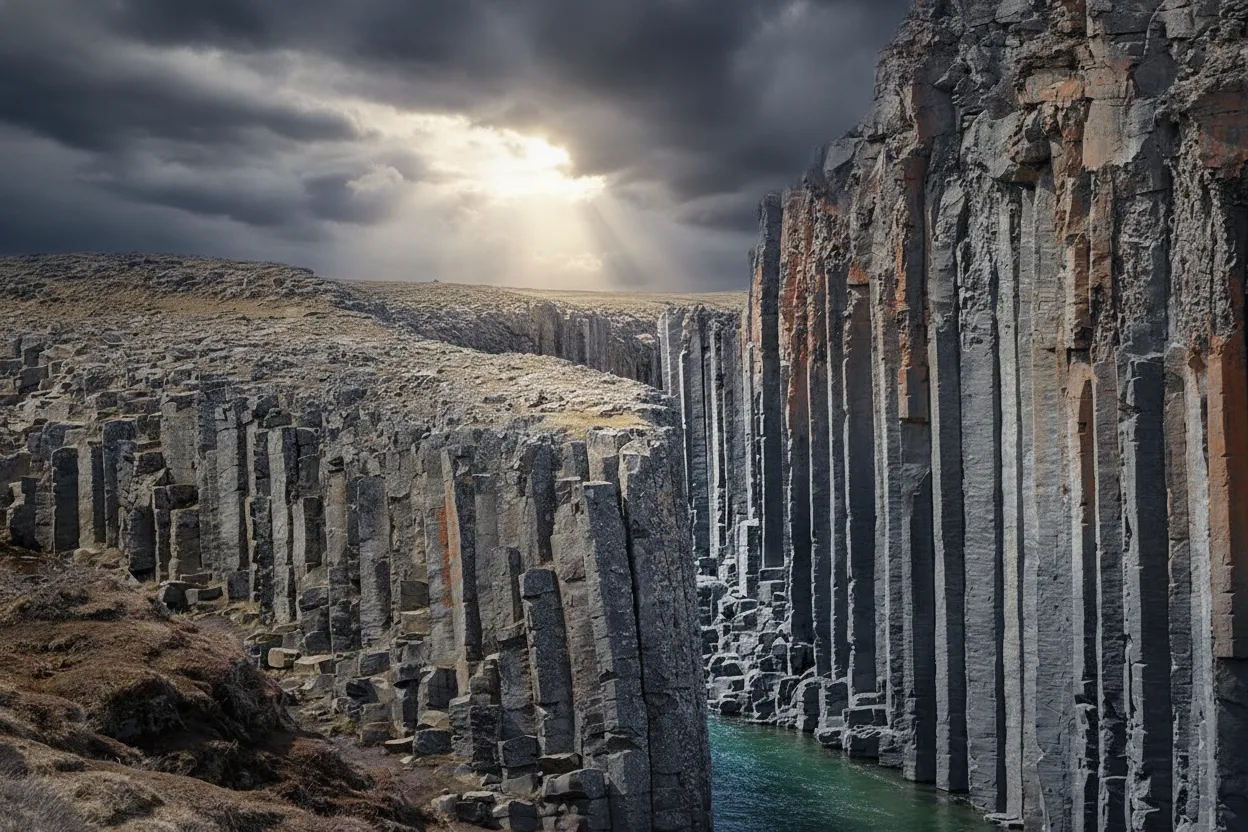
Imagine a place where the earth itself seems to have been sculpted by a master artist, where nature’s geometry takes center stage in a breathtaking display of raw power and delicate beauty. Now, imagine this place was, until recently, a secret, hidden beneath the swirling currents of a powerful glacial river. Journey with me into a remote Icelandic canyon where shockingly turquoise waters flow between thousands of towering, perfectly hexagonal basalt columns. Welcome to Stuðlagil, a place that redefines "hidden gem" and will etch itself into your memory forever.
Stuðlagil Canyon, nestled deep in the rugged heart of East Iceland, is not just a geological marvel; it's a testament to the dynamic forces that shape our planet and a poignant reminder of nature's ability to surprise us. For centuries, this incredible spectacle lay submerged, its intricate basalt formations a secret known only to the rushing meltwater of the mighty Jökulsá á Dal river. But thanks to a fascinating turn of events, this otherworldly gorge has emerged, revealing an intricate landscape that looks like it belongs on another planet, yet is surprisingly accessible to those willing to seek it out.
What Makes Stuðlagil Canyon Unforgettable?
What sets Stuðlagil apart from Iceland's myriad other natural wonders? It's the sheer, jaw-dropping combination of elements that converge here. Picture this: a river, whose waters shift from an ethereal milky blue to an intense, almost unreal turquoise, cutting a path through a canyon whose walls are composed entirely of perfectly formed, towering hexagonal basalt columns. These aren't just a few columns; they stretch for hundreds of meters, forming colossal staircases, intricate patterns, and sheer cliffs that seem to defy belief.
Unlike other basalt formations you might encounter in Iceland, such as the famous Reynisfjara black sand beach or Svartifoss waterfall, Stuðlagil offers an immersive experience. Here, you can descend into the canyon itself, walk among these geological giants, and stand at the water's edge, feeling dwarfed by the sheer scale and precision of nature's handiwork. The columns are so uniform, so perfectly stacked, that they appear almost man-made, yet they are entirely the product of volcanic cooling and erosion. It’s a place that simultaneously inspires awe and a profound sense of wonder at the Earth's artistic capabilities.

A Tale of Ice, Fire, and Human Ingenuity: Stuðlagil's Revealing History
The story of Stuðlagil is as captivating as the canyon itself. For millennia, the Jökulsá á Dal, one of Iceland's longest rivers, thundered through this valley, carrying vast quantities of glacial meltwater and sediment. This powerful, silty river kept the incredible basalt formations of Stuðlagil hidden, its waters too high and too opaque to reveal the secrets beneath. The river's name, often translated as "Glacial River of the Valley," perfectly describes its ancient character.
The turning point came with the construction of the Kárahnjúkar Hydropower Project, a massive undertaking completed in 2009. This project involved building several dams, most notably the Kárahnjúkar Dam, to harness the power of the Jökulsá á Dal for electricity generation. As a direct consequence of the dam's operation, the flow of water into the lower reaches of the river, including Stuðlagil, was drastically reduced and stabilized. The once-raging glacial river transformed into a calmer, clearer waterway, fed primarily by a spring-fed tributary rather than direct glacial melt.
And so, the secret was revealed. As the water levels receded, the astonishing basalt columns, sculpted over countless millennia by volcanic activity and subsequent erosion, emerged from their watery tomb. What was once a powerful, muddy torrent now flowed in serene, shockingly turquoise hues, reflecting the clear skies and revealing the intricate geological masterpiece beneath. It was a discovery that slowly but surely caught the attention of photographers and adventurers, transforming Stuðlagil from an unknown stretch of river into one of Iceland's most sought-after hidden gems.
Exploring the Turquoise Depths: What to Expect at Stuðlagil
Visiting Stuðlagil offers two distinct experiences, largely depending on which side of the canyon you approach. Most of the iconic, ground-level photos you see are taken from the west bank, which requires a bit more effort but rewards you with an unparalleled immersive experience.
The East Bank: The Overlook
The east bank of Stuðlagil is the easier access point. From the main road (Jökuldalsvegur or Road 923), you can drive directly to a parking area near a farm called Grund. From there, a relatively short and easy walk (about 10-15 minutes) leads you to a viewing platform that offers a spectacular panoramic view of the canyon from above. You'll see the river snaking through the columns, and the sheer scale of the formations is impressive. While beautiful, this perspective doesn't allow you to get down to the water's edge or walk among the columns, making it less ideal for those iconic close-up shots.
The West Bank: The Immersive Hike
For the full Stuðlagil experience, you’ll want to head to the west bank. This involves a longer drive on road 923, turning off towards Stuðlafoss waterfall (marked as Klaustursel). Park your car near the abandoned farm of Klaustursel. From here, a hike of approximately 45-60 minutes awaits. The trail is mostly flat, following the river, but can be uneven and rocky in places. Your destination is the Stuðlagil Canyon, where you can descend into the gorge itself.
Once you reach the base of the canyon on the west side, you'll be surrounded by the magnificent basalt columns. This is where the magic truly happens. You can walk along the banks, marvel at the geometric precision of the columns, and dip your fingers into the incredibly clear, turquoise water. The color of the water is most vibrant during the summer months when the river is fed primarily by the clear spring water, rather than glacial melt. It's an incredibly peaceful and awe-inspiring place, perfect for photography and simply soaking in the natural beauty.

Your Essential Guide to Visiting Stuðlagil Canyon
To make the most of your trip to this extraordinary destination, here are some practical tips:
- Best Time to Visit: The ideal time to visit Stuðlagil is during the summer months, from June to September. During this period, the water levels are lowest, and the river's color is at its most vibrant turquoise. In winter, snow and ice can make the trails inaccessible and dangerous, and the water levels might be higher and murkier due to increased glacial melt. Always check weather and road conditions before heading out.
- Getting There: Stuðlagil is located in East Iceland, approximately an hour's drive from Egilsstaðir, the largest town in the region. From Egilsstaðir, take Ring Road 1 south, then turn onto Road 923. For the east bank viewpoint, follow signs for Grund. For the west bank hike, continue on Road 923 past the Grund turnoff until you see a sign for Stuðlafoss/Klaustursel.
- Footwear and Clothing: Proper hiking boots are essential, especially if you plan to hike to the west bank. The terrain can be rocky, uneven, and potentially muddy. Dress in layers, as Icelandic weather can change rapidly, even in summer. A waterproof outer layer is always a good idea.
- Bring Supplies: There are no facilities at Stuðlagil itself, so bring plenty of water, snacks, and anything else you might need for your hike. Pack out everything you pack in.
- Photography Tips: The best light for photography is often in the morning or late afternoon. A wide-angle lens will help capture the grandeur of the canyon and its columns. Don't forget to capture the reflections in the water!
- Safety First: Stick to marked trails and exercise caution, especially when descending into the canyon or walking near the river's edge. Rocks can be slippery, and water levels can fluctuate.
- Accommodation: The nearest major town with a good selection of accommodation, restaurants, and services is Egilsstaðir. Consider making it your base for exploring East Iceland.

Stuðlagil: Iceland's Newly Revealed Masterpiece
Stuðlagil Canyon is more than just a beautiful sight; it's a testament to the ever-changing landscape of Iceland and a symbol of discovery. It reminds us that even in a country famed for its dramatic geology, there are still wonders waiting to be fully appreciated. To stand amidst those towering basalt columns, with the impossibly turquoise river flowing silently at your feet, is to experience a moment of profound connection with the Earth's ancient past and its vibrant present. It’s an adventure, a geological lesson, and an aesthetic triumph all rolled into one unforgettable destination. If you're seeking an experience that truly stands out, Stuðlagil Canyon should be at the very top of your Icelandic itinerary. Go, explore, and let this newly revealed masterpiece captivate your soul.
Essential Travel Information
- Location Stuðlagil Canyon, Iceland
- Best Time June to September
- Getting There From Egilsstaðir, take Route 1 south, then turn onto Road 923. Follow signs for Grund (east bank viewpoint) or Stuðlafoss/Klaustursel (west bank hike).
- Airport Egilsstaðir Airport (EGS)
- Budget Mid-range (approx. $150-250 USD per person per day, excluding major tours)
- Language Icelandic, English
Find Places to Stay Near Stuðlagil Canyon
Compare hotels, hostels, and unique stays in Iceland.
Search AccommodationTours & Experiences Near Stuðlagil Canyon
Book guided tours, day trips, and unique experiences.
Browse Tours