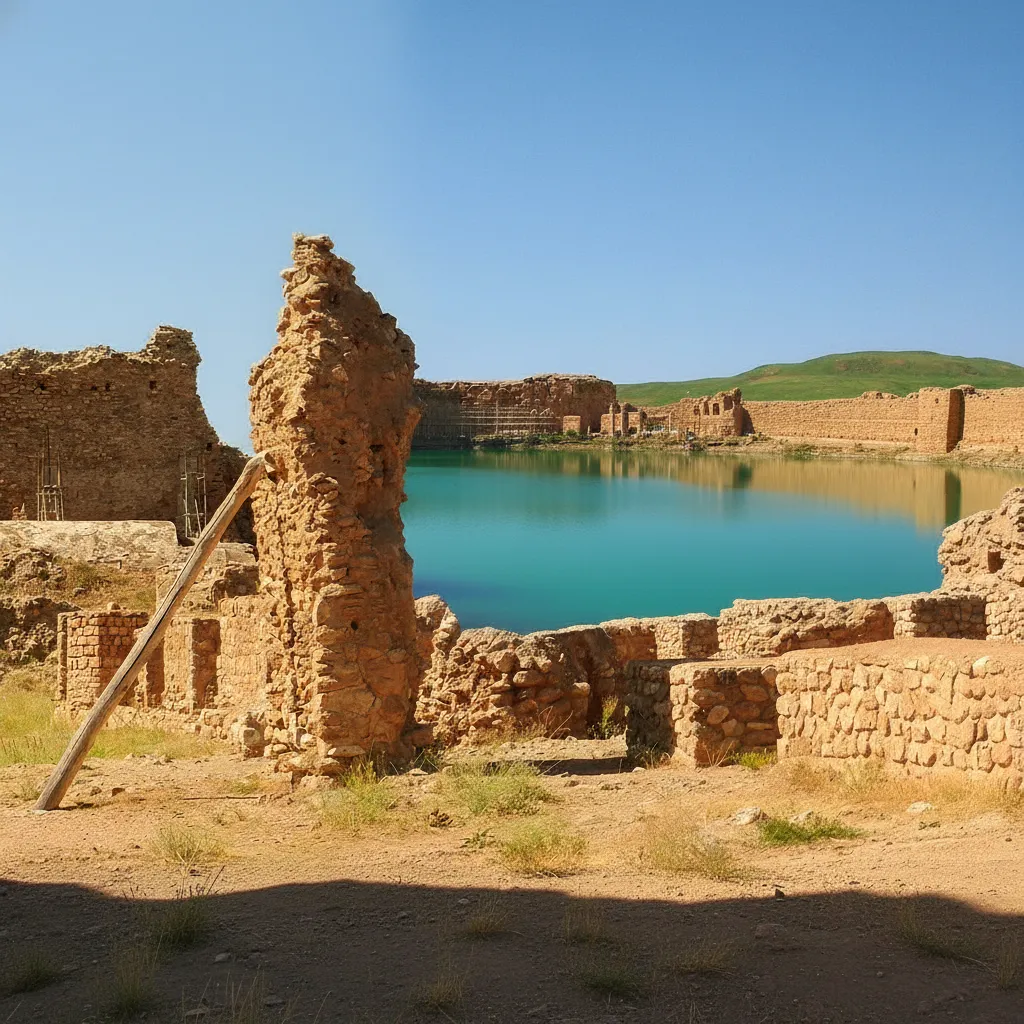
Imagine stepping into a realm where the earth breathes history, where myths linger in the air, and a sacred, 'bottomless' lake shimmers with an ethereal turquoise glow. Tucked away in the rugged, dramatic landscapes of Iran's West Azerbaijan Province lies Takht-e Soleymān, the Throne of Solomon – a UNESCO World Heritage site so profound, so steeped in ancient mystique, it feels like a secret whispered across centuries. This isn't just another historical ruin; it's a breathtaking blend of natural wonder and human devotion, a place where the spiritual heart of the mighty Sassanian Empire once beat, and where the echoes of fire rituals and royal decrees still resonate. If you're searching for an adventure that transcends the ordinary, a journey to a hidden gem that promises to awaken your sense of wonder, then prepare to be captivated by Takht-e Soleymān.
Takht-e Soleymān: Where Myth Meets Majesty
What makes Takht-e Soleymān truly extraordinary is its almost mystical fusion of geological marvel and ancient human endeavor. At its very core lies a volcanic crater lake, not just any lake, but one shrouded in legend – believed by locals to be bottomless and imbued with sacred, even healing, powers. Its waters gleam with an unbelievable turquoise, a color so vibrant it seems to hum with an otherworldly energy, drawing you into its enigmatic depths. This natural wonder is cradled within the formidable fortified walls of what was once one of the most significant Zoroastrian fire temple complexes in the world, the Azargoshnasp. It's a place where the earth itself seems to have conspired with human ambition to create a sanctuary of immense power and beauty.
This isn't a site you'll find overrun with tour buses; it remains a relatively undiscovered treasure, offering an intimate glimpse into a pivotal period of Persian history. The sheer scale of the ruins, combined with the serene yet potent presence of the lake, creates an atmosphere of profound contemplation. You’ll feel the weight of history in the air, a palpable sense of the grand ceremonies and the daily lives that unfolded here thousands of years ago. It’s a journey not just through space, but through time, to a place where the veil between the ancient and the present feels incredibly thin.

Whispers of Empires: A Journey Through Time at Takht-e Soleymān
To understand Takht-e Soleymān is to delve into the heart of the Sassanian Empire (224-651 CE), a glorious period in Persian history that saw the revival of Zoroastrianism as the state religion. This complex, originally known as Shiz, wasn't just any fire temple; it was Azargoshnasp, one of the three great royal fire temples of the Sassanian era, specifically dedicated to the warrior class. Imagine Persian kings, perhaps even Khosrow I or Khosrow II, making pilgrimages here, offering prayers before embarking on military campaigns, believing that the sacred flames would grant them victory. The temple housed one of the most revered fires, believed to have been lit by Zoroaster himself, symbolizing purity, truth, and the divine presence of Ahura Mazda.
Before the Sassanians, the site had earlier layers of occupation, including Parthian and even Achaemenid influences, hinting at its long-standing spiritual significance. However, it was under the Sassanians that it reached its zenith, transforming into a magnificent fortified city complete with royal palaces, an Anahita temple (dedicated to the goddess of waters), and elaborate fortifications. Its strategic location, nestled amidst mountains, made it both defensible and awe-inspiring, a true spiritual capital.
The prosperity and sanctity of Takht-e Soleymān, however, were not eternal. The Arab conquest of Persia in the 7th century marked the decline of Zoroastrianism as the dominant religion, though the site continued to be revered and even briefly reused by the Ilkhanid Mongols in the 13th century, who added an impressive palace complex of their own. Yet, time and invasions eventually led to its abandonment, leaving behind the majestic ruins we see today – a testament to a forgotten era, whispering tales of kings, priests, and profound religious ceremonies.

Exploring the Sacred Ruins: What Awaits You
Your visit to Takht-e Soleymān begins, inevitably, with the lake. Stand at its edge and gaze into the impossibly blue water. Is it truly bottomless? Geologists suggest it's a deep artesian spring, but the mystery persists, adding to its allure. The water level fluctuates, but its captivating color remains constant, a hypnotic focal point around which the entire complex is built. Allow yourself a moment to simply absorb its serene, powerful presence.
Then, turn your attention to the surrounding ruins. You can trace the outline of the grand Sassanian fire temple, imagining the priests tending the eternal flame in its central sanctuary, surrounded by courtyards and administrative buildings. The sheer scale of the stone blocks and the intricate layout hint at the architectural prowess of the Sassanians. You'll walk past the remains of the Anahita Temple, dedicated to the water goddess, a fitting tribute given the sacred lake's presence. Picture the rituals performed here, seeking blessings for fertility and prosperity.
As you explore the various halls and palaces, including those later added by the Ilkhanids, you'll notice the distinct architectural styles that tell the story of different eras. The fortified walls that encircle the entire complex are impressive, offering glimpses into the defensive strategies of ancient empires. Climb to a vantage point along these walls for a breathtaking panoramic view of the entire site, with the lake shimmering at its heart and the rugged Iranian landscape stretching out to the horizon. It's a view that will stay with you long after you've left.
Just a few kilometers away, don't miss the chance to visit Zendan-e Soleymān, or Solomon's Prison. This is another fascinating geological formation – a hollow, conical mountain that was once a volcano. Legend has it that King Solomon imprisoned monsters within its depths. While you can no longer descend into its crater, the sheer scale and unique shape of this natural wonder add another layer of myth and intrigue to your Takht-e Soleymān experience, making for a perfect complementary visit.

Planning Your Pilgrimage: Practical Tips for Visiting Takht-e Soleymān
Visiting Takht-e Soleymān requires a bit of planning, but the reward is immeasurable. It’s a remote location, part of its charm, so don't expect bustling tourist infrastructure.
Getting There: The most convenient way to reach Takht-e Soleymān is by private car or as part of an organized tour from larger cities like Tabriz or Urmia, which are several hours' drive away. Public transport options are limited and may require multiple connections, making a private driver or tour a more comfortable and efficient choice. The drive itself is scenic, offering glimpses into rural Iranian life.
Accommodation: There are very limited accommodation options directly near Takht-e Soleymān. Most visitors opt to stay in Tabriz or Urmia and undertake a day trip, or combine it with other destinations in the region. If you're adventurous, you might find guesthouses in nearby towns like Takab, but be prepared for basic facilities.
Best Time to Visit: The spring (April-May) and autumn (September-October) months offer the most pleasant weather for exploring, with mild temperatures and clear skies. Summers can be hot, and winters can be very cold with snow, making access challenging.
What to Bring: Comfortable walking shoes are essential as you'll be exploring uneven terrain. Bring plenty of water, especially during warmer months, and sun protection (hat, sunscreen). A good camera is a must to capture the stunning landscapes and ancient architecture. Remember to dress modestly, respecting local customs, particularly for women who should wear a headscarf.
Local Guides: While you can explore independently, hiring a local guide, especially one knowledgeable in history and English, can significantly enhance your visit. They can bring the ruins to life with stories, historical context, and local legends that you might otherwise miss.
Visa: Remember that entry to Iran requires a visa for most nationalities. Plan this well in advance of your trip.
Takht-e Soleymān is more than just a historical site; it's an experience that resonates deep within your soul. It's a journey back to the heart of an ancient empire, a communion with nature's raw beauty, and a moment to stand where kings once stood, feeling the weight of millennia. If you seek an adventure that promises both profound historical insight and breathtaking natural wonder, add Takht-e Soleymān to your travel list. It’s a secret worth uncovering.
Essential Travel Information
- Location Takht-e Soleymān (Throne of Solomon), Iran
- Best Time April-May (Spring) and September-October (Autumn)
- Getting There Best by private car or organized tour from Tabriz or Urmia (several hours drive).
- Airport Tabriz International Airport (TBZ)
- Budget Mid-range (approx. $50-100 USD/day, excluding tours/private transport)
- Language Persian (Farsi), Azerbaijani Turkish
Find Places to Stay Near Takht-e Soleymān (Throne of Solomon)
Compare hotels, hostels, and unique stays in Iran.
Search AccommodationTours & Experiences Near Takht-e Soleymān (Throne of Solomon)
Book guided tours, day trips, and unique experiences.
Browse Tours