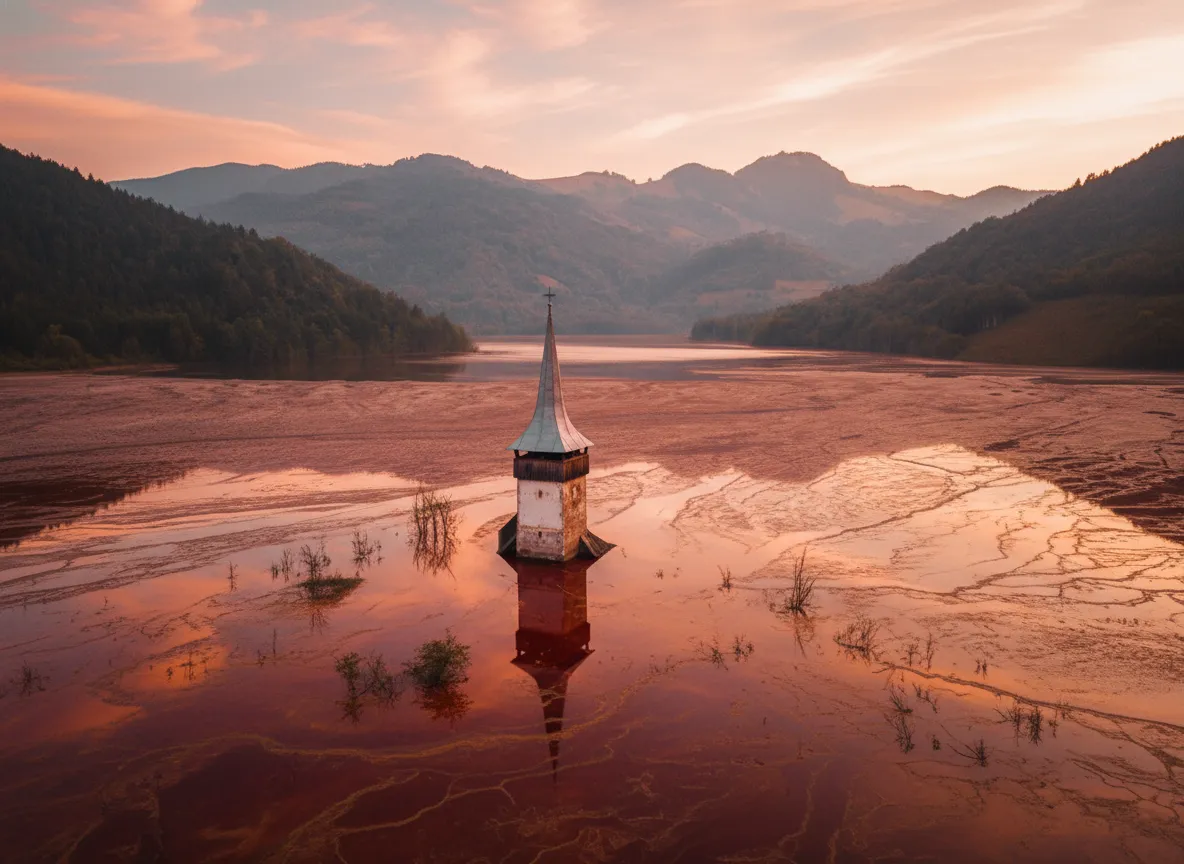
Imagine a modern Atlantis, not lost to ancient seas, but deliberately sacrificed to a rising tide of poison. In the heart of Romania, nestled within the majestic Apuseni Mountains of Alba County, lies one of the most hauntingly beautiful and poignant sights you will ever witness: The Drowned Church of Geamăna. Here, a once-vibrant village was slowly, methodically submerged beneath a crimson, metallic lake, leaving only its church steeple to pierce the toxic surface. It stands as a solitary sentinel, a silent, macabre monument to environmental devastation and a community forever erased from the map, yet eternally etched into the landscape.
This isn't a fairy tale; it's a stark, compelling reality that beckons the curious traveler. If you seek journeys that challenge your perceptions, stir your soul, and offer a profound glimpse into humanity's impact on our planet, then Geamăna is a destination that will stay with you long after you've left its eerie shores. Prepare to embark on an unforgettable exploration of a place where beauty and tragedy intertwine, creating a scene of unparalleled, somber wonder.
The Eerie Allure: What Makes Geamăna Unforgettable
What makes Geamăna so incredibly special isn't just its visual spectacle, but the powerful story it tells. The image of the church steeple, often appearing to float and shift with the currents, above a vast, unnaturally colored lake, is nothing short of mesmerizing. Depending on the water levels – which constantly fluctuate due to the ongoing mining operations – you might see just the cross, or a significant portion of the church tower, sometimes even the faint outline of its roof. It’s a dynamic, living monument, constantly changing, constantly reminding visitors of its tragic past.
The lake itself is a spectacle of its own. Its vivid red-orange hue comes from the heavy metals and cyanide used in the copper extraction process at the nearby Roşia Poieni mine. This isn't a natural phenomenon; it's a man-made sea of toxic waste, a testament to industrial ambition and the devastating cost it can levy on nature and communities. The stark contrast between the vibrant, almost artistic colors of the lake and the solemn, resilient structure of the church creates an almost surreal atmosphere. It’s a place that forces contemplation, sparking questions about progress, sacrifice, and the true price of resources.
For photographers, artists, and anyone with a keen eye for the dramatic, Geamăna offers unparalleled scenes. The shifting light, the reflection of the surrounding mountains, the often-misty conditions, and the sheer uniqueness of the subject combine to create a truly cinematic landscape. It’s a place that feels both ancient and alarmingly modern, a ghost of the past haunting the present, making it a truly unique and deeply moving travel experience.

A Village Sacrificed: The Haunting History of Geamăna
The story of Geamăna is a painful chapter in Romania's modern history, dating back to the late 1970s. Under the communist regime of Nicolae Ceaușescu, Romania embarked on ambitious industrialization projects, often with little regard for environmental consequences or human cost. One such project was the expansion of the Roşia Poieni copper mine, which holds one of Europe's largest copper deposits. To process the vast quantities of ore, a massive tailings pond was needed to store the waste sludge.
Geamăna, a picturesque village nestled in a valley, was deemed the ideal location. Its inhabitants, approximately 400 families, were given a devastating ultimatum: abandon their homes, their ancestral lands, and their way of life, or be consumed by the rising tide of toxic waste. With little compensation and even less choice, the villagers were forced to relocate, scattering to various parts of Romania and beyond. They watched, helpless, as their homes, their school, their cemetery, and their beloved church were slowly, inexorably swallowed by the crimson sludge pumped in from the mine.
The tailings pond was designed to grow, and it continues to do so to this day. Over the decades, the lake has expanded, covering more and more of the former village. The church steeple, once a central point of community life, is now the last visible remnant, a poignant and eerie testament to what was lost. It’s a powerful symbol of environmental sacrifice, a modern-day Pompeii where the disaster was not sudden and volcanic, but slow, deliberate, and man-made.
Experiencing the Eerie Beauty: What You'll See at the Drowned Church
Visiting Geamăna is an experience that transcends mere sightseeing. It’s a journey into a landscape that feels both surreal and deeply melancholic. As you approach, the first thing that strikes you is the vibrant, almost shocking color of the lake. It's a stark, unnatural red-orange that stands in stark contrast to the verdant hills and forests of the surrounding Apuseni Mountains. This is not a place of natural beauty in the conventional sense, but rather a site of profound, unsettling allure.
The focal point, of course, is the church steeple. Depending on the season and the mine's activity, the water levels can vary dramatically. In drier periods, or when the mine is pumping less waste, more of the church might be visible. You might even discern the contours of its roof or parts of the nave beneath the surface. During periods of heavy rain or increased mining activity, only the very tip of the cross might peek out, making it seem as if the entire structure is truly floating on the toxic expanse.
The atmosphere here is incredibly powerful. The silence is often broken only by the wind or the distant hum of mining operations. There's a palpable sense of history, of lives lived and abruptly ended. You'll find yourself imagining the village as it once was, a bustling community now silenced forever beneath the crimson waves. It’s a place for quiet reflection, a stark reminder of the environmental costs often hidden from plain sight.

While the church is the main attraction, take time to appreciate the broader landscape. The rugged beauty of the Apuseni Mountains provides a stunning, if ironic, backdrop to the industrial scar. The contrast between the pristine nature and the man-made disaster is a key part of Geamăna's impact. You might also encounter local shepherds or farmers, continuing their traditional way of life in the valleys around the mine, a testament to resilience in the face of immense change.
Planning Your Pilgrimage to the Past: Practical Visit Tips
Visiting the Drowned Church of Geamăna requires a bit of planning and a spirit of adventure. It’s not a heavily commercialized tourist spot, which adds to its raw, authentic appeal.
Best Time to Visit
Spring (April-May) and Autumn (September-October) are generally the best times. The weather is milder, offering comfortable conditions for driving and exploring. Spring brings fresh greenery to the surrounding mountains, while autumn paints them with vibrant colors, creating a striking contrast with the red lake. Summer can be hot, and winter can bring heavy snow, making access challenging on the unpaved roads.
How to Get There
Geamăna is remote, and a personal vehicle is highly recommended. The nearest towns of significant size are Abrud and Câmpeni, both accessible from Alba Iulia. From these towns, you'll follow a series of often unpaved, winding mountain roads. GPS navigation is essential, but be prepared for areas with limited cell service. The journey itself is part of the adventure, offering stunning views of the Apuseni Mountains. Drive carefully, especially on curves and unsealed sections.
Respect and Safety
This is crucial. The water in the tailings pond is highly toxic. Under no circumstances should you touch it or attempt to go near the water's edge. Stay on solid, elevated ground. The land around the lake can be unstable and dangerous. This site is also a former village and a place of profound loss; approach it with respect for the community that once thrived here. Avoid littering and keep noise to a minimum.
What to Bring
- **Sturdy Footwear:** For navigating uneven terrain.
- **Water and Snacks:** Services are scarce once you leave the main towns.
- **Camera:** You'll want to capture the unique beauty.
- **Layered Clothing:** Mountain weather can be unpredictable.
- **Offline Map/GPS:** For navigation.
Nearby Attractions and Accommodation
While Geamăna itself has no tourist infrastructure, you can find accommodation and dining in nearby towns like Abrud, Câmpeni, or even further afield in Alba Iulia. Consider combining your visit with other fascinating sites in the Apuseni Mountains, such as the historic mining town of Roșia Montană (another site with a complex mining history) or explore the region's beautiful caves and hiking trails. This area of Romania is rich in natural beauty and cultural heritage, making it ideal for a multi-day exploration.

The Drowned Church of Geamăna isn't just a destination; it's an experience that resonates deeply. It's a place that asks us to confront the consequences of our actions, to reflect on the stories of those who were displaced, and to marvel at the enduring power of a single steeple standing against a sea of red. For the traveler seeking more than just pretty pictures, for those who crave stories that challenge and inspire, Geamăna offers a pilgrimage into a profound and unforgettable corner of Romania. It’s a testament to both human ingenuity and human folly, a stark reminder that even in sacrifice, there can be a haunting, undeniable beauty.
Essential Travel Information
- Location The Drowned Church of Geamăna, Romania
- Best Time Spring (April-May) and Autumn (September-October) offer mild weather and beautiful colors.
- Getting There Best reached by car from nearby towns like Abrud or Câmpeni, via often unpaved mountain roads. GPS recommended, limited cell service in areas.
- Airport Cluj-Napoca International Airport (CLJ)
- Budget Budget/Mid-range, approx. €50-80/day (for accommodation, food, transport if self-driving)
- Language Romanian
Find Places to Stay Near The Drowned Church of Geamăna
Compare hotels, hostels, and unique stays in Romania.
Search AccommodationTours & Experiences Near The Drowned Church of Geamăna
Book guided tours, day trips, and unique experiences.
Browse Tours