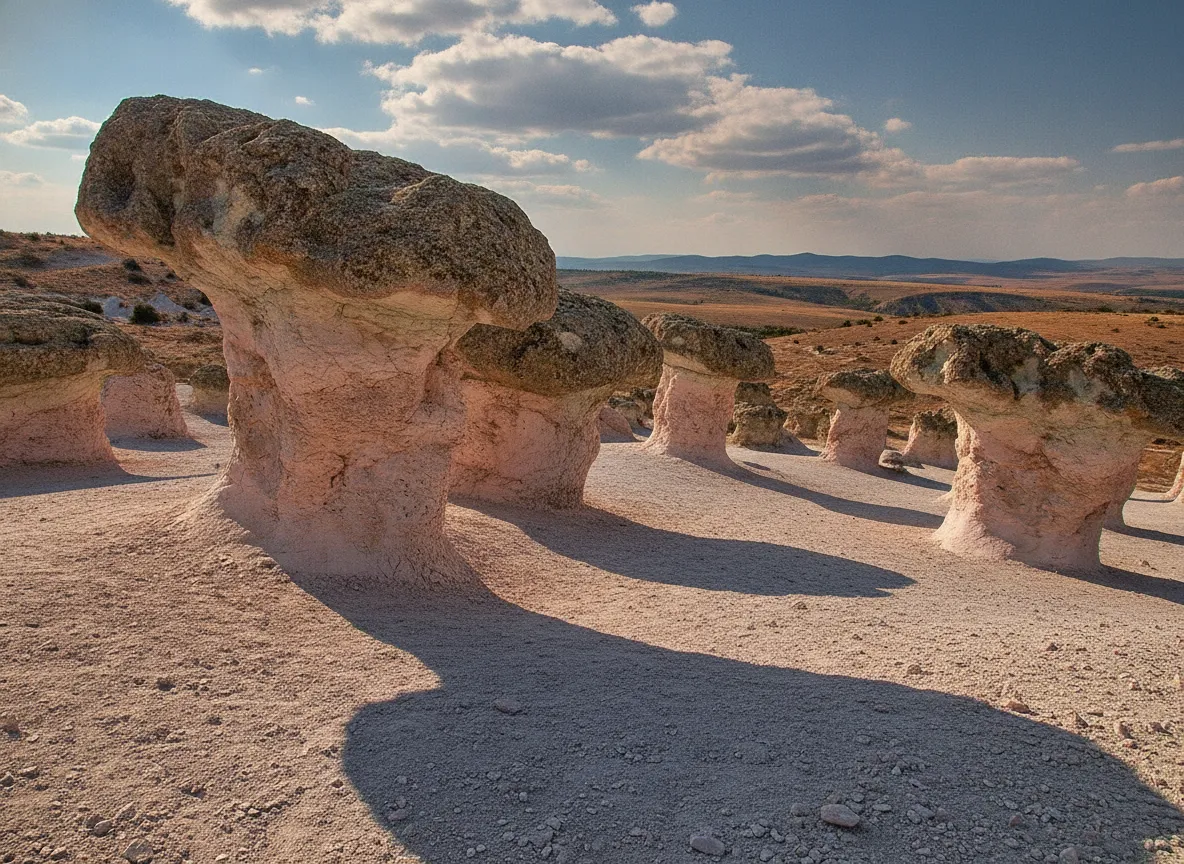
Imagine stepping into a realm where the earth itself has sculpted wonders so fantastical, they defy belief. A place where colossal, ancient stone giants stand sentinel, their forms so peculiar, so perfectly mushroom-like, that you'd swear a wizard's spell had brought them to life. This isn't a scene from a forgotten fairy tale or a distant planet; it's a very real, breathtaking spectacle tucked away in the heart of Bulgaria, near a tiny village in the Kardzhali Province. Welcome, my friends, to the Stone Mushrooms (Каменни гъби) – a truly hidden gem waiting to bewitch your senses and ignite your imagination.
What Makes the Stone Mushrooms So Special?
This isn't just another rock formation; it's a geological marvel that feels utterly otherworldly. Picture this: towering structures, some reaching an astounding 10 meters (over 30 feet) high, each meticulously carved by nature with a distinct, mushroom-like silhouette. What truly sets them apart is their striking coloration: a warm, rosy-pink base gradually transitions into a dramatic, bluish-grey cap. It’s a palette that seems hand-picked to enhance their mystical aura, making every angle a photographer's dream. Far from the bustling resorts and well-trodden paths of Bulgaria's Black Sea coast or the popular ski slopes, the Stone Mushrooms offer a profound sense of discovery. You're not just observing nature; you're stepping into a living, breathing legend, a place where geology and folklore intertwine to create an unforgettable experience. This is Bulgaria at its most raw, most enchanting, and most authentically magical.

A Tale Told in Stone: Geology and Local Legends
The story of the Stone Mushrooms is a tale told in stone, spanning millions of years. These incredible formations are the result of a geological process known as differential erosion. Eons ago, this region was covered by ancient seas and intense volcanic activity. Over time, layers of volcanic ash and rock settled, creating distinct strata. The lower parts of what would become the mushrooms are composed of softer, pinkish volcanic tuffs, rich in minerals that give them their characteristic hue. Above these, harder, more resistant ignimbrites, formed from solidified volcanic ash and rock fragments, created the darker, bluish-grey caps.
Then, the tireless forces of nature – wind, rain, and the relentless flow of water – began their slow, deliberate artistry. The softer tuffs at the base eroded more quickly, while the tougher ignimbrites above resisted, protecting the underlying material from the elements. This painstaking process, unfolding over millennia, gradually sculpted the iconic mushroom shape we see today. It’s a powerful reminder of nature’s incredible patience and artistic prowess, a natural sculpture garden created by the very elements that define our planet.
But the scientific explanation, while fascinating, only tells half the story. The locals, with their deep connection to this land, have woven a much more romantic and dramatic narrative around these stone giants. Legend has it that a young bride, celebrated for her unparalleled beauty, was riding with her sisters to her wedding when they were ambushed by Ottoman invaders. In their despair and fear, the bride and her sisters cried out to the heavens for help. Their prayers were answered in a miraculous, albeit tragic, way: they were instantly transformed into these colossal stone mushrooms, forever preserving their purity and marking the spot of their fateful journey. Some versions even say the bride's tears created the small stream that flows nearby, a constant reminder of their sacrifice. This poignant tale adds an emotional depth to the landscape, inviting visitors to ponder the whispers of the past carried on the wind, making the Stone Mushrooms not just a geological wonder, but a monument to love and tragedy.
What You'll See and Experience There
As you approach the Stone Mushrooms, the first thing that strikes you is their sheer scale and surreal appearance. It's like walking into a giant's garden, where natural sculptures stand proudly amidst the rugged landscape of the Eastern Rhodope Mountains. Each mushroom is unique, with subtle variations in shape, height, and color intensity, making exploration a continuous delight. You'll find yourself craning your neck to admire their lofty caps, marveling at the intricate textures carved into their bases, and perhaps even trying to spot the faces or figures that the imagination often conjures in such organic forms.
The area around the mushrooms is relatively open, allowing for easy access and fantastic photo opportunities from various angles. Imagine capturing the morning sun casting long, dramatic shadows, or the soft glow of twilight painting the caps in hues of purple and gold. The silence here is profound, broken only by the gentle rustle of leaves or the distant call of a bird, offering a tranquil escape from the hustle and bustle of modern life. It’s a place that encourages quiet contemplation, a deep connection with nature, and a profound sense of awe. Beyond the formations themselves, the surrounding countryside offers glimpses into traditional Bulgarian village life, with charming houses and verdant fields adding to the picturesque scenery. You might even encounter local shepherds with their flocks, adding to the authentic charm of the region.

Practical Tips for Your Visit
Getting There
The Stone Mushrooms are located near the village of Beli Plast, in the Kardzhali Province, approximately 15 kilometers northeast of the city of Kardzhali. As a truly off-the-beaten-path destination, public transport options are limited, so renting a car is highly recommended for flexibility and ease. From Sofia, it's about a 3.5-4 hour drive; from Plovdiv, it's closer, around 1.5-2 hours. The roads are generally good, but the final approach to the site might involve narrower village roads. Look for signs for "Каменни гъби" or "Stone Mushrooms." GPS coordinates can be incredibly helpful to navigate directly to the site.
Best Time to Visit
Spring (April-May) and Autumn (September-October) are ideal. During these seasons, the weather is pleasantly mild, the landscape is vibrant with either blossoming flora or rich autumnal colors, and the crowds are minimal, allowing for a more serene experience. Summer can be quite hot, though still manageable with proper hydration, while winter can bring snow, offering a magical but potentially challenging visit due to slippery conditions and colder temperatures.
What to Bring
- Comfortable Walking Shoes: You'll be walking on natural, uneven terrain.
- Camera: This place is incredibly photogenic, so bring your best gear!
- Water & Snacks: There are no facilities directly at the site, so come prepared.
- Sun Protection: Hat, sunglasses, and sunscreen are essential, especially in warmer months.
- Layers: Even in spring/autumn, temperatures can vary throughout the day.
- A Sense of Adventure: Be ready to explore and be amazed!
Accommodation
The nearest major town with a good selection of hotels, guesthouses, and restaurants is Kardzhali. You can also find charming guesthouses in some of the smaller, more traditional villages in the surrounding Rhodope Mountains if you prefer a more authentic, rural experience and wish to immerse yourself deeper in local culture.
Nearby Attractions
Make a day or even a weekend of your trip! The Kardzhali region is rich in history and natural beauty. Don't miss the ancient Thracian city of Perperikon, a monumental archaeological complex often called the "Bulgarian Machu Picchu," or the sacred rock sanctuary of Tatul, believed to be the tomb of Orpheus. These sites are relatively close by and offer fascinating insights into Bulgaria's ancient past, making your journey to the Stone Mushrooms part of a larger, unforgettable cultural and historical adventure.
Respectful Tourism
The Stone Mushrooms are a natural wonder. Please help preserve them by sticking to marked paths, not climbing on the formations (as they are fragile), and taking all your litter with you. Let’s ensure this magical place remains pristine for generations to come, allowing future travelers to experience the same awe and wonder you will.

Unearth Your Own Adventure
The Stone Mushrooms of Bulgaria are more than just a collection of rocks; they are a testament to the earth's artistry, a canvas for ancient legends, and a sanctuary for the soul. Visiting this hidden gem is an invitation to slow down, to marvel at the extraordinary, and to feel the deep, resonant pulse of a land rich in history and wonder. If you're seeking an adventure that takes you off the well-worn tourist trail and into a landscape that truly feels like stepping into a fantasy novel, then pack your bags. The Stone Mushrooms are calling, ready to offer you an experience that will linger in your memory long after you’ve left their magical embrace. This is your chance to discover a piece of Bulgaria that few ever see, an experience that promises both wonder and tranquility.
Essential Travel Information
- Location The Stone Mushrooms (Каменни гъби), Bulgaria
- Best Time Spring (April-May) and Autumn (September-October) for mild weather and vibrant scenery.
- Getting There Best reached by rental car, located near the village of Beli Plast in Kardzhali Province. Approx. 1.5-2 hours drive from Plovdiv.
- Airport Plovdiv Airport (PDV), alternatively Sofia Airport (SOF).
- Budget Budget to Mid-range. Approximate daily cost for accommodation, food, and transport could be 40-80 EUR per person, depending on choices.
- Language Bulgarian (Cyrillic script). English is spoken in major tourist areas, but less so in rural regions.
Find Places to Stay Near The Stone Mushrooms (Каменни гъби)
Compare hotels, hostels, and unique stays in Bulgaria.
Search AccommodationTours & Experiences Near The Stone Mushrooms (Каменни гъби)
Book guided tours, day trips, and unique experiences.
Browse Tours