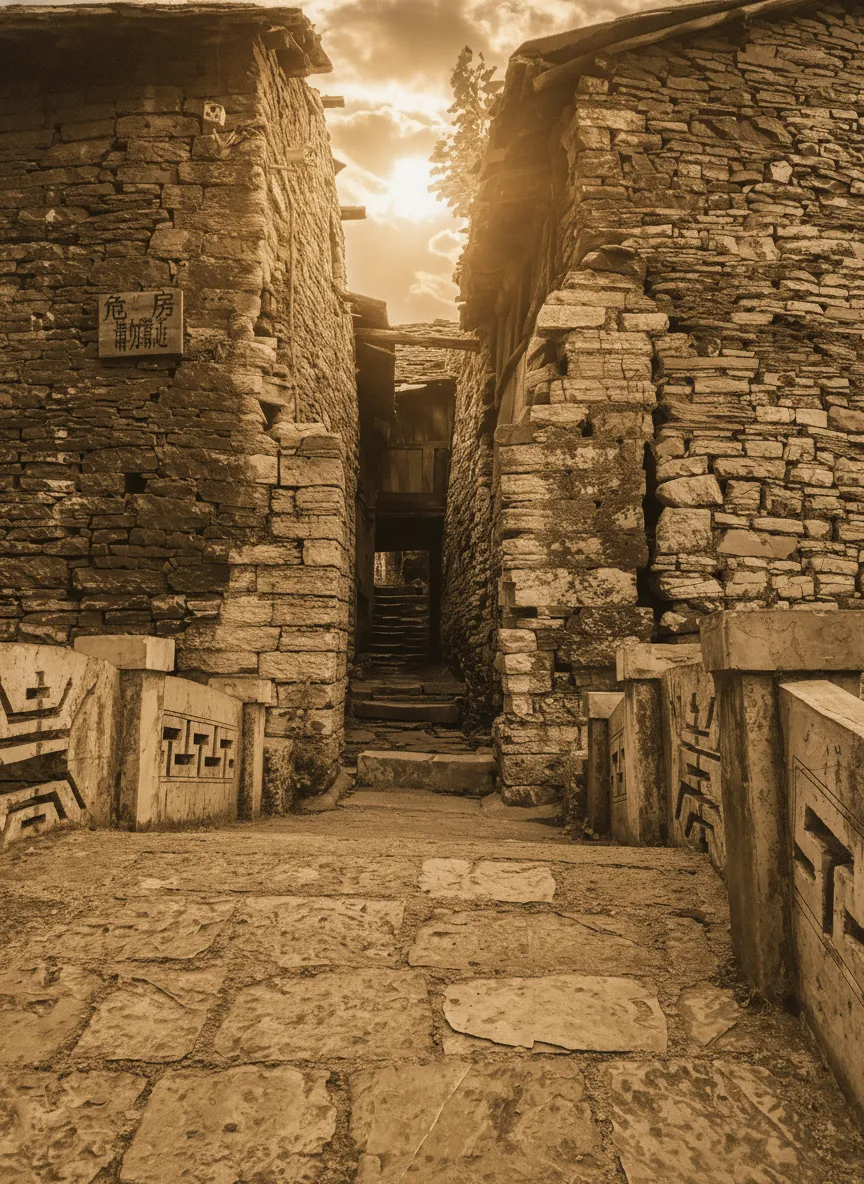
Imagine a place where time itself seems to have paused, a living echo of an empire long past. Picture stepping into a Ming Dynasty fortress-village, preserved not in amber, but in the vibrant daily lives of its people, for over 600 years. This isn't a museum exhibit or a meticulously reconstructed film set; this is Tianshengqiao Tunpu Village (天生桥屯堡村) in China's enchanting Guizhou Province. Here, nestled amidst a landscape sculpted by nature into majestic stone bridges, descendants of ancient Han Chinese soldiers still live, speak, and build as their ancestors did, offering a truly unparalleled journey into China's forgotten past.
A Living Time Capsule: Why Tianshengqiao Tunpu is Unique
What makes Tianshengqiao not just special, but utterly captivating, is its astonishing status as a living time capsule. This isn't just an old village; it's a continuously inhabited cultural anomaly. The people you'll encounter here are the 'Tunpu'—a distinct Han Chinese sub-ethnic group whose lineage traces directly back to soldiers dispatched from Nanjing in the 14th century. These warriors were sent to guard the Ming empire's southwestern frontier, a strategic move that inadvertently preserved their unique way of life for centuries.
Unlike other Han Chinese populations who have evolved culturally, linguistically, and architecturally over the dynasties, the Tunpu people have steadfastly maintained their ancestral traditions. They speak a unique dialect, a living remnant of Ming Dynasty Mandarin, which sounds distinct even to modern Mandarin speakers. Their architectural style, characterized by sturdy stone houses and defensive walls, harks back to an era when security was paramount. Even their traditional clothing, particularly the women's elaborate silver headdresses and embroidered garments, stands apart from both modern Han Chinese attire and the vibrant costumes of the surrounding ethnic minorities in Guizhou.
To walk through Tianshengqiao is to witness a vibrant, continuously inhabited culture that time has seemingly forgotten. It's a place where history isn't just remembered; it's lived, breathed, and passed down through generations. This isn't merely a historical site; it's a dynamic, breathing slice of the past, offering a rare and intimate glimpse into a cultural heritage that has defied the currents of modernity.
Echoes of Empire: The Story of the Tunpu People
The story of the Tunpu people is one of strategic foresight, isolation, and remarkable cultural resilience. During the early Ming Dynasty, Emperor Hongwu, the founder of the dynasty, sought to consolidate control over his vast empire. The southwestern regions, including what is now Guizhou, were considered a volatile frontier. To assert imperial authority and secure these distant lands, Hongwu initiated a massive military colonization program.
Thousands of soldiers, primarily from the Nanjing region (the Ming capital at the time), were dispatched to Guizhou. These soldiers, along with their families, were granted land and ordered to settle, farm, and defend the frontier. They built fortified villages, known as 'Tunpu' (屯堡), which literally translates to "military settlements." Tianshengqiao is one such village, strategically located and meticulously constructed to withstand potential threats.
Over the centuries, as the empire's focus shifted and the frontier became less volatile, these Tunpu communities found themselves increasingly isolated. Surrounded by diverse ethnic minority groups and geographically separated from the Han heartland, they clung fiercely to their ancestral customs. This isolation, rather than eroding their culture, served to preserve it, creating a unique cultural island where Ming Dynasty traditions continued to flourish, largely untouched by the subsequent Qing Dynasty and the radical changes of the 20th century. Their resilience is a testament to the enduring power of cultural identity, making Tianshengqiao a truly 'alive' historical anomaly.

Stepping Back in Time: What Awaits You in Tianshengqiao
Visiting Tianshengqiao is an immersive experience that engages all your senses. As you approach the village, the first thing that strikes you is the sheer scale of the natural landscape. The "Tianshengqiao" or "Heavenly Bridge" itself, a magnificent natural stone arch carved by millennia of erosion, often forms a dramatic backdrop or even an integral part of the village's surroundings. It’s a breathtaking fusion of human ingenuity and natural grandeur.
Once inside the village walls, you'll find yourself wandering through a labyrinth of narrow, stone-paved alleys. The houses are built predominantly from local stone, their grey facades weathered by centuries of sun and rain. Each home, often featuring intricate carvings and sturdy wooden doors, tells a silent story of generations. Defensive elements like watchtowers and fortified gates are still visible, reminding you of the village's military origins.
The true magic, however, lies in the people. You'll see elderly women, their faces etched with history, still wearing the distinctive Tunpu clothing—often a dark blue or black jacket, wide trousers, and the iconic silver headdress that glints in the sunlight. Children play in the courtyards, their laughter echoing off ancient walls, while men go about their daily tasks, perhaps tending to fields or repairing a roof. The air is filled with the gentle rhythm of daily life, punctuated by the unique sounds of the Tunpu dialect, a melodic reminder of a language from another era.
Don't be surprised if you're invited for a cup of tea or a glimpse into a traditional home. The Tunpu people, while maintaining their traditions, are generally welcoming to respectful visitors. You might stumble upon a local market, where traditional crafts or agricultural produce are sold, or witness a spontaneous cultural performance. Every corner turned, every face encountered, feels like a page from a history book brought vividly to life.

Your Journey to the Past: Practical Tips for Visiting
Embarking on a journey to Tianshengqiao Tunpu Village is an adventure, and a little preparation will ensure a smooth and enriching experience. This is not a bustling tourist hotspot, which is precisely its charm, but it means planning is key.
Best Time to Visit: Spring (April-May) and Autumn (September-October) are generally the most pleasant. The weather is mild, avoiding the intense heat and heavy rains of summer, and the chill of winter. These seasons also offer beautiful natural scenery.
Getting There: Tianshengqiao's remoteness is part of its allure. The most common route involves flying into Guiyang Longdongbao International Airport (KWE) or taking a high-speed train to Anshun. From Anshun, you'll need to arrange local transport, likely a bus or a hired car, to reach the village. Be prepared for a scenic but potentially winding journey through the Guizhou countryside. Consider hiring a private driver for convenience, especially if your Mandarin is limited.
Accommodation: While Tianshengqiao itself might have very basic guesthouses or homestays, many visitors opt to stay in the larger nearby city of Anshun, which offers a wider range of hotels and amenities. Day trips from Anshun are very feasible.
Language and Communication: The Tunpu people speak their unique dialect, but many younger villagers and those accustomed to visitors will likely understand and speak some Mandarin Chinese. Learning a few basic Mandarin phrases will always be appreciated. A translation app on your phone can also be helpful.
Respectful Travel: Remember, this is a living community, not an open-air museum. Be mindful and respectful of local customs and privacy. Always ask for permission before taking photos of people, especially the elderly. Dress modestly, and be prepared to remove your shoes if invited into a home. Embrace the slow pace of life and the opportunity for genuine cultural exchange.
What to Bring: Comfortable walking shoes are a must for navigating the uneven stone paths. A good camera is essential to capture the village's photogenic charm. Bring an open mind, a sense of wonder, and a desire to connect with a history that continues to breathe.

Tianshengqiao Tunpu Village isn't just a destination; it's an experience, a journey through time that challenges your perceptions of history and culture. It's a testament to the incredible diversity hidden within China, a place where the echoes of a 600-year-old empire resonate in every stone and every smile. If you seek an adventure beyond the well-trodden paths, a place that truly feels like discovering a secret, then Tianshengqiao awaits, ready to unveil its ancient wonders.
Essential Travel Information
- Location Tianshengqiao Tunpu Village (天生桥屯堡村), China
- Best Time Spring (April-May) and Autumn (September-October)
- Getting There Fly to Guiyang Longdongbao International Airport (KWE) or take a high-speed train to Anshun. From Anshun, hire a private car or take a local bus to the village.
- Airport Guiyang Longdongbao International Airport (KWE)
- Budget Mid-range (approx. $80-150 USD daily, excluding international flights, depending on transport choices)
- Language Tunpu dialect (Ming Dynasty Han Chinese), Mandarin Chinese
Find Places to Stay Near Tianshengqiao Tunpu Village (天生桥屯堡村)
Compare hotels, hostels, and unique stays in China.
Search AccommodationTours & Experiences Near Tianshengqiao Tunpu Village (天生桥屯堡村)
Book guided tours, day trips, and unique experiences.
Browse Tours