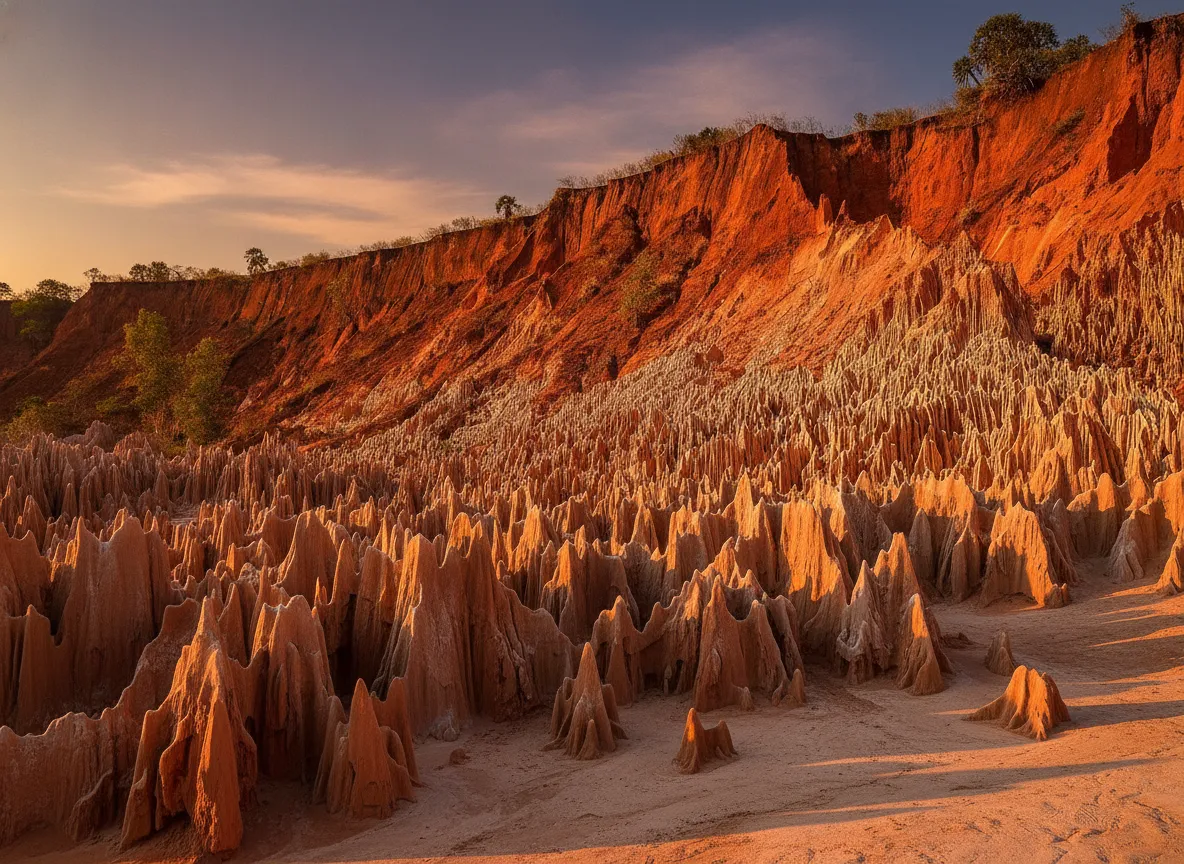
Forget everything you thought you knew about canyons. Imagine a landscape where the earth itself is a canvas, painted in the most vivid reds, oranges, and whites, sculpted by the very elements that breathe life into it. This isn't a dream, nor is it a painting; it's Tsingy Rouge, Madagascar's most ephemeral and breathtaking geological secret, a place so stunning and so transient, it feels like a whispered legend.
Nestled deep within the rugged Diana Region of northern Madagascar, Tsingy Rouge defies easy categorization. Unlike its more famous, towering limestone cousin, Tsingy de Bemaraha, this 'painted canyon' is a marvel of delicate sandstone, marl, and laterite. It's a testament to nature's relentless artistry, a constantly evolving masterpiece that changes with every season's rain, revealing new spires, new valleys, and new shades of an otherworldly palette. To visit Tsingy Rouge is to witness a fleeting spectacle, a vibrant mosaic of natural art that offers a profoundly unique glimpse into the raw, untamed beauty of Madagascar.
Unveiling Tsingy Rouge: Madagascar's Painted Canyon
What makes Tsingy Rouge so utterly captivating? It's a symphony of contradictions: robust yet fragile, ancient yet ever-new, a riot of color born from the earth's quiet processes. While Madagascar is famed for its limestone Tsingy formations – dramatic, sharp pinnacles that stand like petrified forests – Tsingy Rouge offers a distinctly different, equally awe-inspiring experience. Here, the rock formations are softer, more fluid, resembling melted candles or abstract sculptures carved by an invisible hand. The dominant lateritic soil, rich in iron oxides, gives the landscape its signature fiery red hues, interspersed with creamy whites from kaolin and soft oranges from other minerals, creating a visual feast that photographers dream of.
The term 'Tsingy' itself, derived from the Malagasy word meaning "where one cannot walk barefoot," usually refers to the sharp, jagged karst formations. Tsingy Rouge, however, stretches the definition, presenting a landscape of delicate, almost ethereal spires and hoodoos that are much softer and more easily eroded. This unique composition is what makes it so special – and so vulnerable. It's a place that reminds us of the power of natural forces and the transient beauty they can create.
A Geological Masterpiece in Motion: The Story of Tsingy Rouge
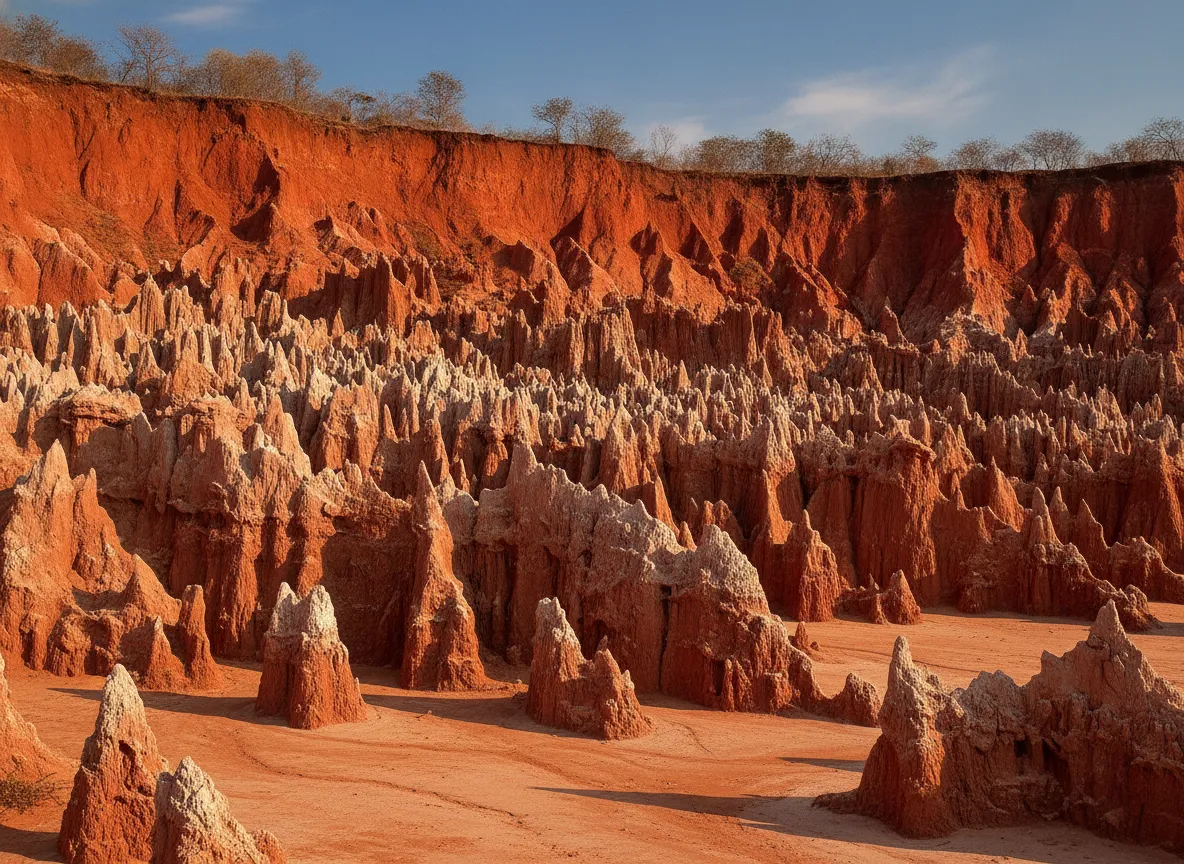
The story of Tsingy Rouge begins millions of years ago, with the formation of vast sedimentary basins in northern Madagascar. Over millennia, layers of sandstone, marl (a calcium carbonate-rich clay), and laterite (a soil and rock type rich in iron and aluminum, formed in hot, wet tropical areas) were deposited. The laterite, in particular, is responsible for the intense coloration. It's a product of intense weathering and leaching of underlying rock, leaving behind concentrations of iron oxides.
The true magic, however, began with erosion. The Diana Region experiences distinct wet and dry seasons. During the heavy downpours of the wet season, the delicate layers of earth are relentlessly sculpted by water. Rainwater, channeled by natural depressions, carves intricate patterns, eroding the softer materials and leaving behind the more resistant pillars and spires. This process is continuous and dramatic. What you see one year might be slightly different the next, as new channels form and old ones deepen, constantly reshaping the landscape. It’s a living, breathing geological canvas, a testament to the relentless dance of water and earth.
This dramatic erosion created what geologists call "badlands" topography, characterized by intricate drainage patterns, steep slopes, and minimal vegetation. The result is a landscape of incredible visual drama, a unique geological phenomenon born from the very forces that seem to threaten its existence. It’s a powerful reminder of nature’s ability to create beauty from destruction, and a stark illustration of the planet's dynamic processes.
What Awaits You: Exploring the Surreal Landscape
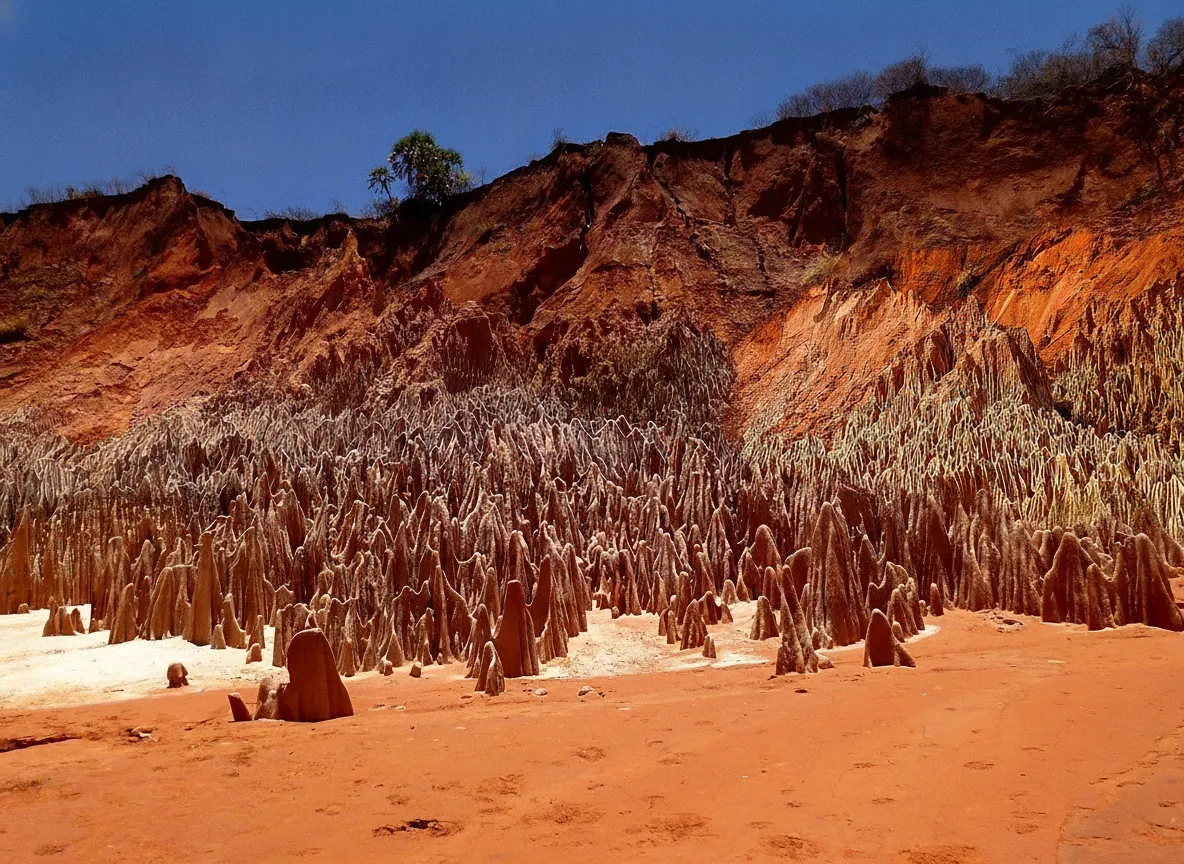
Stepping into Tsingy Rouge is like entering another world. The sheer scale and vibrancy of the colors are astounding. You'll find yourself walking through narrow passages flanked by towering pillars that glow with an inner fire, their surfaces textured and rippled by countless rains. The light shifts throughout the day, transforming the colors – from deep crimson in the morning sun to fiery orange at midday, and soft rose in the late afternoon. Every turn reveals a new vista, a new formation, a new shade you hadn't noticed before.
The formations take on fantastical shapes: some resemble intricate sandcastles, others gothic cathedrals, and many appear like an army of delicate, painted chimneys. The ground beneath your feet is often soft, a mix of eroded soil and sand, making the experience feel almost dreamlike. You'll hear the quiet hum of insects, the rustle of a distant breeze, and perhaps the call of a bird, but mostly, it’s the quiet awe of being surrounded by such raw, natural beauty that will fill your senses. It’s a place that invites contemplation, urging you to slow down and truly absorb the wonder around you.
Planning Your Journey to an Ephemeral Wonder: Practical Tips
Visiting Tsingy Rouge is an adventure that requires a bit of planning, primarily due to its remote location and the seasonal nature of its accessibility. But trust me, the effort is more than rewarded.
Best Time to Visit
Timing is everything. Tsingy Rouge is typically only accessible for a few months each year, primarily during Madagascar's dry season, which generally runs from **May to November**. However, the prime window for Tsingy Rouge specifically is usually from **June to early November**, after the heavy rains have subsided but before the next season begins. Visiting too early in the dry season might mean some roads are still impassable, while too late could risk the onset of new rains. Always check local conditions and forecasts before you go.
How to Get There
The gateway to Tsingy Rouge is the vibrant northern city of Antsiranana, also known as Diego Suarez. From Antsiranana, the Tsingy Rouge site is about a 2-3 hour drive, but this isn't your average road trip. The journey requires a robust 4x4 vehicle and an experienced local driver. The roads are unpaved, often rough, and can be challenging, but they offer glimpses into rural Malagasy life and stunning landscapes along the way. Most visitors arrange a guided tour from Antsiranana, which includes transportation and a local guide.
What to Bring
- **Sun Protection:** The Malagasy sun is intense. Bring a wide-brimmed hat, sunglasses, and high-SPF sunscreen.
- **Water:** Stay hydrated! Carry plenty of water, as there are no facilities at the site.
- **Sturdy Shoes:** While the terrain isn't overly strenuous, comfortable, closed-toe shoes with good grip are essential for walking on uneven surfaces.
- **Camera:** You'll want to capture every angle of this incredible place, so bring your best camera and extra batteries!
- **Light Snacks:** Pack a few energy-boosting snacks for your exploration.
Guided Tours and Respecting the Environment
It's highly recommended to visit Tsingy Rouge with a local guide. They not only navigate the challenging terrain but also provide invaluable insights into the geology, local flora and fauna, and cultural significance of the area. More importantly, they help ensure your visit is responsible and respectful of this fragile environment. Stay on marked paths, do not climb on the delicate formations, and absolutely leave no trace behind. This is a place we need to protect for future generations to wonder at.
Beyond the Canyon: Exploring the Diana Region
While Tsingy Rouge is undoubtedly a highlight, the Diana Region offers a wealth of other natural wonders that make for a truly unforgettable Malagasy adventure. Consider extending your trip to explore:
- **Amber Mountain National Park:** A lush rainforest haven home to incredible biodiversity, including several species of lemurs, chameleons, and vibrant birds. Its cooler climate offers a refreshing contrast to the drier landscapes.
- **Ankarana Special Reserve:** Home to more traditional limestone Tsingy formations, vast cave systems, and a unique 'lost river' phenomenon. It offers a different kind of geological wonder and fantastic opportunities for wildlife spotting.
- **Diego Suarez (Antsiranana):** The bustling port city itself is worth exploring, with its colonial architecture, vibrant markets, and beautiful bays, including the iconic "Sugar Loaf" island.
Why Tsingy Rouge Should Be On Your Bucket List
Tsingy Rouge isn't just a destination; it's an experience, a journey into the heart of Madagascar's wild beauty. It's a place that challenges your perceptions of what a landscape can be, a testament to the raw, untamed power of nature. Its ephemeral beauty, constantly reshaped by the elements, offers a unique opportunity to witness geological art in motion. If you're seeking an adventure that combines geological wonder, vibrant colors, and a profound sense of discovery, then make sure Tsingy Rouge is at the very top of your travel dreams. Don't miss your chance to witness this fleeting masterpiece before it changes again.
Essential Travel Information
- Location Tsingy Rouge, Madagascar
- Best Time June to early November (dry season)
- Getting There From Antsiranana (Diego Suarez), requires a 2-3 hour drive by 4x4 vehicle with an experienced local driver/guide.
- Airport Antsiranana-Arrachart Airport (DIE)
- Budget Mid-range (approx. $100-$200+ USD per person per day, including guided tours and 4x4 transport)
- Language Malagasy, French
Find Places to Stay Near Tsingy Rouge
Compare hotels, hostels, and unique stays in Madagascar.
Search AccommodationTours & Experiences Near Tsingy Rouge
Book guided tours, day trips, and unique experiences.
Browse Tours