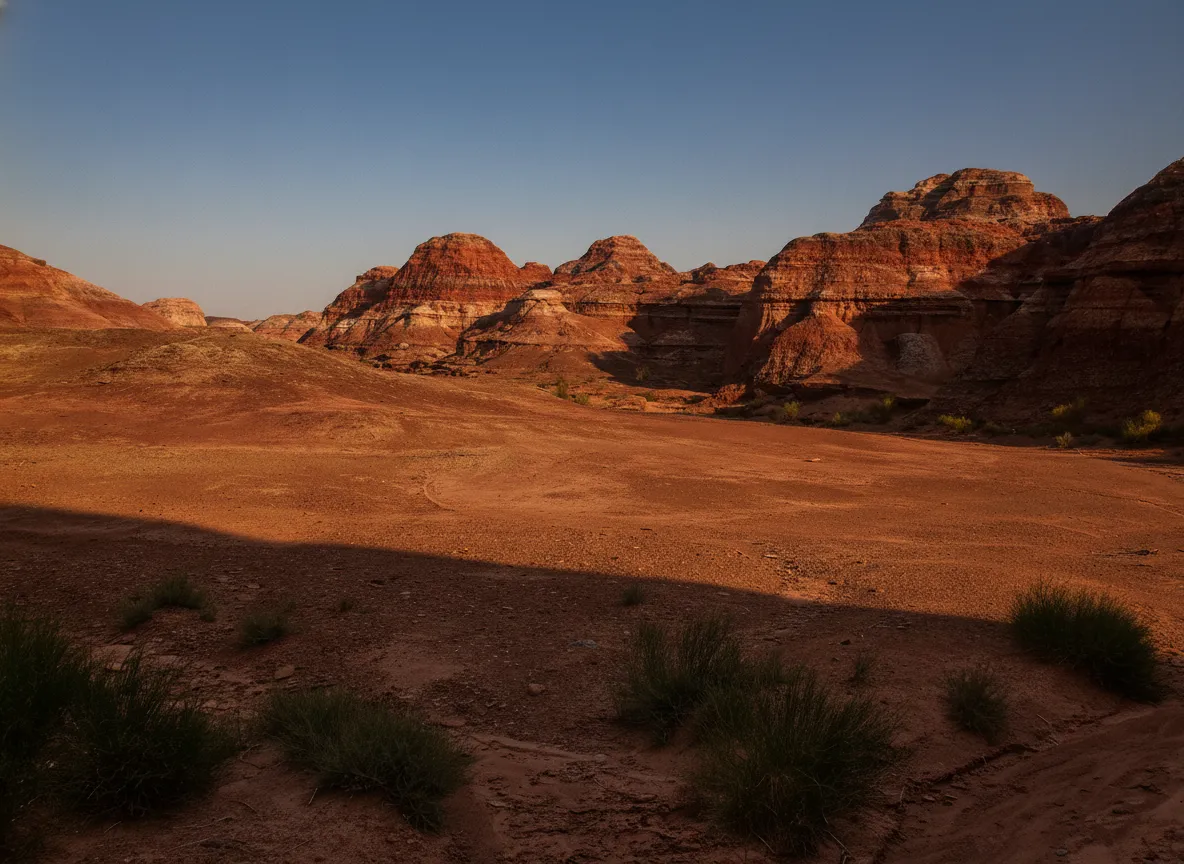
Step into a wind-carved phantom city in the heart of China's Gobi Desert, where geological formations moan like spirits and glow in iridescent hues. Imagine a landscape so alien, so profoundly sculpted by the relentless hand of nature, that it feels less like Earth and more like a scene from a forgotten dream. This isn't a fantasy; it's Urho Devil City (乌尔禾魔鬼城), a place that whispers tales of ancient winds and timeless beauty, waiting to be discovered by the intrepid traveler. Tucked away in the vast, dramatic expanse of the Xinjiang Uyghur Autonomous Region, this hidden gem promises an experience unlike any other, a journey into a world where the earth itself tells a story of creation and erosion on a monumental scale.
What Makes Urho Devil City So Unforgettable?
Urho Devil City isn't just a collection of rocks; it's a living, breathing testament to the power of wind and time. What truly sets it apart are its magnificent Yardangs – eerie, wind-sculpted rock formations that stretch for miles across the desert floor. These natural sculptures have been painstakingly carved by millennia of abrasive sand and powerful gusts, transforming a once flat landscape into what astonishingly resembles a deserted medieval city. You'll wander among formations that conjure images of grand palaces, towering pagodas, ancient temples, and even lifelike human and animal figures, each with its own unique silhouette and character.
But the visual spectacle is only half the story. The constant, often fierce, desert winds whistling through these natural corridors and hollows create haunting, phantom-like sounds. It’s this eerie symphony, a chorus of groans, whispers, and howls, that gave rise to its evocative local name: 'Devil City' or 'Ghost City.' It’s a soundscape that will send shivers down your spine, yet simultaneously draw you deeper into its mystique. As the sun begins its descent, Urho Devil City truly comes alive. The formations catch the light in a kaleidoscope of oranges, reds, purples, and golds, transforming the already bizarre landscape into an unforgettable, almost surreal spectacle. It’s a photographer’s dream and a soul-searcher’s paradise, a place where the boundaries of reality seem to blur.

A Glimpse into its Ancient Past: History and Geological Background
The story of Urho Devil City is etched in stone, a saga spanning millions of years. Geologically, these Yardangs are formed from soft sedimentary rock layers, primarily sandstone and mudstone, deposited during ancient geological eras when this area was likely covered by vast lakes or seas. Over eons, tectonic forces uplifted these layers, exposing them to the relentless forces of nature. The primary sculptor here is the wind, specifically the strong, sand-laden winds characteristic of the Gobi Desert.
This process, known as aeolian erosion, works much like a giant sandblaster. The wind picks up abrasive sand particles, which then scour and wear away the softer parts of the rock formations, leaving the harder, more resistant layers intact. This differential erosion creates the distinctive streamlined shapes of the Yardangs, often elongated in the direction of the prevailing wind. The name "Yardang" itself has Turkic origins, meaning "steep bank," and was first introduced to the Western world by Swedish explorer Sven Hedin during his expeditions in Central Asia.
Locally, the legends surrounding Urho Devil City are as captivating as its geology. For centuries, local Uyghur people and travelers along the ancient Silk Road avoided this area, believing it to be the dwelling place of spirits or demons, hence the "Devil City" moniker. The mournful sounds of the wind, combined with the bizarre, often menacing shapes of the formations, fueled these superstitions. Today, while the scientific explanation for its formation is understood, the mystical aura of Urho Devil City remains, adding another layer of intrigue to its already profound beauty. It’s a place where science and folklore intertwine, creating a narrative as rich and layered as the rocks themselves.
Exploring the Phantom City: What You'll See and Experience
Stepping into Urho Devil City is like entering a sprawling, open-air museum of natural art. The scale is immense, covering an area of approximately 20 square kilometers, and the best way to explore is by taking one of the park's designated sightseeing vehicles, which navigate well-maintained paths between the most iconic formations. These vehicles typically stop at various viewpoints, allowing you to disembark and wander amongst the formations, absorbing the atmosphere.
You’ll quickly find yourself lost in a world of imagination. Keep an eye out for formations that resemble a majestic "Eagle Spreading its Wings," a powerful "Lion Guarding the City," or even the "Grand Palace," complete with intricate spires and battlements. Each turn reveals a new perspective, a different "building" or "figure" brought to life by your own mind and the ever-changing light. Don't rush; take your time to appreciate the intricate details, the striations of color in the rock, and the sheer audacity of nature's artistry.
For photographers, the golden hours – sunrise and sunset – are non-negotiable. As the sun dips below the horizon, painting the sky in fiery hues, the Yardangs come alive with an almost supernatural glow. Shadows lengthen and dance, transforming familiar shapes into entirely new entities. The silence, broken only by the wind's eerie song, becomes a profound companion. There are elevated viewing platforms offering panoramic vistas, perfect for capturing the sheer scale of this geological wonder.

Practical Tips for Your Adventure to Urho Devil City
Ready to embark on this extraordinary journey? Here are some essential tips to ensure your visit to Urho Devil City is as smooth and memorable as possible:
Getting There
Urho Devil City is located about 100 kilometers northwest of Karamay City in Xinjiang. The most common way to reach it is by flying into Karamay Airport (KRY) from major Chinese cities like Urumqi. From Karamay, you can hire a private car or taxi, which is the most convenient option, or take a local bus to Urho town and then arrange transport to the site. Alternatively, you could fly into Urumqi Diwopu International Airport (URC) and then take a longer bus or train journey to Karamay, or arrange a multi-day tour from Urumqi that includes Urho.
When to Visit
The Gobi Desert experiences extreme temperatures. The best times to visit are during Spring (April-May) and Autumn (September-October). During these months, temperatures are milder and more comfortable for exploring. Summers (June-August) can be scorching hot, while winters (November-March) are bitterly cold and windy, making outdoor exploration challenging.
What to Bring
- Water: Essential in the desert environment. Bring more than you think you'll need.
- Sun Protection: A wide-brimmed hat, sunglasses, and high-SPF sunscreen are crucial.
- Comfortable Shoes: You'll be doing a fair bit of walking on uneven terrain.
- Layers of Clothing: Desert temperatures can fluctuate dramatically between day and night, even in spring and autumn.
- Camera Gear: Extra batteries, memory cards, and a wide-angle lens are highly recommended for capturing the vast landscapes.
- Snacks: While there might be basic facilities, having your own snacks is always a good idea.
On-Site Experience
There is an entrance fee to Urho Devil City. Once inside, you'll typically take a park shuttle bus or electric cart that follows a designated route, stopping at key viewpoints. This is the most efficient way to see the main attractions. While you can disembark at stops, it's generally advised to stay on marked paths to protect the fragile environment and for your own safety.
Accommodation
The nearest major city with a range of accommodation options is Karamay. You can find everything from budget hotels to more comfortable mid-range options there. There might be very basic guesthouses in Urho town, but Karamay offers more choice and amenities.

Urho Devil City is more than just a destination; it's an encounter with the raw, untamed beauty of our planet. It challenges your perceptions, ignites your imagination, and leaves an indelible mark on your soul. If you're seeking a truly unique adventure, a place that embodies both mystery and grandeur, then let the whispers of the wind guide you to this extraordinary phantom city in the heart of China’s Gobi Desert. Prepare to be utterly mesmerized.
Essential Travel Information
- Location Urho Devil City (乌尔禾魔鬼城), China
- Best Time Spring (April-May) and Autumn (September-October)
- Getting There Fly to Karamay (KRY) or Urumqi (URC), then private car/taxi or bus to Urho. The site is about 100km northwest of Karamay.
- Airport Karamay Airport (KRY), Urumqi Diwopu International Airport (URC)
- Budget Mid-range (approx. $70-120 USD/day excluding flights)
- Language Mandarin Chinese, Uyghur
Find Places to Stay Near Urho Devil City (乌尔禾魔鬼城)
Compare hotels, hostels, and unique stays in China.
Search AccommodationTours & Experiences Near Urho Devil City (乌尔禾魔鬼城)
Book guided tours, day trips, and unique experiences.
Browse Tours