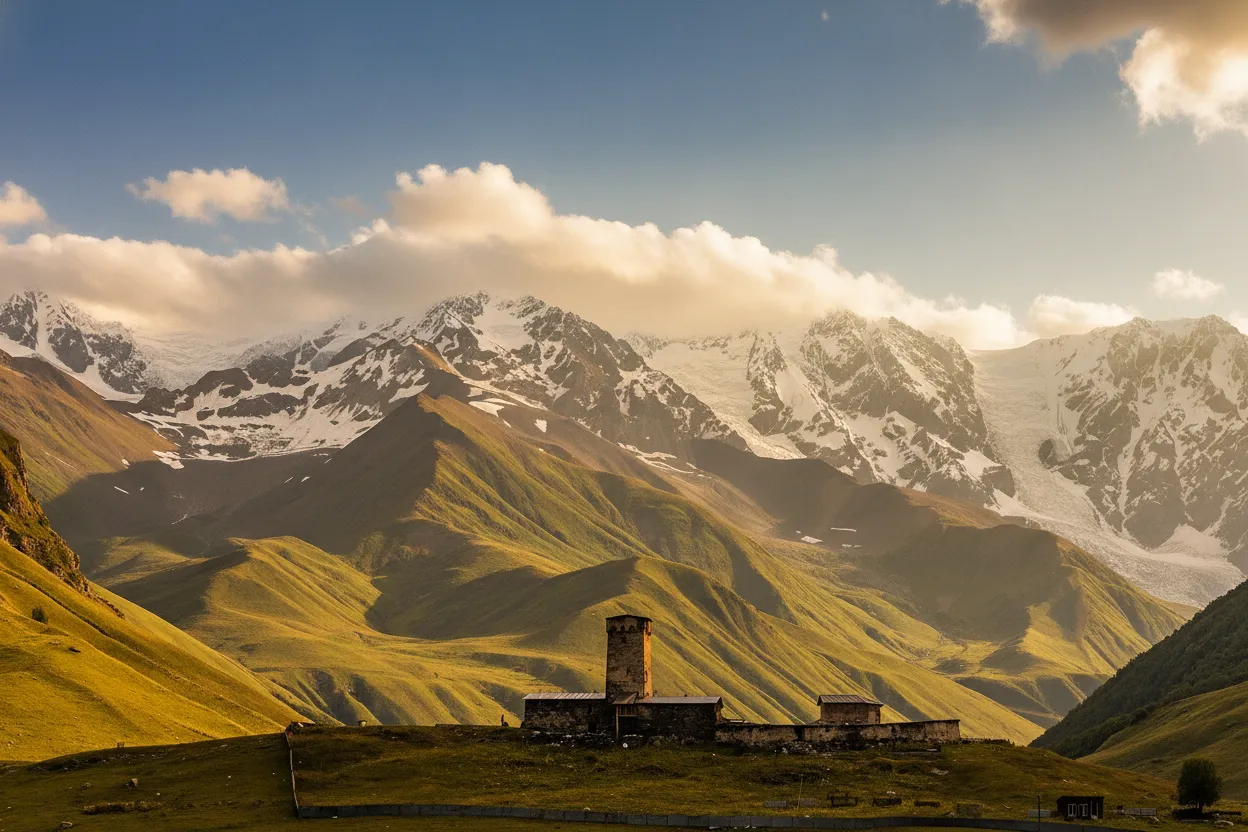
Imagine a medieval village frozen in time, nestled high in the majestic Caucasus Mountains, where ancient stone towers rise directly from every home, guarding families for centuries against invaders. This isn't a scene from a fantasy novel; it's Ushguli, a place so extraordinary it feels like stepping through a portal to a forgotten past. Tucked away in the remote Svaneti region of Georgia, Ushguli isn't just a destination; it's an experience, a living monument to resilience, culture, and breathtaking natural beauty that will etch itself into your memory forever.
For those who crave authentic travel, who seek out corners of the world untouched by modern haste, Ushguli beckons. It's a place where the air is crisp with mountain purity, where the silence is broken only by the whisper of the wind and the distant chime of cowbells, and where every stone tells a story of survival and tradition. Get ready to discover one of Europe's most captivating secrets.
Ushguli: Where Time Stands Still and Towers Touch the Sky
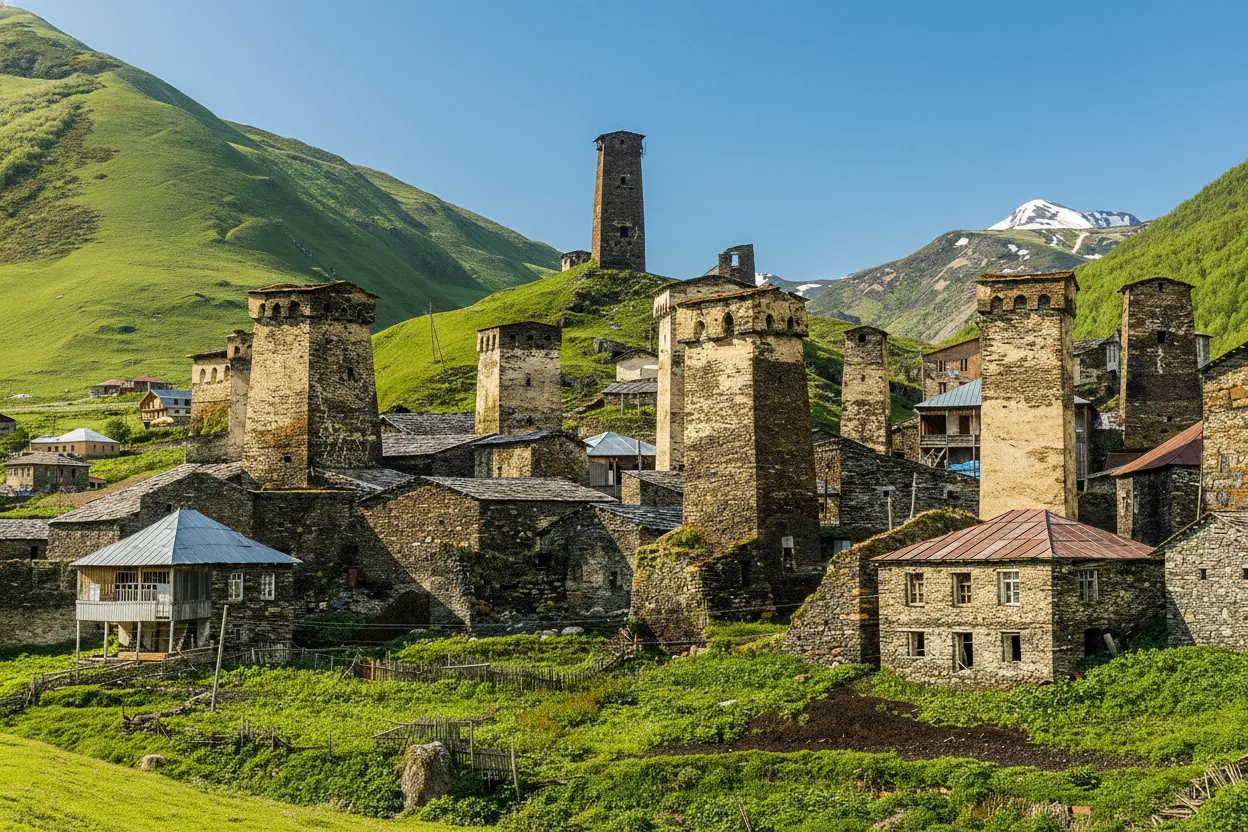
What makes Ushguli so utterly unique? For starters, it's not just one village, but a community of four small settlements – Chazhashi, Murqmeli, Chvibiani, and Zhibiani – huddled together at an astonishing altitude of over 2,100 meters (nearly 7,000 feet). This makes it one of the highest continuously inhabited settlements in Europe, a testament to the hardy Svan people who have called this rugged terrain home for millennia. But the true magic lies in its architecture.
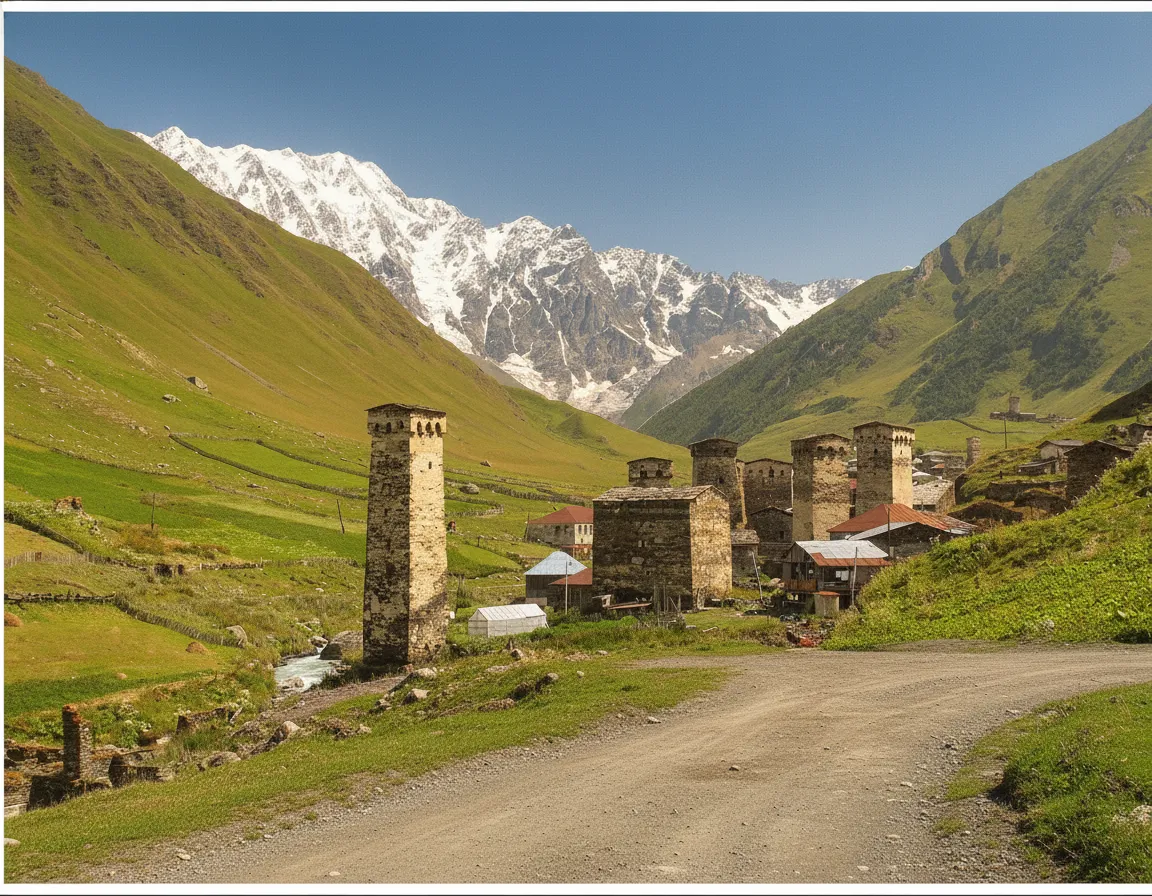
As you approach, the first thing that strikes you is the incredible sight of hundreds of defensive Svan towers, or "koshki," piercing the sky. These aren't just standalone structures; many are integrated directly into the stone houses, creating a unique fortified village landscape unlike anywhere else on Earth. Some of these formidable towers date back to the 9th century, serving as watchtowers, defensive strongholds during invasions, and even refuge during devastating blood feuds. They stand as silent sentinels, embodying centuries of history and the unbreakable spirit of the Svan people. It’s this architectural marvel, combined with its unparalleled preservation, that earned Ushguli its well-deserved UNESCO World Heritage status.
Beyond the towers, Ushguli's isolation has been its greatest protector. Shielded by towering peaks, including the magnificent Shkhara – one of Europe's highest mountains – this community has preserved a distinct Svan culture, a unique dialect of the Georgian language, and a way of life that feels profoundly ancient. Here, traditions are not relics; they are living, breathing parts of daily existence. You'll find yourself wondering if you've stumbled into a forgotten chapter of history, and in many ways, you have.
A Glimpse into Svaneti's Storied Past
The history of Ushguli and the wider Svaneti region is one of proud independence and fierce self-reliance. Nestled deep within the Greater Caucasus, Svaneti's formidable geography made it incredibly difficult to conquer, allowing its people to maintain a unique cultural identity even as Georgia itself faced numerous invasions. The Svan towers, which define Ushguli's skyline, are the most tangible evidence of this turbulent past.
Built between the 9th and 12th centuries, during Georgia's Golden Age, these towers were not mere architectural whims. They were vital for survival. Each family or clan would build a tower, often attached to their dwelling, providing a secure refuge for people and valuables during times of conflict. The narrow, windowless lower levels were almost impenetrable, while higher levels offered vantage points for defense. This system of fortified homes allowed the Svan people to defend their lands and their way of life against Persian, Ottoman, and other invaders, as well as providing protection during internal clan conflicts and the infamous blood feuds that once plagued the region.
This historical isolation also meant that Svaneti became a repository for Georgian cultural treasures during times of upheaval in the lowlands. Many ancient manuscripts, icons, and artifacts were brought to Svaneti for safekeeping, further enriching the region's already deep cultural heritage. Exploring Ushguli is not just seeing old buildings; it's walking through a living history book, where every stone wall and every creaking wooden door whispers tales of bygone eras and enduring spirit.
What Wonders Await You in Ushguli?
Once you've arrived in Ushguli, the true adventure begins. This isn't a place for bustling tourist traps; it's a destination for quiet exploration, immersion, and awe. Here's what you can expect to discover:
-
Wander Through the Villages: Take your time to explore the four distinct settlements. Chazhashi, in particular, is renowned for its highest concentration of well-preserved Svan towers and is often considered the heart of Ushguli. Lose yourself on the narrow, winding cobblestone paths, marveling at the ancient architecture and the sheer audacity of building such structures in this remote landscape.
-
Visit Lamaria Church: Perched on a hill overlooking the villages, the 10th-century Lamaria Church (Church of the Virgin Mary) is a must-see. Not only is it a beautiful example of Svan ecclesiastical architecture, but the views from its grounds are simply unparalleled. From here, you can gaze down at the cluster of towers and houses, with the colossal, snow-capped peak of Shkhara dominating the horizon. It's a postcard-perfect vista you'll never forget.
-
Seek Out Queen Tamar's Castle: High above Ushguli, you can find the ruins of what is believed to be Queen Tamar's Castle. Though mostly in ruins, the legend of Georgia's revered 12th-century monarch, who is said to have visited and even lived in Svaneti, adds an extra layer of mystique to the site. The hike up is rewarded with even more expansive views of the valley.
-
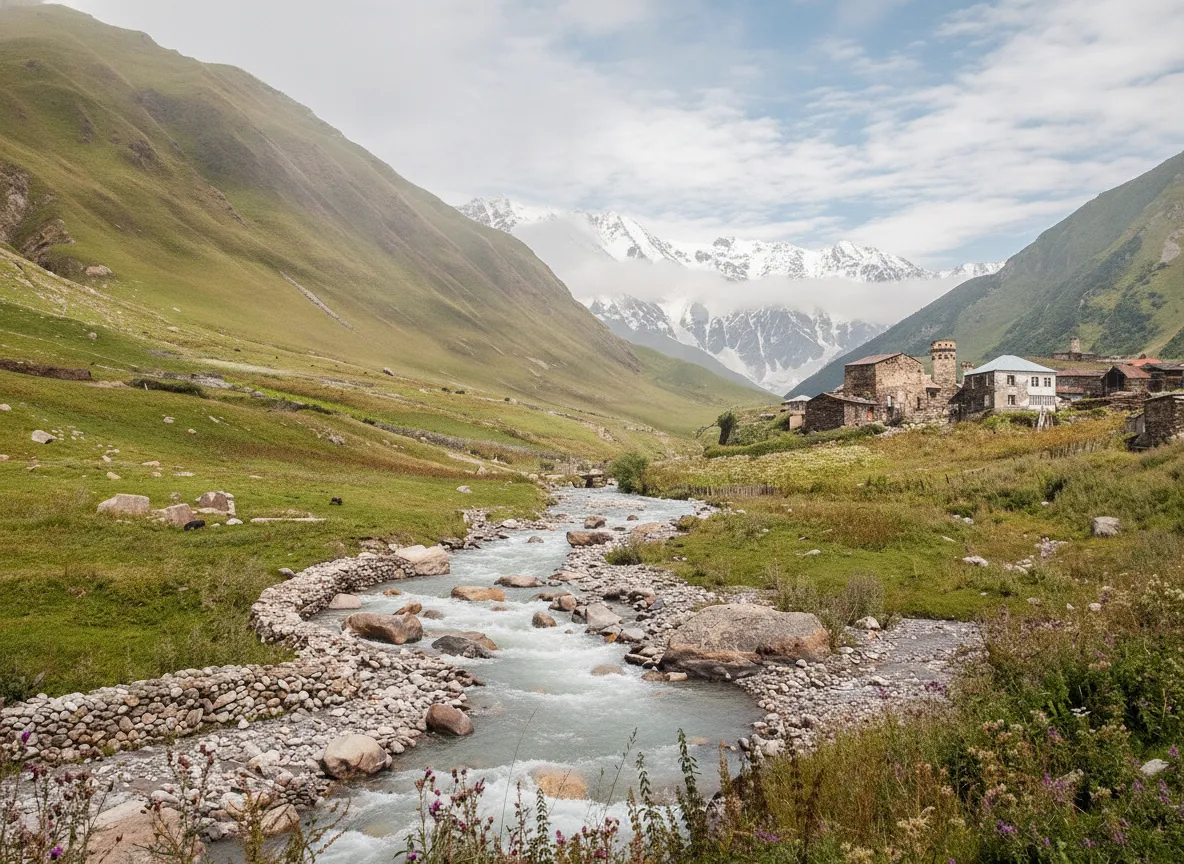
Hike to Shkhara Glacier: For the adventurous, a relatively easy and incredibly rewarding hike leads from Ushguli towards the base of Shkhara and its glacier. The trail follows the Enguri River, offering increasingly dramatic views of the towering peaks and the vast, ancient glacier. It's a chance to truly feel the immense power and beauty of the High Caucasus.
-
Experience Local Hospitality: Stay in a traditional guesthouse and experience the warmth of Svan hospitality. Sample delicious Svan cuisine, including "Kubdari" (meat-filled bread) and "Chvishtari" (cornbread with cheese), often prepared with ingredients sourced directly from the surrounding mountains.
-
Svaneti Museum of History and Ethnography: While in the region (perhaps in Mestia, the regional capital), delve deeper into Svan culture at this excellent museum, which showcases artifacts, icons, and the history of the Svan people.
Planning Your Journey to the Roof of Europe
Reaching Ushguli is part of the adventure, requiring a bit of planning but promising immense rewards. Here are some practical tips to make your trip smooth and memorable:
-
Getting There: The most common way to reach Ushguli is via Mestia, the administrative center of Svaneti. From Mestia, you'll need to hire a 4x4 vehicle (marshrutkas, or shared minivans, also run the route but can be less comfortable and less frequent). The road is unpaved, winding, and can be challenging, especially after rain, but the scenery along the way is spectacular. The journey typically takes 2-3 hours from Mestia.
-
When to Visit: The best time to visit Ushguli is from late May to early October. During these months, the weather is milder, the hiking trails are accessible, and the roads are generally in better condition. July and August are the warmest, but also the busiest. Early autumn (September-October) offers stunning fall foliage and fewer crowds. Winter transforms Ushguli into a snow-covered wonderland, but many roads become impassable, and guesthouses may close. Only experienced winter travelers should attempt a visit during this time.
-
Accommodation: Ushguli offers a range of cozy guesthouses and homestays. These provide a fantastic opportunity to experience local life, enjoy home-cooked meals, and interact with Svan families. Book in advance, especially during peak season, as options are limited.
-
Altitude Awareness: At over 2,100 meters, some visitors might experience mild altitude sickness. Take it easy on your first day, stay hydrated, and avoid strenuous activity immediately upon arrival. Listen to your body.
-
What to Pack: Even in summer, mountain weather can be unpredictable. Pack layers, including warm clothing, a waterproof jacket, sturdy hiking boots, and sun protection (hat, sunglasses, sunscreen). Don't forget a camera – you'll want to capture every moment!
-
Connectivity: Internet and phone signal can be spotty or non-existent in Ushguli. Embrace the digital detox and enjoy being truly present in this incredible environment.
-
Respect Local Culture: Ushguli is a living community, not just a tourist attraction. Be respectful of local customs, ask permission before taking photos of people, and support local businesses.
Ushguli isn't just a destination; it's an invitation to connect with history, nature, and a culture that has defied time. It's a place that challenges your perceptions of what's possible, where the past feels tangible and the mountains inspire profound reverence. If you're looking for an adventure that transcends the ordinary, a journey that will leave you with stories for a lifetime, then pack your bags and set your sights on Ushguli. The roof of Europe awaits.
Essential Travel Information
- Location Ushguli, Georgia
- Best Time Late May to early October
- Getting There Fly to Kutaisi (KUT), then take a marshrutka or taxi to Mestia. From Mestia, hire a 4x4 vehicle to Ushguli.
- Airport Kutaisi International Airport (KUT)
- Budget Mid-range (approx. $50-100 USD/day including accommodation, food, transport)
- Language Georgian, Svan (local dialect)
Find Places to Stay Near Ushguli
Compare hotels, hostels, and unique stays in Georgia.
Search Accommodation