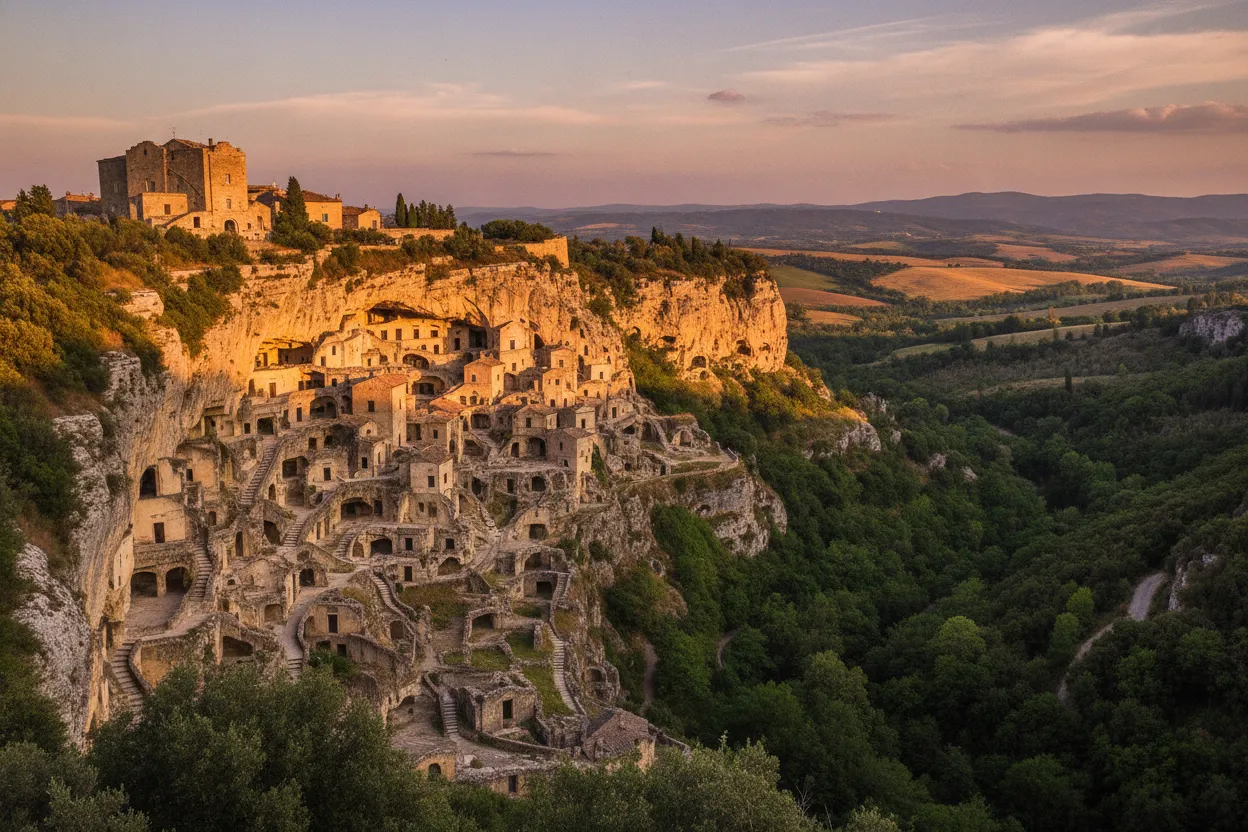
Imagine an entire medieval city carved directly into volcanic rock, where ancient cave dwellings, castles, and tombs remain remarkably preserved, yet almost entirely forgotten by time. This isn't a scene from a fantasy novel; it's a real place, tucked away in the rolling, sun-drenched hills of Tuscany, just waiting for the intrepid traveler to unearth its secrets. Forget the crowded piazzas of Florence or the well-trodden paths of Rome; prepare to step into a different Italy, one where human history is literally etched into the earth beneath your feet. Welcome to Vitozza, the 'City of Rock,' a place that will redefine your understanding of ancient civilization and leave you breathless with wonder.
Nestled deep within the Maremma region of southern Tuscany, the Vitozza Rock Settlement is one of Italy's most remarkable and least-known archaeological treasures. It's a sprawling park that reveals a troglodyte settlement inhabited for over a millennium, where entire communities lived quite literally *within* the earth. If you're yearning for an adventure that combines history, mystery, and the serene beauty of the Tuscan countryside, far from the tourist throngs, then Vitozza is calling your name.
What Makes Vitozza a Truly Special Hidden Gem
What sets Vitozza apart from other historical sites in Italy, or indeed the world, is its sheer scale and the unique way its inhabitants interacted with their environment. This isn't just a collection of a few caves; it's a vast, labyrinthine landscape featuring hundreds of cave homes, a massive necropolis, and two 'rock castles,' all meticulously hewn from the soft, volcanic tuff stone. Walking through Vitozza feels like stepping into a forgotten world, a silent testament to human ingenuity and resilience.
The soft, easily workable tuff stone that characterizes this area allowed the ancient inhabitants to carve not just shelters, but entire multi-room dwellings, stables, storage areas, and even intricate burial chambers directly into the cliff faces. Imagine living in a home that maintains a constant, cool temperature year-round, naturally insulated by the earth itself. These were not primitive holes in the ground; many feature multiple levels, windows, and even decorative elements, showcasing a sophisticated understanding of architecture and comfort.
Unlike many famous Italian ruins that are meticulously restored and often roped off, Vitozza retains a raw, untouched quality. You are free to wander its silent paths, duck into ancient cave dwellings, and explore the nooks and crannies of this extraordinary place at your own pace. There are no gift shops, no crowded cafes, just you, the whispering wind, and millennia of history. It's an experience of genuine discovery, allowing for a profound connection with the past that is increasingly rare in our over-touristed world.
A Millennium of Life: The History of Vitozza
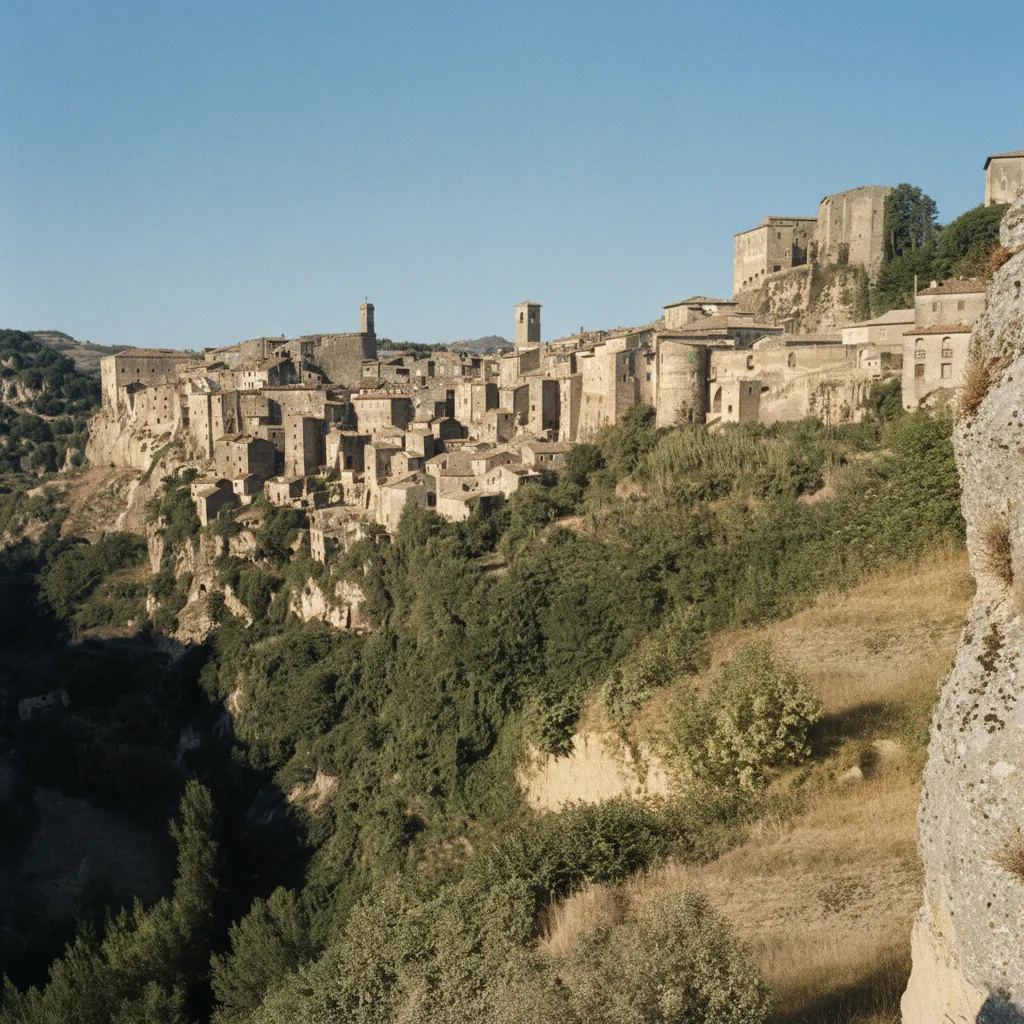
The history of the Vitozza Rock Settlement is as deep and layered as the tuff cliffs themselves. Evidence suggests that the area was first settled as early as the Bronze Age, with more significant development beginning in the Etruscan period (around 9th-1st century BC). The Etruscans, masters of rock-cut architecture, likely recognized the strategic advantages and the ease of carving the local stone, laying the groundwork for what would become a thriving troglodyte community.
The settlement truly flourished during the medieval period, from roughly the 8th to the 14th centuries AD. During this time, the population grew significantly, expanding the network of cave homes and developing sophisticated defensive structures. The 'rock castles' – likely fortified dwellings or watchtowers – speak to a need for protection in a tumultuous era. Life in Vitozza would have been self-sufficient, with inhabitants farming the surrounding land and raising livestock, often housed in cave stables adjacent to their homes.
Vitozza's strategic location, perched on a plateau overlooking the Lente River valley, provided natural defenses. The community thrived for centuries, adapting to various political and social changes, until a gradual decline began in the late medieval period. As larger, more conventional towns grew and the need for rock-cut defenses diminished, the population slowly migrated away, leaving Vitozza to the silent embrace of nature. By the 18th century, it was largely abandoned, becoming a 'ghost city' carved into stone, waiting patiently for rediscovery.
What You'll Discover on Your Journey Through the Rock City
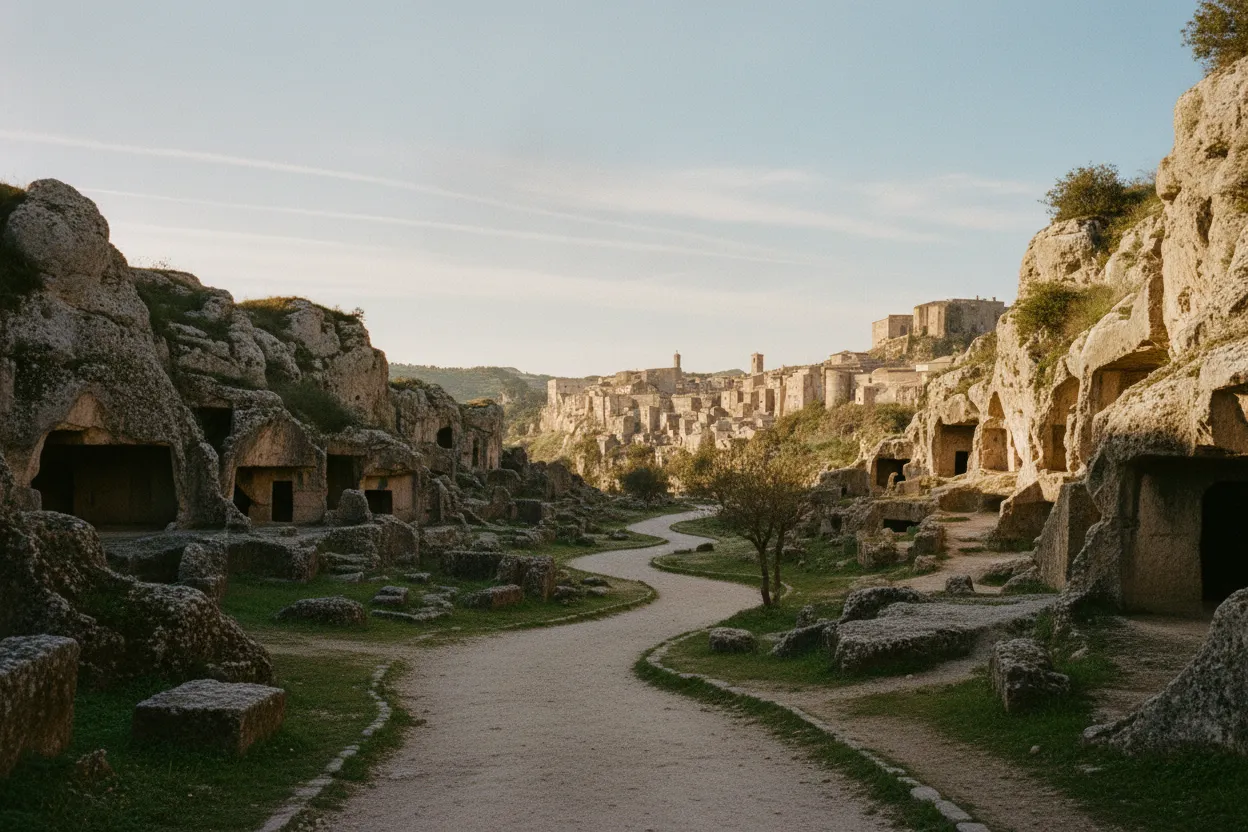
Exploring Vitozza is an adventure for the senses, a journey into the heart of ancient human ingenuity. As you step onto the site, you'll immediately be struck by the sheer number of openings in the rock face – each one a doorway to a past life. The paths wind through dense Mediterranean scrub, occasionally opening up to breathtaking vistas of the valley below.
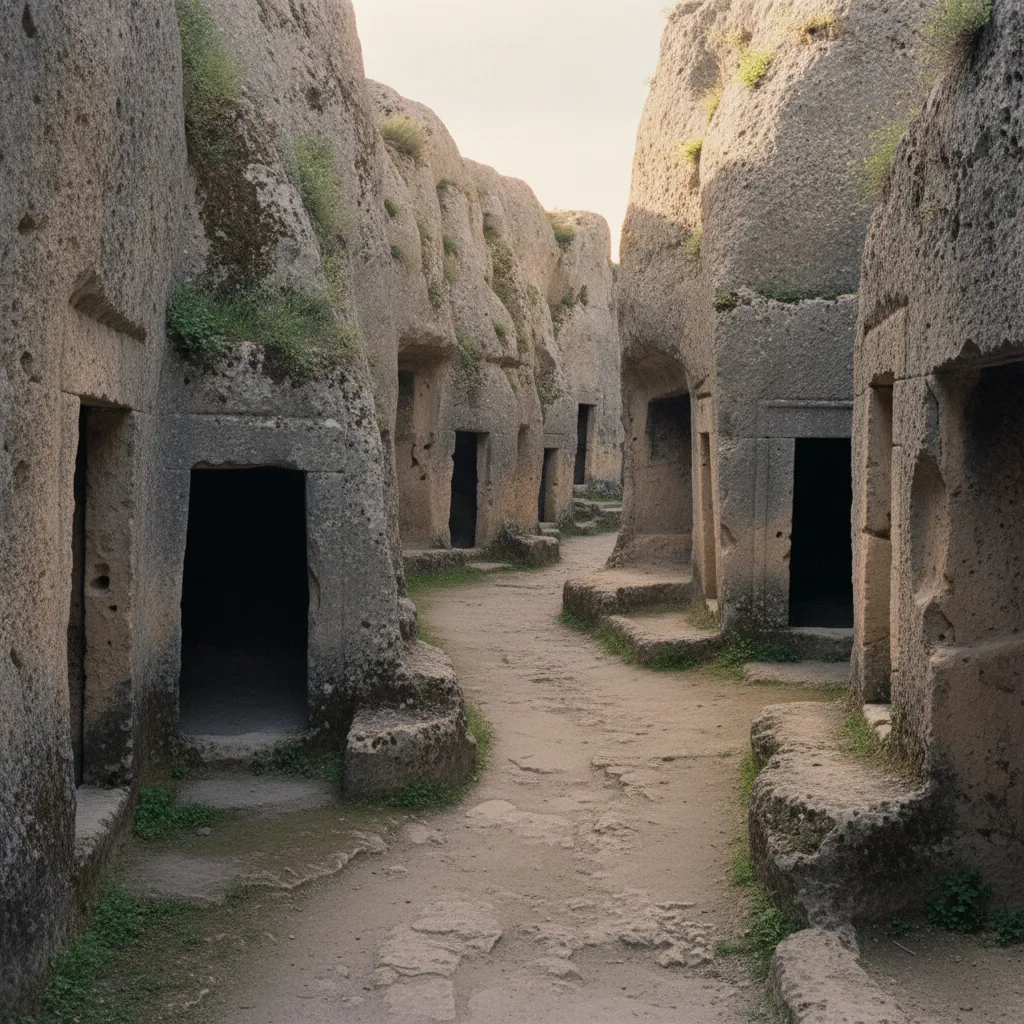
The most striking features are, of course, the **cave dwellings**. These range from simple, single-room shelters to complex, multi-chambered homes complete with carved-out benches, shelves, and even rudimentary fireplaces. Imagine families living here, cooking, sleeping, and raising children within these cool, stone walls. You can duck inside many of them, feeling the cool air and tracing the chisel marks left by their ancient builders. Each cave tells a silent story, inviting you to ponder the daily lives of its former inhabitants.
Further into the park, you'll encounter the **Necropolis of San Pietro**. This vast burial ground is a testament to the community's long history, featuring hundreds of tombs carved directly into the rock face. These aren't just simple holes; many are elaborate, multi-chambered family tombs, some resembling miniature houses, complete with false doors and decorative elements. It's a poignant and powerful sight, offering a glimpse into their beliefs and respect for the departed.
Don't miss the two prominent **'Rock Castles' (Castellaccio and Castel di Vitozza)**. While not castles in the conventional sense, these are larger, more complex structures, believed to have served as fortified residences or defensive strongholds. They offer a sense of the community's hierarchy and its need for protection. The views from these elevated points are spectacular, providing a panoramic perspective of the entire settlement and the surrounding Tuscan landscape. From here, you can truly grasp the scale of this ancient city.
As you wander, you might also stumble upon ancient wells, channels for water management, and even traces of former roads, all adding to the immersive experience. The quietude of Vitozza is profound, broken only by the chirping of cicadas or the rustle of leaves, allowing for a truly meditative exploration.
Practical Tips for Visiting This Tuscan Wonder
Vitozza is a place that rewards preparation and a spirit of adventure. Here's what you need to know to make your visit unforgettable:
-
Getting There: Vitozza is best reached by car. It's located near the charming 'tuff towns' of Sorano, Pitigliano, and Sovana in southern Tuscany. From these towns, follow signs for "Parco Archeologico di Vitozza." Public transport options are very limited, so a rental car is highly recommended for exploring this region.
-
Best Time to Visit: Spring (April-May) and Autumn (September-October) offer the most pleasant weather for hiking and exploring. The temperatures are mild, and the landscape is either bursting with wildflowers or adorned with autumnal colors. Summer can be very hot, making extended walking challenging, while winter can be damp and chilly.
-
What to Wear and Bring: This is an archaeological park, not a manicured garden. Wear sturdy, comfortable walking shoes or hiking boots, as the paths can be uneven, rocky, and sometimes muddy. Dress in layers, and bring plenty of water, especially on warmer days, as there are no facilities within the park. A flashlight or headlamp can be useful for exploring deeper into some of the darker caves, and don't forget your camera!
-
Entry and Facilities: Entry to Vitozza is often free or requires a very small, symbolic fee. There are typically no visitor centers, restrooms, or food vendors directly at the site, so plan accordingly. The nearest amenities will be in Sorano or San Quirico, a small village very close to the park entrance.
-
Explore Nearby: Vitozza is part of a fascinating region known for its 'tuff towns.' Combine your visit with explorations of Sorano, Pitigliano, and Sovana – three medieval towns perched dramatically on volcanic rock, each with its own unique charm and history. They offer excellent accommodation and dining options.
-
Respect the Site: Remember that Vitozza is an ancient and fragile archaeological site. Tread lightly, do not climb on unstable structures, and leave no trace behind. Help preserve this incredible piece of history for future generations.
Vitozza is more than just a destination; it's an experience that transports you back in time, challenging your perceptions of how ancient civilizations lived and thrived. It's a reminder that some of the greatest wonders are not always found on the main tourist routes but are hidden away, waiting to be discovered by those willing to venture a little off the beaten path. If you're seeking a profound connection with history in one of Italy's most beautiful and untouched regions, then pack your bags for the extraordinary rock city of Vitozza.
Essential Travel Information
- Location Vitozza Rock Settlement, Italy
- Best Time Spring (April-May) and Autumn (September-October) for mild weather and beautiful landscapes.
- Getting There Best reached by car. Located near Sorano, Tuscany. Follow signs for Parco Archeologico di Vitozza. Limited public transport.
- Airport Perugia San Francesco d'Assisi Airport (PEG) or Rome Fiumicino Airport (FCO).
- Budget Budget to Mid-range. Entrance is often free or very low cost. Daily expenses €50-€100, primarily for car rental and accommodation in nearby towns.
- Language Italian
Find Places to Stay Near Vitozza Rock Settlement
Compare hotels, hostels, and unique stays in Italy.
Search AccommodationTours & Experiences Near Vitozza Rock Settlement
Book guided tours, day trips, and unique experiences.
Browse Tours