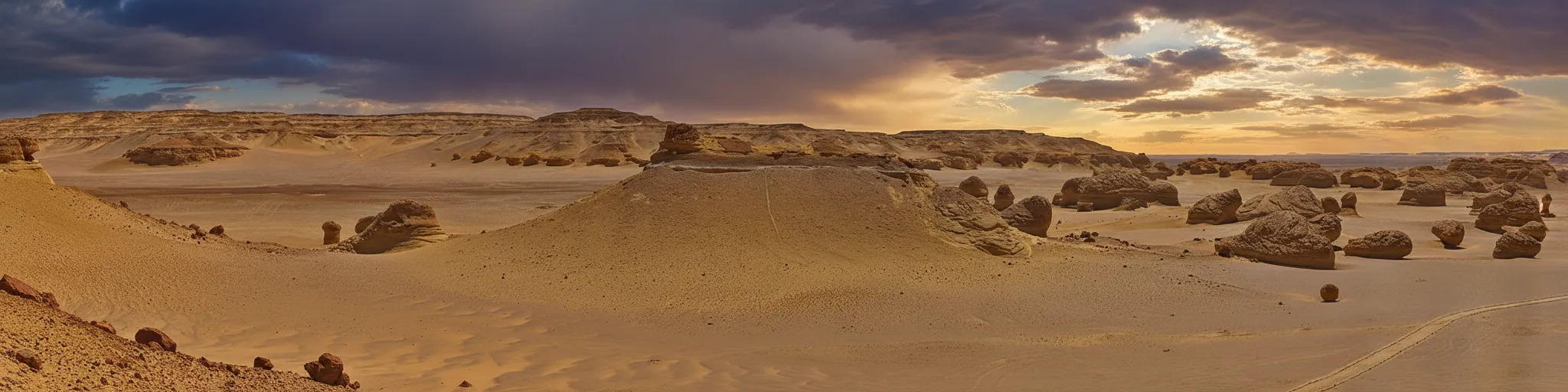
Imagine a desert graveyard where hundreds of gigantic, fully articulated whale skeletons lie scattered, telling an impossible story of evolution and forgotten seas. This isn't a scene from a sci-fi epic; it's the astonishing reality of Wadi Al-Hitan, Egypt's "Valley of the Whales." Tucked away in the vast, arid expanse of the Faiyum Governorate, this UNESCO World Heritage site is a place where time has literally stood still for 40 to 50 million years, preserving a moment in Earth's history so profound it will challenge everything you thought you knew about deserts, oceans, and the very origins of life on our planet. Prepare to be utterly captivated by a destination that feels like stepping onto another world, yet holds the clearest evidence of an evolutionary journey that shaped the magnificent creatures we know as whales today.
What Makes Wadi Al-Hitan an Unforgettable Journey?
Wadi Al-Hitan isn't just a collection of old bones; it's an open-air museum of unparalleled scientific significance and breathtaking natural beauty. What sets it apart globally is the sheer number, concentration, and remarkable preservation of its fossilized whales. Here, you'll find the remains of archaeoceti, the earliest, now extinct, suborder of whales. These aren't just fragments; many are complete skeletons, some stretching over 20 meters long, lying exactly where they died in what was once a shallow, nutrient-rich sea.
The star attractions are the magnificent *Basilosaurus isis* and the smaller, more shark-like *Dorudon atrox*. But the true wonder lies in a detail that will make your jaw drop: many of these ancient whales still possess tiny, fully formed hind limbs, complete with toes! These vestigial legs, too small for walking on land but perfectly preserved, are the most compelling proof on Earth of whales' evolutionary transition from four-legged land mammals back to the ocean. It's a vivid, tangible narrative of adaptation, survival, and the incredible plasticity of life, all laid out beneath the vast Egyptian sky.
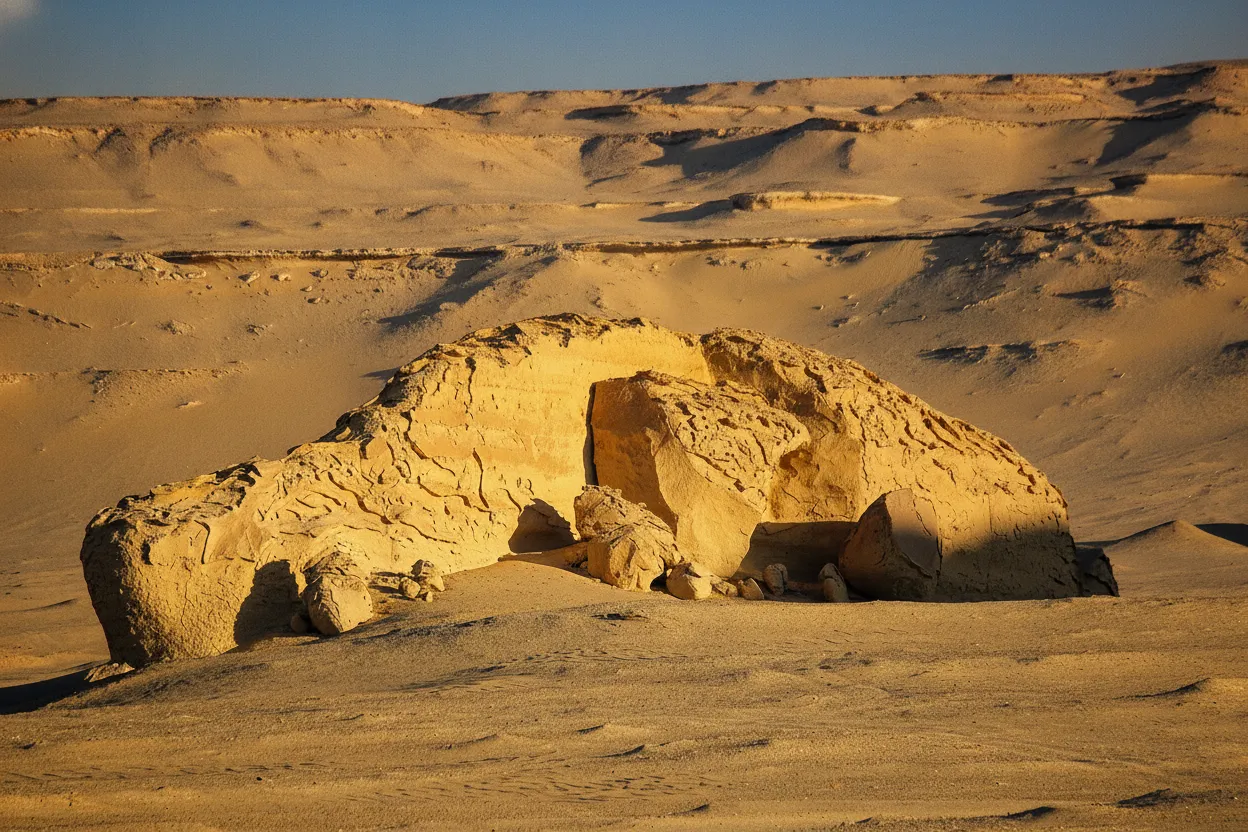
Beyond the scientific marvel, the landscape itself is a character in this story. The desert here is not barren in spirit; it's a canvas of eroded rock formations, towering mesas, and undulating dunes, painted in hues of ochre, gold, and dusty rose. The silence is profound, broken only by the wind, allowing for a deep connection with the ancient past and the raw power of nature. This unique combination of paleontological importance and stunning desert scenery is why UNESCO recognized Wadi Al-Hitan as a site of Outstanding Universal Value.
A Journey Through Time: When the Desert Was a Primordial Ocean
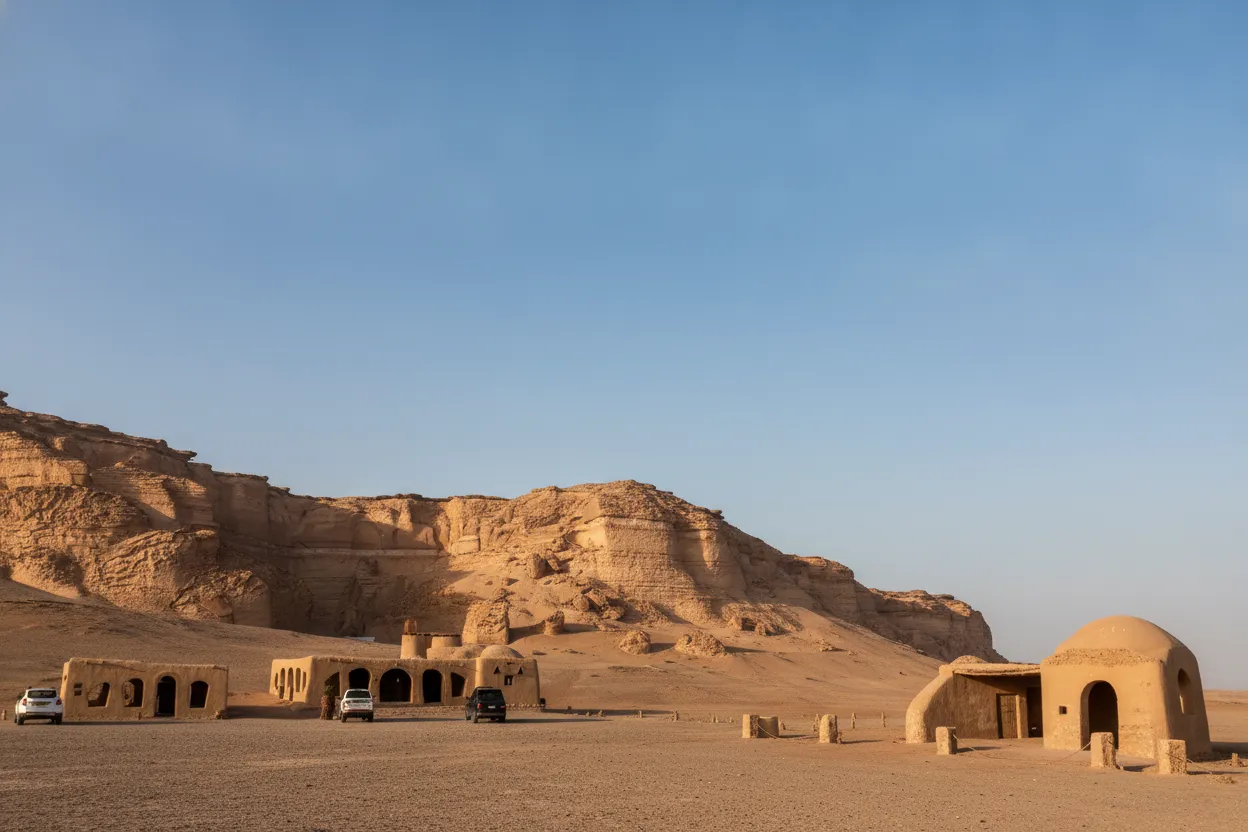
To truly appreciate Wadi Al-Hitan, you need to rewind the clock about 40 to 50 million years. During the Eocene epoch, the entire Faiyum region, now a parched desert, was submerged beneath a vast, shallow embayment of the ancient Tethys Sea. This was a warm, tropical ocean teeming with life – a vibrant ecosystem where mangroves lined the shores, dugongs grazed on seagrass, crocodiles stalked the waters, and sharks patrolled the depths. And, of course, it was home to the ancestors of modern whales.
The *Basilosaurus*, despite its name meaning "king lizard," was a whale, albeit a very serpentine one. It was a formidable predator, perfectly adapted to its marine environment. The *Dorudon*, smaller and more agile, was likely prey for the larger *Basilosaurus*. As the Tethys Sea gradually receded over millions of years, leaving behind layers of sediment, the conditions were just right for the remarkable preservation of these creatures. The fine-grained sediments, coupled with the rapid burial of carcasses in calm, oxygen-depleted waters, created a perfect fossilization environment. What we see today is the result of millennia of erosion slowly revealing these incredible treasures to the surface.
The first significant discovery was made in 1902, but it was only in the 1980s and 90s that the full extent of Wadi Al-Hitan's paleontological richness began to be understood. Since then, careful excavation and research have continued, cementing its status as the most important site globally for understanding whale evolution.
Unearthing Giants: What You'll See at Wadi Al-Hitan
Your visit to Wadi Al-Hitan is an immersive experience. The site is designed as an open-air museum, allowing you to walk amongst the fossils in their natural setting. The main trail guides you past numerous exposed skeletons, each carefully protected but visible up close. You'll marvel at the sheer scale of the *Basilosaurus* skeletons, their elongated vertebrae snaking across the desert floor. Look closely, and you’ll spot those incredible hind limbs – a humbling testament to evolution.
Beyond the whales, you'll encounter a diverse array of other ancient marine life. There are fossilized sharks' teeth, sea snakes, turtles, crocodiles, and even the remains of early manatees and dugongs, painting a complete picture of this ancient ecosystem. Interpretive signs provide detailed information about each exhibit, bringing the scientific narrative to life.
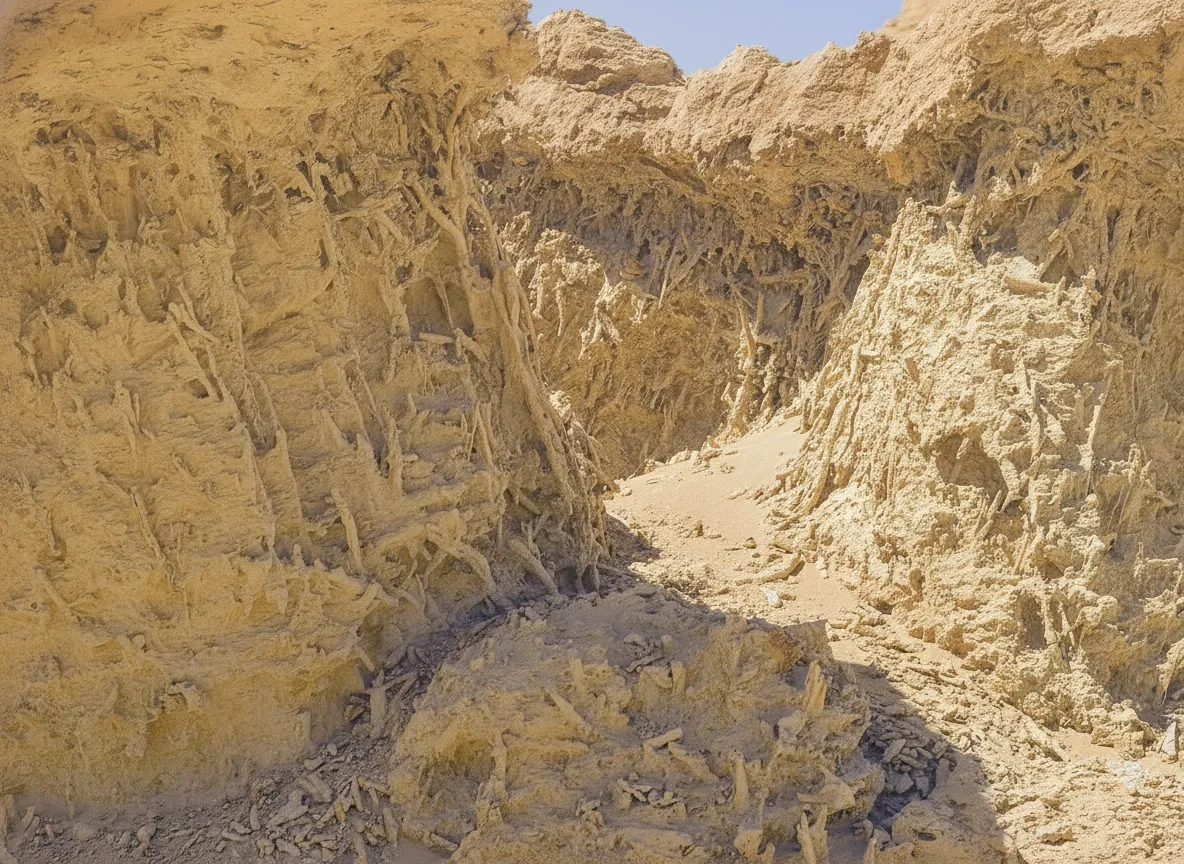
At the heart of the valley, a modern, well-designed Visitor Centre and Museum offers a deeper dive into the science. Here, you can see exquisitely reconstructed skeletons, detailed dioramas, and multimedia presentations that explain the geological and biological history of the site. It's a fantastic complement to the outdoor experience, offering context and protection from the desert sun. There's also a small café and shop where you can grab a refreshment or a souvenir.
Planning Your Expedition: Practical Tips for Visiting Wadi Al-Hitan
Visiting Wadi Al-Hitan is an adventure, and a little planning goes a long way to ensuring a comfortable and memorable trip.
Best Time to Visit
The cooler months from **October to April** are ideal. Summer temperatures (May-September) can be extremely hot, making exploration challenging and less enjoyable. Winter days are pleasant, though nights can be chilly, especially if you plan an overnight desert stay.
How to Get There
Wadi Al-Hitan is remote. The easiest way to visit is by arranging a private tour from Cairo or Faiyum City. A 4x4 vehicle is absolutely essential, as the last part of the journey involves driving off-road through sandy desert tracks. A knowledgeable guide is highly recommended, not only for navigation but also for enriching your understanding of the site's geology and paleontology.
What to Bring
- **Plenty of Water:** This is non-negotiable. Bring more than you think you'll need.
- **Sun Protection:** Hat, sunglasses, high-SPF sunscreen are crucial.
- **Comfortable Walking Shoes:** You'll be doing a fair amount of walking on uneven desert terrain.
- **Light Layers:** For sun protection during the day and warmth if the temperature drops.
- **Snacks/Packed Lunch:** While there's a small café, options are limited.
- **Camera:** You'll want to capture the incredible sights!
- **Cash:** For entrance fees, souvenirs, and tips.
Respecting the Site
Wadi Al-Hitan is a UNESCO World Heritage site and a delicate ecosystem. Please adhere to all rules: stay on designated paths, do not touch or disturb the fossils, and take all your rubbish with you. Leave no trace, so future generations can experience the same wonder.
A Desert Oasis of Ancient Wonders
Wadi Al-Hitan is more than just a destination; it's a portal to a bygone era, a powerful reminder of Earth's dynamic history and the incredible adaptability of life. Standing amidst the fossilized giants, feeling the desert wind whisper tales of an ancient sea, you can't help but be moved by the sheer scale of geological time and the intricate dance of evolution. It's a place that sparks wonder, ignites curiosity, and leaves an indelible mark on your soul. If you're seeking an adventure that combines scientific marvel with breathtaking natural beauty, a journey to Egypt's Valley of the Whales should be at the very top of your list.
Essential Travel Information
- Location Wadi Al-Hitan (Valley of the Whales), Egypt
- Best Time October to April
- Getting There Private 4x4 tour from Cairo or Faiyum City; a guide is essential.
- Airport Cairo International Airport (CAI)
- Budget Mid-range to Luxury (approx. $150-300+ per person per day, depending on tour inclusions)
- Language Arabic (official), English (widely used in tourism)
Find Places to Stay Near Wadi Al-Hitan (Valley of the Whales)
Compare hotels, hostels, and unique stays in Egypt.
Search AccommodationTours & Experiences Near Wadi Al-Hitan (Valley of the Whales)
Book guided tours, day trips, and unique experiences.
Browse Tours