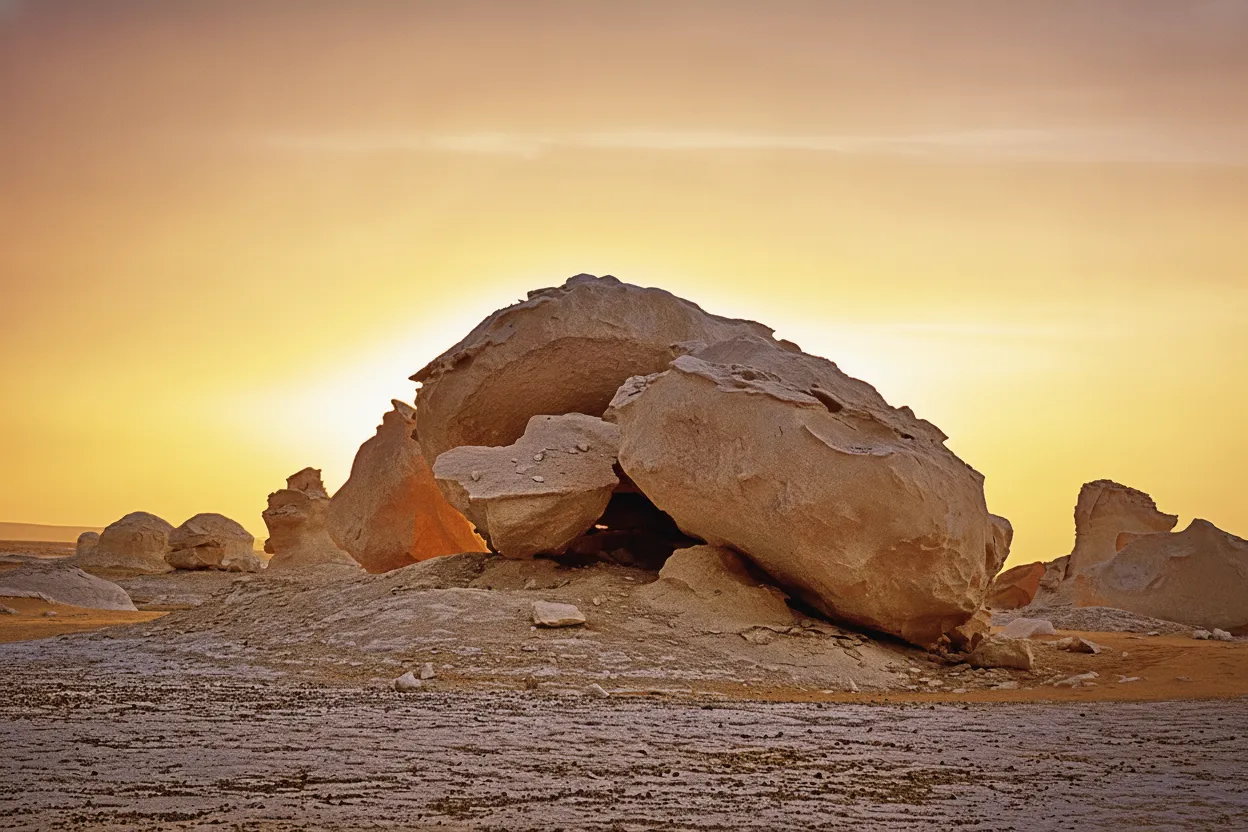
For approximately 40 million years, the landscape now known as Egypt's White Desert National Park lay submerged beneath an ancient sea, its chalk formations slowly accumulating from marine organisms. Today, these fossilized remnants rise dramatically from the desert floor, sculpted by millennia of wind and sand into an arresting panorama unlike any other on Earth.
Far from the bustling markets of Cairo and the ancient monuments along the Nile, Egypt's Western Desert holds a geological marvel often overlooked by mainstream tourism. The White Desert National Park, situated in the vast Farafra Depression within the New Valley Governorate, offers an exploration into a truly unique environment. This isn't just another sandy expanse; it's a colossal outdoor gallery where nature is the sole sculptor, carving magnificent, brilliant white figures that challenge perceptions of what a desert can be.
A Unique Geological Masterpiece
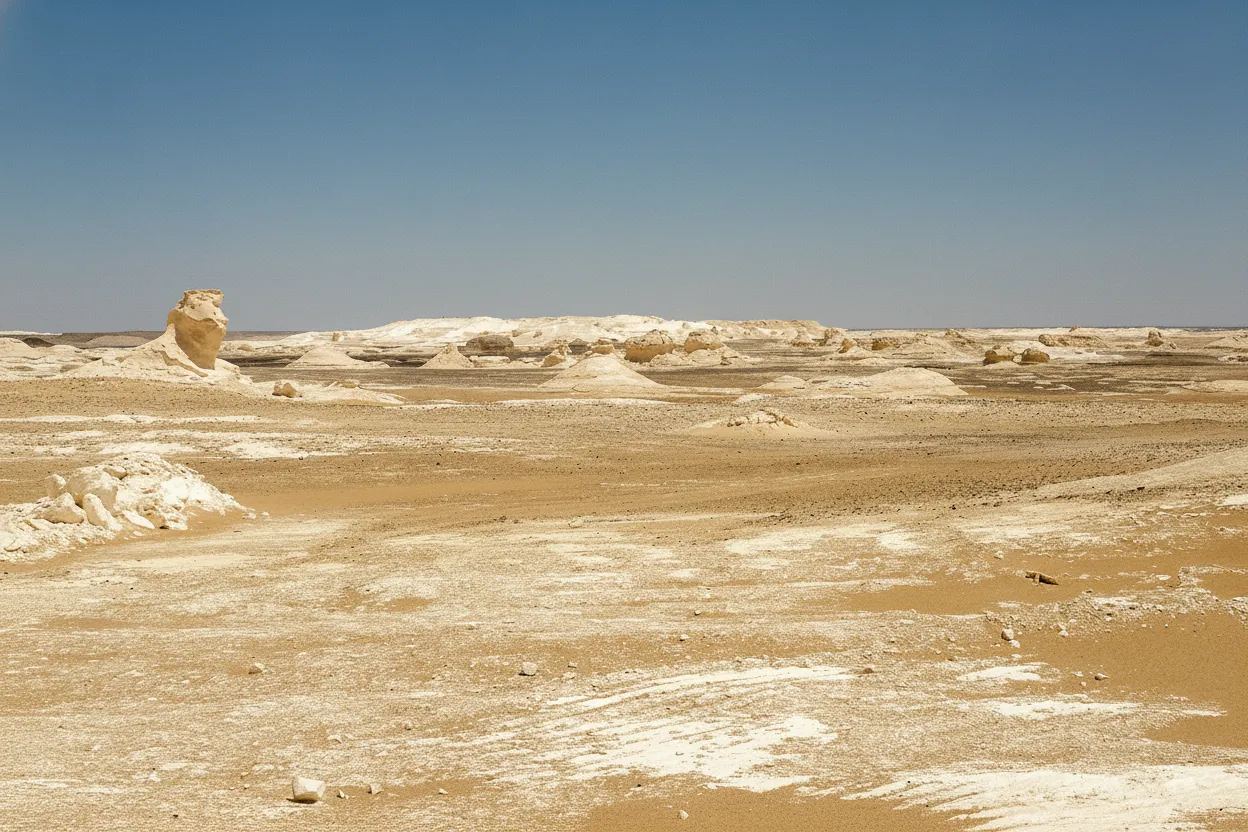
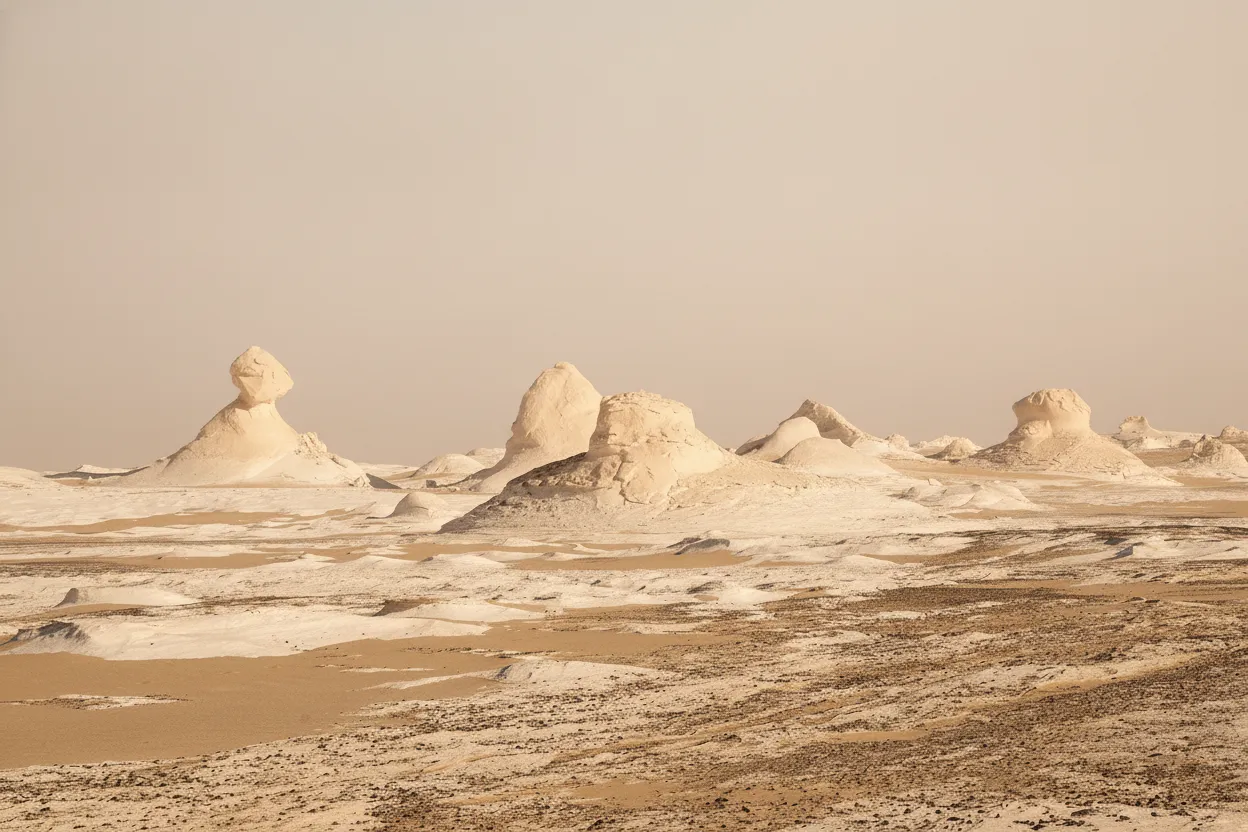
What makes the White Desert so profoundly special is its geology. Imagine a vast, undulating plain, not of sand, but of chalk so pure and white it gleams under the desert sun. From this luminous ground, monumental natural sculptures emerge, fashioned by the relentless forces of erosion. These aren't small curiosities; they are towering formations resembling giant mushrooms, colossal icebergs, and fantastical creatures, all carved from the same soft, creamy-white rock.
The stark contrast between the dazzling white formations and the golden-yellow sands that frame them creates a visual experience that is both striking and surreal. During the day, the landscape feels vast and open, with formations casting sharp, intricate shadows that shift with the sun's arc. As evening approaches, the light softens, painting the chalk pillars in hues of orange, pink, and purple before the deep blue of twilight descends. This transformation is a daily spectacle, making every moment spent here feel dynamic and alive.
The White Desert is a protected national park, a designation that ensures the preservation of its delicate geological structures and unique desert ecosystem. It's a place where the silence is profound, broken only by the whisper of the wind or the distant call of a desert creature. For those who seek truly immersive travel experiences, this park offers an unparalleled opportunity to connect with the raw, untamed beauty of our planet.
A Journey Through Deep Time: History and Formation
The story of the White Desert begins millions of years ago, long before humans walked the Earth. During the Upper Cretaceous period, approximately 90 to 60 million years ago, this entire region was submerged beneath the Tethys Sea. Over eons, the shells and skeletons of marine organisms, primarily foraminifera and coccolithophores, accumulated on the seabed, forming thick layers of soft chalk.
As the sea receded and geological uplift occurred, these chalk layers were exposed to the elements. For millennia, the fierce desert winds, laden with sand, began their patient work of erosion. The softer parts of the chalk rock were gradually worn away, while harder, more resistant sections remained, slowly taking on the incredible shapes we see today. This process of differential erosion, where wind carves rock into intricate patterns, is a powerful demonstration of nature’s artistry.
The Farafra Depression itself is a geological low-lying area, part of Egypt's extensive Western Desert. While evidence of ancient human habitation, including tools and rock art, has been found in other parts of the Western Desert, the White Desert's primary narrative is one of geological transformation. It was officially declared a protected area in 2002, recognizing its scientific importance and the need to conserve its fragile environment for future generations.
What You'll Discover on Your Expedition
Exploring the White Desert is an adventure best undertaken with a local guide who knows the terrain and its hidden wonders. Your journey will typically involve a 4x4 vehicle, allowing you to traverse the varied landscape and reach the most impressive formations. Here’s a glimpse of what awaits:
- Mushroom Rock and Chicken Rock: These are among the most famous formations, instantly recognizable for their distinct shapes. The "Mushroom" stands proudly on a slender base, while the "Chicken" appears to be an enormous bird perched on the sand. They are prime examples of the wind's sculpting power.
- The Iceberg Field: This section features massive, rounded chalk formations that rise from the desert floor, giving the impression of colossal icebergs adrift in a white sea. The scale here is truly impressive, making you feel small amidst nature's grandeur.
- The Valley of Agabat: A stunning area characterized by deep ravines and towering walls of white chalk, often enclosing hidden pockets of sand. It’s a maze-like section that offers incredible photographic opportunities, especially when the sun casts long shadows.
- Overnight Camping: This is arguably the highlight of any White Desert trip. Setting up camp amidst the chalk formations as the sun sets is an experience to cherish. As darkness falls, the moon illuminates the white rocks, making them glow with an internal luminescence. The clear desert sky, devoid of light pollution, reveals a canopy of stars that feels incredibly close and vibrant.
- Nearby Attractions: Many tours combine the White Desert with visits to the Black Desert, a stark contrast with its volcanic hills and dark, iron-rich rocks, and Crystal Mountain, a ridge composed entirely of quartz crystals that shimmer in the sunlight.
Practical Tips for Your Visit
A trip to the White Desert requires some planning to ensure a safe and memorable experience. Here’s what you need to know:
- Best Time to Visit: The cooler months, from October to April, are ideal. Daytime temperatures are pleasant, and nights are cool. Avoid the scorching summer months (May to September) when temperatures can be extreme.
- How to Get There: Most expeditions start from the Farafra Oasis or the larger Bahariya Oasis, both accessible by bus or private transfer from Cairo. From these oases, you'll join a pre-arranged 4x4 safari tour. Independent travel into the park is not permitted and not advisable due to the remote terrain and lack of amenities.
- Guided Tours are Essential: Reputable tour operators provide experienced drivers, guides, 4x4 vehicles, camping equipment, and meals. They also handle necessary permits. It’s crucial to choose a company with a strong safety record and positive reviews.
- What to Bring:
- Warm Layers: Evenings and nights in the desert can be surprisingly cold, especially in winter. Pack a jacket, hat, and gloves.
- Sun Protection: Sunscreen, sunglasses, and a wide-brimmed hat are vital for daytime exploration.
- Sturdy Footwear: Comfortable walking shoes or hiking boots are recommended for exploring the formations.
- Camera Gear: This landscape is incredibly photogenic. Bring extra batteries and memory cards. A tripod is excellent for night photography.
- Water: Your tour operator will provide water, but always carry a personal reusable bottle.
- Respect the Environment: The White Desert is a fragile ecosystem. Always follow the "leave no trace" principles. Take all your rubbish with you, do not disturb wildlife, and avoid climbing on delicate formations.
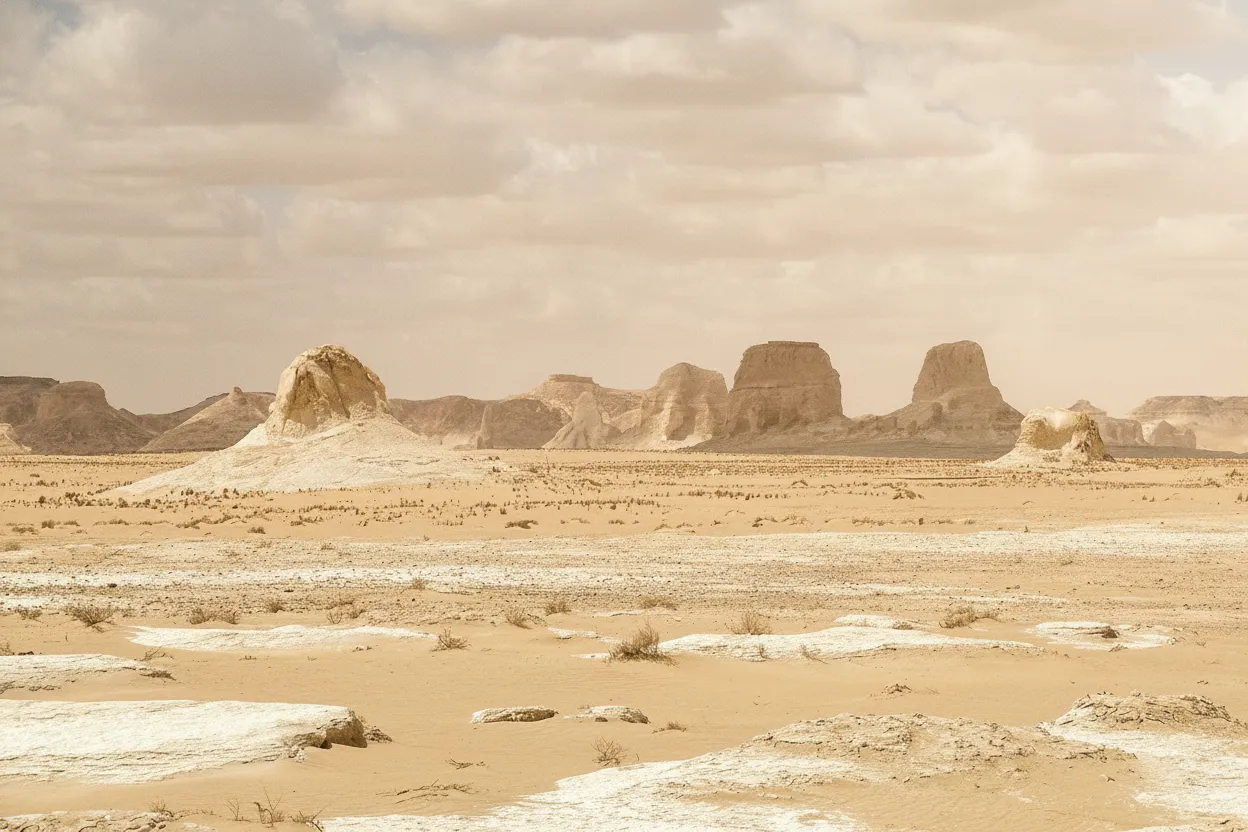
Visiting Egypt's White Desert National Park is more than just a sightseeing trip; it’s an immersive journey into a landscape that feels sculpted by imagination. It’s an opportunity to witness the raw power of nature, to sleep under a blanket of stars, and to discover a side of Egypt that few ever experience. If you’re seeking a truly remarkable adventure that combines geology, exploration, and profound natural beauty, the White Desert awaits your discovery.
Essential Travel Information
- Location White Desert National Park (Farafra Depression), Egypt
- Best Time October to April
- Getting There Typically via 4x4 guided tour from Farafra Oasis or Bahariya Oasis; accessible by bus/private transfer from Cairo.
- Airport Cairo International Airport (CAI)
- Budget Mid-range (approx. $150-300 USD per person per day for an all-inclusive 2-day/1-night safari)
- Language Arabic (local), English (widely spoken by tour guides)
Find Places to Stay Near White Desert National Park (Farafra Depression)
Compare hotels, hostels, and unique stays in Egypt.
Search AccommodationTours & Experiences Near White Desert National Park (Farafra Depression)
Book guided tours, day trips, and unique experiences.
Browse Tours