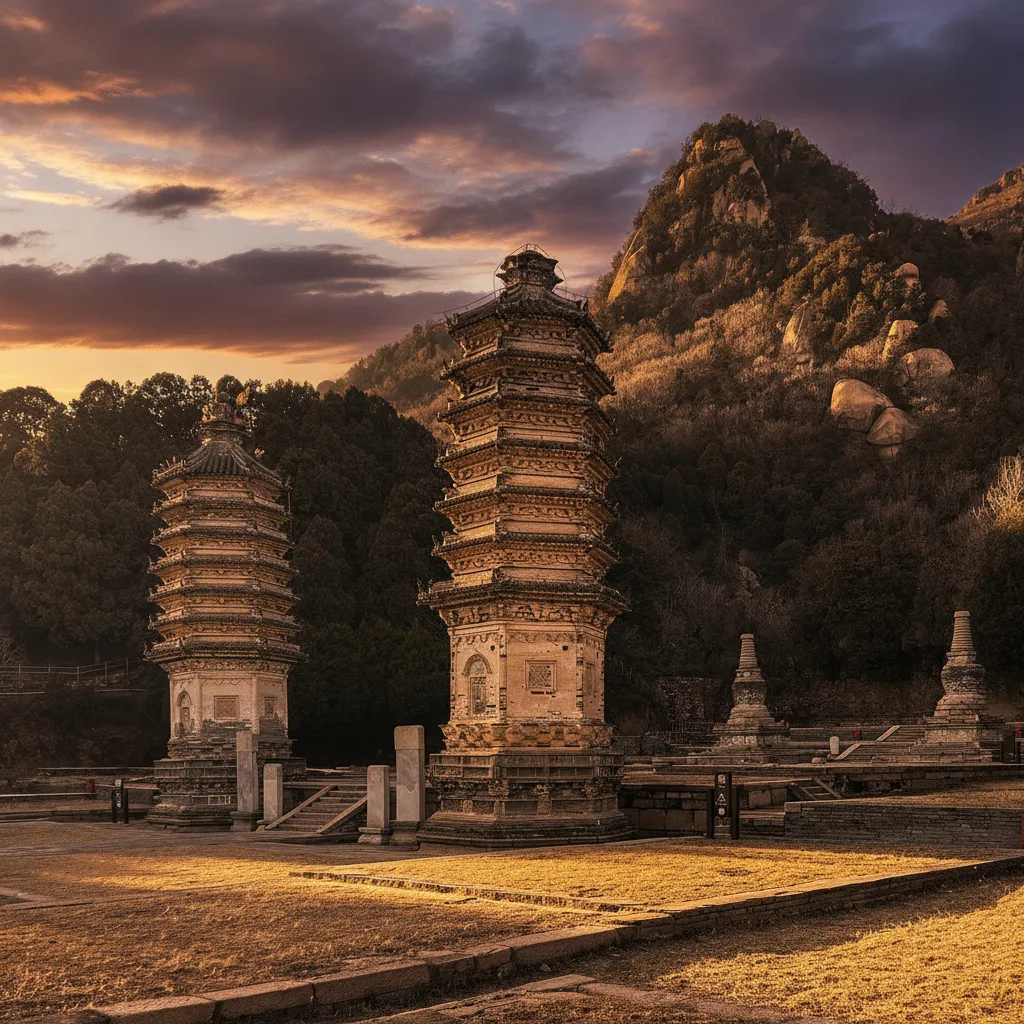
The Silver Mountain's Secret: What Makes Yinshan Pagoda Forest So Special?
What truly sets Yinshan Pagoda Forest apart from other historical sites in China is its astonishing blend of natural beauty and human ingenuity, coupled with its profound sense of peaceful isolation. While Beijing boasts countless temples and imperial sites, Yinshan offers something uniquely different: a monastic complex largely reclaimed by nature, yet remarkably preserved. Here, the pagodas aren't just structures; they are monuments to the monks and abbots of the past, their intricate carvings telling stories of Buddhist cosmology and spiritual journeys. Many of these pagodas are not merely built *on* the mountain but are carved *into* its rugged face, a testament to the incredible skill and dedication of ancient artisans. This integration with the natural landscape gives the site a mystical, almost ethereal quality. The 'Silver Mountain' moniker itself is evocative, perhaps referring to the shimmering quality of the rock faces under certain light, or the way the mountain glistens after a frost. Whatever its origin, the name perfectly encapsulates the unique, almost magical atmosphere of this hidden gem. It’s a place where the air feels cleaner, the silence deeper, and the past more palpable, offering a tranquil retreat rarely found so close to a bustling metropolis.
Whispers of Dynasties Past: A Glimpse into Yinshan's Rich History
To truly appreciate Yinshan Pagoda Forest, one must understand its historical roots. The complex primarily flourished during the Liao (907–1125 CE) and Jin (1115–1234 CE) Dynasties, periods when northern China was ruled by non-Han ethnic groups who were fervent patrons of Buddhism. It was during these centuries that Yinshan became a significant monastic center, attracting revered monks and receiving imperial patronage. The pagodas you see today served as stupas, funerary monuments housing the relics or remains of eminent monks and abbots from the various temples that once thrived here. Over time, as dynasties shifted and political landscapes changed, the monastic complex at Yinshan gradually declined. Temples fell into disrepair, and the bustling spiritual community that once animated these mountains dispersed. What remained were the durable stone and brick pagodas, silent sentinels standing watch over a forgotten legacy. This decline, however, paradoxically preserved the site from the kind of extensive renovation or modernization that many more prominent historical sites underwent. Today, this 'ghost monastery' offers a remarkably authentic window into a specific, vibrant chapter of Chinese Buddhist history, untouched by the hands of more recent eras.Journey Through Time: What You'll Discover at Yinshan Pagoda Forest
Your visit to Yinshan is less a structured tour and more an exploration, a personal discovery of ancient wonders amidst breathtaking natural beauty. As you ascend the winding paths, the pagodas begin to reveal themselves, sometimes singly, sometimes in clusters. You'll encounter a fascinating variety of styles, from simple, elegant stone stupas to more elaborate, multi-tiered brick pagodas adorned with intricate carvings of Buddhas, bodhisattvas, celestial beings, and auspicious symbols. Many of the most impressive pagodas are found high up the mountain, carved directly into the rock face itself, a truly astounding feat of ancient engineering and artistry. Imagine the effort involved in shaping these monumental structures from solid stone, often in precarious positions. Beyond the pagodas, you'll also find remnants of the former monastic complex: crumbling temple foundations, weathered stone tablets, and intriguing caves that once served as meditation chambers or hermitages. Each turn of the path brings a new vista, a new discovery, making the hike itself a rewarding part of the experience. The air is filled with the scent of pine and the sound of birdsong, a stark contrast to the urban symphony you leave behind in Beijing.
Beyond the Pagodas: A Sanctuary of Serenity
While the pagodas are undoubtedly the stars of Yinshan, the broader environment offers its own profound allure. The 'Silver Mountain' is not just a historical site; it's a natural sanctuary. Lush forests blanket the slopes, particularly vibrant in spring with new growth or in autumn with a spectacular display of fiery foliage. The tranquility here is absolute, a rare commodity in modern China. It's a place where you can truly disconnect, meditate on the passage of time, and feel a deep connection to nature and history. The mountain paths invite leisurely strolls, offering panoramic views of the surrounding valleys and distant peaks. You might even spot some local wildlife, adding to the sense of being truly away from it all. This blend of spiritual architecture, ancient history, and untouched natural beauty makes Yinshan Pagoda Forest not just a tourist destination, but a place for reflection, rejuvenation, and profound wonder. It's a testament to the fact that even near one of the world's largest cities, pockets of extraordinary peace and historical depth can still be found, waiting to be rediscovered.Planning Your Pilgrimage: Practical Tips for Visiting Yinshan Pagoda Forest
Visiting Yinshan Pagoda Forest requires a bit of planning, but the reward is immeasurable. Think of it as an adventure, a day trip into Beijing's less-traveled, more mystical side.**Best Time to Visit:**
Spring (April-May) offers pleasant temperatures, blooming flowers, and vibrant new greenery. Autumn (September-October) is arguably the most spectacular, with the mountains ablaze in crimson and gold foliage, and crisp, clear air perfect for hiking. Summers can be hot and humid, while winters, though beautiful with potential snow, can make some paths icy.
**Getting There:**
Yinshan Pagoda Forest is located in Changping District, about 70-80 kilometers north of central Beijing. The most convenient way to reach it is by private car or hired taxi, which takes approximately 1.5 to 2 hours, depending on traffic. Public transport is an option for the adventurous: take a bus from Deshengmen Bus Station (e.g., Bus 888 or 889) to Changping, then hire a local taxi or 'black car' for the remaining distance to the pagoda forest. Be prepared for a potentially higher taxi fare for the final leg.
**What to Bring:**
Comfortable walking shoes are essential, as you'll be doing a fair amount of hiking on uneven terrain. Bring plenty of water, especially if visiting in warmer months, and some snacks. A camera is a must to capture the breathtaking scenery and intricate pagodas. Dress in layers, as mountain weather can be unpredictable.
**Entry Fees and Hours:**
There is an entrance fee to the site. Opening hours typically run from morning to late afternoon, but it's always wise to check the most current information online or with your accommodation before you set out, as they can sometimes vary.
**Etiquette:**
Remember that this is a historical and spiritual site. Show respect by refraining from loud noises, littering, or disturbing the pagodas. While some areas are ruins, it's important to appreciate their historical significance.
 Yinshan Pagoda Forest is more than just a collection of ancient structures; it's an experience, a journey back in time, and a profound encounter with the enduring spirit of Chinese Buddhism and artistry. For those seeking an escape from the ordinary, a deeper connection with history, and an unforgettable adventure into Beijing's hidden heart, the 'Silver Mountain' awaits. Uncover its secrets, breathe in its tranquility, and let its ancient whispers transport you to a world of wonder.
Essential Travel Information
- Location Yinshan Pagoda Forest (银山塔林), China
- Best Time Spring (April-May) for blooming flowers and mild weather, Autumn (September-October) for vibrant foliage and comfortable temperatures.
- Getting There Approximately 2 hours drive from central Beijing. Best reached by private car/taxi. Public transport involves a bus to Changping, then a local taxi to the site.
- Airport Beijing Capital International Airport (PEK)
- Budget Mid-range. Expect around 500-800 CNY per person for transport (if hiring a car for the day) and entrance fees, excluding food.
- Language Mandarin Chinese
Find Places to Stay Near Yinshan Pagoda Forest (银山塔林)
Compare hotels, hostels, and unique stays in China.
Search AccommodationTours & Experiences Near Yinshan Pagoda Forest (银山塔林)
Book guided tours, day trips, and unique experiences.
Browse Tours